
Adani Group, Kolkata Port Authority Join Hands to Restore Heritage Kumartuli Ghat
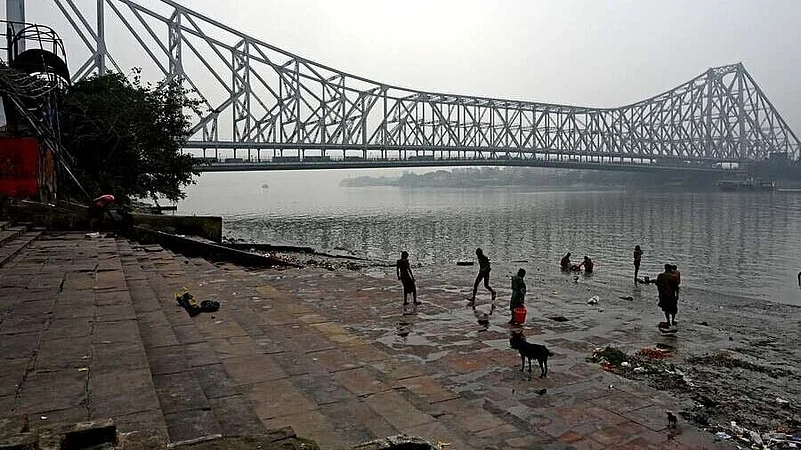
KOLKATA, July 11: The Adani Group has partnered with Syama Prasad Mookerjee Port, Kolkata (SMPK), to restore and beautify the historic Kumartuli Ghat, a significant step in preserving the city’s cultural and artistic heritage, officials said on Friday. The two entities signed a Memorandum of Understanding (MoU) to redevelop the ghat, located along the Hooghly River, under SMPK’s ‘Swachhata’ initiative. The agreement marks a public-private partnership aimed at transforming the cultural landmark through heritage-compliant infrastructure upgrades, environmental sustainability, and civic responsibility. Kumartuli is widely known as Kolkata’s iconic clay modellers’ hub, where generations of artisans have sculpted Durga idols and other traditional figures, sustaining Bengal’s celebrated artistic traditions. The restoration project aims to make the ghat cleaner, safer, and more accessible to artisans, locals, and tourists. “This is not just a restoration project, but a revival of Bengal’s artistic legacy,” said Rathendra Raman, Chairman of SMPK. He emphasised the importance of the ghat in the city’s socio-cultural fabric and said the collaboration would give a new lease of life to the neglected riverfront. Adani Ports and Special Economic Zone Ltd (APSEZ) will oversee the redevelopment, with design architects already engaged to plan the transformation. The development will remain confined to the port’s jurisdiction along the Kolkata riverfront, officials said. Subrat Tripathy, President of Business Development at APSEZ, said the company was honoured to be part of the initiative. “It was an honour to help renovate a place so sentimentally linked to Kolkata’s identity. This spot will be a source of pride for Kolkata as a tourist destination,” he said. Once a vibrant riverfront and artisanal hub, Kumartuli Ghat has suffered from years of neglect, marked by riverbank erosion, poor waste management, and deteriorating infrastructure. Authorities said the redevelopment would address these issues, with a focus on preserving the area’s heritage character. The project is expected to include upgraded public amenities, enhanced waste disposal systems, improved pathways, and lighting—designed to serve both functional and aesthetic purposes while supporting the needs of the artisan community. The initiative aligns with broader efforts to revitalise Kolkata’s historic ghats and riverfronts, many of which are central to the city’s identity but have fallen into disrepair over time.
West Bengal’s Digital Push Achieves Milestone as Bangla Sahayata Kendra Transactions Cross ₹1,000 Crore

KOLKATA, July 11: West Bengal’s flagship public service initiative, Bangla Sahayata Kendra (BSK), has surpassed ₹1,000 crore in e-wallet transactions, marking a significant milestone in the state’s ongoing digital transformation, Chief Minister Mamata Banerjee said on Friday. In a post on X (formerly Twitter), Banerjee described the achievement as a reflection of the “efficiency, transparency, and public trust” in the state’s digital service delivery mechanism. The initiative is part of the state’s broader ‘Digital Bangla in Action’ programme. “This initiative is empowering citizens, expanding access to government services, and is a major step towards universal, inclusive governance,” Banerjee wrote. She also congratulated the BSK operators and support staff, crediting their dedication for the accomplishment. Launched in 2020, the BSK centres serve as single-window digital service hubs, providing over a thousand government services daily. These include widow pensions, student scholarships, caste and residence certificates, health insurance under Swasthya Sathi, agriculture support, and housing schemes. According to senior state officials, over 3,700 BSK centres across West Bengal currently handle thousands of citizens each day. Transactions conducted via e-wallets at these centres have seen exponential growth, with the ₹1,000 crore mark being crossed in a relatively short time. “This volume of digital transactions demonstrates the public’s increasing reliance on digital platforms for accessing essential services,” Banerjee said. The services offered at BSK centres are typically linked to essential documents and schemes. Citizens pay nominal fees for these services, which are deposited into the state treasury. Officials said this model not only increases convenience for users but also contributes to state revenue. Following the milestone, the state government is planning to expand the BSK network further, with a focus on enhancing outreach in rural areas and increasing the range of services available. The BSK model has also significantly reduced the traditional bottlenecks of public service delivery — long queues, bureaucratic delays, and physical hardship. The digital-first approach is being credited with easing red tape and improving administrative responsiveness. “In today’s Bengal, standing in long queues for certificates is a thing of the past,” said a senior official. “People now trust digital transactions, and BSKs have become their reliable ally.” The Weston Bengal government views the BSK success story as a benchmark for digital governance, with potential replication in other states.
Trump Announces Patriot Missile Deal for Ukraine via NATO Amid Surge in Russian Attacks

WASHINGTON/ROME, July 11; U.S. President Donald Trump has announced plans to send Patriot air defence systems and other weapons to Ukraine through NATO, amid renewed pressure from Kyiv and a sharp rise in Russian drone and missile attacks on Ukrainian cities. Speaking to reporters, Trump said the weapons would be routed through NATO, which would also bear the cost. “We’re going to be sending Patriots to NATO, and then NATO will distribute that,” he said. “NATO is going to reimburse the full cost.” Trump’s comments followed a “positive dialogue” with Ukrainian President Volodymyr Zelensky, who has requested 10 Patriot systems to bolster Ukraine’s air defences. “They’re getting hit very hard now,” Trump said, referring to record waves of Russian attacks. “We have to [send the weapons].” The Patriot missile batteries, which can detect and intercept incoming projectiles, are widely considered one of the most advanced air defence systems globally. In the past week alone, Ukraine endured a record 728 drone attacks in a single night, and Zelensky has warned that Russia aims to increase that number to 1,000. The UN reported that June marked the highest monthly civilian casualty toll in three years, with 232 people killed and over 1,300 injured. Zelensky, speaking in Rome on Thursday, confirmed that Germany has pledged to fund two of the requested Patriot systems, Norway will pay for one, and other European countries have also expressed readiness to contribute. Trump, who last week held a phone call with Russian President Vladimir Putin, expressed disappointment at the lack of progress toward ending the war. “I’m not happy,” he said in an interview with NBC News. “Putin’s very nice attitude turned out to be meaningless.” Trump added he would make a “major statement” on Russia next Monday, without elaborating. U.S. Secretary of State Marco Rubio said on Friday that Washington was urging allies such as Germany and Spain to donate Patriot systems already in their arsenals, saying they could reach Ukraine faster than newly manufactured units. “We have continued to encourage our NATO allies to provide those weapons… since they have them in their stocks,” Rubio said. “Then we can enter into financial agreements where they can purchase the replacements.” Concerns have mounted in Kyiv after the U.S. Department of Defense recently paused some shipments of critical munitions, including Patriot interceptor missiles and precision artillery shells. Zelensky described the Patriots as “real protectors of life” and appealed for immediate resumption of deliveries. NATO funding comes from contributions made by its member states, with the United States as its largest financial contributor.
Earthquake Jolts Delhi this Evening; Epicentre in Haryana’s Jhajjar

NEW DELHI, July 11: – A mild earthquake struck the National Capital Region (NCR) on Friday evening, marking the second tremor felt in Delhi in less than 36 hours, triggering fresh concerns among residents but causing no reported damage or casualties. According to the National Center for Seismology (NCS), the tremor occurred at 7:49 p.m. local time and measured 3.7 on the Richter scale. The epicentre was located near Jhajjar in Haryana, approximately 51 kilometres west of New Delhi. The quake originated at a depth of 10 kilometres below the earth’s surface. The tremor follows a stronger earthquake recorded on Thursday morning, which had measured 4.4 magnitude on the Richter scale. That event was also traced to Jhajjar, specifically three kilometres northeast of the district headquarters. It occurred at 9:04 a.m., sending tremors across Delhi-NCR and neighbouring parts of Haryana and western Uttar Pradesh. The twin seismic events have stirred anxiety among residents in the region, where seismic activity is typically moderate but unpredictable. Thursday’s quake was widely felt across Haryana’s Rohtak, Gurugram, Panipat, and Hisar districts, as well as Uttar Pradesh’s Meerut. Many residents reported buildings shaking and rushed outdoors in panic during the busy morning hours. No structural damage or injuries were reported in either incident. “Today’s earthquake was of relatively lower intensity, but the back-to-back occurrences are being closely monitored,” an NCS official said, adding that the situation does not currently suggest an escalation but continued vigilance is advised. Authorities in Jhajjar and surrounding districts have issued advisories urging residents to stay alert and follow standard earthquake safety protocols. Emergency response teams have been placed on standby, although no immediate action was deemed necessary following the Friday tremor. India’s capital region, lying close to several minor fault lines, is classified under seismic zone IV, indicating a high-risk area for earthquakes. Although major quakes are rare, tremors ranging between magnitude 3.0 to 5.0 are not uncommon and often serve as reminders of the region’s seismic vulnerability. Friday’s quake, though moderate, caused momentary alarm, with some residents taking to social media to share their experiences. “Felt it again! Two days in a row now. Hope it’s nothing serious,” a user posted on X, formerly known as Twitter. The NCS, under the Ministry of Earth Sciences, continues to track seismic activity in the region and has assured timely updates. While no immediate aftershocks have been recorded, authorities have urged people to avoid panic and rely on official communication channels for updates.
Heavy rains lash South Bengal, IMD issues fresh warning amid low pressure and cyclonic circulation
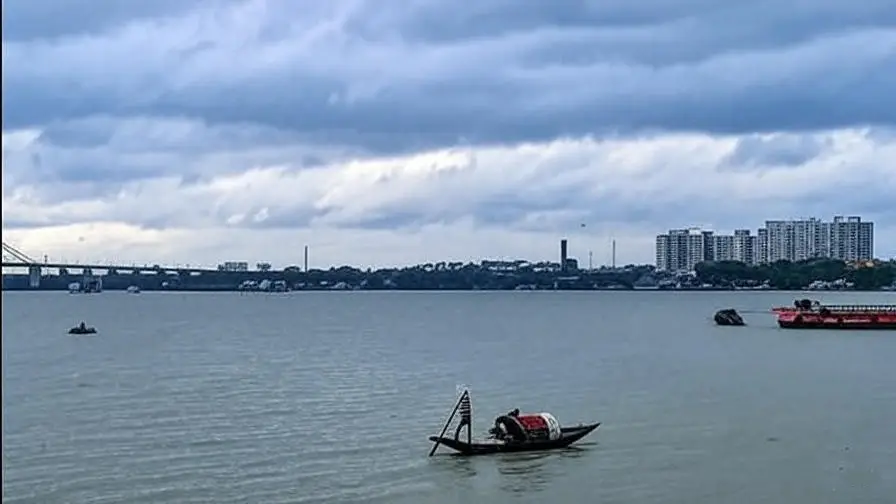
KOLKATA: Heavy rainfall continued to batter parts of South Bengal for the third consecutive day due to the combined effect of a low-pressure area and an active cyclonic circulation, prompting the India Meteorological Department (IMD) to issue fresh warnings for several districts in the state. The IMD’s Alipore Regional Meteorological Centre on Wednesday forecast heavy rainfall (7–11 cm) in four southern districts — Paschim Bardhaman, Purulia, Jhargram, and Bankura — along with parts of Kolkata, where sporadic thunderstorms accompanied by winds gusting up to 40 km/h are expected. According to the IMD, the low-pressure area over Gangetic West Bengal has now shifted to Jharkhand and adjoining regions, while the cyclonic circulation is likely to move northwestward toward Jharkhand and northern Chhattisgarh over the next 24 hours. The monsoon trough now extends from Prayagraj to the Bay of Bengal through the low-pressure zone, keeping the monsoon activity robust over the region. The weather department has also warned of turbulent sea conditions along the West Bengal and Odisha coasts due to the system. Fishermen have been advised against venturing into the deep sea. In North Bengal, heavy rainfall is forecast over Jalpaiguri, Kalimpong, and Alipurduar districts on Wednesday. The IMD further projected light to moderate rainfall with thunderstorms across all North Bengal districts through the weekend, with higher intensity expected in Darjeeling, Kalimpong, Cooch Behar, Jalpaiguri, and Alipurduar on Sunday and Monday. Kolkata woke up to overcast skies and intermittent showers on Wednesday, with no signs of sunshine. The continuous rainfall has, however, brought respite from the sweltering heat. The maximum temperature in the city on Tuesday dropped to 27.1°C, 5.4°C below normal, while the minimum on Wednesday stood at 24.8°C, around 2°C below average. Rainfall over the past 24 hours included 11.7 mm in Alipore, 15.7 mm in Dum Dum, 33 mm in Uluberia, 31.2 mm in Krishnanagar, 94.8 mm in Sriniketan, 73.4 mm in Bardhaman, 46.2 mm in Basirhat, and 30.4 mm in Canning. IMD forecasts indicate that unsettled weather conditions will persist across large parts of Bengal through the week, with no significant improvement expected in South Bengal before Monday.


