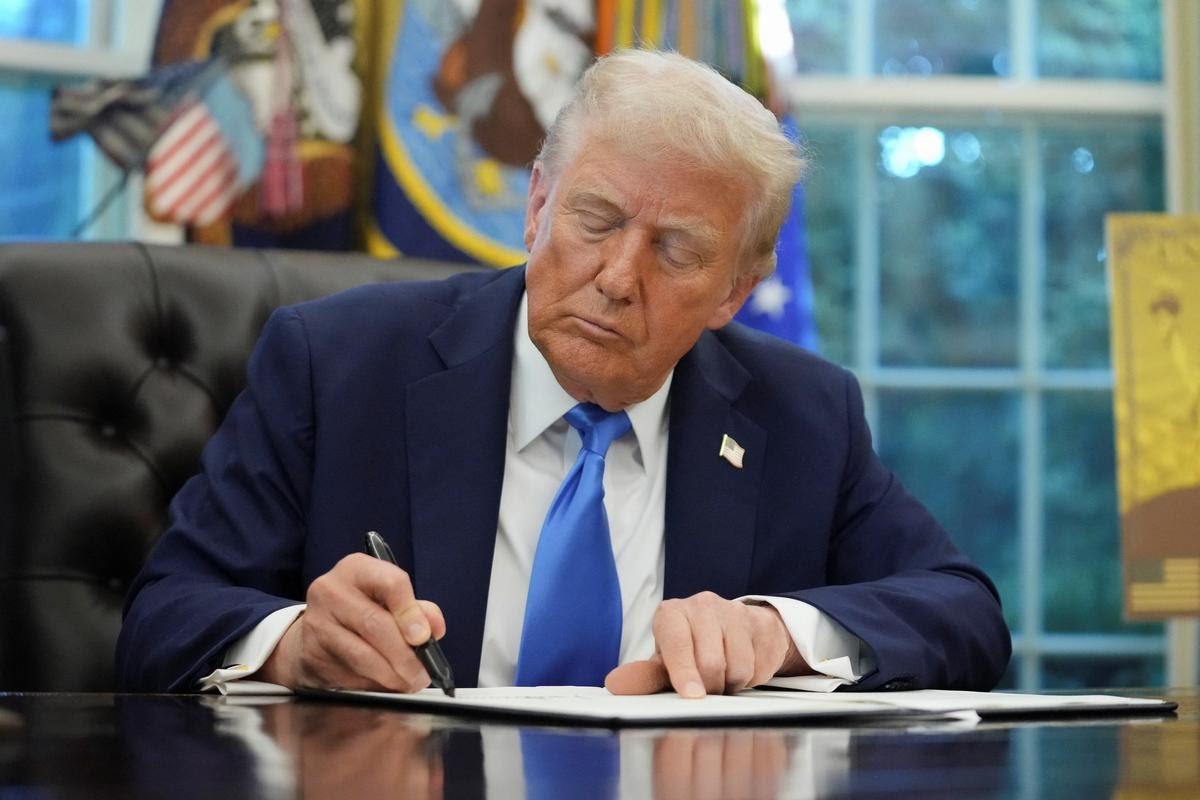
U.S. multinational companies including Meta, Amazon, Microsoft and JPMorgan Chase have urged their employees holding H-1B visas to remain in the United States, as uncertainty grows following President Donald Trump’s new directive raising the cost of such visas. Emails sent to employees this week, reviewed by Reuters, instructed H-1B and H-4 visa holders to return to the U.S. by Sunday or avoid international travel until further notice. Microsoft, in a message to its staff, said, “We are asking those on H-1B and H-4 visas to return to the United States within the specified time frame.” JPMorgan has gone further, advising workers not to leave the country at all until the company receives additional guidance. The companies have not explained the move, but industry observers believe it is tied to Trump’s latest executive order. Signed Friday, the directive imposes a $100,000 annual fee — roughly 8.8 million rupees — for companies employing workers on H-1B visas. The H-1B program, a nonimmigrant visa system, allows U.S. firms to hire skilled foreign workers, many of them from India and China. While the new policy does not ban the visa outright, labor experts say the steep fee is intended to discourage companies from sponsoring foreign talent. The technology sector, heavily reliant on international hires, could face a major disruption. According to government data, Amazon employs more H-1B workers than any other U.S. company, with more than 10,000 staff on the visa. Tata Consultancy Services follows with 5,505, while Microsoft employs 5,189, Meta 5,123, Apple 4,202 and Google 4,181. Industry leaders have yet to comment publicly on the White House’s announcement, but labor analysts warn that higher costs could slow recruitment of overseas professionals and intensify an already competitive U.S. job market for tech skills. Commerce Secretary Howard Lutnick defended the measure, saying the administration consulted “all major U.S. multinationals” before finalizing the decision. “This is about ensuring American workers are prioritized while companies contribute fairly to the system,” Lutnick said. The H-1B visa has long been a political flashpoint in Washington. Supporters argue the program supplies essential talent to keep U.S. companies globally competitive, while critics contend it undercuts American workers by lowering wages.
For now, thousands of foreign professionals and their families are scrambling to comply with employers’ instructions, hoping to secure their legal status before the new rules take effect.