
TMC Leader Shot Dead in West Bengal’s Birbhum, Police Suspect Political Motive

BIRBHUM: A local leader of the ruling Trinamool Congress (TMC) was shot dead in Birbhum district of West Bengal early Saturday, triggering political tension ahead of next year’s state assembly elections, police and party officials said. Piyush Ghosh, 42, the TMC’s zone president in the Labhpur area and an office-bearer in the local panchayat samiti, was found dead with a gunshot wound to the head around 500 metres from his home in Komarpur village. Police said he had received a call from an unknown number around 2 a.m. and left home on his motorcycle shortly before he was attacked at point-blank range. Three suspects, including a woman with known political links to the TMC, have been detained for questioning. A murder investigation has been launched, with police examining possible motives including political rivalry, personal enmity, and disputes over the local sand trade, in which Ghosh was reportedly involved. “This is a premeditated murder,” a senior TMC functionary said. “He was an influential figure in the area, both politically and economically. He had received threats during election season. We believe he was targeted to be removed from his organisational role.” Ghosh’s wife said she had repeatedly urged him to step away from politics, fearing for their safety. “Now I just want my children to be secure and get proper employment,” she said. The killing comes just days after two other TMC leaders were shot dead in separate incidents — Rajjak Khan in South 24 Parganas and another party worker in Malda. The spate of violence has raised alarm within the ruling party, with some leaders pointing to rising intra-party tensions and deteriorating law and order. Local MLA Abhijit Sinha called the murder “deeply unfortunate” and said the party would fully cooperate with the police investigation. “We have full faith in the administration. The culprits and the source of the weapon used will be uncovered,” he said. Police have sent the body for postmortem and deployed additional forces in the region to prevent unrest. Birbhum Superintendent of Police Amandeep confirmed that three people were in custody and being interrogated. The TMC, which has ruled West Bengal since 2011, faces state elections in less than a year. Political analysts say the recent killings underscore growing tension at the grassroots level within the party and the volatile political atmosphere in rural Bengal.
Odisha Moves to Copyright Rituals of Jagannath Temple Amid Dispute With West Bengal
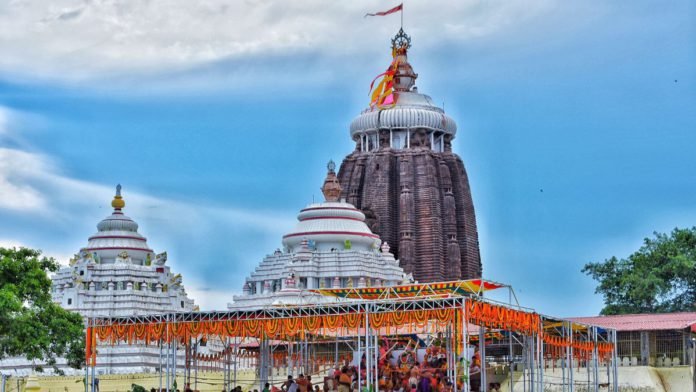
BHUBANESWAR/KOLKATA, July 13: The Odisha government has initiated steps to obtain copyright protection for the centuries-old rituals and traditions of the Jagannath Temple in Puri, a move prompted by growing concerns over perceived misuse and replication of the temple’s customs outside the state. Gajapati Maharaja Dibyasingha Deb, the titular king of Puri and chairman of the temple’s managing committee, confirmed in an interview with local media that the process is underway. “The state government has already begun taking legal advice on how to proceed with copyrighting Jagannath rituals. This should be viewed from a legal perspective,” he said. The development comes amid tensions between Odisha and West Bengal over the construction of a Jagannath temple in Digha, a seaside town in Bengal, which has been referred to as “Jagannath Dham” by Chief Minister Mamata Banerjee’s government. The use of the term “Dham,” which signifies a divine abode, has drawn objections from both the Odisha government and religious authorities in Puri, who argue it violates centuries-old spiritual and cultural sanctity. Odisha Chief Minister Mohan Charan Majhi had earlier written to Banerjee expressing concerns about the naming and presentation of rituals in the Digha temple. The temple’s daily worship is currently overseen by ISKCON (International Society for Krishna Consciousness), whose involvement has further intensified the controversy. Critics, including the Shankaracharya of the Govardhan Peeth in Puri, Swami Nischalananda Saraswati, allege that ISKCON has deviated from traditional observances by conducting festivals like the Rath Yatra and Snan Yatra on dates that do not align with those observed in Puri. “Such actions are hurting the sentiments of Jagannath devotees across the world,” said Dibyasingha Deb. “We are also in discussions with ISKCON’s headquarters in Mayapur,” he added, referring to the organisation’s global base in West Bengal’s Nadia district. “The goal is to ensure that sacred traditions are not distorted or misrepresented.” In recent years, Odisha has sought to protect the unique identity of Jagannath worship practices, which are deeply rooted in regional customs and history. The move to copyright these rituals is seen as part of a broader attempt to prevent what authorities describe as the “misuse” or “commercial replication” of the temple’s heritage. Deb said the dispute between Odisha and West Bengal should ideally be resolved through mutual dialogue. “We are hopeful that the two state governments will engage in discussions to settle the issue. But if that does not happen, we will be compelled to consider other measures to protect our traditions.” The controversy reflects growing concerns over cultural appropriation and the need to preserve religious heritage in an era of increasing replication and globalisation of spiritual practices.
Odisha Student Critical After Self-Immolation Over Unaddressed Sexual Harassment Complaint
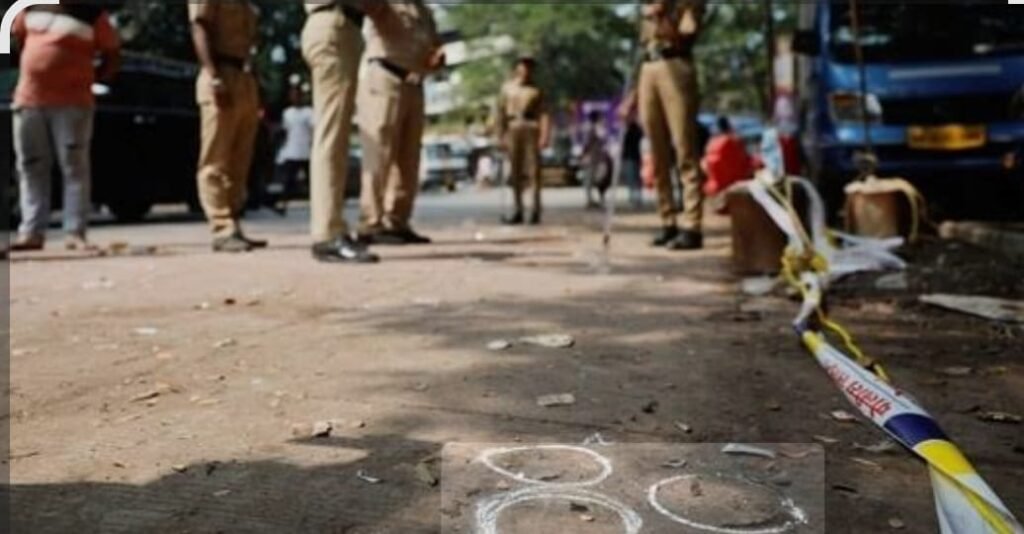
BHUBANESWAR: A female undergraduate student is in critical condition after setting herself on fire inside a college corridor in Odisha’s Balasore district on Saturday, alleging that her sexual harassment complaint against a senior faculty member went ignored by authorities, police and officials said. The incident occurred at Fakir Mohan Autonomous College, where the student had earlier accused assistant professor Samir Kumar Sahu, head of the education department, of sexual misconduct and intimidation. Sahu was arrested shortly after the self-immolation, while the college principal, Dilip Ghosh, was suspended pending further inquiry, according to officials from the Higher Education department. The student, who suffered 90% burns, was transferred to AIIMS Bhubaneswar in a critical condition. Two male students who attempted to rescue her also sustained burn injuries and are undergoing treatment. The student had reportedly submitted a written complaint on July 1, alleging that Sahu demanded sexual favours and threatened to sabotage her academic progress if she refused. While the college formed an internal complaints committee, no disciplinary action was taken, prompting student protests across the campus. Allegations have also surfaced that Balasore MP Pratap Sarangi was informed about the complaint but failed to act. The ruling Biju Janata Dal (BJD) held a press conference blaming the college administration, local police, and Sarangi for ignoring the student’s pleas. “The inaction by the principal and lack of response from the MP pushed the student to the edge,” said a BJD spokesperson. College authorities have denied wrongdoing, saying the internal committee did not find sufficient evidence. Students, however, allege that the committee lacked impartiality and failed to include student representatives. The Higher Education department has constituted a high-level inquiry committee to investigate the handling of the case, amid mounting political pressure and public outrage. This is the second such incident in recent months in Odisha. Earlier this year, a Nepalese student at a private university was found dead in her hostel room following repeated complaints of harassment by a male classmate. The latest case has intensified calls for reforms in college grievance redressal mechanisms and stronger safeguards for students facing harassment.
Bangladesh Election Chief Says Poll Date Yet to Be Finalised Amid Political Uncertainty
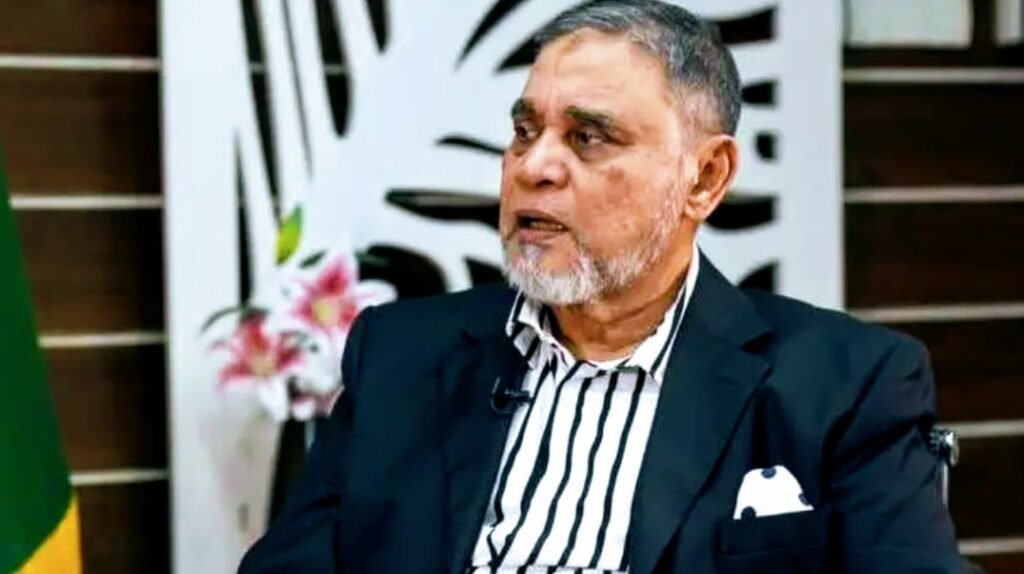
DHAKA: Bangladesh’s Chief Election Commissioner (CEC) A.M.M. Nasir Uddin said the date for the country’s upcoming general election has not yet been finalised, amid political uncertainty and growing concerns over law and order in the run-up to the vote. Speaking in Dhaka this week, Nasir Uddin said the Election Commission has not received any formal communication from the interim government regarding the polling date, though indications suggest the election may be held either before the holy month of Ramadan in early February or during the first half of April. “It’s very difficult for me to respond because I myself don’t know the exact date,” he said, adding that the Commission is operating under assumptions based on public statements made by senior officials of the caretaker government. Preparations for the election had initially been based on a December-to-June timeline, with the Commission targeting December as a potential window, Uddin said. “From day one, we started preparing ourselves with December in mind,” he added. The uncertainty over the election date has heightened tensions in the country’s political landscape, especially following the ousting of the Awami League government earlier this year. Questions remain over whether the party will be allowed to participate in the election, and recent decisions by the Commission—such as the denial of the ‘Shapla’ (water lily) symbol to the newly formed National Consensus Party (NCP)—have also drawn scrutiny. Despite the lack of clarity, the Election Commission has continued its preparatory work, while security forces have reportedly been instructed to remain on alert ahead of the polls. The upcoming vote is expected to be a critical juncture for Bangladesh, which is navigating a period of political transition and public anxiety following months of unrest and economic pressure.
India’s ATS Cracks Down on Self-Styled Godman in Alleged Forced Conversion Racket

LUCKNOW: Indian authorities have launched a high-level investigation into a self-styled godman accused of orchestrating a large-scale religious conversion racket allegedly funded by foreign sources. Jalaluddin, also known as Chhangur Baba, was arrested in Uttar Pradesh following claims that he received over ₹500 crore ($60 million) from Muslim countries in the past three years to facilitate conversions of Hindu women, state officials said. Uttar Pradesh’s Anti-Terrorism Squad (ATS) arrested Chhangur Baba and his close associate Neetu, also known as Nasreen, who allegedly managed foreign funding. The two have been placed in seven-day custody, while the Intelligence Bureau (IB) and the National Investigation Agency (NIA) have joined the probe to track the flow of money and investigate potential links to foreign entities. According to ATS sources, the accused channelled funds through the Indo-Nepal border to operatives in seven districts across the state. Payments were allegedly made to Muslim men tasked with luring Hindu women into conversion through deceitful relationships, a practice referred to as “love jihad” by right-wing groups, though the term remains controversial and lacks legal recognition. Authorities said Chhangur Baba used his son Mehboob’s bank account to purchase land and carry out large transactions. Mehboob and another aide, Naveen alias Jamaluddin, were previously arrested and remain in judicial custody in Lucknow. Investigators are examining financial records tied to the accused and are probing possible overseas accounts in Sharjah, Dubai and other parts of the UAE. In a separate action, a ₹5 crore ($600,000) mansion allegedly built by Chhangur on encroached government land in Balrampur was demolished earlier this week. The 40-room structure, complete with a marble security gate, was razed over three days using 10 bulldozers, local officials confirmed. The case has sparked fresh debate over foreign funding and the misuse of religious identity for criminal purposes. Authorities said further arrests and asset seizures are likely as the investigation continues.


