
CM Mamata Banerjee to Lead Rally in Birbhum Protesting ‘Insult to Bengali Language’
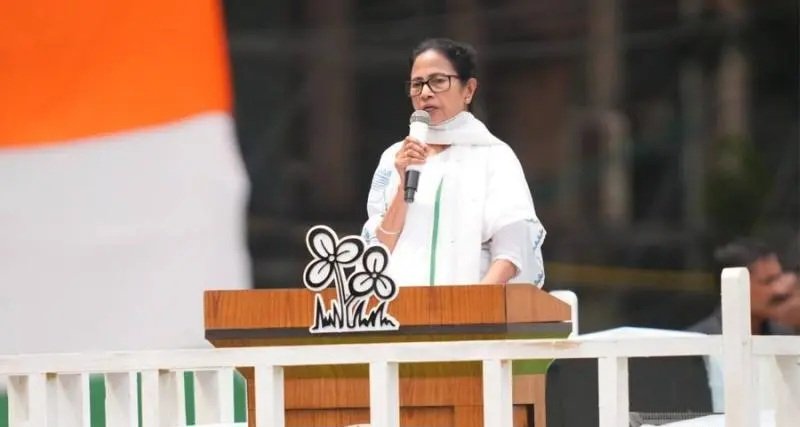
West Bengal Chief Minister Mamata Banerjee is scheduled to visit Birbhum district on July 28, where she is expected to lead a protest march condemning alleged disrespect towards the Bengali language, sources within the Trinamool Congress said on Monday. The symbolic rally is likely to take place in Bolpur, with several senior district leaders, including Kajal Sheikh, Chandranath Singh, Ashis Banerjee, Abhijit Singh, and suspended TMC leader Anubrata Mondal, expected to accompany the chief minister. The march is being organized amid growing political tensions surrounding the status of Bengali in neighbouring states and recent incidents targeting Bengali-speaking migrant workers. Banerjee, who has repeatedly raised concerns over what she calls the “systematic sidelining” of regional languages, is likely to use the platform to send a strong political message to both her party’s base and opponents at the national level. Apart from the protest event, the chief minister is also slated to chair a high-level administrative meeting with Birbhum district officials, a source in the state secretariat confirmed. Issues related to development, law and order, and public service delivery are expected to be discussed. Following the day’s engagements, Banerjee will spend the night at Ranga Bitan, the state guest house in Bolpur. She is scheduled to return to Kolkata on July 29. The Birbhum district administration has intensified security measures in anticipation of the chief minister’s visit, with a detailed deployment plan reportedly underway to ensure a smooth event and public order during the march. This visit marks Banerjee’s renewed attempt to assert regional identity politics ahead of key political milestones in the state.
Bengal Launches ‘Amar Para, Amar Samadhan’ Scheme to Deliver Grassroots Governance Ahead of 2026 Polls
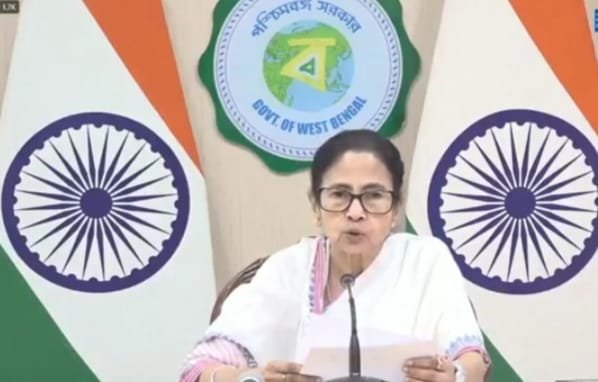
West Bengal Chief Minister Mamata Banerjee on Tuesday launched a new grassroots governance initiative titled ‘Amar Para, Amar Samadhan’ (Our Neighborhood, Our Solution), aimed at addressing hyper-local civic and administrative issues directly at the booth level. The announcement comes a day after Banerjee cited central deprivation statistics at a political rally, reinforcing her narrative of state resilience through welfare and outreach. Addressing a press conference at the state secretariat Nabanna, Banerjee said the programme is designed to make government services more accessible and responsive, particularly to rural and marginalized communities. “This is a small programme now, but it will expand. For the first time in the country, the government is reaching every booth to listen to people’s issues and solve them on the spot,” Banerjee said. The scheme will group three polling booths into one unit, with each unit hosting a single-day government camp. With approximately 80,000 booths across the state, the camps are set to begin on August 2 and will run over a period of two months, excluding a 15-day break during the Durga Puja festivities. At each camp, government officers will spend the day listening to local grievances and determining feasible solutions in real time. The process will be digitized via an online portal to ensure transparency and traceability. A budget of ₹10 lakh (approximately $12,000) has been allocated per booth, totaling over ₹8,000 crore (roughly $960 million) for the entire project. A task force led by the state chief secretary will oversee the implementation, with corresponding district-level teams ensuring local coordination. The scheme is seen as part of the Trinamool Congress’s broader outreach strategy ahead of the 2026 state assembly elections, positioning Banerjee’s administration as responsive and proactive in the face of alleged federal neglect.
Thousands of Companies Exit West Bengal Under TMC Rule, Claims BJP’s Amit Malviya
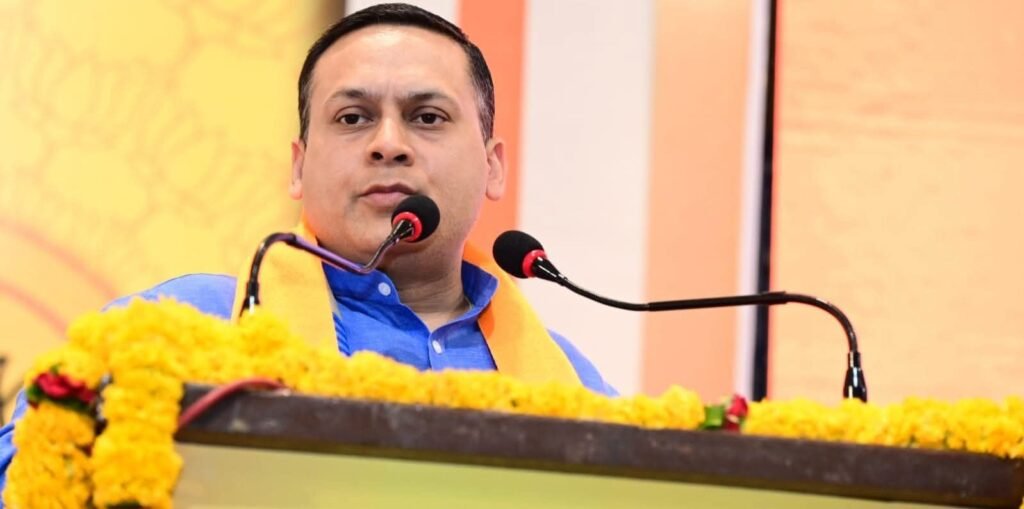
Bharatiya Janata Party (BJP) leader and IT cell head Amit Malviya on Monday alleged that West Bengal has witnessed a sharp industrial decline under the Trinamool Congress (TMC) government, pointing to the departure of 6,688 companies from the state over the past 14 years. In a detailed post on X (formerly Twitter), Malviya, who also serves as the BJP’s co-observer for the state, claimed that between April 1, 2011 and March 31, 2025, these companies relocated their registered offices from West Bengal to other Indian states. He stated that 110 of the 6,688 companies were listed on the stock exchange at the time of their departure. According to Malviya, the data reflects the erosion of investor confidence and the decline of West Bengal’s status as a business destination, once regarded as a key industrial centre in eastern India. He said the exodus was particularly severe during the financial years 2015–16, 2016–17, and 2017–18, when the state saw 869, 918, and 1,027 companies leave, respectively. Malviya noted that the bulk of the relocating companies moved to Maharashtra, Delhi, and Uttar Pradesh, with significant numbers also shifting to Chhattisgarh, Gujarat, and Rajasthan. Other destinations included Assam, Jharkhand, Karnataka, Madhya Pradesh, Tamil Nadu, and Telangana, which also attracted hundreds of firms. Calling the migration a symptom of deeper economic issues, Malviya wrote, “This isn’t just a number—it represents lost jobs, economic decline, and shrinking investor confidence in West Bengal. It’s time to ask: Who is accountable for this economic migration?” The Trinamool Congress has not yet issued a response to the allegations. However, the ruling party has previously dismissed similar claims, maintaining that West Bengal continues to attract investment through initiatives such as the Bengal Global Business Summit and that changes in company registration often reflect corporate restructuring rather than economic failure. Let me know if you’d like a shortened version or want to add a TMC reaction when available.
Tragic accident at Hukumchand Jute Mill ; Separate heist case solved by Amherst Street Police

A tragic accident at the Hukumchand Jute Mill in Halisahar claimed the life of a worker on Tuesday morning. The deceased has been identified as M. Rustam Ali (52), a resident of Halisahar. According to local sources, Rustam Ali was engaged in his duties inside the jute store when the mishap occurred. He was reportedly distracted while operating a machine and accidentally got pulled into it. Though the machine stopped immediately, the damage had already been done. Fellow workers rushed him to the Kalyani ESI Hospital, where doctors declared him dead on arrival. The incident cast a pall of gloom over the jute mill and the surrounding locality, with fellow workers expressing shock and outrage over the tragic loss. In a separate incident, Amherst Street Police cracked a gold heist case involving an elderly woman living alone. Acting on a tip-off, investigators tracked down and arrested the accused from South Barasat in Joynagar. The accused, identified as Mozammel Purkait, hails from Uttar Gangajal village under Mathurapur police station limits. Disguised as a hawker, Mozammel had been hiding at a relative’s house in the Jhautala area near South Barasat railway station. Upon receiving intelligence, Amherst Street Police informed their counterparts in Joynagar, and a joint team launched a raid, arresting the accused. During a subsequent search of the premises, police recovered gold ornaments including a chain and bangles worth Rs 3 lakh, looted from the residence of Suparna Ghosh, the elderly victim from Amherst Street. The accused was brought to Joynagar police station for further interrogation. Investigators are now probing the extent of his involvement in similar crimes and attempting to identify any accomplices in the gold theft racket.
West Bengal may call special Assembly session in August over ‘attacks’ on Bengali language, migrants
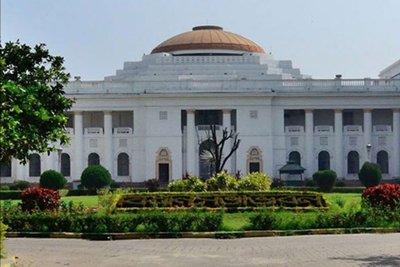
The West Bengal government is considering convening a special session of the state assembly in August to counter what it calls “systematic attacks” on the Bengali language and the alleged harassment of Bengali-speaking migrant workers in BJP-ruled states, a senior official from the assembly secretariat said. Sources from the state’s parliamentary affairs department said the special session, tentatively scheduled between 8 and 21 August, will table a resolution condemning the targeting of Bengali speakers—many of whom are labelled “Bangladeshi” for simply speaking the language. The session may also introduce four legislative bills currently under review with the state law department. While discussions have already taken place between the Trinamul Congress (TMC) legislative party and the parliamentary affairs department, no final decision has yet been taken, a TMC MLA said on condition of anonymity. The proposed session comes in the wake of strong statements by Chief Minister Mamata Banerjee and party general secretary Abhishek Banerjee during the party’s annual 21 July rally. Both leaders vowed to confront the BJP on its alleged attempts to undermine the Bengali language and identity—both in Parliament and through state initiatives. “We will hit back,” Mamata Banerjee said, accusing the BJP of inciting cultural marginalisation in states where many Bengali-speaking workers reside. According to party insiders, the proposed session will also serve as a platform for the state to take an aggressive legislative stance against such incidents, complementing TMC’s protests planned at the national level. The Monsoon Session of Parliament began on Monday in New Delhi, where TMC MPs are expected to raise the issue both inside the Houses and through a sit-in near the Gandhi statue on Parliament premises. This is not the first time the West Bengal Assembly has been convened for a special session. In August last year, it met to pass the “Aparajita Bill” in the wake of the alleged rape and murder of a female medical intern at RG Kar Hospital. Meanwhile, opposition leader Suvendu Adhikari of the BJP has dismissed Mamata Banerjee’s claims. “Who gave her the right to speak on behalf of the Bengali language?” he said on Tuesday, ahead of his departure to Delhi. Adhikari cited examples of prominent Bengali figures holding key positions under the Modi government, including late economist Bibek Debroy, current economic adviser Sanjeev Sanyal, and Haryana Governor Asim Ghosh, to reject allegations of bias. Tensions between the TMC and BJP are expected to intensify as Mamata Banerjee has called for weekly protests in support of the Bengali language and against the alleged marginalisation of Bengali-speaking communities in BJP-ruled regions, starting 27 July with the annual “Nanur Day” observance.


