
Major Action by BSF on India-Bangladesh Border, 89.4 kg of Ganja Seized
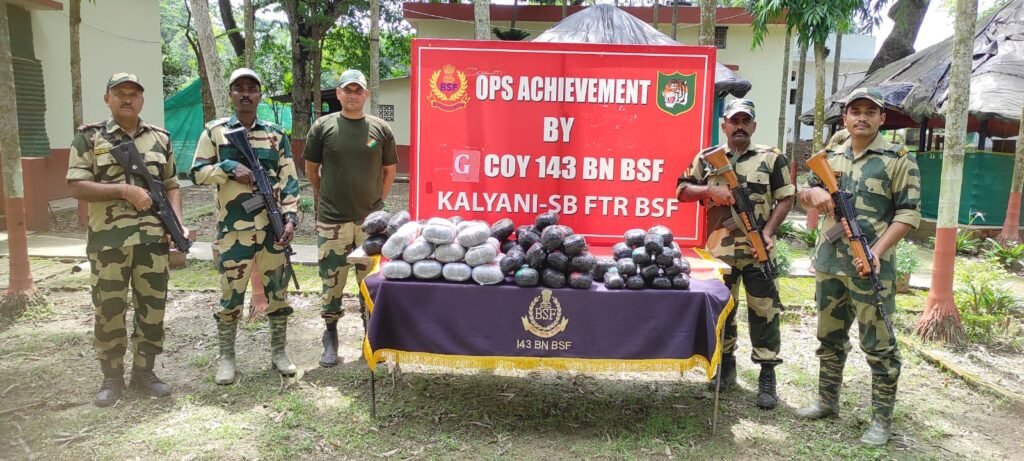
Troops of the South Bengal Frontier of Border Security Force (BSF), deployed along the India-Bangladesh international border in West Bengal’s North 24 Parganas and Nadia districts, thwarted multiple attempts to smuggle narcotics through vigilant monitoring and swift action. During these operations, a total of 89.4 kilograms of Ganja was seized. On July 22, 2025, based on intelligence inputs about a possible smuggling attempt in the border area under the Amudia Border Outpost of 143 Battalion, BSF personnel devised a special strategy and intensified surveillance in the border region. During the second shift, BSF troops observed 4–5 suspicious individuals carrying heavy loads moving toward the international border. Assessing the seriousness of the situation, the troops immediately sprang into action and warned the suspects to stop. A warning shot was also fired using a PAG. Frightened by the possibility of being caught, the smugglers abandoned their items and fled toward the nearby village of Amudia Gazipara. Following the incident, BSF conducted an extensive search operation in the area and recovered three suspicious bundles. Upon inspection, they were found to contain a total of 56 kg of ganja, packed in 86 packets. These included 34 packets of 1 kilogram each, 36 packets of 500 grams and 16 packets of 250 grams. In addition to this, during separate operations, alert BSF troops seized 28.4 kg of Ganja from the Boripota and Raninagar Border Outposts of the 11th Battalion and 5 kg of Ganja from the Gede Border Outpost of 32 Battalion. The seized narcotics have been handed over to the concerned authorities following the necessary legal procedures. The Public Relations Officer of the South Bengal Frontier stated that BSF personnel are performing their duties with full vigilance and commitment to curb smuggling along the India-Bangladesh border. Due to our continuous surveillance and strategic operations, major smuggling attempts are being foiled. BSF remains dedicated to ensuring the security of border areas through rigorous monitoring and precise operations.
Supply Crisis Looms in West Bengal Amid Crackdown on Illegal Cattle Sheds

A potential milk supply disruption is looming over Kolkata and other parts of West Bengal after authorities began demolishing hundreds of illegal cattle sheds in Dankuni following a directive from the National Green Tribunal (NGT). The eviction drive commenced early Wednesday, sparking concerns over an immediate shortfall in milk distribution across the state. According to local estimates, nearly 700 cattle sheds — locally known as khatal — were operating illegally along both banks of the Dankuni Canal. These facilities, which house over 8,500 dairy animals, are reported to supply a substantial portion of the daily milk consumed in West Bengal. Officials from multiple departments, including police, municipal workers from Dankuni Municipality, and veterinarians from the state’s animal resources department, oversaw the operation. Bulldozers were deployed to dismantle makeshift sheds amid heavy security presence to prevent resistance from cattle shed owners and workers. Cattle shed owners allege the eviction will affect more than 200,000 people whose livelihoods depend on the dairy trade. “These khatals produce milk that reaches consumers across the state every day. Shutting them down without an alternative arrangement will create a milk crisis,” said a shed operator, requesting anonymity. The NGT had previously directed the removal of these illegal setups by July 19, citing environmental damage to the canal. Authorities say the structures had encroached on nearly two kilometers of land along the canal, leading to waste disposal issues and choking the water body. Despite repeated warnings, khatal owners did not relocate or submit any proposals for alternative arrangements. “There was ample time given. We are only enforcing the court’s order,” a district official told media. However, owners contend that instead of demolition, the government could have installed waste chambers and drainage systems to regulate effluents, which would have preserved both livelihoods and the environment. As operations continue, dairy supply chains may begin to feel the strain. Local milk distributors and retailers have expressed concern about potential shortages and price spikes if the evictions proceed without an immediate contingency plan. State authorities have not yet announced any measures to compensate for the expected shortfall in milk or provide relocation support to the displaced cattle owners.


