
Air India Flight to London Aborts Takeoff at Delhi Airport Due to Technical Glitch

An Air India Dreamliner en route to London was forced to abort takeoff at Delhi’s Indira Gandhi International Airport on Thursday due to a suspected technical issue, the airline confirmed. Flight AI2017, scheduled to depart for London on July 31, was operated with a Boeing 787-9 aircraft. As the plane began its takeoff run, the cockpit crew detected a potential technical anomaly and decided to return the aircraft to the bay for precautionary checks. “Following standard operating procedures, the cockpit crew discontinued the takeoff and brought the aircraft back for technical inspection,” an Air India spokesperson said in a statement. The exact nature of the technical fault has not yet been disclosed. An alternative aircraft is being arranged to operate the flight, the airline added. “Our ground staff is providing all necessary assistance to passengers to minimise inconvenience,” the spokesperson said. There has been no official word on the number of passengers onboard at the time of the incident. The latest disruption adds to a string of recent issues involving Air India aircraft. The airline has faced increasing scrutiny from India’s aviation regulator over safety and maintenance protocols. Earlier this summer, on June 12, another Air India Dreamliner — a Boeing 787-8 operating a flight from Ahmedabad to London Gatwick — tragically crashed into a building shortly after takeoff, killing all 260 people on board. The incident sent shockwaves through the aviation community and led to a full-scale investigation. As regulators continue to examine Air India’s operational safety, the airline has reiterated its commitment to passenger safety and service continuity.
India’s Owaisi Slams Modi Govt Over Malegaon Blast Acquittals, Demands Supreme Court Appeal

All India Majlis-e-Ittehadul Muslimeen (AIMIM) chief Asaduddin Owaisi has lashed out at the Indian government over what he described as “hypocrisy” in handling terrorism cases, following the acquittal of all seven accused in the 2008 Malegaon bomb blasts case. Addressing journalists at the Indian Parliament complex on Thursday, Owaisi questioned whether the Narendra Modi-led central government and the Maharashtra state administration would challenge the verdict in the Supreme Court. “Will the Modi government and the Maharashtra government challenge the verdict in the Supreme Court? Or will they continue their hypocrisy on terrorism?” Owaisi asked. The special National Investigation Agency (NIA) court in Mumbai earlier this week acquitted all accused, including BJP Member of Parliament Pragya Singh Thakur and Indian Army officer Lt Col Prasad Purohit. The blasts, which occurred near a mosque in Malegaon, Maharashtra, in September 2008, killed six people and injured more than 100 others. Calling the investigation process “deeply flawed,” Owaisi pointed out that although the NIA had confirmed the use of military-grade RDX in the attack, no accountability had been established regarding its origin. “Seventeen years later, there are no answers. There is no closure,” he said. Owaisi invoked the memory of slain police officer Hemant Karkare, who initially led the probe while serving as head of the Mumbai Anti-Terrorism Squad (ATS), before the case was transferred to the NIA. “What happened to Karkare’s investigation? Why was it derailed?” he asked. Drawing parallels with other high-profile terror cases, the AIMIM president referred to the Samjhauta Express bombing, the Mecca Masjid blast in Hyderabad, the Ajmer Sharif Dargah blast, and the 2006 Malegaon attack. He alleged that Muslims were falsely implicated in several of these incidents and later discharged after years of incarceration and torture. “There cannot be two approaches to terrorism,” he said. “Justice has been denied not just in Malegaon but across cases where closure remains elusive for victims’ families.” Owaisi also recalled the 2015 claim by then-special prosecutor Rohini Salian that she was pressured to go soft on the accused, and cited the NIA’s 2017 move to reintroduce Thakur’s name in the chargesheet as evidence of systemic inconsistencies. In a scathing critique of the BJP’s alleged dismissal of “saffron terror” narratives, Owaisi rhetorically asked, “Was the person who killed Mahatma Gandhi Chinese? Who assassinated Rajiv Gandhi? Who killed Indira Gandhi?” Calling on the government to come clean on its next steps, he concluded: “If the real culprits are roaming free, the country has the right to know who bombed Malegaon in 2008.
Kyiv Airstrikes Kill Eight, Over 130 Wounded Amid Escalating Russian Offensive

At least eight people, including a six-year-old boy and his mother, were killed and more than 130 others wounded in a massive overnight barrage of Russian drones and missiles on Kyiv, Ukrainian officials said on Wednesday. The assault — one of the most intense in months — struck over two dozen locations across the capital, with cruise missiles and Shahed drones pounding residential buildings and public infrastructure. Mayor Vitali Klitschko confirmed that 12 children were among the injured, making it the highest number of child casualties in a single night in Kyiv since the start of Russia’s full-scale invasion in February 2022. Ukraine’s Air Force reported that Russia launched 309 drones and eight cruise missiles during the night. While Ukrainian air defences intercepted many, multiple projectiles penetrated the defence system, causing widespread destruction. “A red-orange glow lit up the night sky as missiles struck,” said a local resident in Sviatoshynskyi district, one of the hardest hit areas alongside Solomyanskyi. Three fatalities occurred at the site of a collapsed apartment building, according to Interior Minister Ihor Klymenko. “An entire entrance was destroyed. Rescuers are clearing the rubble,” he said. The assault came just days after U.S. President Donald Trump shortened a deadline for a Russian ceasefire from 50 days to “ten or 12 days,” warning of increased sanctions if Moscow did not comply. Trump, on a recent UK visit, said he had expected a ceasefire to be in place and expressed frustration at what he called a “disconnect” between President Vladimir Putin’s private assurances and the continued strikes on Ukrainian cities. “The world has yet again seen Russia’s response to our, America’s and Europe’s desire for peace,” President Volodymyr Zelensky said on social media. “More demonstrative murder. This is why peace without strength is impossible.” Windows of a children’s hospital ward were shattered in Kyiv’s Shevchenkivskyi district, while a school and kindergarten also sustained damage. Thirty of the wounded remained hospitalised by mid-afternoon. Meanwhile, on the eastern front, Russia claimed to have captured the hilltop town of Chasiv Yar in Donetsk region — a claim Ukraine denied. The Ukrainian military reported ongoing combat, while independent analysts from DeepState suggested Russia had gained partial control of the town’s eastern and northern zones. Control of Chasiv Yar would offer Russia a strategic advantage to launch further assaults on cities including Kramatorsk and Sloviansk. Analysts have warned that Pokrovsk, 60km southwest of Chasiv Yar, is becoming increasingly vulnerable to Russian encirclement amid growing pressure along the eastern front.
Multinational Axis Bank and Antara Hospital Unite to Realise Mother Teresa’s Dream of Mental Health for the Poor
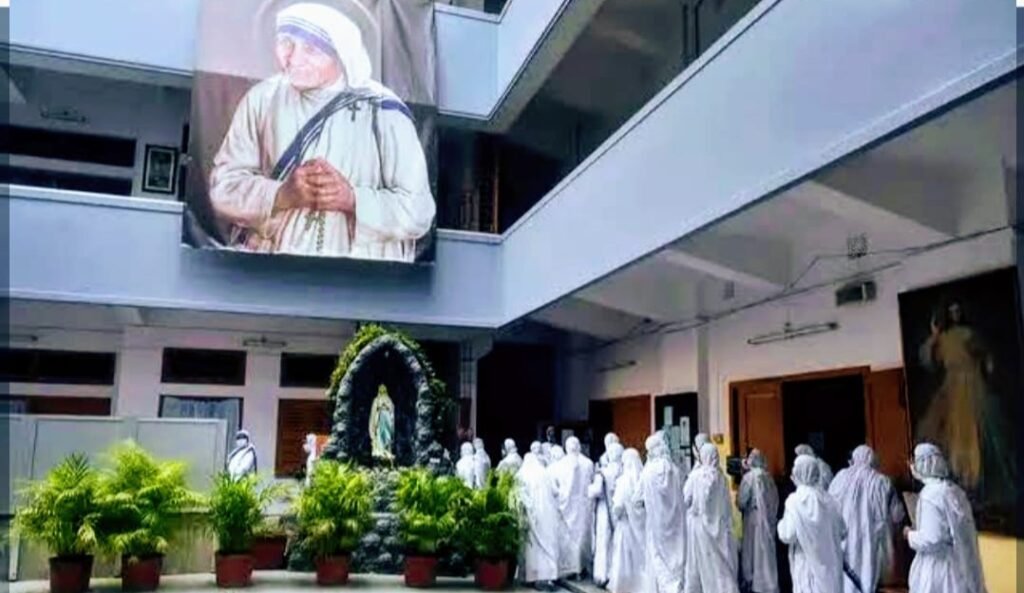
She walked the streets of Calcutta in her white-bordered blue sari, tending to the dying, the destitute, the forgotten. To the world, she was Mother Teresa — a saint in every sense. But to countless voiceless souls, she was simply Ma. While much of the world remembers her for feeding the hungry and sheltering the homeless, few know of another dream she held close — a hospital for the mentally ill, where the poorest of the poor could receive dignity, care, and healing of the mind, not just the body. That unfulfilled vision is now finding shape in a groundbreaking partnership between Antara Psychiatric Hospital — an institution deeply influenced by Mother Teresa’s legacy — and Axis Bank, one of India’s leading private-sector banks. A New Chapter: The Axis Bank Antara Institute of Health Sciences In a landmark move, Axis Bank has signed a Memorandum of Understanding (MoU) with Antara to establish the Axis Bank Antara Institute of Health Sciences in Kolkata. This will be one of Eastern India’s first dedicated mental health educational facilities, offering accredited programs in psychiatry, psychology, nursing, social work, and counselling. The MoU was signed at Axis House in Mumbai’s Worli area in the presence of Mr. Amitabh Chaudhry (MD & CEO, Axis Bank), Mr. Vijay Mulbagal (Group Executive, Axis Bank), Mr. Kamal Prakash (President, Antara), and Dr. Matthew P. John (Hon. General Secretary, Antara). Dr. John, a long-time mental health advocate, recalls his early conversations with Mother Teresa. “She told us that beyond feeding mouths, we must heal broken minds. That message stayed with us.” It was that inspiration, he says, that led to the foundation of Antara in the early 1970s — a clinic that has grown quietly, serving thousands with dignity and devotion. Now, with Axis Bank stepping in, the dream expands. A Mental Health Crisis Meets a Bold Response India, a country of over 1.4 billion, has a severe shortage of mental health professionals. According to government estimates, the ratio of psychiatrists to patients is around 0.75 per 100,000 people, far below WHO recommendations. Facilities are few, stigma is rampant, and training opportunities are limited. Axis Bank’s Group Executive, Mr. Vijay Mulbagal, described the initiative as “a testament to inclusive growth”. He added, “Mental health is not a side note — it is central to national well-being. We are honoured to be part of something that uplifts lives and builds capacity for a healthier India.” The partnership is not only about charity — it is strategic. The Institute is set to launch its academic programs in phases from 2026, aiming to enrol over 200 students annually by 2028. With Antara already receiving DNB (Psychiatry) accreditation from the National Board of Examinations in May 2025 — a first for any mental health institution in West Bengal — the groundwork is well laid. Inspired by Mother Teresa, Powered by Compassion Antara’s ethos is steeped in the spirit of its early years. The staff — many of whom come from humble backgrounds — speak often of Mother Teresa’s visits, her words, her presence. Anita Brooke, Communications Manager at Antara, says the team sees themselves as continuing her mission. “We are not just treating illnesses. We are serving humanity, often the invisible and neglected. Many of our doctors and nurses have given up more lucrative careers to work here.” She adds that Axis Bank’s involvement has encouraged other institutions to come forward. “This is no longer just a clinic. It’s a movement.” Hope on the Horizon From its modest campus in Kolkata, Antara has grown into a beacon of hope for the mentally ill, especially those who cannot afford care. With Axis Bank’s investment, this vision is entering a new phase — one that fuses philanthropy with systemic reform. As Kolkata prepares to host one of Eastern India’s first large-scale mental health education institutes, an old dream is stirring once more — not with grand gestures, but with trained minds, caring hearts, and open doors. In the quiet corridors of Antara, Mother Teresa’s spirit seems to whisper: “Do small things with great love.” Now, thanks to a bank, a hospital, and a legacy of compassion, those small things are becoming something extraordinary.
WBJEE results to be announced on 7 August after OBC quota row delayed release
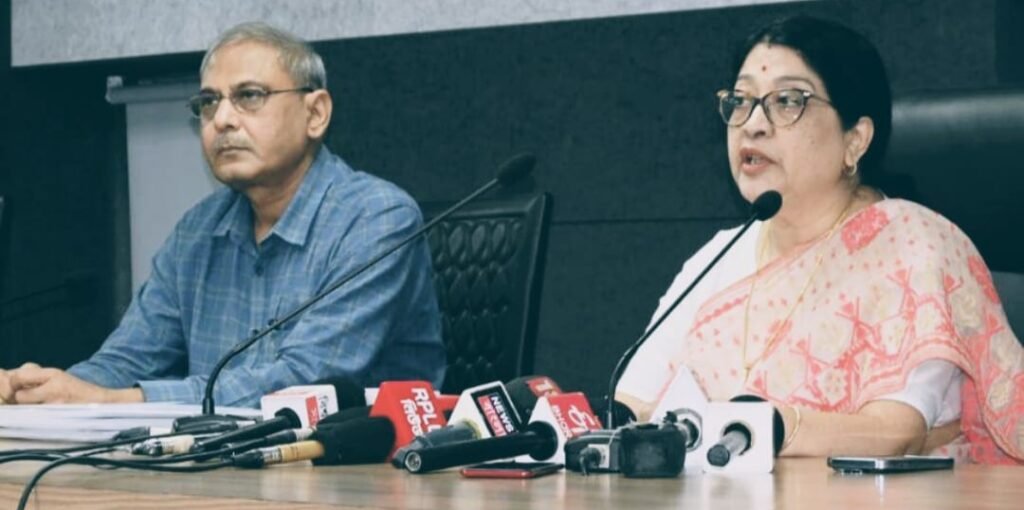
The results of the West Bengal Joint Entrance Examination (WBJEE) will be announced on August 7, nearly three months after the engineering entrance test was held on 27 April, officials said on Wednesday. Sonali Chakraborty Banerjee, chairperson of the West Bengal Joint Entrance Examination Board, confirmed the revised date, stating that the delay was caused by a legal dispute over the state’s OBC reservation policy. “We are hopeful of declaring the results on 7 August. The delay occurred as the OBC certificate matter was sub-judice,” she said. The delay stemmed from a Calcutta High Court order in May that put an interim stay on the West Bengal government’s 2010 notification recognizing OBC status in higher education admissions. The matter reached the Supreme Court, which on Monday issued a partial stay on the High Court order, allowing state authorities to resume procedural activities. In response, the state higher education department sought legal advice and instructed the Joint Entrance Board to proceed with results, pending final adjudication. The Board has also requested all candidates to update their caste certificates between 31 July and 2 August via the official portal. Approximately 100,000 students took the WBJEE for engineering courses across the state. The Board earlier intended to publish results by 5 June but had to suspend the process due to the legal uncertainty. On Tuesday, a division bench of the Calcutta High Court comprising Justices Sujoy Paul and Smita Das Dey ordered the Board and the state government to declare results within a week. Failing that, they must file affidavits explaining the delay by 7 August. Earlier SFI and other Left Front students unions staged agitation in College Street demanding immediate release of results.
India court acquits all accused including Sadhvi in 2008 Malegaon blast case, citing lack of evidence

A special National Investigation Agency (NIA) court on Monday acquitted all seven accused, including Bharatiya Janata Party (BJP) lawmaker Pragya Singh Thakur and Lieutenant Colonel Prasad Purohit, in the 2008 Malegaon bomb blast case, citing insufficient evidence and procedural lapses in the investigation. The court observed that the prosecution failed to establish the charges against the accused, adding that critical lapses by the investigating agencies had weakened the case beyond repair. The September 29, 2008 explosion in Malegaon, a communally sensitive town in Maharashtra, killed six people and injured over a hundred. The case drew nationwide attention due to its political and religious overtones, and the trial lasted for over 17 years. Reading out the verdict, the judge noted that the prosecution could not conclusively prove whether the bomb was planted on a motorcycle. No evidence linked Col. Purohit to either assembling or supplying the explosive device, and it remained unclear who had placed the bomb. Key forensic evidence, including fingerprints from the blast site and the motorcycle chassis number, was either not collected or lost. Investigators also failed to establish whether the vehicle used for the bombing was registered in Thakur’s name. The court said the panchanama — a legal description of the crime scene — was not conducted properly, and experts failed to preserve crucial material evidence. “No conviction can be made solely on the basis of suspicion,” the court said, reiterating that terrorism has no religion. It also noted that no conclusive voice tests or credible proof of alleged secret meetings were presented during trial. All seven accused were declared not guilty by the court.


