
Weapons Cache Discovered in Luxury Apartment Complex in West Bengal, India
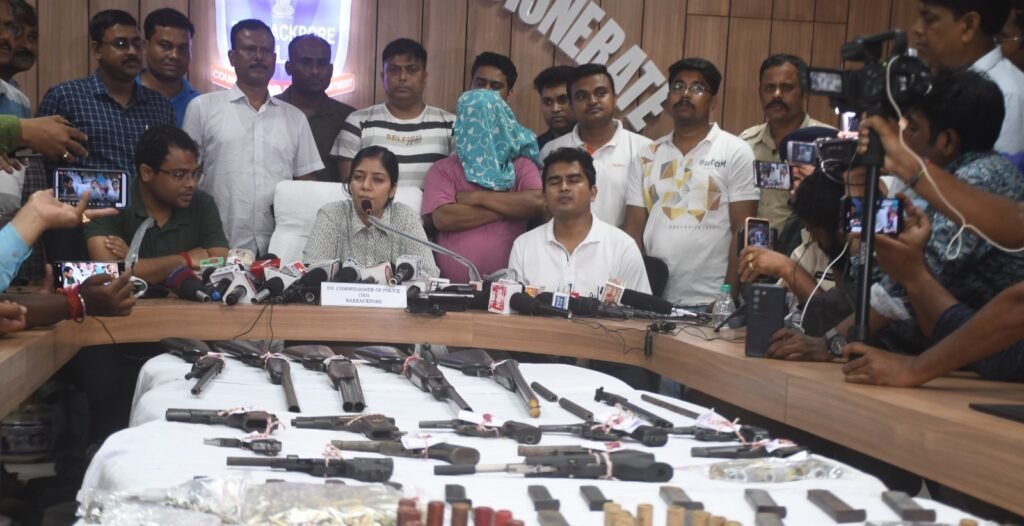
Police in the eastern Indian state of West Bengal uncovered a massive weapons cache inside a high-rise apartment complex on Monday, raising serious concerns about a potential organized criminal or terror network operating in the region. Acting on a tip-off, officers from the Barrackpore Police Commissionerate raided Pratibha Manzil, a posh residential tower located in the Regent Park area of Khardah, North 24 Parganas district. The operation led to the seizure of 15 firearms and approximately 1,000 rounds of live ammunition, authorities confirmed. The sudden presence of a large police contingent caused panic in the neighborhood, typically known for its quiet residential character. Investigators say they are now probing why such a large cache of weapons was being stored in a civilian housing unit. “This is not something you expect to find in a modern apartment complex,” a senior police official said, speaking on condition of anonymity. “We are investigating whether this is part of a larger conspiracy.” In addition to the firearms and ammunition, police also seized several lakh rupees’ worth of materials, including cash and other items believed to be of investigative interest. A man identified as Liton Chakraborty has been taken into custody and is currently being interrogated. Police sources say Chakraborty’s questioning is key to unraveling the motive behind the stockpile, and whether it is linked to criminal syndicates, extremist groups, or other clandestine operations. The discovery has sparked security concerns in the region and is likely to prompt increased surveillance and searches in similar housing units in the coming days.
Trump Vows to Hike Tariffs on India Over Russian Oil Purchases
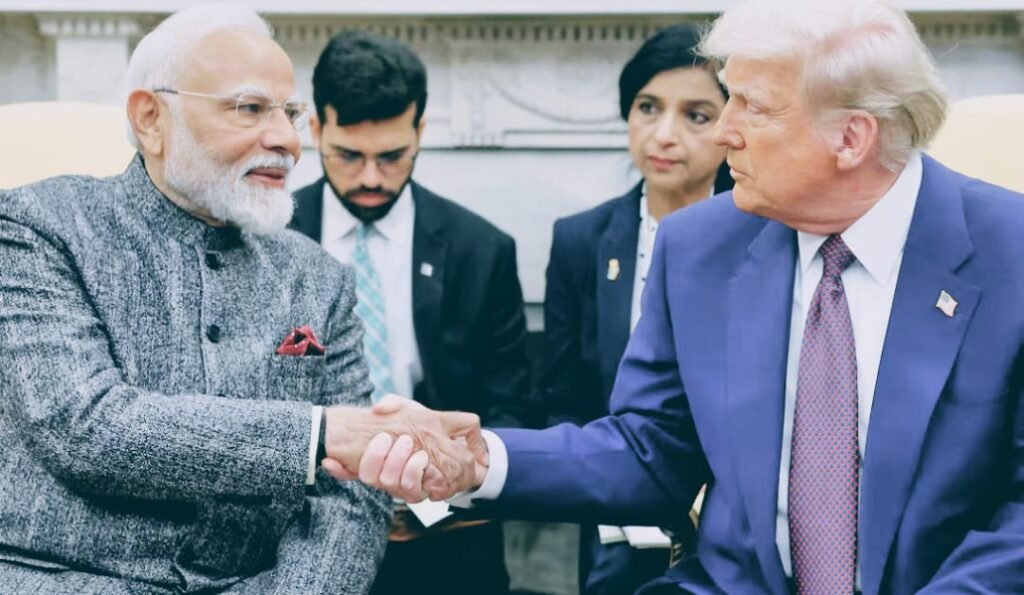
U.S. President Donald Trump has announced plans to sharply increase tariffs on India, accusing New Delhi of profiting from the resale of Russian oil while turning a blind eye to the ongoing war in Ukraine. In a post on his social media platform, Truth Social, on Monday, Mr. Trump said: “India is not only buying massive amounts of Russian oil, they are then, for much of the oil purchased, selling it on the open market for big profits. They don’t care how many people in Ukraine are being killed by the Russian War Machine.” “Because of this, I will be substantially raising the tariff paid by India to the USA,” the president added. The remarks come amid growing scrutiny from the Trump administration over India’s energy ties with Moscow, which have remained robust despite Western sanctions against Russia following its 2022 invasion of Ukraine. On Sunday, Stephen Miller, the White House deputy chief of staff and a close aide to Mr. Trump, echoed the president’s sentiments, suggesting that India’s purchases amounted to indirect support for Russia’s war effort. “What he [President Trump] said very clearly is that it is not acceptable for India to continue financing this war by purchasing oil from Russia,” Mr. Miller told reporters in Washington. India has consistently defended its energy strategy, stating that its imports are guided by national interest and economic needs, and noting that it has remained in dialogue with all key partners, including the United States. The proposed tariff hike marks a sharp escalation in trade tensions between Washington and New Delhi and comes at a time when both nations had been seeking to deepen strategic ties, particularly in the Indo-Pacific region. There has been no immediate response from the Indian government. However, analysts say Mr. Trump’s statement is likely to provoke concern in New Delhi, especially given India’s dependence on exports to the U.S. and the broader implications for the bilateral relationship.
Nitish Kumar Reintroduces Domicile Policy for Teachers’ Recruitment in Bihar Ahead of State Polls

Bihar Chief Minister Nitish Kumar on Monday announced the reintroduction of a domicile policy for the recruitment of teachers in the state’s government schools, a move widely seen as a pre-election sop ahead of the upcoming assembly polls. The policy, which gives priority to residents of Bihar in teacher appointments, will come into effect from the Teachers Recruitment Exam-4 (TRE-4) slated for 2025. It reverses a 2023 decision that had opened up state teaching jobs to candidates from across the country. “The Education Department has been directed to amend the recruitment rules to ensure that only candidates domiciled in Bihar are eligible for government school teaching positions,” Kumar said in a post on social media platform X. The chief minister also announced that the State Teacher Eligibility Test (STET) will be conducted before TRE-5, which is scheduled for 2026, to streamline the recruitment process. The move marks a return to regional job preferences amid growing political momentum in the state. Kumar said the decision was part of a broader effort to strengthen Bihar’s education system, which his government has been working to reform since 2005. “Since the formation of our government, we have continuously prioritised educational improvements. A large number of teachers have already been recruited, and we remain committed to expanding opportunities for Bihar’s youth,” Kumar added. The reintroduction of the domicile clause is expected to generate mixed reactions. While it may find favour among local aspirants, critics say it risks reducing opportunities for qualified candidates from other states and could trigger legal challenges. Analysts view the policy as a strategic move by Kumar’s Janata Dal (United)-led government to consolidate support among the youth and unemployed ahead of the 2025 elections.
BJP’s Sukanta Majumdar Accuses West Bengal Government of ‘Jizya Tax’ on Hindu Pilgrims
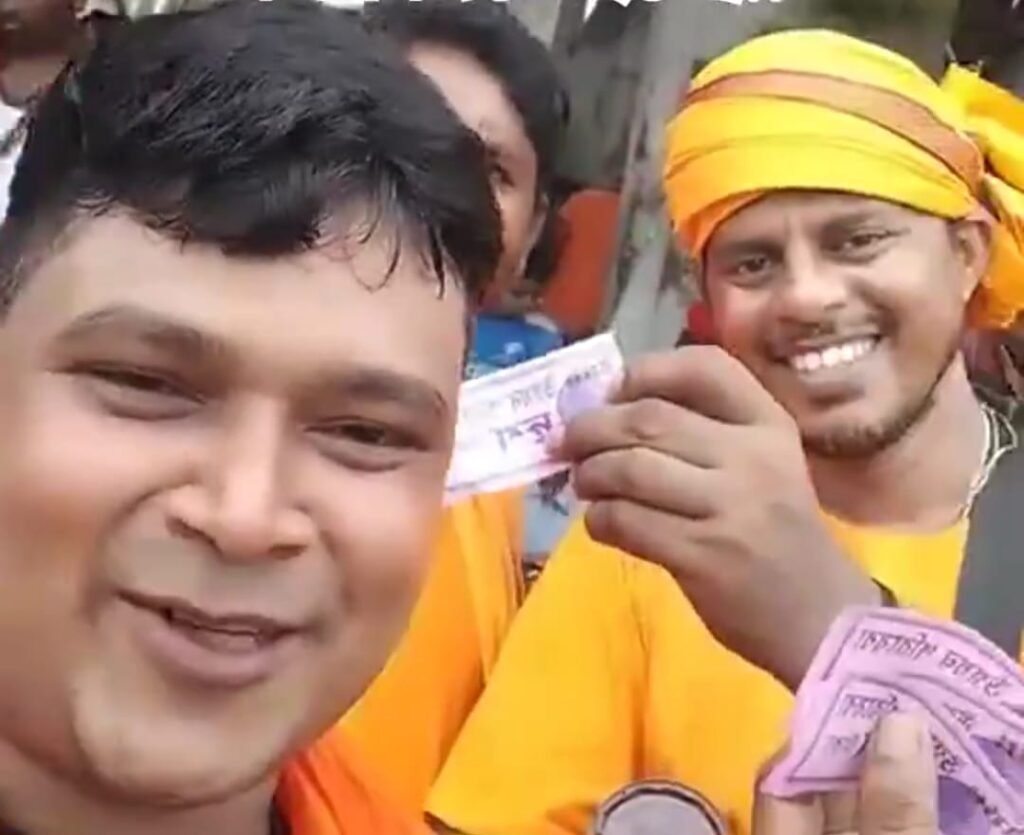
Amid heightened political tension over issues of migrant safety outside Bengal, BJP MP and former state president Sukanta Majumdar has made a sensational allegation against the Trinamool Congress (TMC)-led West Bengal government, accusing it of extorting money from Hindu pilgrims during the month-long Shravani Mela in Tarakeswar. Taking to social media platform X (formerly Twitter), Majumdar claimed that the state authorities are charging a Rs 10 fee per devotee at the Nimai Tirtha ghat in Baidyabati — a popular spot where pilgrims collect Ganga water before embarking on the journey to offer it at the Shiva temple in Tarakeswar. He referred to the levy as a modern-day “jizya tax” — a term historically associated with a tax imposed on non-Muslims during medieval Islamic rule. “Is this merely a revenue-collection tactic or a veiled message to Bengali Hindus that their religious practices will now come at a cost?” Majumdar questioned in his post. He described the move as a “blatant display of the TMC government’s anti-Hindu and fundamentalist mindset”. The Shravani Mela, which began this week, draws lakhs of devotees from across West Bengal and other states. Pilgrims, known as ‘kanwarias’, walk barefoot for several kilometres carrying holy water from the Ganges to pour over the Shiva lingam in Tarakeswar. The fair is one of the largest religious gatherings in south Bengal. In preparation for the influx of devotees, the Hooghly district administration has deployed additional police forces, installed CCTV surveillance, and coordinated with health departments and civic volunteers to ensure drinking water, food, shelter, and emergency medical services are in place. While the state government and local authorities have not yet responded to Majumdar’s allegations, volunteers and organisers say a nominal fee is often collected at certain ghats for maintenance and sanitation during the mela period — a long-standing practice not unique to West Bengal. However, Majumdar insisted that such collections amount to “extortion under the garb of administration” and are being carried out in the name of public facilities, while “innocent Hindu devotees are being forced to pay to perform their rituals”. The remark comes at a time when TMC leaders have been criticising the BJP-led central government over the safety of Bengali migrant workers in other states. The fresh row is expected to further fuel the polarised political atmosphere in Bengal ahead of the 2026 Assembly elections.


