
Painting Teacher Assaulted After Protesting Against Public Drinking in West Bengal
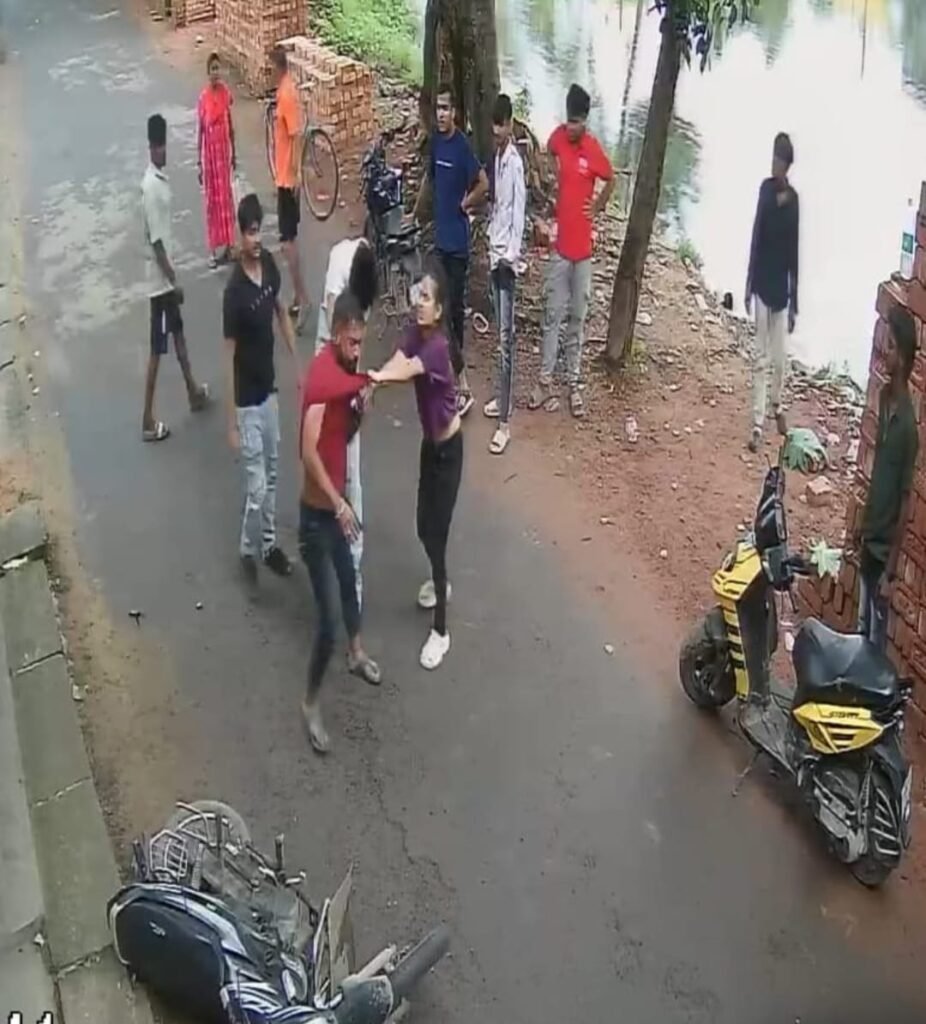
A school teacher was brutally assaulted in broad daylight after objecting to a group of young men and women drinking alcohol in public in Kamarhati, on the northern outskirts of Kolkata. The incident, which left the victim — identified as 45-year-old art teacher Nirupam Pal — seriously injured, took place on Saturday morning in Ward No. 31 of Kamarhati Municipality, sparking panic among local residents. Police said Mr Pal, a resident of Nandannagar, was returning home from a community function when he saw several people drinking by the roadside. Disturbed by the sight of public drinking early in the morning, he confronted the group. According to the complaint lodged at Belgharia police station, the youths and a woman then attacked him, dragging him to the ground and beating him severely. Local residents who rushed to the spot managed to rescue the teacher, while the assailants fled. The attackers also allegedly threatened to kill Mr Pal. Police confirmed that CCTV footage from the area captured the assault. One suspect has been taken in for questioning, while efforts are on to identify and trace the others, believed to be outsiders. The incident has triggered political controversy. Sayanadeep Mitra, a member of the CPI(M) state committee, visited the site and accused the police of inaction. “Belgharia and Kamarhati are increasingly becoming safe havens for miscreants. It was the duty of the police to prevent public drinking, but when they failed to do so, Nirupam Sir took a stand and paid the price,” he said. Police have launched an investigation, but the accused remain absconding.
Kolkata mountaineers conquer Unam peak amid landslides and adversity
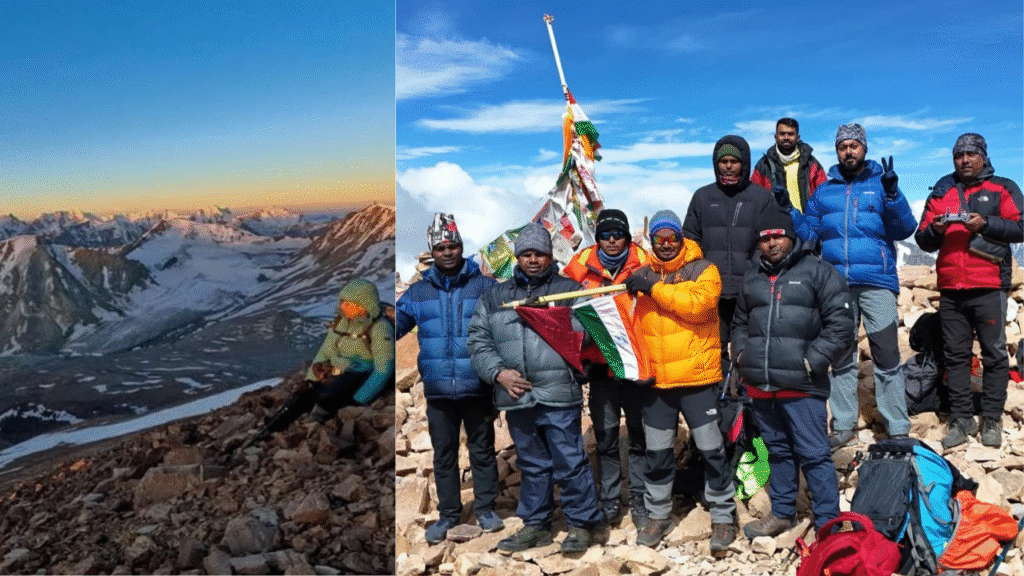
After six long years, the Mountaineers’ Association returned to the high Himalayas this August, sending a 25-member team to scale the formidable Unam peak (6,111 metres) in Himachal Pradesh’s remote Lahaul-Spiti region. What unfolded was a tale of grit, altitude sickness, triumph—and an arduous return through landslide-ravaged roads. The expedition began on 8 August, with the team leaving Kolkata by train for Chandigarh before embarking on the rugged road journey to Manali. Heavy rains forced them to change buses three times—from Chandigarh to Mandi, onward to Kullu, and finally into Manali. Lugging 24 heavy rucksacks packed with climbing gear, tents, and supplies through multiple bus changes was an expedition in itself. “Over four decades of mountaineering, I have rarely seen such a chaotic approach journey,” said one veteran climber. “Even reaching Manali felt like a battle won.” At 6,726 feet, Manali served as the base for two nights of acclimatisation. The weather was fickle—rain and clouds breaking through brief spells of clear skies. Yet, the team pressed on with preparations, before setting off in two tempo travellers on 12 August. The road ahead was dizzying. Manali to Bharatpur (15,420 feet) meant an ascent of nearly 8,700 feet in a single day. The route, once over Rohtang Pass, now passes through the 9-km-long Atal Tunnel, one of the longest high-altitude road tunnels in the world. The sharp altitude gain left many members struggling with nausea and headaches. “Everyone was warned,” recalled expedition manager Subrata Banerjee. “We knew altitude sickness was inevitable. That is why we had pre-planned a two-night halt at Bharatpur.” From Bharatpur, the climbers ferried loads to the base camp. Despite illness, members including deputy leader Amiya Mitra, Ajay Debnath, Soum Jyoti Seal, and NIMAS instructor Saurav Rajak established the camp on 13 August. Two members were evacuated back to Manali due to severe sickness. By 14 August, the full team had consolidated at base camp, ready for the summit push. Then came the decisive night. At 12:43 a.m. on 15 August—India’s Independence Day—twelve climbers set off under headlamps, roped together against the icy winds. Hours later, at 9:22 a.m., ten of them stood victorious on the summit of Unam, gazing across the frozen expanse of Lahaul-Spiti. The successful summiteers included climbing leader Nitai Mondal, deputy leader Mitra, instructor Rajak, and young climbers such as Sayak Mondal and Raunak Dutta. Two others—Amit Das and Bikram Dasgupta, both fresh from a rock-climbing course—had to halt just below the summit, exhausted but elated at their first Himalayan experience. The triumph was short-lived. On the return journey to Chandigarh, the team was caught in devastating landslides and flash floods that paralysed Himachal’s road network. For nearly 30 hours, the climbers were stranded—without food for 27 hours—while vehicles remained trapped in tunnels and mountain passes. Many spent the night sleeping on roadsides. With the help of local authorities and medical aid from Dr. Rabikar Pal, the team eventually made it through, exhausted but safe. On 22 August, they boarded the Kalka Mail back to Kolkata, carrying not just the story of a successful summit but also of endurance, resilience, and the unpredictability of the mountains. “Climbing Unam was hard,” said one member with a weary smile. “But the descent through nature’s fury was even harder. This was not just a mountaineering expedition—it was a reminder of how small we are before the Himalayas.”
Radhashtami festival to be celebrated in grand style at ISKCON Mayapur
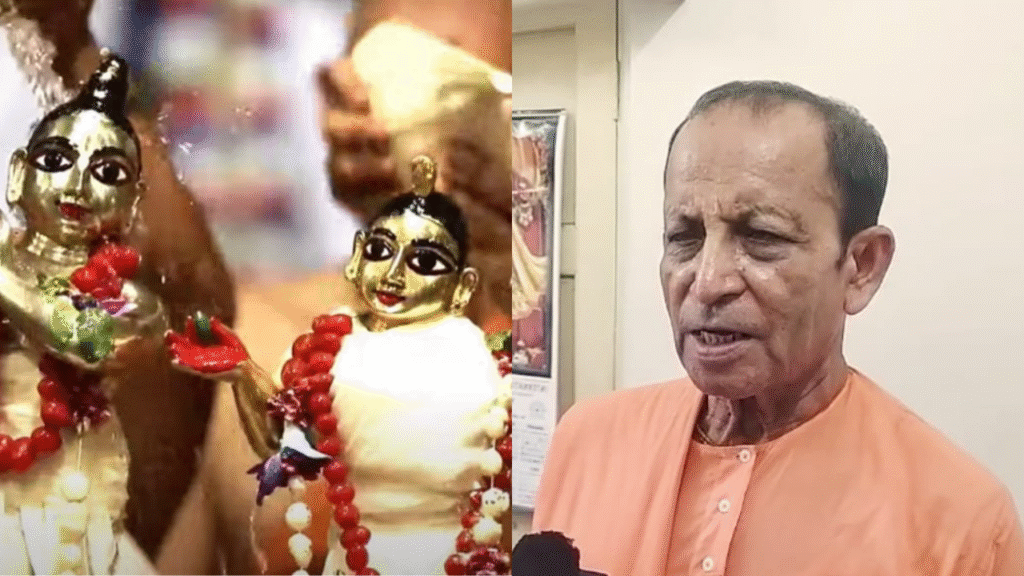
The International Society for Krishna Consciousness (ISKCON) is preparing to celebrate Radhashtami — the birth anniversary of Srimati Radharani, consort of Lord Krishna — with grandeur and devotion at its global headquarters in Mayapur, West Bengal, on Sunday, 31 August 2025. The festival, one of the most significant in the Vaishnava calendar, will also be observed across ISKCON centres worldwide. According to ISKCON’s public relations officer, Rasik Gauranga Das, the Mayapur temple complex will be decorated with flowers and lights, with thousands of devotees from India and abroad expected to participate in the celebrations. Authorities said special arrangements are being made for crowd management and security as pilgrims are likely to gather in large numbers. Radhashtami, which falls on the eighth day of the bright fortnight of the month of Bhadra in the Hindu lunar calendar, marks the appearance of Radharani more than 5,200 years ago in the village of Raval, near Vrindavan, as the daughter of King Vrishabhanu and Queen Kirtida. In the Vaishnava tradition, Radharani is revered as the embodiment of divine love and the feminine counterpart of Krishna. “Just as milk and its whiteness or fire and its burning power cannot be separated, so too Radha and Krishna are one soul in two forms,” explained Rasik Gauranga Das. “Her pure, unconditional love for Krishna represents the highest form of devotion. If humanity can imbibe even a fraction of that love, it will bring blessings to the entire world.” The festival will include traditional rituals, devotional singing (bhajans and kirtans), scriptural discourses, cultural performances, and distribution of sanctified food (prasadam). In Mayapur, ISKCON leaders will also lead prayers for peace and spiritual awakening in the face of global conflicts and crises. ISKCON officials said the Radhashtami celebrations are not limited to India. From New York to London, Nairobi to Sydney, and in more than 700 ISKCON centres around the world, devotees are preparing similar events. In London’s Bhaktivedanta Manor, for instance, thousands of worshippers are expected to gather for special midnight prayers, while in New York, the festival will include a cultural parade and community feast. For ISKCON, which has grown into a global spiritual movement since its founding in 1966, Radhashtami is not only a religious observance but also an occasion to highlight Radharani’s message of unconditional love and the power of the feminine principle. “Her life and teachings remind us that only the awakening of true maternal strength can lead humanity towards light,” said an ISKCON spokesperson. “On this auspicious day, we pray for her grace to guide society towards peace, unity and higher consciousness.”
CBI files case against Anil Ambani’s Reliance Communications in ₹2,000 crore bank fraud
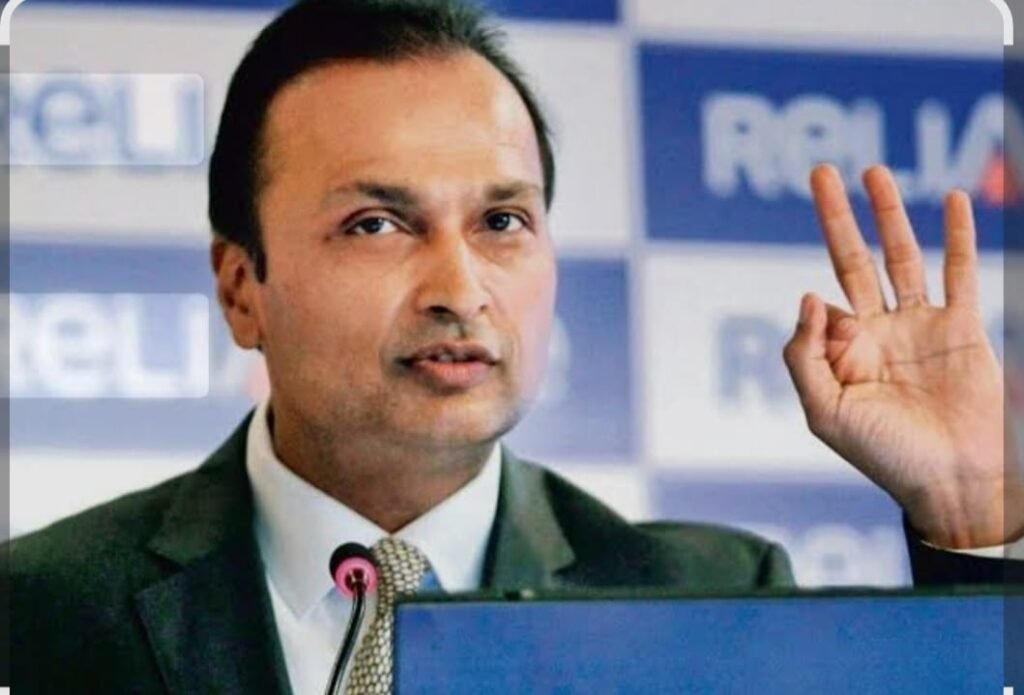
India’s federal police, the Central Bureau of Investigation (CBI), has registered a case against Anil Ambani-promoted Reliance Communications (RCom) in connection with an alleged bank fraud, officials said on Saturday. The agency conducted searches at multiple locations linked to the company and its promoters in Mumbai earlier in the day. Investigators said the alleged fraud caused a loss of about ₹2,000 crore ($240 million) to State Bank of India (SBI). On June 13, SBI classified RCom’s loan account as “fraudulent,” adding Anil Ambani’s name to its report under Reserve Bank of India (RBI) guidelines. The bank formally reported the case to the RBI on June 24 and initiated proceedings with the CBI, junior finance minister Pankaj Chaudhary informed parliament last month. Under RBI norms, once an account is declared fraudulent, banks are required to report it to the regulator within 21 days and also lodge a complaint with the police or CBI. Ambani, who has faced multiple investigations into his group companies, was questioned by the Enforcement Directorate (ED) in July in connection with a separate alleged loan fraud involving about ₹17,000 crore. That case includes ₹3,000 crore in loans from Yes Bank, which ED says were irregularly disbursed and possibly linked to kickbacks. ED officials last month raided over 35 offices connected to Ambani’s group across Mumbai, covering about 50 companies tied to him. On Saturday, CBI teams also reached Ambani’s ‘Sea Wind’ residence in Mumbai as part of their searches, sources said.


