
West Bengal resumes teacher recruitment exams after nine years amid tight security

For the first time in nearly a decade, the West Bengal School Service Commission (SSC) will hold teacher recruitment examinations, beginning Sunday with tests for classes nine and 10. The move comes after years of legal battles, allegations of corruption, and recruitment irregularities that tarnished the credibility of the SSC and left thousands of aspiring teachers in limbo. On Saturday, SSC chairman Siddhartha Majumdar outlined a series of stringent measures aimed at ensuring transparency and preventing leaks, a problem that has plagued examinations across India in recent years. “We have introduced multiple layers of security this time,” Majumdar told reporters. “Each question paper will carry unique security features. Admit cards will be scanned at the centres. If anyone attempts something illegal, they will be caught within 30 minutes.” According to SSC, more than 319,000 candidates are expected to appear for Sunday’s test across 636 examination centres. Another round, for classes 11 and 12, will be held on September 14. Strict rules have been imposed on candidates. They must report to the centres by 11:45am, with no entry allowed once the clock strikes noon. Mobile phones, smartwatches, and calculators are banned. Even water bottles and pens must be transparent, though the commission has arranged pens for examinees. Metal detectors will be used to frisk candidates at the gates. “All centres are sensitive. No one will be allowed to leave until the exam is over,” Majumdar said. The stakes are high. The last recruitment cycle in 2016 ended in controversy, with widespread allegations of jobs being sold and candidates being unfairly excluded. Several senior political leaders and education officials were arrested in connection with the scam, which became one of the state’s biggest political flashpoints. Despite that, the exams continue to draw massive interest. Majumdar revealed that nearly all of those who secured jobs in 2016 have reapplied this year. Compared with the previous round, the number of candidates has increased by at least 250,000, reflecting both the demand for teaching jobs and the backlog of aspirants waiting for the process to restart. For many candidates, Sunday’s exam is more than just a test — it is a chance at long-awaited stability in a state where government teaching positions remain highly sought after for their job security and benefits. The commission, under pressure to redeem its image, is projecting this exam cycle as a fresh start. Whether these measures will restore public faith in the SSC remains to be seen.
Union Textile Minister Calls for Innovation in Jute Sector at IJIRA Meeting in Kolkata
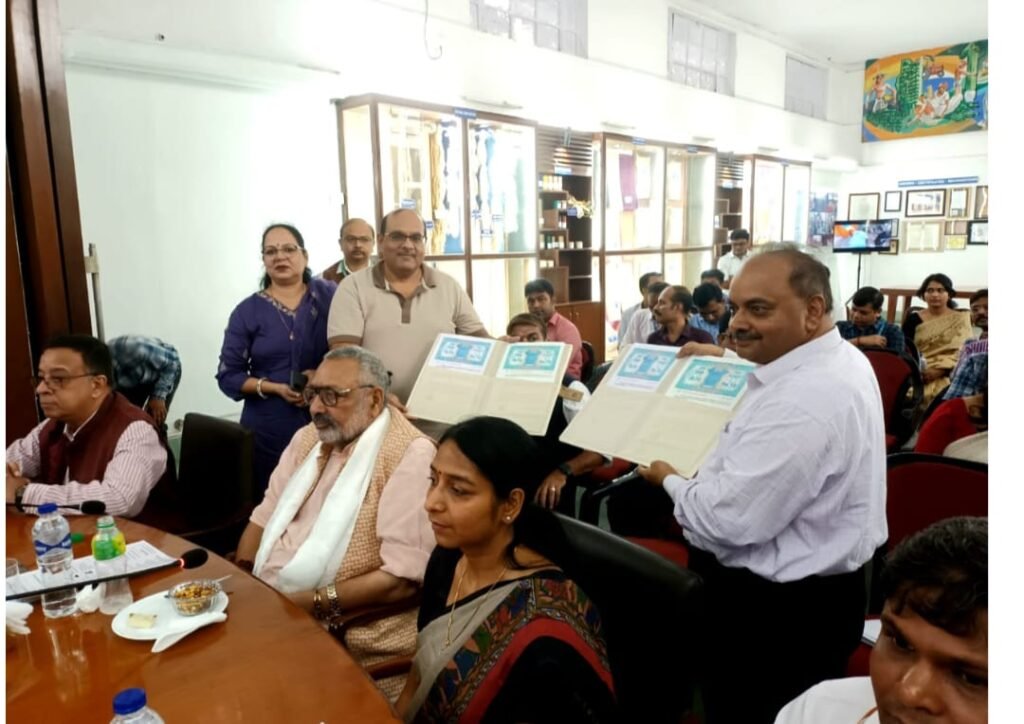
Union Minister of Textiles Giriraj Singh on Friday underscored the need for innovation in India’s jute sector to boost productivity, cut dependence on imported technology, and make the industry globally competitive. Speaking at the Indian Jute Industries’ Research Association (IJIRA) in Kolkata, Singh inspected prototypes of advanced machinery developed by the institute and reviewed progress on an artificial intelligence-based model for grading jute fibre. He said technological interventions would be critical in improving quality standards, building farmer confidence, and expanding markets. “India is steadily reducing its dependency on foreign technology, especially from China,” Singh said, noting that two improved machines developed locally had already been ordered. He emphasized that investor viability should remain central to any new technology, urging designers to explore cost-saving innovations such as replacing iron with carbon fibre in machinery. Jute, cultivated mainly in eastern India, is one of the country’s oldest and most significant natural fibres. Traditional retting, which requires large quantities of water, continues to pose challenges, while many spinning and processing machines remain outdated and expensive. These issues have slowed productivity and limited farmer participation. Scientists at IJIRA said newer technologies, such as minimal-water retting and AI-based fibre grading, are expected to ease these constraints, deliver better quality fibre, and reduce the need for imported machinery. The minister also pointed to the government’s “One Mill One Village” initiative, which seeks to generate rural livelihoods through decentralized jute processing. He stressed that significant improvements in natural fibres must be achieved by 2030 to meet India’s sustainability targets. Blending jute with other fabrics, Singh said, could open new opportunities in fashion and help push exports beyond the current ₹4,000 crore. Singh further highlighted research on allied fibres such as bamboo and sheesham. Bamboo, which takes four years to mature, can be harvested every one to two years thereafter and offers environmental benefits such as replenishing groundwater and supporting mixed cropping systems. Concluding his address, Singh praised the work of Kolkata-based institutions—including IJIRA, the Central Research Institute for Jute and Allied Fibres (CRIJAF), and the National Institute of Natural Fibre Engineering and Technology (NINFET)—for linking farmers, industry, and policymakers. “As the world’s largest producer of jute, India has the potential to lead in natural fibre technology,” Singh said. “With sustained innovation and diversification, the sector can achieve higher growth and greater global reach.”
NCB Kolkata Secures Conviction Under NDPS Act in Major Drug Trafficking Case

The Narcotics Control Bureau’s Kolkata Zonal Unit secured a conviction this week in a drug trafficking case, marking a significant success in its ongoing crackdown against narcotics trade. The court of the Additional Sessions Judge, 6th Court, Barasat, North 24 Parganas, on Thursday sentenced the accused, identified as David Blessings, to 10 years of rigorous imprisonment and a fine of ₹1,00,000 under Section 22 of the Narcotic Drugs and Psychotropic Substances (NDPS) Act. In default of payment, the convict will serve an additional five months in prison. Blessings was also sentenced to two years of rigorous imprisonment and fined ₹10,000 under Section 21 of the Act, with a default sentence of one month. According to NCB officials, the case dates back to a seizure at the Kolkata airport, where investigators intercepted Blessings, who had arrived on a flight from Mumbai. Acting on specific intelligence, officers searched her backpack and recovered 20 LSD blots and 12 grams of cocaine. The Kolkata Zonal Unit carried out the investigation, which culminated in Thursday’s judgment. Officials said the case was prosecuted under the guidance of the Special Public Prosecutor, and the court’s decision underscores the agency’s determination to pursue drug offenders through to conviction. “This conviction serves as a deterrent to traffickers and syndicates involved in the illicit drug trade,” an NCB spokesperson said. “It sends a strong message that the Bureau remains committed to its mission of curbing drug abuse and protecting society from the harmful effects of narcotics.” The agency added that the conviction reflects the broader goal of achieving a “Drug-Free India.” It commended the efforts of its investigation team and the prosecution for securing the verdict. The NCB also urged citizens to assist in the fight against drug trafficking by sharing information through MANAS, the National Narcotics Helpline, at toll-free number 1933. Officials assured that the identity of informants is kept confidential.
Punjab Kings Pledge Aid for Flood-Hit Villages in Punjab

Punjab Kings, the Indian Premier League franchise, has pledged more than 3.3 million rupees ($400,000) in relief to support victims of devastating floods that have inundated large parts of Punjab, officials said Saturday. At least 29 people have died and more than 265,000 residents have been displaced across 12 of the state’s 23 districts following days of torrential rain, authorities reported. Entire villages remain submerged, with washed-out roads and collapsed communication lines hampering rescue efforts. Livestock losses have further deepened the crisis. The franchise, co-owned by Bollywood actor Preity Zinta, announced it would contribute 3.38 million rupees to Hemkunt Foundation and Round Table India, both non-profits engaged in providing emergency supplies and relief boats to stranded communities. Zinta, who personally pledged additional funds, said she hoped the contribution would accelerate rescue and rehabilitation work. “Punjab is going through one of its worst humanitarian crises in years. As a team deeply rooted in this state, we feel a strong responsibility to stand with our people,” Zinta said in a social media post. Beyond the immediate donation, Punjab Kings have launched a crowd-funding drive on the online platform Ketto, setting a target of raising 20 million rupees ($2.4 million) by Sept. 15. The funds will be directed to Global Sikh Charity, which plans to distribute relief materials village by village. Organizers said the donations will be used to purchase rescue boats, provide clean drinking water, and supply essential items to flood-hit families. The franchise’s gesture follows earlier expressions of solidarity, including from India’s Test cricket captain Shubman Gill, who hails from Punjab and urged fans to support relief initiatives. The floods have been described by state officials as among the most severe weather disasters in decades, with crop losses stretching into hundreds of thousands of hectares. Authorities continue to appeal for federal aid as rescue teams battle rising waters and logistical challenges. On social media, fans praised Zinta’s initiative, calling it an example of sports teams stepping beyond the field to help communities in crisis.
PM Modi to Visit Flood-Hit Northern States as Death Toll Rises Above 500
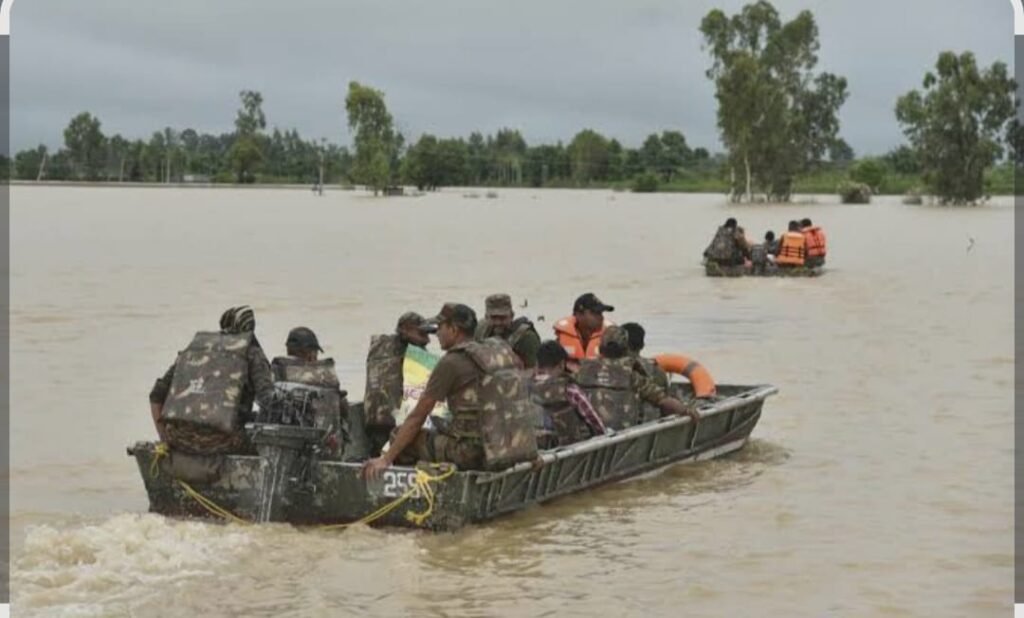
Prime Minister Narendra Modi will tour several northern states battered by floods and landslides in recent weeks, officials said Friday, as heavy monsoon rains continue to wreak havoc across the region. The visit comes as authorities struggle to respond to widespread destruction that has claimed more than 500 lives, washed away infrastructure, and left hundreds of thousands affected. Officials said Modi’s itinerary will focus on the worst-hit areas, where he will meet local authorities, review relief operations, and assure survivors of government support. Himachal Pradesh remains among the hardest-hit states. The State Disaster Management Authority reported that more than 360 people have died since the onset of the monsoon. At least 1,087 roads are blocked, 2,838 power lines disrupted, and 509 water supply schemes damaged. Economic losses are estimated at over 39.7 billion rupees ($478 million), affecting both public and private property. The Indian Air Force has been mobilized for rescue operations, particularly to aid stranded pilgrims during the annual Manimahesh Yatra. In neighboring Punjab, officials described the situation as one of the state’s worst weather disasters in decades. More than 1,900 villages across 23 districts remain inundated, with 43 people confirmed dead. Roughly 171,000 hectares of crops have been destroyed, dealing a severe blow to the state’s agriculture. The Punjab government has appealed for a special financial package from New Delhi. Union Agriculture Minister Shivraj Singh Chouhan toured affected districts earlier this week and is preparing a detailed assessment report for the prime minister. Floodwaters in Jammu and Kashmir have begun to recede, bringing some relief after several days of heavy rainfall. The India Meteorological Department forecast mainly dry conditions in the next 24 hours, with only isolated showers expected. Chief Minister Omar Abdullah chaired a review meeting Friday, ordering reinforcement of vulnerable embankments and evacuation of residents from submerged villages. Control rooms across the state are operating round-the-clock to monitor developments. Uttarakhand and other Himalayan states have also reported deadly flash floods and landslides. Authorities said relief teams from state and central agencies are working together to restore essential services, evacuate stranded residents, and distribute food and medical supplies. Officials stressed that Modi’s visit is intended to assess the disaster’s scale firsthand and ensure relief reaches the most affected. “The prime minister will prioritize areas with the highest damage and coordinate with state governments to accelerate rescue and rehabilitation,” one senior official said. With rivers still running above danger levels and landslides cutting off major transport routes, authorities warned that the humanitarian crisis remains far from over. This monsoon season, they said, is shaping up to be one of the deadliest in decades.


