
Top Maoist Leader With Rs 10 Lakh Bounty Killed in Jharkhand Encounter
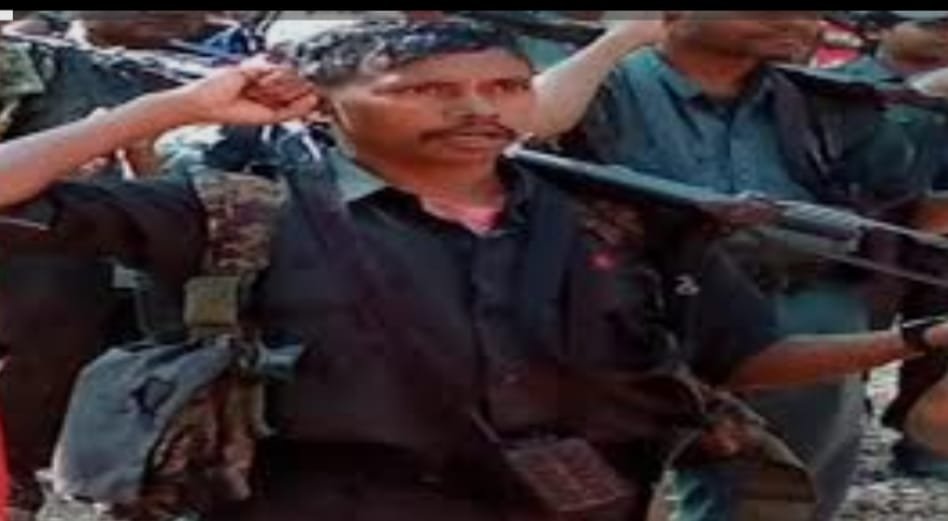
A Maoist leader carrying a bounty of Rs 10 lakh was killed in an encounter with security forces in Jharkhand’s West Singhbhum district early Sunday, police said. The slain leader, identified as Amit Hansda alias Aptan, was long wanted for his role in multiple Maoist operations in the state, police added. His death marks a significant blow to Maoist activities in the region. “Security forces had specific intelligence about the presence of Maoist cadres near Relapara in the Burjua Hills. When our teams moved in early morning hours, they came under heavy fire from the extremists. The forces retaliated, and during the gunfight, Aptan was neutralized,” said West Singhbhum Superintendent of Police Pars Rana. Police said Hansda’s body was later recovered from the site along with several weapons and explosives. His name figured on the list of most wanted Maoist commanders in Jharkhand, and authorities had earlier announced a reward of ₹10 lakh for information leading to his arrest. Security forces believe several other Maoist members managed to escape deeper into the forest during the encounter. A search operation is underway to track them down, police officials said. The encounter is the latest in a string of intensified anti-Maoist operations in Jharkhand. Earlier this month, police launched a separate operation to capture another senior Maoist leader, Shashikant Ganjhu, who had come to his native village Keda to participate in the traditional Karma festival. That attempt led to a fierce gunbattle between security forces and Maoist cadres. Three policemen were injured in the crossfire, and two later succumbed to their injuries. The incident highlighted the continuing threat posed by Maoists in the state’s forested districts. Hansda’s death, however, is being seen by security officials as a significant success in their campaign. “This encounter is a major setback to the Maoist network in West Singhbhum. Operations will continue until the remaining cadres are neutralized,” SP Rana said. Maoist groups, also known as Naxals, have waged a decades-long insurgency across several states in India’s mineral-rich but impoverished heartland. Jharkhand, along with Chhattisgarh and Odisha, has been among the worst-affected regions. Despite repeated crackdowns, Maoists continue to operate in remote forested belts, targeting security forces and infrastructure. Authorities said Sunday’s encounter shows that their presence, though weakened, remains a challenge.
Woman alleges gang rape at birthday party in Kolkata; police launch probe

Police in Kolkata are investigating allegations that a young woman was gang-raped by two acquaintances during a birthday party in the city, officials said Sunday. The woman, a resident of Haridevpur in south Kolkata, filed a complaint late Saturday at the Haridevpur police station, accusing two men she knew — identified as Chandan Mallick and another man named Dip — of sexually assaulting her. Both suspects remain at large, police said. According to the complaint, the woman had met Mallick several months ago. He allegedly introduced himself as an organizer of a prominent Durga Puja committee in south Kolkata and later introduced her to Dip. The two men reportedly promised to connect her with the committee’s activities and remained in contact with her. On Friday, her birthday, Mallick and Dip allegedly invited her to a flat in the Regent Park area to celebrate. After food and drinks, the woman said she tried to leave but the men blocked her and locked the door before assaulting her. The woman returned home afterward but initially did not tell anyone, police said. She later disclosed the incident to her family and filed a case the next day. Police have begun an investigation and launched a search for the suspects. “The accused are absconding, but efforts are underway to track them down,” a police officer said.
BNP warns rise in mob violence, right-wing forces threatens Bangladesh’s democracy

Bangladesh’s main opposition party warned that mob violence and the rise of right-wing Islamist forces have become pressing threats to the country’s stability in the aftermath of last year’s political upheaval. Bangladesh Nationalist Party (BNP) Secretary General Mirza Fakhrul Islam Alamgir told the Press that unchecked mob attacks could prove “extremely harmful” for the country. “Some groups and individuals are openly stating that those who say anything that goes against Shariah will not be tolerated, that women will be controlled,” Alamgir said. “This is against the kind of inclusive, liberal democratic society we want to build.” Alamgir said such forces had existed earlier but became more visible after Aug. 5, 2024, when a student-led movement toppled Prime Minister Sheikh Hasina. Since then, an interim government headed by Nobel laureate Muhammad Yunus has suspended activities of Hasina’s Awami League, pending trials of its top leaders on charges including crimes against humanity. Hasina, who is being tried in absentia at the Bangladesh International Crimes Tribunal, has been barred from making statements in the media, with the interim government warning of legal action against outlets that broadcast her remarks. The BNP, once led by former premier Khaleda Zia and now effectively run by her son Tarique Rahman from London, has emerged as the country’s largest party in Hasina’s absence. Though regarded as center-right, the BNP has recently voiced alarm that extremism could supplant liberal politics. Alamgir’s warning came a day after two violent incidents shook the country. In western Rajbari district, an Islamist mob desecrated the grave of Sufi spiritual leader Nura Pagla, exhumed his body and set it ablaze, sparking clashes with his followers that left one person dead and more than 100 injured. Police and administrative vehicles were also torched. Separately, another mob set fire to the central office of the Jatiya Party, a longtime ally of Hasina’s Awami League, in Dhaka. Rights groups say such attacks are becoming increasingly common. The Human Rights Support Society reported at least 25 deaths in 38 mob lynching incidents nationwide in August. A survey last month by the BRAC Institute of Governance and Development and advocacy group Voice for Reform found that 80% of Bangladeshis were concerned about rising mob violence, with many also worried about women’s safety. Alamgir said the trend underscored the urgent need to protect Bangladesh’s democratic values. “A conspiracy is underway to replace liberal politics with extremism,” he warned.


