
Bengal’s Anupurna Roy Wins Best Director at Venice Film Festival for Songs of Forgotten Trees

Indian filmmaker Anupurna Roy has etched her name in cinematic history, winning the Best Director award at the 82nd Venice International Film Festival for her film Songs of Forgotten Trees. The announcement came during the closing ceremony of the prestigious festival last week, where Roy, draped in a sari with kohl-lined eyes, represented India on the global stage. The victory is being celebrated across West Bengal and beyond as a proud moment for the country. For Roy, 35, the journey to Venice began far from the red carpets of Europe. She grew up in Narayanpur, a village in Purulia district’s Nituria block, where her father, Brahmananda Roy, worked in a coal mine. She completed her schooling at Ranipur Colliery High School before moving to Durgapur for further studies. After earning a degree in English literature from Kulti College, she pursued a master’s in mass communication in Delhi. Roy briefly worked in the IT sector but left the stability of a desk job to chase her dream of filmmaking in Mumbai. The decision worried her father, who often urged her to take the safer route of a government or corporate career. “I always wanted her to be financially secure,” he said. “But she had the courage to follow her passion. Today I can only feel proud.” That pride overflowed when Anupurna phoned her father past midnight from Venice to share the news of her win. “Baba, I got the award… can you hear me?” she told him, her voice trembling with joy. Her family and community are celebrating her achievement. “She was good in studies but also active in sports and cultural activities,” recalled her former schoolteacher Sujit Kumar Pal. “We always knew she was destined for something special.” Her aunt Baby Roy added, “For us, she’s still the little girl we saw growing up. To see her win such honors feels incredible.” Roy’s mother, Manisha, expressed both happiness and longing, as her daughter will not be home for Durga Puja this year. Instead, the filmmaker will head to London in October to participate in the London Film Festival, where her award-winning film will also be screened. For Roy, the recognition at Venice is more than a personal triumph. It signals a new chapter for Indian independent cinema on the global stage. As she returns to Mumbai this week, her family, teachers and admirers in Purulia will continue to wait eagerly for the day the award-winning director comes
Hasina moves to settle Awami League succession with family at the helm
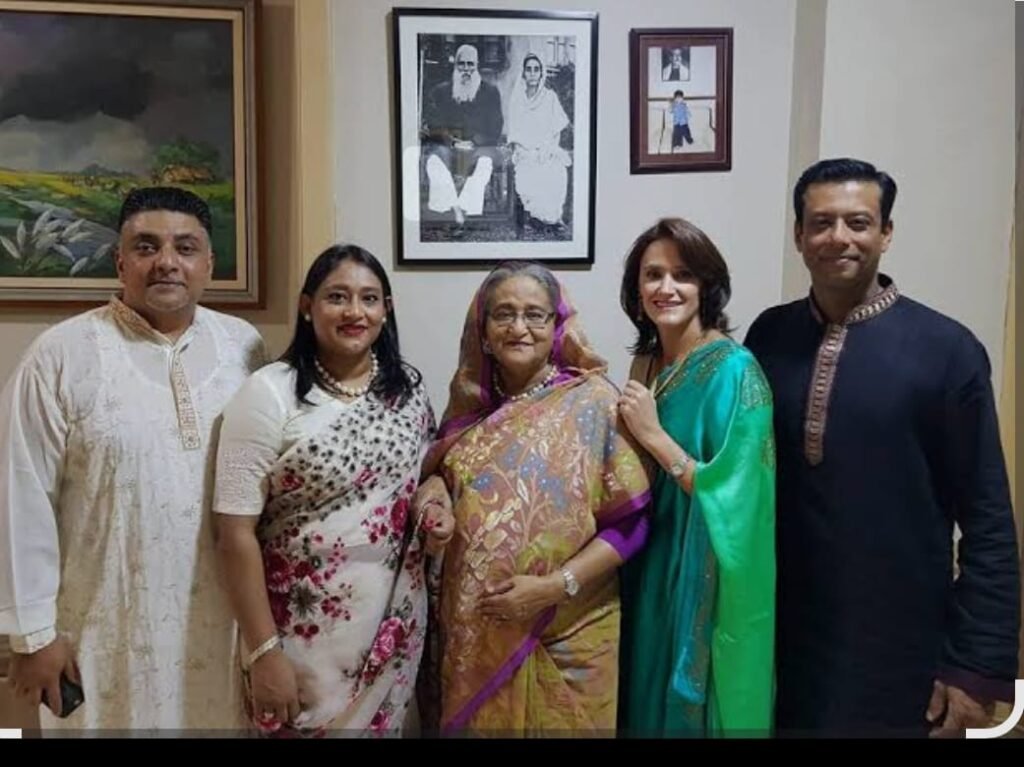
For more than four decades, Sheikh Hasina has been at the helm of Bangladesh’s ruling Awami League, steering the party since May 17, 1981. But after her ouster from power last year, questions of succession that she had long avoided are now forcing their way to the forefront. Hasina, 77 this month, has never publicly outlined how the party would function in her absence. Observers say that lack of a succession plan contributed to the Awami League’s rapid collapse after she was forced from office on Aug. 5, 2024. The interim government that took over subsequently banned the party’s activities, leaving grassroots workers without clear leadership. Since then, Hasina has been living in India as what officials describe as a “guest” of New Delhi, with tight restrictions on her movements and contacts with her followers. From there, under both political pressure and personal considerations of age, she is now preparing to settle the issue of who leads the Awami League after her. Party insiders and political analysts say Hasina has finalized a plan to bring her son, Sajeeb Wazed Joy, and daughter, Saima Wazed Putul, into the party’s top ranks. In addition, her sister Sheikh Rehana’s son, Radwan Mujib Siddiq Bobby, is also expected to play a role. The model, observers note, resembles India’s Congress Party, where Sonia Gandhi positioned her children, Rahul and Priyanka, as future leaders. Joy, a U.S. citizen and permanent resident, has emerged as the Awami League’s chief spokesman abroad, giving frequent media interviews and representing the family’s political line. Putul, until recently the World Health Organization’s regional director in New Delhi, has gone on indefinite leave from the post and is now stepping fully into politics. Hasina’s reliance on her children underscores how dynastic politics continues to dominate in South Asia, where leadership transitions often bypass internal party democracy. Critics argue such moves risk alienating the Awami League’s grassroots and further weaken its organizational base. Still, for Hasina, who has led the party through exile, opposition and long years in office, the urgency to secure her family’s hold on leadership appears stronger than ever.
ED raids 22 locations in Bengal in illegal sand mining probe

The Enforcement Directorate (ED) on Monday carried out searches at 22 locations across West Bengal in connection with an alleged illegal sand mining and money laundering racket, officials said. The early morning operation stretched across multiple districts, including Jhargram, Kolkata, North 24 Parganas and Nadia. Teams of ED officers, accompanied by central security forces, descended on residential properties, offices and vehicles linked to sand mine owners, businessmen and alleged intermediaries. One of the key targets of the search was the sprawling residence of Sheikh Jahirul at Nayabasan in Gopiballavpur-I block of Jhargram district, located close to the Subarnarekha river. Jahirul, a former village police volunteer, is accused of abandoning his job to enter the sand trade, amassing wealth and multiple sand quarries in the process. Officials said a search warrant was served at Jahirul’s residence, and investigators examined his office and vehicles for financial records. A large contingent of security personnel cordoned off the area during the raid. “All relevant documents are being scrutinized, including property papers and financial transactions,” an official said. Searches were also conducted at the premises of several other sand quarry owners in Beliyabera and Jamboni blocks of Jhargram. Parallel raids were underway in Kolkata’s Behala, Regent Park and Salt Lake areas, as well as in Kalyani in Nadia district, officials said. Investigators suspect that proceeds from illegal sand mining, running into crores of rupees, were diverted into insurance products and layered through various businesses to mask the illicit origins. “We have traced multiple transactions that point to laundering of sand mining profits through insurance companies and local businessmen,” a source said, requesting anonymity as the probe is ongoing. The sand mining trade in West Bengal, particularly in Jhargram and adjoining districts, has faced allegations of large-scale illegal operations, often involving powerful local operators. Environmental activists have long warned of the ecological damage caused by unregulated mining from riverbeds, while opposition parties have accused the state government of turning a blind eye to the trade. Monday’s operation marks one of the largest actions by the ED in the state this year, officials said. While no arrests have been confirmed so far, the agency is expected to question multiple individuals once searches are completed and documents analyzed. The West Bengal government has not immediately commented on the raids.


