
Economist and Former Left Leader Prasenjit Bose Joins Congress in Kolkata

Economist and social activist Prasenjit Bose, once a prominent student leader of the Left at Jawaharlal Nehru University (JNU), formally joined the Congress party on Monday in Kolkata, saying he was committing himself to the struggle to defend India’s Constitution and voting rights. Bose, 51, received the Congress membership form from West Bengal Pradesh Congress Committee president Shubhankar Sarkar at a ceremony at Ram Mohan Mancha in North Kolkata. He was welcomed into the party by youth leader Kanhaiya Kumar, Rajya Sabha Congress member Syed Nasir Hussain, and AICC general secretary and state observer Ghulam Ahmad Mir. “The biggest challenge before the people is to resist the Special Intensive Revision so that the right to vote is protected,” Bose said. He added that he was joining Congress because he believes the party under Rahul Gandhi is leading the opposition fight on the ground. “What the Left often says in words, Rahul Gandhi is doing on the streets,” Bose said. Bose rose to prominence in the 1990s as a face of the Students’ Federation of India (SFI) in JNU. He later became a key voice for the Communist Party of India (Marxist), but resigned in 2012 over the CPI(M)’s decision to support Pranab Mukherjee’s presidential bid. In recent years, he has been active as an economist, researcher, and commentator on social issues. His decision to enter the Congress fold highlights the party’s attempt to draw on intellectuals and former Left leaders in West Bengal as it seeks to position itself as an alternative to the ruling Trinamool Congress and the Bharatiya Janata Party. “Congress can play a vital role in building an alternative to the polarization between TMC and BJP,” Bose said. Hussain, who once faced Bose as a rival in JNU student elections, called his entry into Congress “a strengthening of democratic movements.” On Facebook, Bose said his immediate objective was to reinforce democratic struggles and rebuild a progressive alternative in both the state and the nation. Several other former Left leaders, including Kanhaiya Kumar, D.P. Tripathi, and Shakeel Ahmed Khan, have previously joined Congress. However, Bose’s induction has sparked some unease within the party’s student wing, with sections accusing the leadership of giving undue prominence to outsiders over long-time workers. Despite the internal dissent, state Congress leaders said Bose’s stature as a public intellectual and economist would boost the party’s credibility in West Bengal, where it is striving to regain lost ground.
Modi opens Armed Forces commanders’ conference in Kolkata, stresses self-reliance

Prime Minister Narendra Modi on Monday inaugurated the 16th Combined Commanders’ Conference at Fort William in Kolkata, urging India’s military leadership to focus on jointness, self-reliance and innovation to strengthen operational readiness. The biennial conference, attended by the heads of the Army, Navy and Air Force along with senior officials from the defence ministry, serves as the apex forum for reviewing security challenges and shaping the country’s long-term military strategy. This year’s theme is “Year of Reforms – Transformation for the Future.” Modi was briefed on operational preparedness in the aftermath of Operation Sindoor, a recent large-scale exercise, as well as on the future of warfare shaped by emerging technologies. He also reviewed reforms carried out over the past two years and discussed the roadmap for further restructuring of the armed forces. “The prime minister complimented the Armed Forces for their role in anti-piracy operations, humanitarian assistance and disaster relief, and the safe return of Indian citizens from conflict zones,” the defence ministry said in a statement. Modi called on the defence establishment to accelerate steps to improve coordination between the services and reduce dependence on foreign equipment. The conference will continue for two days and is expected to assess structural, administrative and operational reforms, as well as India’s preparedness in the face of rising global uncertainties. Analysts said Modi’s presence at Fort William, the Eastern Command headquarters, carried symbolic weight. A sitting prime minister has rarely attended the event at the historic Kolkata garrison, with the last such visit believed to have taken place in the 1970s. The visit also came amid regional tensions. Nepal has recently witnessed violent protests while political unrest continues in Bangladesh, both of which share borders with eastern India. “The timing of the conference is geopolitically significant,” said a defence analyst, pointing to the security implications for states bordering the two neighbours. Modi’s trip marked his fourth visit to West Bengal this year, ahead of the Durga Puja festival. While he did not address any political rallies in Kolkata, opposition parties accused him of mixing official duties with electioneering. Before departing for Bihar in the afternoon, Modi met briefly at the airport with Sukanta Majumdar, former state president of the Bharatiya Janata Party.
Congress Welcomes Supreme Court Stay on Key Waqf Act Provisions
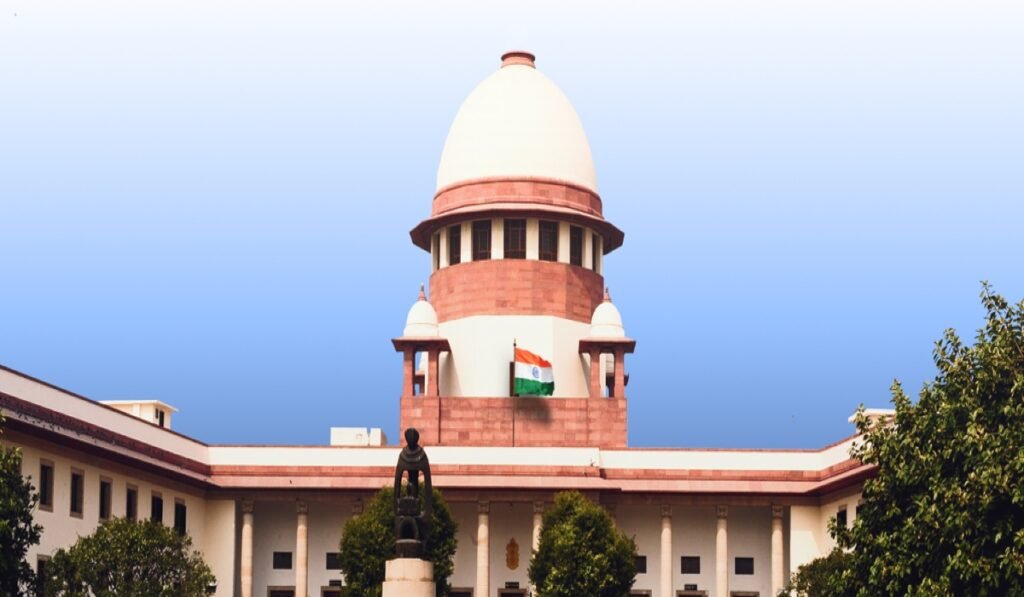
The Congress on Monday hailed the Supreme Court’s interim order staying several contentious provisions of the Waqf (Amendment) Act, 2025, calling it a victory for constitutional values and a blow to what it described as the “mischievous intentions” behind the legislation. Congress general secretary Jairam Ramesh said the ruling validated the objections raised by opposition parties in Parliament as well as dissent notes submitted in the Joint Parliamentary Committee. “The order is an important one because it goes a long way towards undoing the mischievous intentions underlying the original statute,” Ramesh said in a post on X. The Supreme Court, while declining to halt the entire law, stayed the provision that restricted dedication of property as Waqf only to those who had been practising Muslims for at least five years. A bench led by Chief Justice B.R. Gavai said such a requirement, without rules to examine adherence, risked arbitrary application. The court also suspended powers granted to collectors to adjudicate the status of Waqf properties, which critics argued would have left properties vulnerable to dubious challenges. Additionally, the bench ruled that the Central Waqf Council should have no more than four non-Muslim members out of 20, and State Waqf Boards no more than three of 11. “We welcome this order as a win for the constitutional values of justice, equality, and fraternity,” Ramesh said, alleging that the Act was designed to inflame voter sentiment and create an administrative structure to stoke religious disputes. The apex court emphasized that its order was interim and prima facie, leaving both the government and petitioners free to argue the law’s constitutional validity at a final hearing. “Presumption is always in favor of constitutionality of a statute and intervention can be done only in the rarest of rare cases,” the bench said. The Waqf (Amendment) Act, 2025, was passed by Parliament earlier this year and notified on April 8, following presidential assent on April 5. The law quickly became a flashpoint between the ruling BJP and opposition parties, with critics accusing the government of attempting to politicize religious endowments.
Top Maoist Leader Sudhakar Killed in Bijapur Encounter
Security forces in Chhattisgarh achieved a major breakthrough in their ongoing anti-Naxal operations on Monday with the killing of a senior Maoist leader, Narasimha Chalam, better known by his aliases Gautam and Sudhakar. A Central Committee Member of the outlawed CPI (Maoist), Sudhakar was among the most wanted extremists in the country, carrying a bounty of ₹1 crore on his head. DIG of Police, Kamalochan Kashyap, confirmed the development and said the operation was conducted in the dense forests of the Maad region in Bijapur district. Acting on intelligence inputs regarding Maoist movement, a joint team of the District Reserve Guard (DRG) and the Special Task Force (STF) launched a search operation early in the morning. The forces cordoned off the area and subsequently engaged in a fierce gunfight with the rebels. Sudhakar was neutralised during the encounter, while the search for other cadres is still underway. An automatic rifle was recovered from the site. A native of Chintapaludi village in Andhra Pradesh, Sudhakar had been active in Left-wing extremism for over three decades. He rose through the Maoist ranks to become a member of the organisation’s Central Committee, playing a key role in expanding the group’s influence across states. Security officials said he was wanted in multiple cases of violence and insurgency in Maharashtra, Chhattisgarh, and Telangana. His death marks a significant setback for the Maoist movement in Bastar, a region that has long been the epicentre of Naxal activities. Officials noted that Sudhakar’s presence in the region had been a source of inspiration and coordination for cadres in several states. According to police data, more than 400 Maoists have been eliminated across the Bastar range since 2024, reflecting the intensification of counter-insurgency operations. While security forces hailed the success, officials cautioned that combing operations would continue as more Maoist groups remain active in remote pockets of the forested terrain. The killing of Sudhakar, one of the last remaining top-rung Maoist leaders operating in central India, is being seen as a turning point in the fight against Left-wing extremism in Chhattisgarh.


