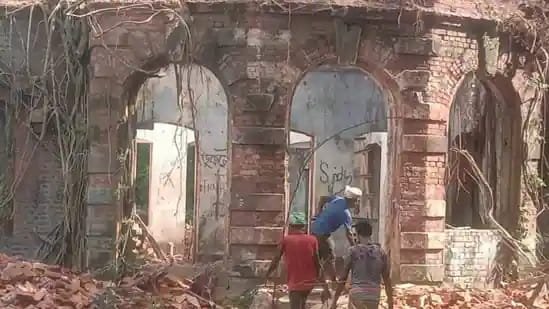
DHAKA/KOLKATA, July 16: India has urged Bangladesh’s interim government to reconsider the demolition of the ancestral home of legendary filmmaker Satyajit Ray, after reports emerged that the property in Mymensingh district is being razed by local authorities.
The residence, located on Harikishore Ray Chowdhury Road, once belonged to Ray’s grandfather, renowned writer and publisher Upendrakishore Ray Chowdhury. The site had been used by the Bangladesh Shishu Academy but has reportedly been lying in disrepair for over a decade. Bangladesh’s interim government, led by Nobel laureate Muhammad Yunus following the recent ouster of Prime Minister Sheikh Hasina’s administration, has initiated demolition of the house citing safety concerns. Local child affairs officer Mohammad Mehedi Zaman told The Daily Star that the structure is at risk of collapse and will be replaced by a semi-concrete building.
The development has sparked a political and cultural backlash across the border in India. West Bengal Chief Minister Mamata Banerjee raised strong objections on Tuesday, urging the Bangladesh authorities to preserve the historic site and calling on New Delhi to intervene. Following her appeal, India’s Ministry of External Affairs issued a statement highlighting the property’s historical and cultural significance. “The ancestral home of Satyajit Ray is not just an architectural structure but a symbol of shared heritage and literary excellence. We urge the Bangladesh government to preserve and restore the site instead of demolishing it,” the statement said. India has offered technical and financial assistance for the restoration and proposed converting the property into a literary museum, which officials say could further deepen the cultural ties between the two nations. The incident follows recent attacks on homes of other prominent Bengali cultural icons in Bangladesh. Just weeks ago, unidentified vandals damaged the ancestral estate of Rabindranath Tagore in Kushtia, raising concerns over the protection of heritage sites amid political instability. According to the Bangladesh Department of Archaeology, Ray’s ancestral home is over 100 years old and was taken over by the government following the 1947 Partition. Ray, who passed away in 1992, remains one of the most influential figures in global cinema. His works, including the iconic Apu Trilogy, have earned him international acclaim and India’s highest civilian honours.
Cultural commentators in both countries are urging Dhaka to preserve the home as a tribute to Ray’s legacy and a testament to the shared cultural fabric of Bengal that transcends borders.