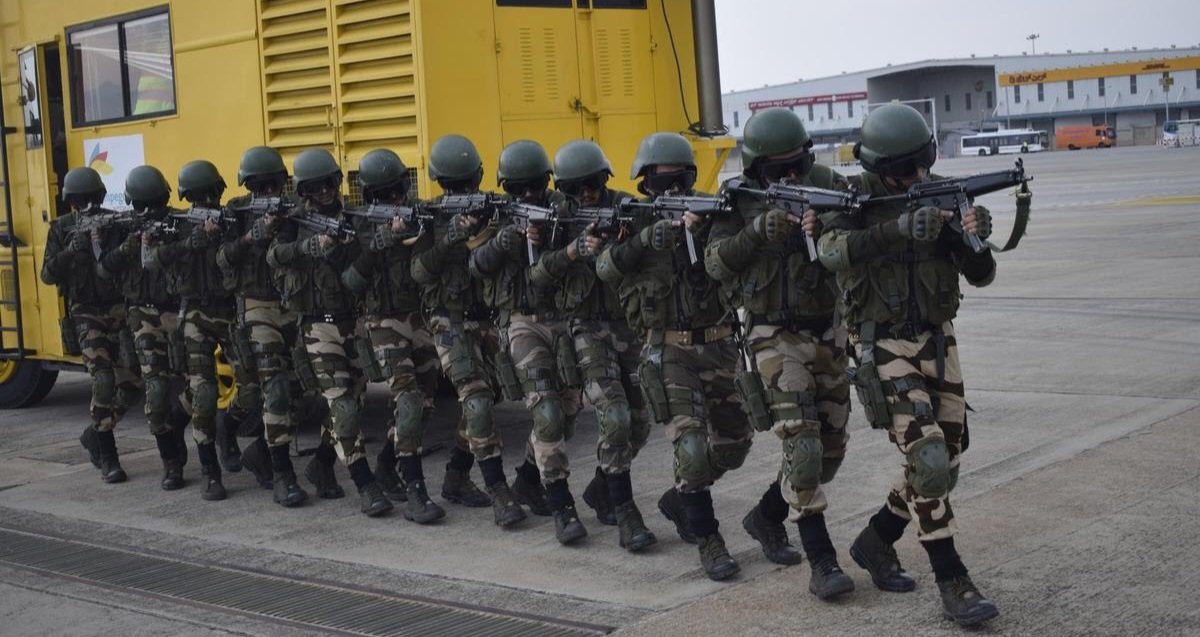
India’s Central Industrial Security Force (CISF) has begun intensive joint training with the Indian Army in a bid to enhance its preparedness against emerging hybrid and unconventional security threats, officials said on Monday. The move is part of a broader strategy to make the paramilitary force “battle ready” for defending critical infrastructure such as airports, nuclear plants, government buildings, and Parliament in the event of high-impact threats such as coordinated terrorist attacks, drone intrusions, or sabotage operations. For the first time, full batches of CISF personnel are undergoing training at Indian Army installations in the Kashmir Valley. Previously, access to such training was limited to a small number of personnel. The current modules include night operations, jungle warfare, close-quarter combat, and endurance-building exercises.
“These joint drills will significantly enhance the operational effectiveness of our Quick Reaction Teams deployed at high-value installations,” a senior CISF officer told Reuters on condition of anonymity. “The emphasis is on speed, precision, and composure under high-pressure scenarios.” The trainees are drawn from CISF’s elite Quick Reaction Teams (QRTs), the first responders to any emergency across the force’s 369 units. Only personnel under the age of 35 who have passed the Battle Physical Efficiency Test (BPET), benchmarked to National Security Guard (NSG) standards, are being selected. All participants have already completed six months of in-house tactical training prior to joining the Army module.
The Indian Army’s involvement marks a deeper civil-military collaboration aimed at bolstering internal security preparedness at a time of heightened concerns over non-traditional threats.
CISF officials said the force plans to gradually extend the Army-led advanced training programme to more units, focusing first on those stationed at high-risk locations. “Our goal is to raise the entire force’s physical resilience, tactical skills, and psychological preparedness to deal with evolving threats,” the official added. CISF, which operates under the Ministry of Home Affairs, plays a critical role in securing India’s key government and industrial assets, including over 60 airports, space centres, and strategic installations.