Union Minister of Textiles Giriraj Singh on Friday underscored the need for innovation in India’s jute sector to boost productivity, cut dependence on imported technology, and make the industry globally competitive.
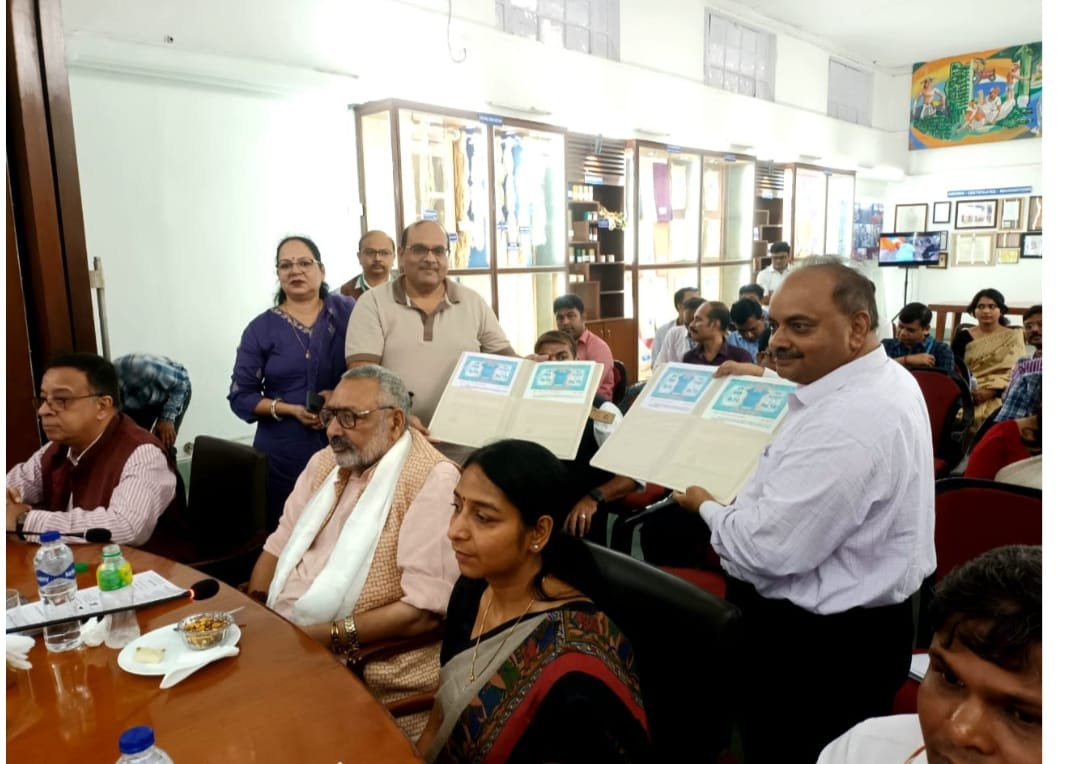
Speaking at the Indian Jute Industries’ Research Association (IJIRA) in Kolkata, Singh inspected prototypes of advanced machinery developed by the institute and reviewed progress on an artificial intelligence-based model for grading jute fibre. He said technological interventions would be critical in improving quality standards, building farmer confidence, and expanding markets.
“India is steadily reducing its dependency on foreign technology, especially from China,” Singh said, noting that two improved machines developed locally had already been ordered. He emphasized that investor viability should remain central to any new technology, urging designers to explore cost-saving innovations such as replacing iron with carbon fibre in machinery.
Jute, cultivated mainly in eastern India, is one of the country’s oldest and most significant natural fibres. Traditional retting, which requires large quantities of water, continues to pose challenges, while many spinning and processing machines remain outdated and expensive. These issues have slowed productivity and limited farmer participation. Scientists at IJIRA said newer technologies, such as minimal-water retting and AI-based fibre grading, are expected to ease these constraints, deliver better quality fibre, and reduce the need for imported machinery.
The minister also pointed to the government’s “One Mill One Village” initiative, which seeks to generate rural livelihoods through decentralized jute processing. He stressed that significant improvements in natural fibres must be achieved by 2030 to meet India’s sustainability targets. Blending jute with other fabrics, Singh said, could open new opportunities in fashion and help push exports beyond the current ₹4,000 crore.
Singh further highlighted research on allied fibres such as bamboo and sheesham. Bamboo, which takes four years to mature, can be harvested every one to two years thereafter and offers environmental benefits such as replenishing groundwater and supporting mixed cropping systems.
Concluding his address, Singh praised the work of Kolkata-based institutions—including IJIRA, the Central Research Institute for Jute and Allied Fibres (CRIJAF), and the National Institute of Natural Fibre Engineering and Technology (NINFET)—for linking farmers, industry, and policymakers.
“As the world’s largest producer of jute, India has the potential to lead in natural fibre technology,” Singh said. “With sustained innovation and diversification, the sector can achieve higher growth and greater global reach.”