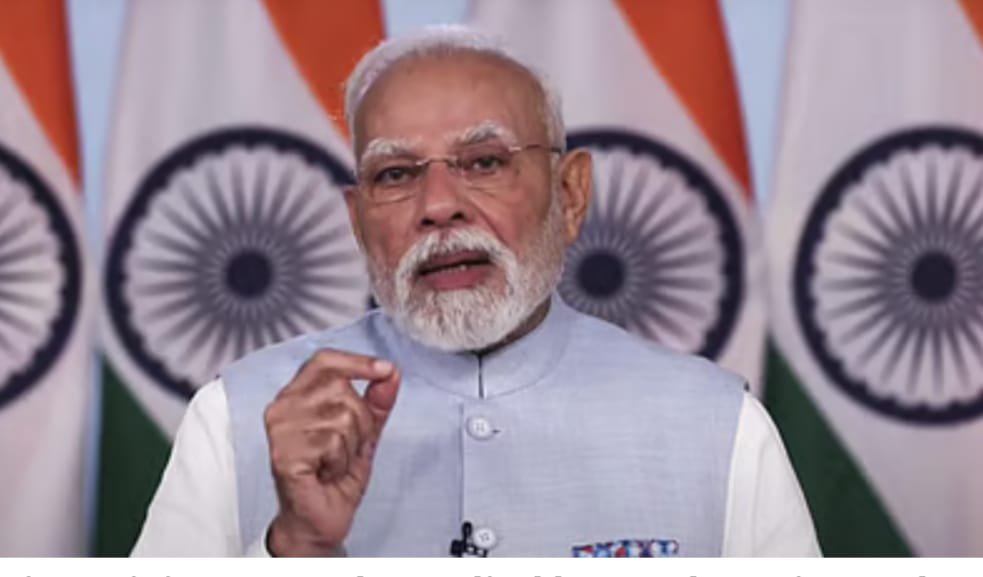
Prime Minister Narendra Modi on Sunday announced sweeping cuts in Goods and Services Tax (GST) rates, calling the move a “next-generation reform” aimed at easing the financial burden on India’s middle class, boosting youth opportunities and accelerating economic growth.
In a nationally televised address at 5 p.m., Modi described the reform as a “GST Bachat Utsav,” or “GST Saving Festival,” that will take effect Monday, Sept. 22. The revised rates apply to a wide range of goods, from automobiles to daily consumer products, in what the government says is the most significant indirect tax change since GST was launched in 2017.
“This reform is not only about reducing prices but about creating new opportunities,” Modi said. “The savings of our middle class will increase, our youth will benefit, and the entire economy will gain momentum.”
He emphasized that cheaper essentials and consumer goods would encourage higher household spending, giving a boost to industries from agriculture to services. “When the purchasing power of people rises, it benefits every sector,” he said, linking the reform to his broader goal of a self-reliant India.
Finance Minister Nirmala Sitharaman had unveiled the rate cuts earlier this month, saying they were designed to spur consumption-driven growth amid global economic uncertainty. Analysts view the tax relief as a timely measure to stimulate demand before the festive season.
The announcement also came a day after U.S. President Donald Trump revealed a sharp increase in H-1B visa fees to $100,000, a move expected to hit Indian IT professionals hard. Opposition parties had pressed Modi to respond to Trump’s comments on India-Pakistan and the concerns of visa holders, but the prime minister kept his focus on domestic economic policy.
The Congress party accused Modi of sidestepping pressing diplomatic issues. “The government is silent on matters affecting millions of Indians abroad,” a party spokesperson said.
Still, Modi underscored that the GST reform was meant to benefit “every household” and provide lasting economic relief. “This is more than a tax cut,” he said. “It is a celebration of savings and growth for every Indian.”