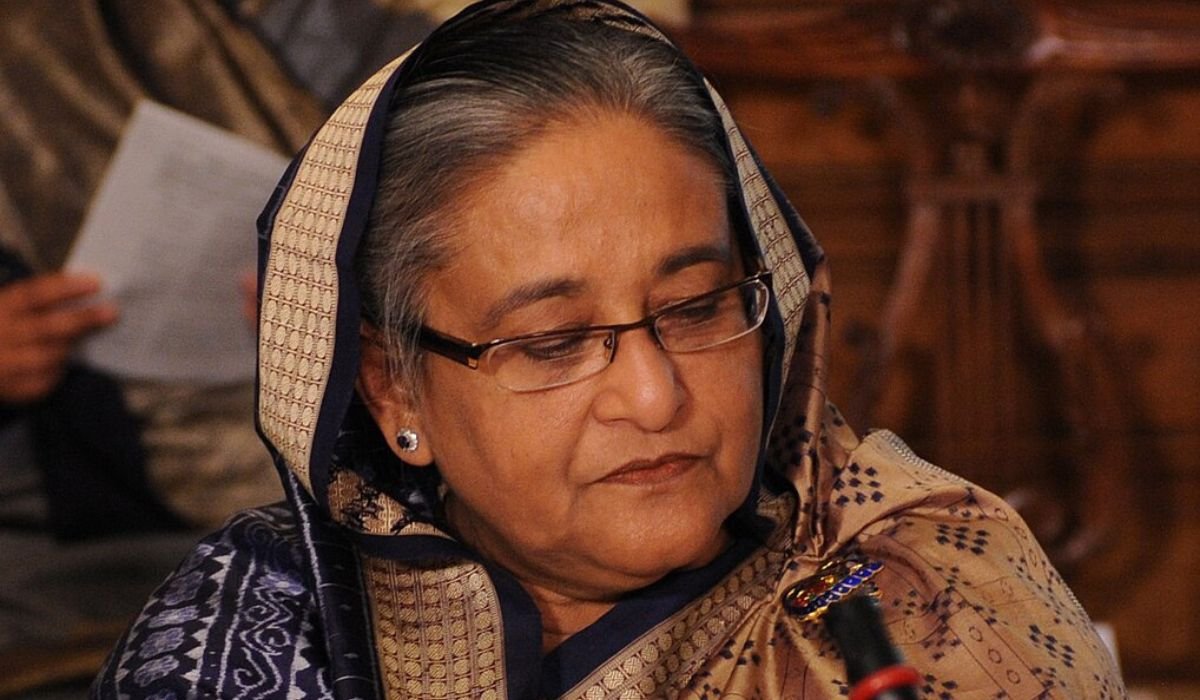
Bangladesh’s International Crimes Tribunal has sentenced former Prime Minister Sheikh Hasina to death after finding her guilty of crimes against humanity for a violent crackdown on student-led protests last year that left more than 1,400 people dead.
The 78-year-old, now a fugitive and residing in India, was tried in absentia. Prosecutors alleged that Hasina was the “mastermind and principal architect” of the deadly suppression of mass demonstrations between July 15 and August 5, 2024 — one of the worst periods of political violence since Bangladesh’s 1971 independence war.
Courtroom Reaction
Live footage from Dhaka showed cheers and applause erupting in the courtroom as the tribunal delivered the death sentence. Security was tight across the capital, with police checking commuters’ belongings and guarding access to the court.
Details of the Charges
According to the verdict, the tribunal found Hasina guilty of:
Ordering lethal force, including the use of drones and helicopters, against protesters.
Incitement and failure to take preventive or punitive measures during the killings and mass injuries.
Orchestrating actions that were “widespread and systematic” and “directed against the civilian population”.
The UN earlier estimated that up to 1,400 people were killed, most by gunfire from security forces, during the 2024 uprising.
The interim government led by Nobel laureate Muhammad Yunus, which took power after Hasina’s 15-year rule collapsed in August 2024, denied accusations that the trial was politically motivated. Officials said the proceedings were transparent and monitored by observers.
The Foreign Ministry earlier summoned India’s envoy to Dhaka, demanding that New Delhi stop providing Hasina a platform to communicate with the media.Hasina’s son, Sajeeb Wazed, said he had expected the death sentence and claimed his mother was safe under Indian protection. He warned that her supporters would not accept the ruling quietly.The Awami League, now banned from contesting elections, is expected to mobilise large-scale protests, adding further uncertainty as Bangladesh heads toward national polls next year. In an extraordinary twist, the tribunal that sentenced Hasina today is the same court she established in 2010 to prosecute collaborators of the 1971 war. Over the years, the tribunal convicted and executed several opposition leaders — a process critics often called politically motivated.