
CBI arrests six policemen in J&K over custodial torture of colleague

India’s federal investigation agency on Wednesday arrested six police personnel, including a deputy superintendent of police, in connection with the alleged custodial torture of a constable in Jammu and Kashmir, officials said. The arrests, which also include an inspector, an assistant sub-inspector and a special police officer (SPO), came weeks after the Supreme Court ordered the Central Bureau of Investigation (CBI) to file a case into what it described as “brutal and inhuman” torture. The court said the constable had been illegally detained and subjected to electric shocks and assault on his genitalia, calling the injuries “life-debilitating” and the abuse “egregious.” On July 21, the top court directed the CBI to register a case and ordered the union territory administration to pay the victim 5 million rupees ($60,000) in compensation. The accused officers have been directed to hand over their weapons and government-issued articles to district police lines, the officials said. The SPO has also been dismissed from service. Further investigation is under way, they added.
Rift within CPM over Congress alliance resurfaces in Bengal state meet

The Communist Party of India (Marxist) [CPI(M)] in West Bengal witnessed sharp internal divisions on Wednesday over its growing proximity to the Congress, with several district leaders questioning the political viability of such an alliance. During a two-day state committee meeting in Kolkata, leaders from North Bengal and parts of South Bengal—including Burdwan East, Cooch Behar and Alipurduar—told the party leadership that a tie-up with the Congress has historically benefited only the latter. According to them, Congress voters rarely transfer their votes to Left candidates, while Left votes get absorbed by the Congress. The criticism came in the presence of CPI(M) general secretary M.A. Baby and was directly addressed to state secretary Mohammad Salim. The issue has also caused friction within the Left Front: allies Forward Bloc and the RSP have already demanded seats they contested in 1977, making clear their reluctance to accommodate the Congress. While one section of the CPI(M) state leadership still appears keen on continuing discussions with the Congress and even the Indian Secular Front (ISF), pressure is mounting for a swift decision on whether such an alliance should go forward ahead of the 2026 assembly elections. Salim reportedly warned that if an understanding is reached in certain constituencies, the party must not compromise on organizational preparedness. Beyond the alliance debate, the state committee also faced criticism from district leaders over the lack of traction in local-level agitations. Reports submitted from various districts suggested that while the BJP has successfully mobilized mass protests on issues such as infiltration, CPI(M)’s movements have remained Kolkata-centric. Leaders demanded more aggressive, statewide campaigns, particularly around the controversial SIR (Special Investigation Report) issue, insisting that street mobilization must extend beyond the capital to counter BJP’s expanding influence in the districts.
India’s opposition erupts as Amit Shah tables bill to disqualify ministers after 30 days in custody
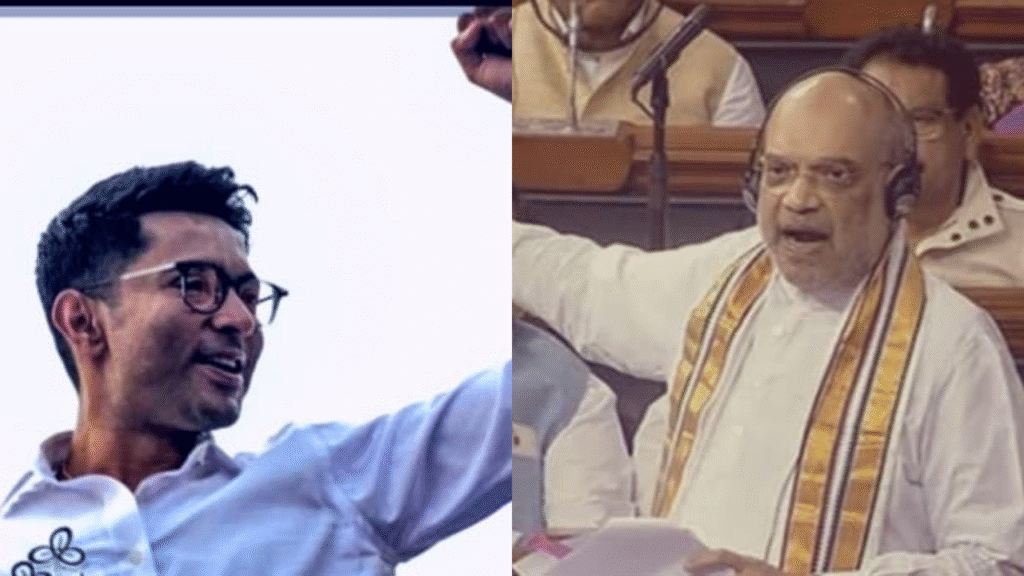
A stormy session rocked India’s Lok Sabha on Wednesday after Home Minister Amit Shah introduced a controversial constitutional amendment bill that would strip the Prime Minister, Chief Ministers, and other ministers of their positions if they remain in custody for 30 consecutive days. The 130th Constitution Amendment Bill, introduced alongside two other pieces of legislation — the Union Territories Government (Amendment) Bill and the Jammu & Kashmir Reorganisation (Amendment) Bill — was met with uproar from the opposition benches. Lawmakers from Congress, Trinamool Congress (TMC), Communist Party of India (Marxist), and All India Majlis-e-Ittehad-ul-Muslimeen (AIMIM) accused the ruling Bharatiya Janata Party (BJP) of weaponising the law to silence dissent. As soon as Shah rose to present the bill, opposition MPs stormed the well of the House, shouting slogans and tearing up copies of the draft legislation. The chaos forced Speaker Om Birla to adjourn proceedings until the afternoon, after which the bill was referred to a joint parliamentary committee. Opposition cries foul Congress MP Priyanka Gandhi strongly criticised the move, calling it “unconstitutional and undemocratic.” “Any Chief Minister can now be kept in custody for 30 days without being convicted, and automatically lose office. This is nothing but a tool to crush democracy under the garb of fighting corruption,” she said. Her remarks come against the backdrop of several high-profile arrests of opposition leaders in recent years, including former Delhi Chief Minister Arvind Kejriwal and Jharkhand’s Hemant Soren, both of whom were detained on graft-related charges. TMC’s Abhishek Banerjee, a vocal critic of the BJP government, accused the Centre of evading accountability while seeking more power. In a statement on social media, he wrote: “The government has failed to protect India’s sovereignty and uplift farmers and workers, but it wants to use agencies like the Enforcement Directorate (ED) to dismantle state governments. This bill reflects an authoritarian mindset.” Banerjee also attacked the Modi government for “hollow bravado” on national security, pointing to its failure to reclaim Pakistan-occupied Kashmir. The Communist Party of India (Marxist) echoed those concerns. General Secretary M.A. Baby described the bill as “neo-fascist,” while Rajya Sabha MP John Brittas warned it would destabilise opposition-ruled states by undermining India’s federal structure. Government defends the bill Rejecting charges of authoritarianism, Shah argued that the draft law would undergo scrutiny by lawmakers across the political spectrum. “The bill will go to a joint parliamentary committee where both ruling and opposition members will be represented,” he said. Despite his assurance, opposition MPs continued their protests inside Parliament, prompting another adjournment. A political flashpoint The proposal comes at a time of heightened political confrontation in India, with the 2026 state elections looming. Critics argue the bill could be used selectively against opposition leaders, enabling the BJP to weaken rival parties by engineering ministerial disqualifications. “This is a direct assault on the Constitution and India’s federal framework,” said AIMIM chief Asaduddin Owaisi, who joined Congress and Left MPs in opposing the measure. Whether the 130th amendment ultimately passes remains uncertain. But for now, it has united an otherwise fragmented opposition bloc against what they describe as the Modi government’s latest attempt to consolidate power.
Kolkata metro expansion to transform city travel ahead of Durga Puja
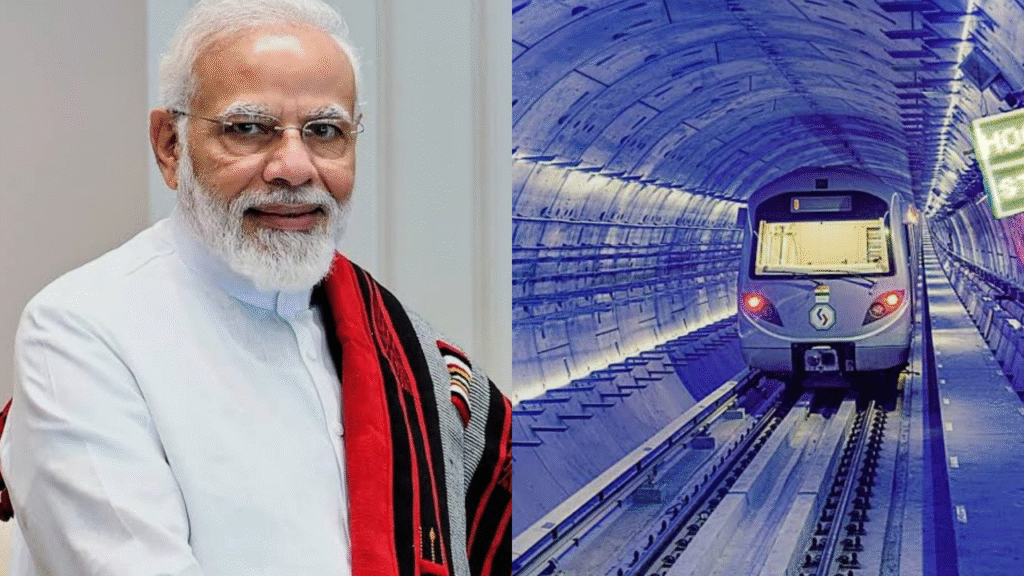
Kolkata is set for a major boost in urban mobility this week, with Prime Minister Narendra Modi scheduled to inaugurate three metro line extensions on Friday, including the long-delayed Sealdah–Esplanade stretch under the East-West Metro corridor, officials said. The 14 km expansion will link key terminals, including Howrah and Sealdah railway stations, the city airport, and Salt Lake Sector V, its information technology hub. Once fully operational, the daily ridership of the East-West Metro could rise from the current 100,000 to more than 700,000, Kolkata Metro General Manager P. Uday Kumar Reddy said. The Sealdah–Esplanade segment, just 2.6 km long, is expected to be the most crucial, cutting travel time between Howrah and Sealdah stations to only 12 minutes via an underwater tunnel under the Hooghly River. The line will ease congestion in the city’s central business district and provide direct access to Salt Lake’s offices from both major railway hubs. For the first time, passengers will also be able to travel between Howrah Maidan and Netaji Subhas Chandra Bose International Airport with a single smart card, though they will need to change trains twice. The Noapara–airport extension, covering 7 km, is also part of the new services. Another 4.4 km stretch connecting Ruby (Hemanta Mukhopadhyay station) and Beleghata (Metropolis) will be launched, offering commuters in eastern Kolkata new links to Sealdah, Howrah and the airport. Services are currently available every 12 to 15 minutes, but the frequency is expected to increase to every eight minutes during peak hours once the expanded network becomes fully operational. Kolkata’s metro, India’s oldest, began operations in 1984. In recent years, several expansions have faced repeated delays, including the East-West project, which was stalled by land subsidence in the Bowbazar area. Last year, Modi inaugurated the country’s first under-river metro service, which opened to the public nine days later. Metro officials said services on the Sealdah–Esplanade stretch may open to passengers immediately after Friday’s inauguration, while the other two extensions are expected to start from Monday.
Delhi CM Rekha Gupta attacked during public hearing, security breach under probe
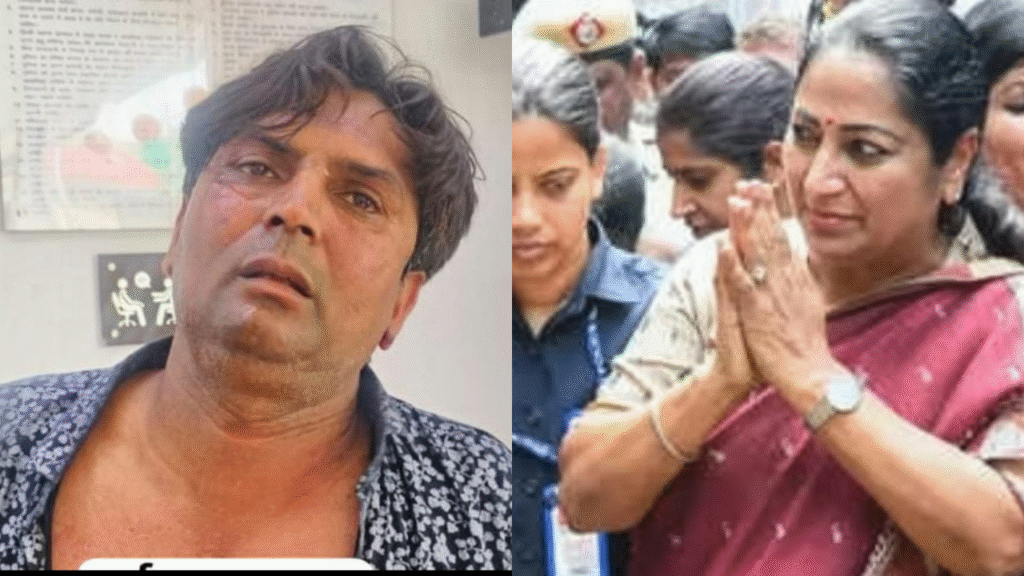
Delhi Chief Minister Rekha Gupta was attacked by a man during a weekly public hearing at her residence on Tuesday, in what police described as a major security breach. The attacker, identified as Rajesh Sakriya from Rajkot in Gujarat, was swiftly overpowered by Gupta’s security personnel and is being questioned, police officials said. Preliminary information suggests he was upset over a Supreme Court ruling to relocate stray dogs in Delhi NCR, according to his family. Gupta, a senior leader of the ruling Bharatiya Janata Party (BJP), was examined by doctors after the incident. Party leaders condemned the attack, with Delhi minister Manjinder Singh Sirsa alleging a “political conspiracy” and calling for a full investigation. “One person present at the meeting attacked the Chief Minister. We condemn the attack. It should be investigated if this attack was politically motivated,” said BJP leader Harish Khurana. Opposition Aam Aadmi Party (AAP) also condemned the assault. “There is no place for violence in a democracy,” said Atishi, AAP’s leader in the Delhi Assembly. “We hope the Chief Minister is completely safe and that strict action is taken against the culprits.” Eyewitnesses said the attacker approached Gupta with papers before suddenly lunging at her. Delhi Police Commissioner S.B.K. Singh will oversee the probe into how the man managed to get close to the Chief Minister. The attack has raised fresh questions about the security arrangements for top political leaders in the capital.
THE BENGAL FILES: “Chilling Fatwa: “Rape Sucheta Kripalani to Earn the Title of Gazi”
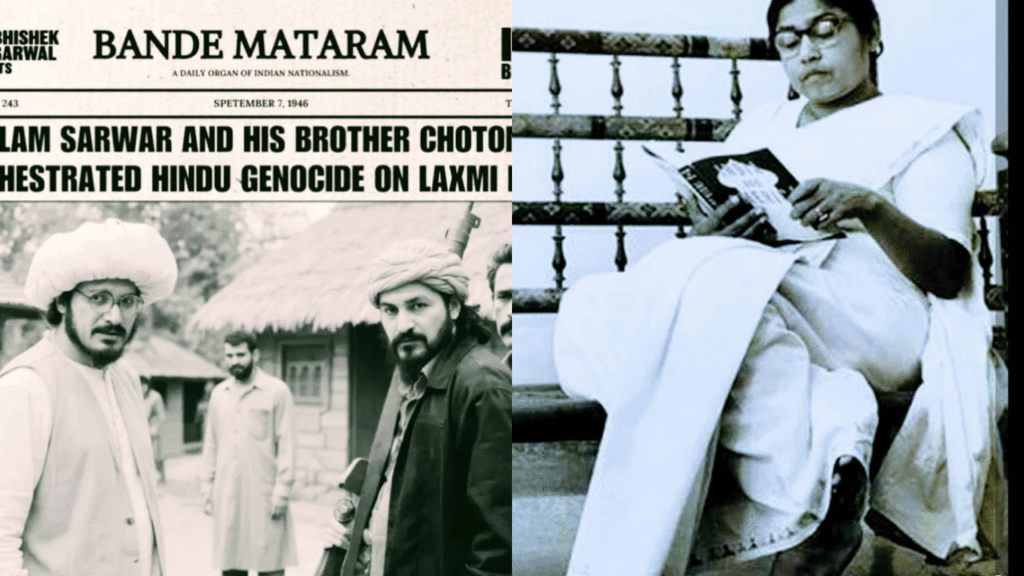
Controversy is mounting in India over filmmaker Vivek Agnihotri’s upcoming movie The Bengal Files, the third in his “Files trilogy”, set for release on September 5. The film revisits the bloody communal violence of 1946 in Bengal and Noakhali, months before Partition. Agnihotri, best known for The Kashmir Files and The Tashkent Files – both of which won national film awards – has launched a fierce social media campaign ahead of the release. In recent weeks, he has shared dozens of posts on X and Facebook, styled as headlines from the period’s nationalist newspaper Bande Mataram. One post, in particular, has provoked outrage. It cites what Agnihotri describes as a chilling fatwa by influential Noakhali cleric Golam Sarwar Husseini: “Whoever rapes Congress leader Sucheta Kripalani will earn the title of Gazi.” Kripalani, then a young protégé of Mahatma Gandhi, was in Noakhali in 1946 as part of a Congress delegation trying to contain the riots. Historians remain divided on the authenticity of such claims, with critics accusing Agnihotri of distorting history for political gain. West Bengal’s ruling Trinamool Congress government has already banned the film’s screening in the state, accusing it of inciting communal tensions ahead of the 2026 state elections. Agnihotri has threatened legal action, while the ruling Bharatiya Janata Party (BJP) at the Centre has openly endorsed the film, calling it a long-suppressed account of Hindu suffering during Partition-era violence. The film has premiered in several US cities and its trailer was released in India on August 16 – the anniversary of the Muslim League’s “Direct Action Day” in 1946, which triggered the Great Calcutta Killings. With supporters hailing it as a bold portrayal of forgotten history and opponents denouncing it as dangerous propaganda, The Bengal Files has already reignited one of South Asia’s most painful and divisive memories.
71 killed as bus catches fire in western Afghanistan crash
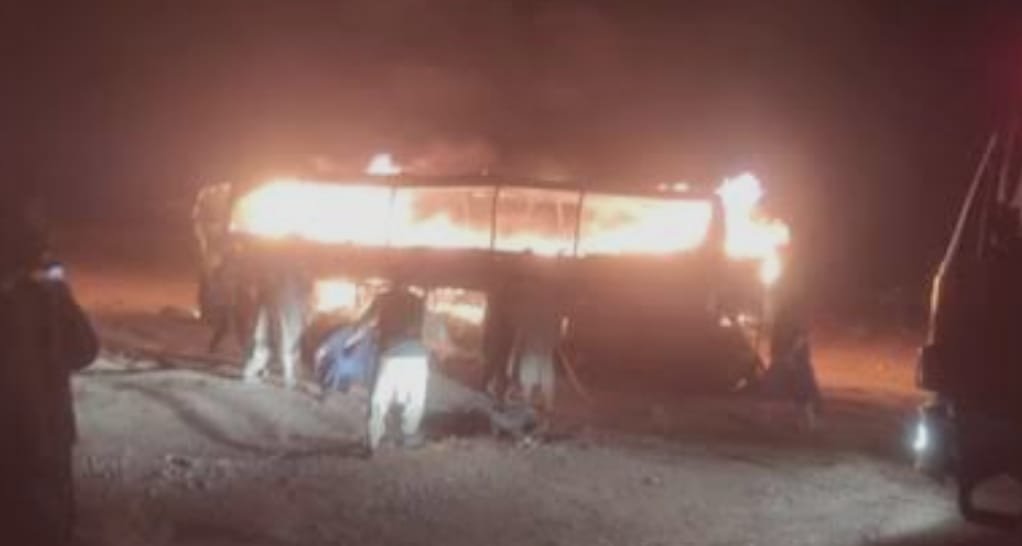
A devastating road accident in western Afghanistan has killed at least 71 people, including 17 children, when a passenger bus caught fire following a collision with a truck and a motorcycle, officials said. The incident took place on Tuesday in Herat province. Local police said the bus, which was carrying Afghan migrants deported from Iran, burst into flames after the impact. “The driver was speeding, and his negligence caused the tragedy,” provincial police said in a statement. Videos circulating on social media showed the bus engulfed in flames as residents rushed to the scene, but few passengers could be rescued. Mohammad Yousuf Zaidi, spokesperson for Herat’s provincial administration, confirmed that all the passengers were Afghan returnees traveling from Islam Qala – a border town with Iran – to Kabul. “They were migrants deported from Iran. Unfortunately, none reached their destination,” he told reporters. The crash comes just a day after Iran’s deputy interior minister, Eskandar Momeni, announced that nearly 800,000 undocumented Afghan migrants would be expelled by next month. Iran has long hosted millions of Afghans fleeing conflict, poverty, and Taliban rule, but Tehran has tightened restrictions in recent years amid economic hardship. Road accidents are frequent in Afghanistan, where poor infrastructure, reckless driving, and overloaded vehicles contribute to high fatality rates. However, Tuesday’s crash is among the deadliest in recent memory, adding to the hardship faced by Afghan families displaced across borders.
Trinamool’s Abhishek Banerjee lays down ground rules ahead of Bengal assembly polls
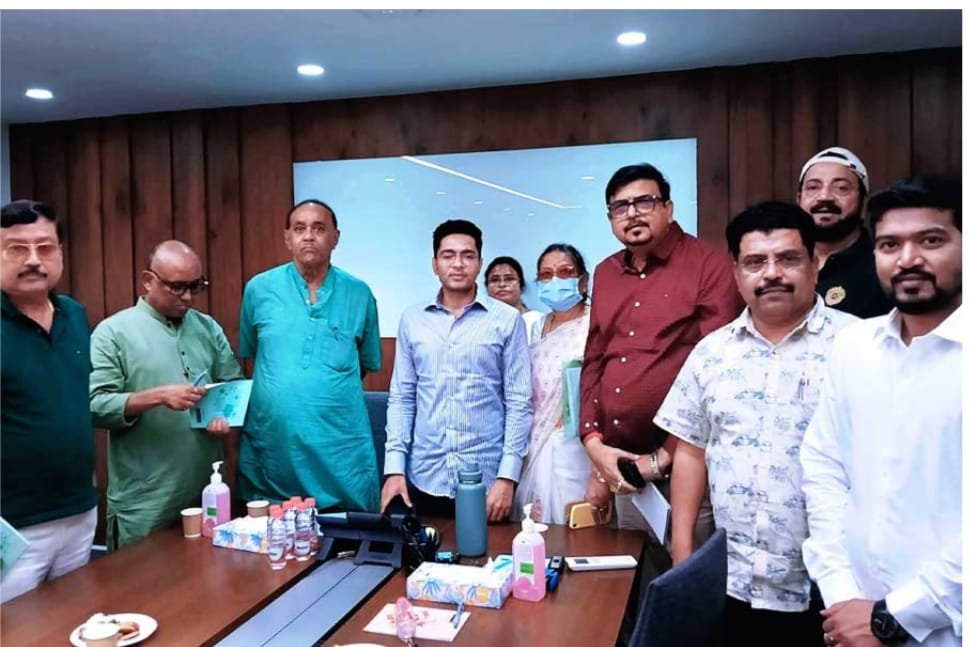
With West Bengal’s assembly elections on the horizon, Trinamool Congress (TMC) national general secretary Abhishek Banerjee is tightening the party’s organizational discipline, holding district-wise review meetings and sending out a clear message: internal unity and grassroots outreach will decide the battle against the Bharatiya Janata Party (BJP). At a meeting with leaders from Barasat and Tamluk on Tuesday, Banerjee stressed generational balance within the party, announcing that leaders above the age of 40 would no longer be part of the youth wing. “If one person holds on to two positions, that is not what the party wants,” he told colleagues, adding that such leaders would instead take up responsibilities in the parent organization. The TMC leader also underscored the need for stronger public engagement. “Factionalism will not be tolerated,” he warned, instructing district leaders to expand outreach at the booth level and maintain constant contact with ordinary citizens. He admitted that the party’s performance in last year’s parliamentary elections was “very poor” but called on cadres to regroup with renewed energy. “In the assembly polls, the BJP must be countered on every front,” Banerjee said, urging elected representatives to remain visible and accessible. In the Tamluk meeting, Banerjee focused on consolidating organizational strength in rural Bengal and paid particular attention to Nandigram — a politically symbolic constituency since Mamata Banerjee’s high-profile contest there in 2021. He also emphasized flagship TMC programs such as Amar Para, Amar Samadhan (My Neighborhood, My Solution), which he said should serve as key tools for local mobilization. By combining the experience of senior leaders with the energy of younger cadres, Banerjee hopes to build a disciplined party machine that can blunt the BJP’s advance in Bengal’s 2026 state polls.
China move to reset strained ties as Wang Yi visits New Delhi
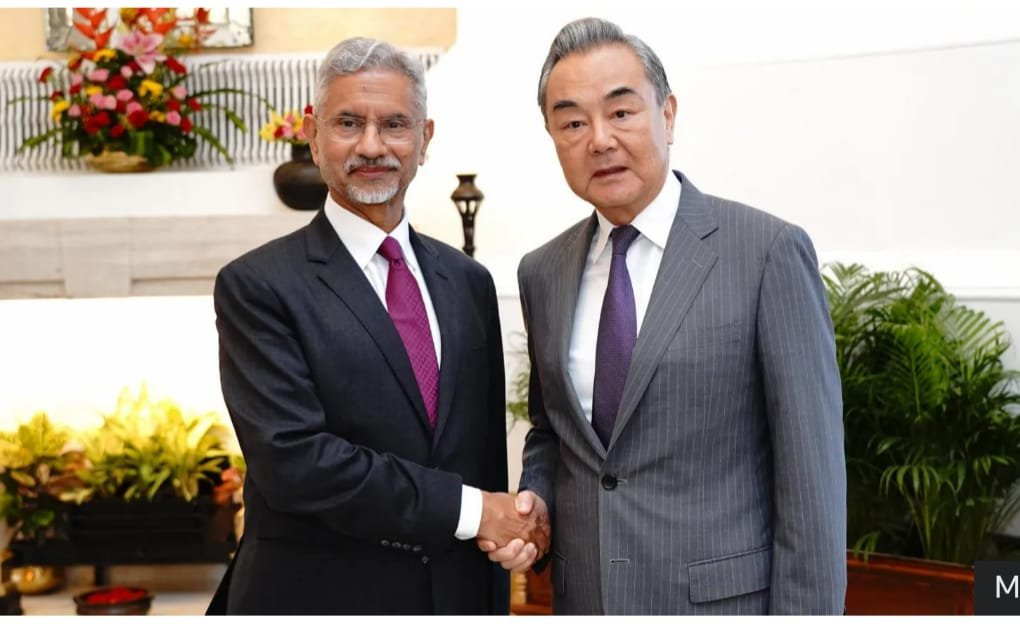
India and China signalled a cautious thaw in their strained relationship on Monday, as Chinese Foreign Minister Wang Yi arrived in New Delhi for a two-day visit aimed at stabilising ties that ruptured after deadly border clashes in 2020. “India and China should see each other as partners, not adversaries or threats,” Wang told reporters after meeting his Indian counterpart, S Jaishankar. Relations, he said, were now on a “positive trend” toward cooperation. The visit marks only the second ministerial-level meeting between the neighbours since the Galwan Valley clashes in Ladakh, where soldiers on both sides were killed in the bloodiest confrontation in decades. Jaishankar struck a cautiously optimistic tone, saying the two sides were working to “move ahead from a difficult period in our ties”. The ministers discussed a range of issues including trade, river data sharing, and religious pilgrimages to Tibet. On Tuesday, Wang also met India’s National Security Adviser Ajit Doval, with both sides reaffirming progress in negotiations to resolve the long-running boundary dispute. “Stability has now been restored at the borders,” Wang said during delegation-level talks. Signs of rapprochement The two Asian powers have taken tentative steps to normalise relations since October last year, when they agreed on new patrolling arrangements along their contested Himalayan frontier. Beijing has since allowed Indian pilgrims to visit sites in Tibet, while New Delhi has resumed visas for Chinese tourists and revived talks on reopening border trade through designated passes. There are also indications that direct flights between the two countries could resume later this year. Wang’s trip is expected to prepare the ground for Prime Minister Narendra Modi’s upcoming visit to China for the Shanghai Cooperation Organisation (SCO) summit — his first in seven years. Reports suggest a possible bilateral meeting with Chinese President Xi Jinping, though neither side has confirmed it. US pressure The rapprochement comes as New Delhi’s ties with Washington face fresh strain. Earlier this month, President Donald Trump imposed additional 25 percent tariffs on Indian imports, raising overall duties to 50 percent — the steepest in Asia — in retaliation for India’s continued purchases of Russian oil and weapons. White House Trade Adviser Peter Navarro accused India of “cozying up to both Russia and China” in an opinion piece for the Financial Times, arguing that India was acting as a “global clearinghouse” for Moscow’s crude exports despite Western sanctions. “If India wants to be treated as a strategic partner of the US, it needs to start acting like one,” Navarro wrote. Multipolar ambitions Speaking after his talks with Wang, Jaishankar pushed back against suggestions that India was aligning with any single power bloc. “We seek a fair, balanced and multipolar world order, including a multipolar Asia,” he said. “Reformed multilateralism is the call of the day.” For both Beijing and New Delhi, analysts say, the reset reflects a pragmatic calculation: stabilising a volatile border while navigating an increasingly fractured global order.
M1xchange targets to double business in West Bengal as MSME credit seen crossing ₹2 trillion by FY26
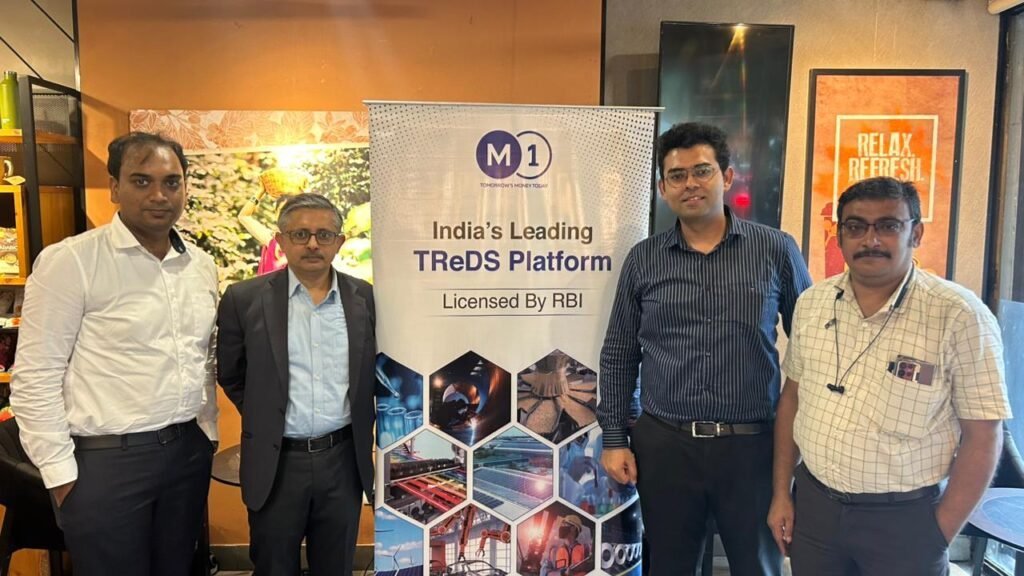
India’s Trade Receivables Discounting System (TReDS) platform M1xchange said on Tuesday it plans to double its business in West Bengal, as credit to the state’s micro, small and medium enterprises (MSMEs) is projected to cross ₹2 trillion ($24 billion) by the end of fiscal 2026. West Bengal, home to nearly 10 million MSMEs and over 4.6 million units registered under Udyam, is one of India’s leading states for manufacturing, trade and exports. Credit to the sector rose 7.5% year-on-year, reflecting rising demand for working capital, according to industry data. M1xchange, licensed by the Reserve Bank of India, facilitates invoice discounting for MSMEs, providing them with faster access to credit from banks and non-bank lenders without collateral. The company said it is focusing on sectors such as infrastructure, auto components, electricals, textiles and agriculture in West Bengal, which it sees as key growth drivers. “MSME credit in West Bengal is projected to cross ₹2 lakh crore by FY26. We at M1xchange are committed to contributing meaningfully to this growth story,” said Kaustubh Srivastava, senior director at M1xchange. “We aim to offer competitive, collateral-free financing options via TReDS, helping businesses grow without cash flow constraints.” So far, M1xchange has facilitated more than ₹2 trillion worth of invoice discounting across India, working with 60,000 MSMEs, over 3,000 corporates and 69 banks and NBFCs. It expects its throughput value – the total invoices processed – to reach ₹1.25 trillion by March 2026, up from ₹780 billion in FY25. In West Bengal, more than 10% of corporates and MSMEs on the platform are from the state. Around 300,000 invoices uploaded by Bengal-based businesses have contributed nearly ₹200 billion to M1xchange’s overall transaction volume. M1xchange has also launched a “small-to-small financing” initiative, expanding TReDS access to tier-2 and tier-3 MSMEs, enabling them to secure early payments at competitive rates. The company said its growth plans align with state-led initiatives to promote exports and digitisation among small businesses.


