
Melania Trump Sends Personal Letter to Vladimir Putin During Alaska Summit

US First Lady Melania Trump has written a personal letter to Russian President Vladimir Putin, which was handed over by her husband, former US President Donald Trump, during his meeting with the Russian leader in Alaska, according to White House sources. While officials US First Lady Melania Trump has written a personal letter to Russian President Vladimir Putin, which was handed over by her husband, former US President Donald Trump, during his meeting with the Russian leader in Alaska, according to White House sources. While officials declined to reveal the full contents of the letter, it is understood that Mrs Trump raised concerns about the plight of children affected by the ongoing war in Ukraine. She is said to have urged the Russian leader to consider the suffering of minors displaced or separated from their families due to the conflict. The issue of children caught up in the war has long been one of its most sensitive aspects. Kyiv has accused Moscow of forcibly transferring hundreds of thousands of Ukrainian children to Russia or Russian-occupied territories without parental consent, describing the practice as a war crime. Moscow has defended its actions, insisting it relocated vulnerable children from active war zones for their own safety. The United Nations’ human rights office has condemned Russia’s actions, accusing it of violating international law and depriving children of their rights. Friday’s meeting between Mr Trump and Mr Putin, which lasted nearly three hours, did not produce a ceasefire agreement. However, both leaders described the talks as “constructive.” Mr Trump suggested that the next step lay with Ukrainian President Volodymyr Zelensky, advising him to pursue direct negotiations with Moscow. A potential meeting between Mr Putin and Mr Zelensky is now being considered, with Mr Trump indicating he may also be present. Following the Alaska summit, President Putin praised Mr Trump’s “friendly” approach and expressed hope that peace could eventually be restored in Ukraine. Check important plight of children affected by the ongoing war in Ukraine. She is said to have urged the Russian leader to consider the suffering of minors displaced or separated from their families due to the conflict. The issue of children caught up in the war has long been one of its most sensitive aspects. Kyiv has accused Moscow of forcibly transferring hundreds of thousands of Ukrainian children to Russia or Russian-occupied territories without parental consent, describing the practice as a war crime. Moscow has defended its actions, insisting it relocated vulnerable children from active war zones for their own safety. The United Nations’ human rights office has condemned Russia’s actions, accusing it of violating international law and depriving children of their rights. Friday’s meeting between Mr Trump and Mr Putin, which lasted nearly three hours, did not produce a ceasefire agreement. However, both leaders described the talks as “constructive.” Mr Trump suggested that the next step lay with Ukrainian President Volodymyr Zelensky, advising him to pursue direct negotiations with Moscow. A potential meeting between Mr Putin and Mr Zelensky is now being considered, with Mr Trump indicating he may also be present. Following the Alaska summit, President Putin praised Mr Trump’s “friendly” approach and expressed hope that peace could eventually be restored in Ukraine.
Cloud burst, Pakistan floods and landslides kill over 200 as monsoon rains wreak havoc

Torrential monsoon rains and flash floods have killed at least 200 people in Pakistan since Thursday, officials confirmed, with the northwestern province of Khyber Pakhtunkhwa bearing the brunt of the disaster. The Urdu service of a news agency, reported that the districts of Buner, Bajaur, and Battagram have been the worst affected. Continuous downpours triggered landslides, swept away homes, and stranded thousands in remote mountain valleys. Helicopter crash during relief mission In one of the most tragic incidents, a military Mi-17 helicopter carrying relief supplies to Bajaur’s Salarzai area crashed in bad weather, killing all five onboard — including two pilots. Provincial disaster management authorities said the aircraft had been assigned to deliver aid to areas cut off by flooding. Whole family killed as houses collapse Authorities in Buner’s Gadezi tehsil reported that 120 people died in that subdistrict alone. In Chagarzai tehsil, an entire family of 22 perished when their home was buried in a landslide. Officials fear many more remain trapped under debris in Higukand and Pir Baba, where floodwaters have engulfed entire neighbourhoods. Al Madina Hotel, a popular local lodging, was completely swept away. The Buner Deputy Commissioner’s office confirmed that while 157 bodies have been recovered, only 78 could be brought to hospitals so far due to road blockages and ongoing landslides. State of emergency under consideration Prime Minister Shehbaz Sharif convened a high-level meeting to review rescue and relief operations. Sources in his office indicated that Khyber Pakhtunkhwa could soon be declared a “disaster-hit zone.” Provincial data shows 189 deaths in the past 24 hours alone — including 163 men, 14 women, and 12 children. In Pakistan-administered Kashmir, at least eight people were killed in landslides, while nearly 500 tourists remain stranded in the Neelum and Jhelum valleys. India’s Jammu and Kashmir also hit Across the border, India’s Jammu and Kashmir reported its own tragedy. In Kishtwar district, cloudbursts and landslides on Thursday killed at least 48 people and injured more than 100. Officials warned the toll could rise as rescue teams, including the army and national disaster response forces, search for the missing in treacherous terrain. Heavy monsoon rains, which typically run from June to September, are becoming more intense in South Asia due to climate change, experts say, making floods and landslides deadlier and more frequent.
Air India’s low cost subsidiary Air India Express Expands to 58 Destinations in Major Post-Crash Revival

After June’s deadly crash in Bengaluru cast a long shadow over its operations of Air India , its low cost subsidiary, Air India Express is in expansion mode, signalling a robust revival with the addition of three new cities to its network — Ahmedabad, Chandigarh, and Dehradun. From September 1, 2025, the airline will connect Ahmedabad and Chandigarh to its Bengaluru hub with twice-daily flights, while Dehradun will join the network from September 15 with daily services. The additions will take the carrier’s footprint to 41 domestic and 17 international destinations, its largest network to date. The low-cost arm of Air India, now operating a fleet of 116 aircraft, is positioning itself as India’s fastest-growing airline. The expansion marks a turnaround from the turbulence that followed the Bengaluru crash, in which dozens lost their lives, sparking safety concerns and operational reviews. Industry analysts say the carrier’s rapid return to growth reflects both a strategic push by the Tata Group and increased post-pandemic demand for domestic and regional connectivity. “With our fleet now exceeding 115 aircraft, we continue to build a robust network focusing on connectivity between metros and emerging cities,” said Air India Express Managing Director Aloke Singh. He promised passengers “a warm, reliable flying experience” with enhanced in-flight services and competitive fares, starting from ₹4,100. The new routes cater to both business and leisure travellers: Ahmedabad offers a gateway to Gujarat’s industrial heartland and cultural heritage; Chandigarh serves as the capital of two states and a symbol of post-independence modernism; and Dehradun opens direct access to Uttarakhand’s spiritual centres and Himalayan trekking circuits. Air India Express is also betting on its ‘Xpress Holidays’ platform to drive ancillary revenue, offering bundled packages of flights, hotels, and local experiences. The airline’s fleet features the Tales of India livery, with each aircraft showcasing designs inspired by regional crafts such as Gujarat’s Bandhani, Punjab’s Phulkari, and Uttarakhand’s Aipan art — a branding strategy aimed at deepening its cultural connection with passengers. From Bengaluru alone, Air India Express now operates over 405 weekly flights to 34 domestic and three international destinations, with one-stop connections to an additional 19 cities worldwide. For survivors and families affected by the Bengaluru crash, the expansion is a poignant reminder of how far the airline has come. For the company, it’s a calculated step towards reclaiming market share and restoring public trust — a journey from tragedy to transformation that continues to play out in India’s highly competitive aviation market.
India-China ties show signs of thaw as Beijing’s foreign minister to visit New Delhi ahead of Modi trip
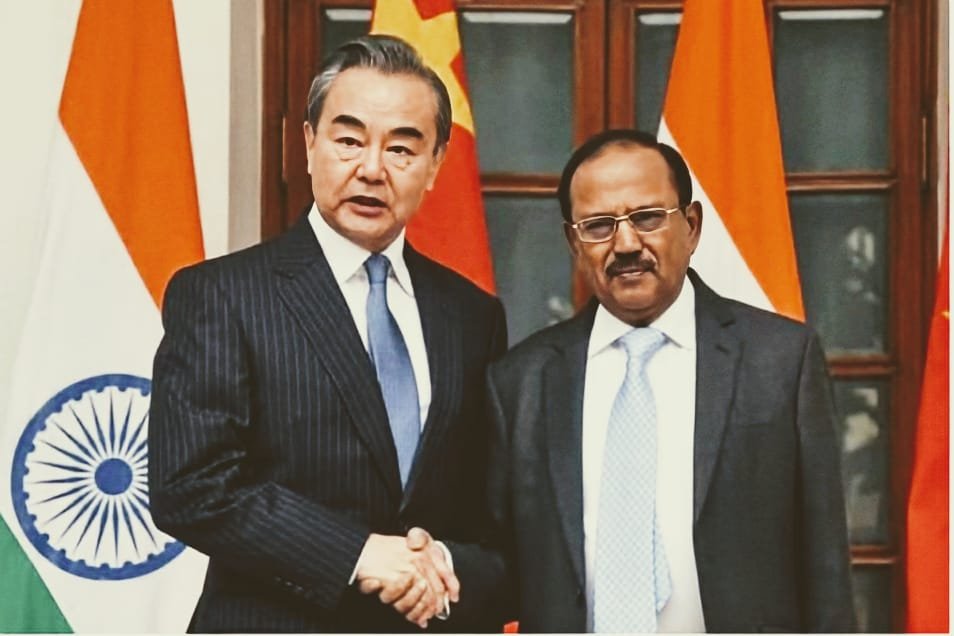
India and China appear to be moving towards a cautious rapprochement, with Chinese Foreign Minister Wang Yi expected to arrive in New Delhi next week for talks with India’s National Security Adviser Ajit Doval, diplomatic sources told Press . The visit comes ahead of Indian Prime Minister Narendra Modi’s planned trip to Beijing later this month – his first since the deadly Galwan Valley clashes in 2020 plunged bilateral relations into their lowest point in decades. According to officials, Wang’s visit will focus on building on recent high-level engagements between the two Asian giants. In July, Indian External Affairs Minister S Jaishankar travelled to China to attend the Shanghai Cooperation Organisation (SCO) meeting, where he met Chinese President Xi Jinping and Vice President Han Zheng. Indian Defence Minister Rajnath Singh also held talks in Beijing with his counterpart, Admiral Dong Jun. During his meetings, Jaishankar stressed the need for “mutual cooperation and open dialogue” between the two neighbours in an “increasingly turbulent world” – a reference to conflicts such as the Russia-Ukraine war and the Iran-Israel confrontation, both of which have heightened global instability. Relations between India and China were further strained by the COVID-19 pandemic in 2020, which halted direct flights, Kailash Mansarovar pilgrimages, and visa issuance. The Galwan clashes later that year left 20 Indian soldiers and at least four Chinese troops dead, prompting a series of tense military-level negotiations. Signs of improvement have emerged in recent months. China has given the green light for the resumption of the Kailash Mansarovar Yatra, while India announced last month that Chinese citizens will once again be eligible for tourist visas. Direct flights between the two countries are also set to resume next month for the first time in over four years. Analysts say Beijing’s outreach reflects a strategic recalibration. “China is looking to stabilise relations with India amid a complex geopolitical environment and economic headwinds,” said one foreign policy expert in New Delhi. The move also comes as Beijing publicly backed New Delhi in opposing recent US tariff hikes imposed by President Donald Trump. Prime Minister Modi is scheduled to attend the SCO summit in Tianjin from August 31 to September 1. Observers say the visit could be pivotal in resetting ties, but both sides remain wary, given the unresolved border disputes. For now, Wang Yi’s trip to New Delhi will serve as a litmus test for whether the world’s two most populous countries can move from a tentative thaw towards genuine reconciliation.
Modi May Meet Trump During UN General Assembly Visit
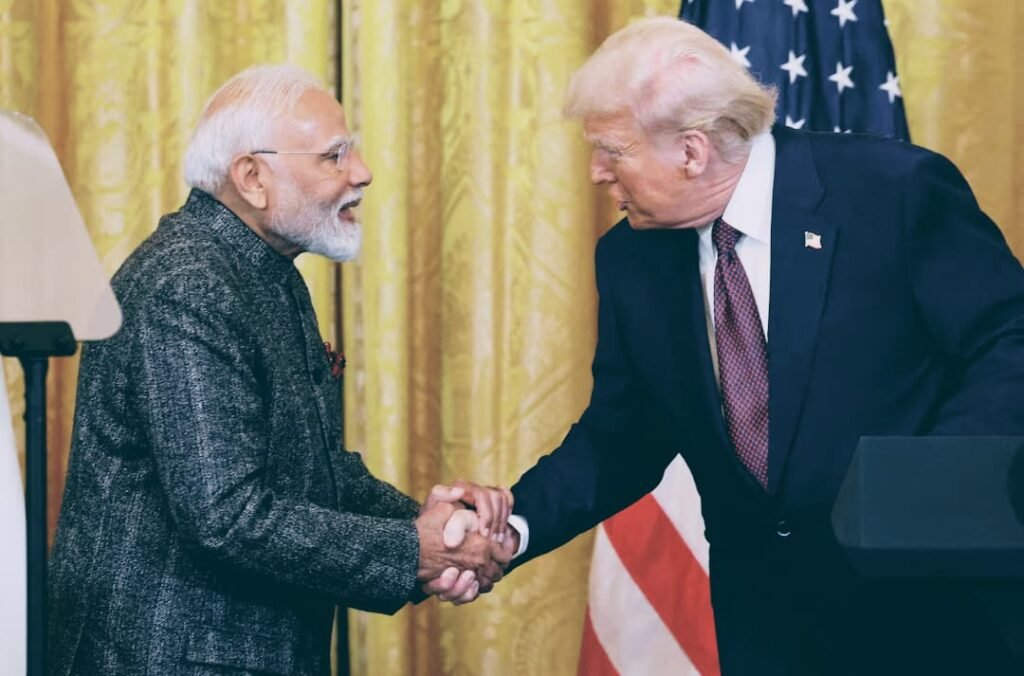
Prime Minister Narendra Modi is likely to meet US President Donald Trump next month during a potential visit to the United States for the United Nations General Assembly (UNGA), the Indian Express reported on Wednesday, citing unnamed sources. India’s Ministry of External Affairs has not confirmed the visit, and a spokesperson did not respond to requests for comment. An Indian official familiar with the planning said no final decision had been made, noting that the provisional list of speakers at the UNGA’s General Debate — which includes Modi on September 26 — is subject to revisions. “The list will go through changes,” the official said. “It has not been decided yet if the Prime Minister will attend.” The 78th session of the UN General Assembly will open on September 9 in New York, with the high-level debate involving heads of state and government scheduled from September 23 to 29. While the official purpose of Modi’s potential visit would be to address the UN gathering, the Indian Express report suggests a key aim would be to hold bilateral talks with Trump. The discussions would likely focus on trade and tariff disputes that have strained relations between New Delhi and Washington over the past year. Tensions rose after the United States withdrew India’s preferential trade status under the Generalized System of Preferences in 2019, citing lack of reciprocal market access. India responded with retaliatory tariffs on certain US goods. While both sides have sought to keep strategic and defence cooperation unaffected, trade remains a sticking point. If the meeting materialises, it would come amid a busy diplomatic season for both leaders. Trump is heading into a re-election campaign, while Modi is keen to project India’s role as a rising global player and maintain strong US ties in the face of China’s growing influence. Modi and Trump last met in Osaka, Japan, on the sidelines of the G20 summit, where they pledged to resolve trade issues “soon.” Whether next month’s UNGA sidelines will offer that breakthrough remains uncertain.
Trump, Zelensky and EU leaders hold talks ahead of Putin summit

German Chancellor Friedrich Merz hosted an online meeting on Tuesday with U.S. President Donald Trump, Ukrainian President Volodymyr Zelensky and European leaders to discuss the war in Ukraine, ahead of Trump’s planned summit with Russian President Vladimir Putin later this week. Zelensky joined Merz in Berlin for the virtual talks, which the White House described as a “listening exercise,” appearing to play down expectations for any immediate breakthrough in efforts to end the 30-month-old conflict. Trump is scheduled to meet Putin in Anchorage, Alaska, on Friday. Speaking ahead of the summit, Zelensky said Ukraine would not cede territory in the east to Russia, warning that abandoning the Donbas region would embolden Moscow to “start a third war” in the country. Ukrainian officials have said Russia is massing troops for a new offensive, expected to begin by September. In a statement posted on Telegram, Zelensky called on Ukraine’s allies to “put pressure on Russia for an honest peace,” adding that there is “currently no sign that the Russians are preparing to end the war.” “We must learn from the experience of Ukraine and our partners to prevent deception by Russia,” he said. “By working together, Ukraine, the U.S., Europe and other allied nations can definitely force Russia to make peace.” Western leaders have reiterated their support for Kyiv, but diplomatic efforts have so far failed to produce a viable framework for negotiations between Ukraine and Russia.
Trial begins in Dhaka corruption cases against Tulip Siddiq, Sheikh Hasina and family members

A Dhaka court has begun hearing witness testimony in corruption cases against British MP Tulip Rizwana Siddiq, former Bangladesh prime minister Sheikh Hasina, and several members of her family. The cases relate to alleged irregularities in land allocations in Purbachal New Town, a government housing project near the capital. Alongside Siddiq, the accused include her mother Sheikh Rehana, brother Radwan Mujib Siddiq, and sister Azmira Siddiq Ruponti. On 31 July, two special courts in Dhaka framed charges in six separate corruption cases against Hasina, members of her family, and more than 20 other accused. The Anti-Corruption Commission alleges that the former prime minister and her relatives were unlawfully allotted six plots of 10 kathas each in December, in violation of rules. On 11 August, witness testimony also began in three other cases tied to the same project, in which Hasina, her son Sajeeb Wazed Joy and daughter Saima Wazed Putul are named as defendants. Hasina and her family have been living abroad since she was ousted from power on 5 August 2024 in a mass uprising. Tulip Siddiq, who is the Labour MP for Hampstead and Kilburn in London, has rejected the allegations, calling them “politically motivated”. She said she has not received any formal summons from the Bangladeshi authorities. Both Hasina and Siddiq deny wrongdoing. The US State Department, in its annual human rights report released earlier this week, noted that while rights conditions in Bangladesh had become more stable under Nobel laureate Muhammad Yunus’s interim government, concerns remained, particularly over judicial independence and political freedoms. Bangladesh’s interim government has vowed to ensure accountability for past abuses and corruption, though rights groups have warned that deep institutional reforms will be required to restore long-term stability.
US says Bangladesh rights situation steadier under interim govt, but concerns remain

Bangladesh’s human rights situation has shown signs of stability following a change of government earlier this year, but significant concerns persist, the U.S. State Department said in its annual human rights report released on Tuesday. The report, published on the State Department’s website, noted that the fall of Prime Minister Sheikh Hasina’s government after weeks of student-led protests paved the way for a Nobel laureate-led interim administration. Muhammad Yunus, awarded the Nobel Peace Prize in 2006 for his work with microfinance, was appointed “chief adviser” of the caretaker government. The protests in July and early August, sparked by grievances over governance and democratic freedoms, culminated in Hasina’s resignation and the dissolution of her cabinet. Since then, the report said, rights conditions have stabilised in the South Asian nation of 170 million people, although some abuses and restrictions remain. “Following certain events in August, the country’s human rights situation became more stable, though concerns remain,” the State Department said. It contrasted the current situation with that under the previous Awami League-led administration, where it cited “arbitrary or unlawful killings, enforced disappearances, torture, arbitrary arrests or detentions, severe restrictions on freedom of expression and the media,” as well as the “worst forms” of child labour. The report also noted “widespread reports of impunity” during Hasina’s tenure, with little accountability for security forces or political leaders accused of abuses. Since taking power, the Yunus-led interim government has arrested several members of the former ruling party accused of human rights violations. Authorities have pledged to investigate past abuses, lift restrictions on the press, and work towards credible elections. However, the State Department cautioned that Bangladesh still faces challenges, including ensuring judicial independence, preventing politically motivated arrests, and safeguarding freedoms of assembly and speech. Rights groups have urged the interim authorities to pursue systemic reforms, warning that stability could prove fragile without deeper changes. Bangladesh’s foreign ministry did not immediately respond to a request for comment on the U.S. report. The caretaker government has said it is committed to restoring democratic institutions and “ending the culture of fear” in politics.
U.S. designates Balochistan Liberation Army, Majid Brigade as foreign terrorist organizations
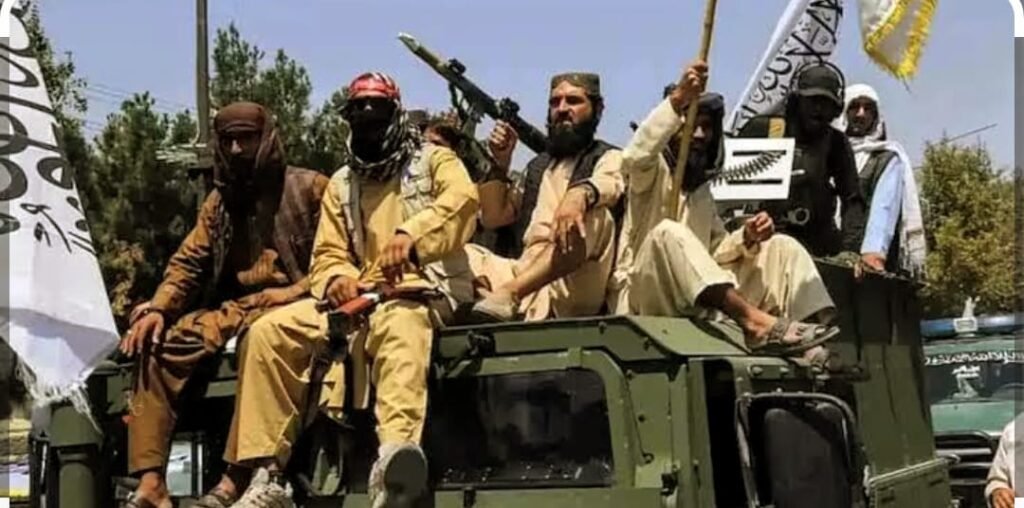
The United States on Monday designated Pakistan’s separatist group Balochistan Liberation Army (BLA) and its affiliate, the Majid Brigade, as foreign terrorist organizations, Secretary of State Marco Rubio said in a statement. Washington had already labeled the BLA a “Specially Designated Global Terrorist” group in 2019. The latest move came shortly after Pakistan’s army chief, General Asim Munir, made his second visit to the U.S. in two months. The BLA has carried out frequent attacks on Pakistani security forces. In one of the most high-profile incidents in recent years, the group seized the Quetta–Peshawar-bound Jaffar Express in March, taking control of the train carrying more than 400 passengers, including army personnel. The Pakistani military later retook the train, but 21 civilians, four soldiers, and 33 insurgents were killed. The State Department said the BLA and the Majid Brigade have claimed responsibility for multiple attacks since 2019, including suicide bombings near Karachi airport and Gwadar port in 2024, as well as the March train hijacking that left 31 people dead. The move follows a recent U.S. designation of Lashkar-e-Taiba offshoot The Resistance Front (TRF), which carried out killings in Pahalgam. It also comes amid diplomatic tensions between Washington and New Delhi over U.S. calls to mediate in India-Pakistan ceasefire talks — a proposal rejected by India but endorsed by Pakistan, which even suggested nominating then-President Donald Trump for a Nobel Prize. The BLA continues to wage an insurgency across Balochistan province. Last Tuesday night, militants killed a Pakistani army major and two soldiers in Noshki district. In May, a BLA attack left 14 soldiers dead. The recent escalation has heightened concerns in Islamabad and among Pakistan’s military leadership.
Delhi-bound Air India flight carrying MPs diverted after technical fault, says Venugopal
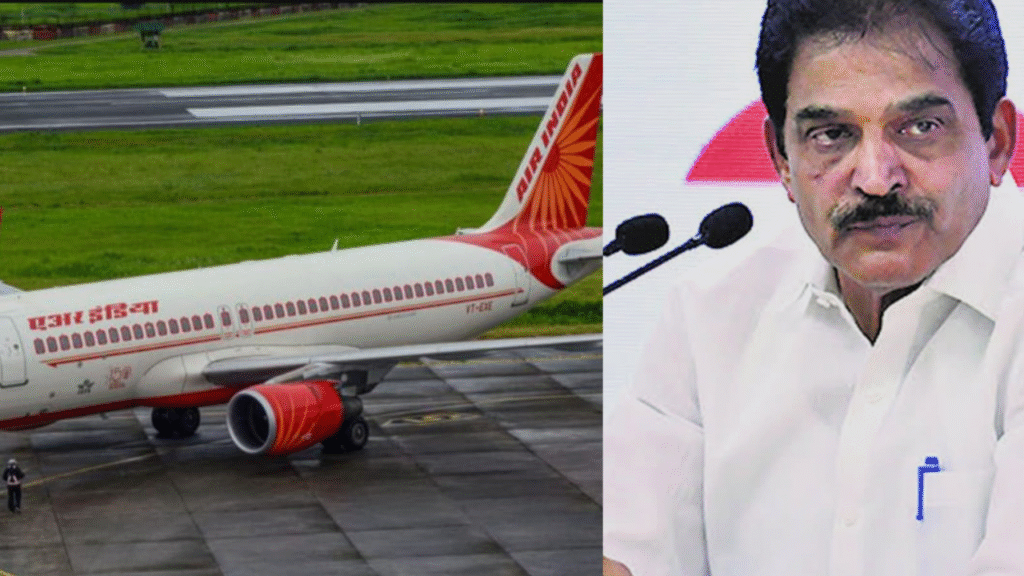
An Air India flight carrying several MPs, including senior Congress leader K C Venugopal, was forced to divert to Chennai on Sunday evening after a suspected technical issue, the airline has said. Flight AI2455, operating from Thiruvananthapuram to Delhi, took off shortly after 20:00 local time (14:30 GMT) but landed in Chennai at 22:35, according to the tracking website Flightradar24. Venugopal, who is chairman of Parliament’s Public Accounts Committee, described the experience as “harrowing” and claimed the aircraft “came frighteningly close to tragedy”. In a post on social media platform X, he said the Airbus A320 experienced “unprecedented turbulence” shortly after take-off. About an hour later, the captain announced a “flight signal fault” and diverted the aircraft to Chennai. “For nearly two hours, we circled the airport awaiting clearance to land, until a heart-stopping moment during our first attempt—another aircraft was reportedly on the same runway,” Venugopal wrote. He credited the captain’s “quick decision to pull up” for avoiding disaster, adding: “We were saved by skill and luck.” The Congress leader urged India’s aviation regulator, the DGCA, and the Ministry of Civil Aviation to investigate the incident and “fix accountability”. Air India disputed parts of Venugopal’s account, saying the diversion was a “precautionary” measure due to the suspected technical fault and poor weather. “A go-around was instructed by Chennai ATC (air traffic control) during the first attempted landing, not because of the presence of another aircraft on the runway,” the airline said in a statement. “Our pilots are well-trained to handle such situations and followed standard procedures throughout the flight.” The aircraft landed safely in Chennai, where it will undergo checks. Air India said alternative travel arrangements were being made for passengers and apologised for the inconvenience. The airline has faced several incidents in recent weeks involving technical snags on its aircraft.


