
Israeli strike kills five Al Jazeera journalists in Gaza; IDF claims Hamas links
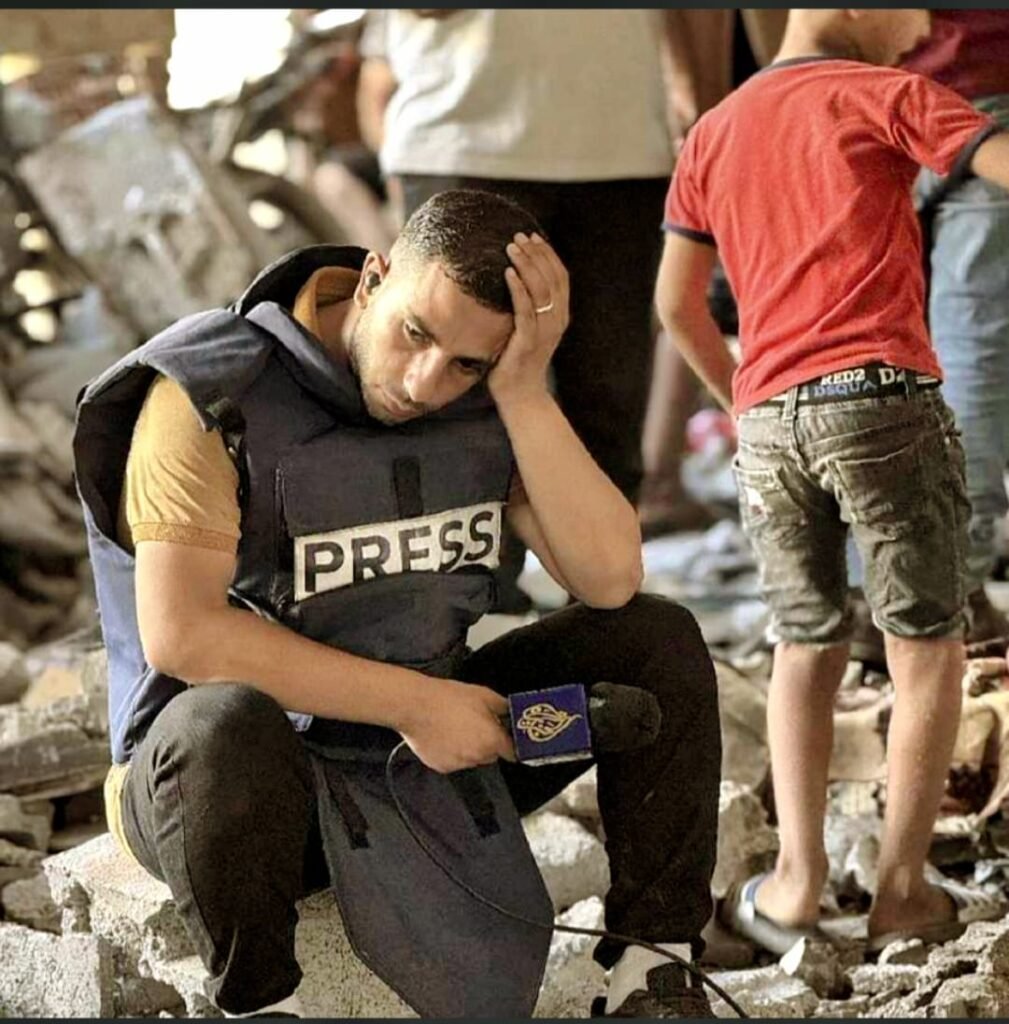
An Israeli air strike on Gaza City late on Sunday killed five journalists working for Al Jazeera, the Qatar-based news network said, in an attack that also claimed two other lives. The network said the journalists – reporter Anas al-Sharif, Mohamed Krikeh, cameraman Ibrahim Zaher, Moamen Aliwa and Mohamed Noufal – were inside a tent for reporters near the main gate of Al-Shifa Hospital when the strike hit. Al Jazeera condemned the killings, calling them an attack on journalists carrying out their duty. The National Press Club in Washington also expressed condolences. Al-Sharif, 28, had been reporting from northern Gaza for years and was a well-known figure in Middle East journalism. A final message posted on his social media account after his death read: “If these words reach you, know that Israel has killed me and silenced my voice.” The Israel Defense Forces (IDF) acknowledged targeting Al-Sharif, calling him a “terrorist” and alleging he was a senior operative in Hamas’s military wing. “Hamas terrorist Anas al-Sharif, who presented himself as an Al Jazeera journalist, was targeted. Intelligence, training rosters and payroll documents confirm his affiliation,” the IDF said in a statement. Al Jazeera has rejected such claims in the past, saying its journalists are being targeted for their reporting. The strike drew condemnation from rights groups and governments worldwide. Australia, which plans to recognise Palestine as an independent state next month at the United Nations General Assembly, also voiced concern over attacks on journalists.
Air India Express launches ‘Freedom Sale’ with 5 million discounted seats

Air India Express has announced a major discount campaign to mark India’s 79th Independence Day, offering five million seats at reduced fares across its domestic and international network. The airline – which has been expanding rapidly in the wake of a previous Air India accident – says fares start from ₹1,279 ($15) for domestic routes and ₹4,279 ($51) for international flights. Tickets will be on sale on the airline’s website and mobile app from 10 August, and across other booking channels between 11 and 15 August. Travel under the offer will be valid from 19 August 2025 to 31 March 2026, covering India’s festive season including Onam, Durga Puja, Diwali and Christmas. Air India Express says it aims to “redefine affordable air travel” through a range of fare types. Its zero check-in baggage “Xpress Lite” option is priced from ₹1,279 domestically, while the standard “Xpress Value” fare with baggage starts from ₹1,379. Business class-style “Xpress Biz” seats – with up to 58 inches of legroom – are now available on over 40 new aircraft added as part of the airline’s expansion. Loyalty programme members will get extra benefits including 25% off Xpress Biz fares, 20% off additional baggage, discounted hot meals, seat selection, and priority services. Special fares remain in place for students, senior citizens, armed forces personnel and their dependents. With a fleet of 116 aircraft operating more than 500 flights daily, the carrier serves 38 domestic and 17 international destinations, with a strong focus on routes linking India and the Middle East. The airline’s “Tales of India” campaign sees each aircraft tail painted with indigenous textile patterns such as Bandhani, Ajrakh, Patola and Warli, which it says reflects both India’s traditions and its “vibrant modern spirit”.
Bangladesh politics abuzz after BNP chief’s aide alleges graft by eight advisers
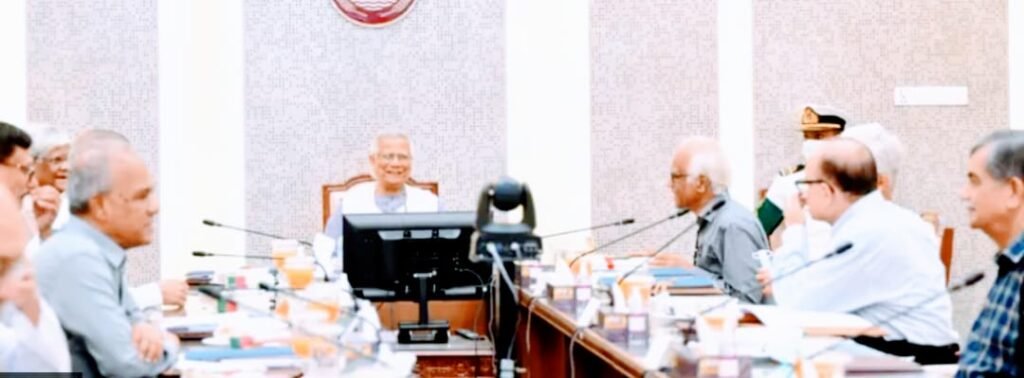
Allegations by a top aide to Bangladesh Nationalist Party (BNP) Chairperson Khaleda Zia that eight advisers in the interim government led by Nobel laureate Muhammad Yunus have engaged in “rampant corruption” have stirred political debate in Dhaka. ABM Abdus Sattar, Zia’s personal secretary, claimed on Friday that he possesses evidence of the alleged wrongdoing – the first time since the Yunus-led administration took office on Aug. 8 last year that such charges have been levelled against so many advisers at once. The government has dismissed the accusations. In a statement on Saturday, Cabinet Secretary urged Sattar to hand over all evidence to the “appropriate authorities” for investigation. BNP Secretary General Mirza Fakhrul Islam Alamgir distanced the party from the remarks, saying the statement was “entirely Sattar’s own” and not linked to the BNP. Sattar has not withdrawn his comments. It is unclear whether the government or the Anti-Corruption Commission (ACC) will act on the allegations, or whether Sattar himself will comply with the request to submit documentation. Transparency International Bangladesh Executive Director Iftekharuzzaman said Sattar, a former government official, should supply the documentary proof he claims to hold. CPD honorary fellow Debapriya Bhattacharya warned that failure to respond to the government’s call could undermine the credibility of future corruption claims. Sattar’s phone has been switched off since Saturday, and Press was unable to reach him or the ACC for comment.
Ex-Awami League leaders open party office near Kolkata after fleeing Bangladesh

Several former senior and mid-level leaders of Bangladesh’s ruling Awami League, now living in India, have set up a party office in a commercial complex on the outskirts of Kolkata, party members said. The leaders, who were among the country’s most influential political figures until a year ago, began frequenting the busy complex only in recent months, drawing attention from regular visitors unfamiliar with them. The move comes after former Bangladeshi Prime Minister Sheikh Hasina left the country on Aug. 5, 2024. In the months since, Awami League members in India had been holding small meetings and party activities in private homes, while larger gatherings were organised in rented restaurants or banquet halls. Party officials said the new office was needed to coordinate activities among members based in India. The complex, located in a densely populated suburban area with hundreds of businesses, sees thousands of visitors daily.
Air India Express marks Raksha Bandhan with in-flight rakhis

Air India Express marked the Hindu festival of Raksha Bandhan on Friday by presenting passengers with limited-edition rakhis during flights across India, the airline said. Cabin crew handed out the traditional decorative threads, symbolising the bond between siblings, to passengers on domestic and international services. The carrier said the gesture aimed to connect travellers with cultural traditions even when separated by distance. The Tata Group-owned airline has marked Raksha Bandhan with in-flight rakhis for several years, calling it part of its focus on “meaningful connections” and celebrating Indian culture. This year, it also ran a social media contest inviting passengers to share their festival moments, with winners receiving flight vouchers. Air India Express, a subsidiary of Air India, operates more than 500 daily flights to 38 domestic and 17 international destinations with a fleet of 116 aircraft, according to the company.
Afghan women deported from Iran: Nearly 700,000 Afghans expelled, UN says
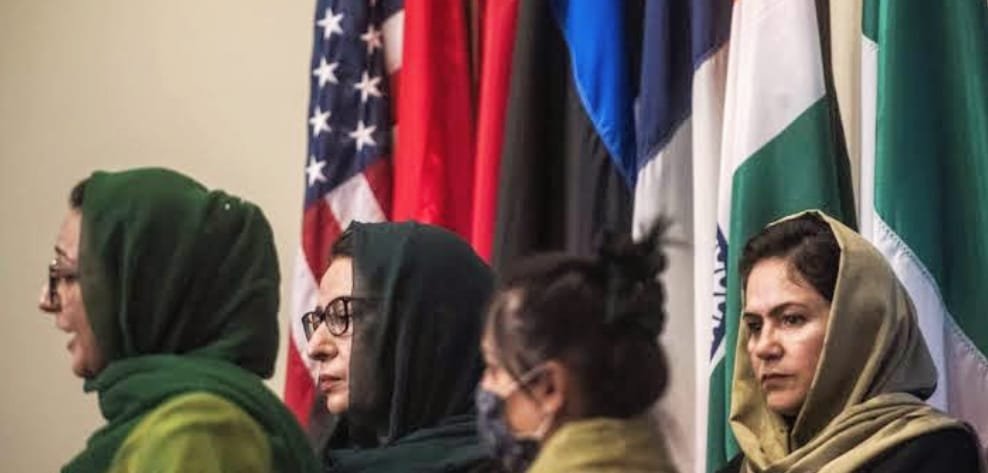
Just weeks away from completing her master’s degree in engineering, 31-year-old Habiba found her future abruptly derailed. Fleeing Taliban restrictions on women’s education, she had sought refuge in Iran and poured years of effort into her studies. But in July, she was deported with little more than her laptop and some documents—sent back to a country where women are banned from attending high school, let alone pursuing higher education. “I was so close,” Habiba said, standing near the Islam Qala border crossing, her voice breaking. “Now I have to start over in a place where my dreams don’t count.” She is one of nearly 700,000 Afghans expelled from Iran since early June, according to the UN refugee agency, as Tehran intensified deportations in the wake of its recent conflict with Israel. Iranian officials cited security concerns and undocumented migration, claiming most Afghans left voluntarily. But rights groups and aid agencies on the ground describe a different reality—families torn apart, people deported without warning, and many arriving home with no possessions or support. “No Future for Us Here” The mass returns have overwhelmed Afghan authorities and aid organizations, many of whom say they were not prepared for the scale or suddenness of the influx. The Taliban-led government has urged Iran to allow deportees time to settle their affairs, but Tehran has moved swiftly, citing an expired registration system for temporary residency cards and security risks amid allegations that some Afghans were spying for Israel—claims Iran has since downplayed. Rahela, 37, had built a stable life in Tehran as a makeup artist and seamstress, supporting her two daughters after separating from her husband. Now back in Herat, she says her independence is gone. Taliban restrictions bar women from working, traveling without a male guardian, or participating in most aspects of public life. “I have no helper and no male guardian,” she said. “My father is old. He can’t help me. We’re trapped.” Women like Rahela and Habiba face not only the trauma of displacement but also the loss of agency and autonomy. “Even when we were mistreated in Iran, at least we could work. At least there was security,” Rahela said. “We Were Beaten, Then Deported” While women speak of shattered dreams and vanishing rights, Afghan men recount family separations, beatings, and economic ruin. Rahim Uzbek, 59, was working as a security guard in Iran when he was detained and deported. His wives and seven children, all Afghan nationals, remain in Iran. He now sleeps in a mosque near the border, with no money, no shelter, and no way to bring his family home. “I had prepaid my rent. The landlord never returned it,” he said, holding back tears. “I have no assets. I don’t even know where to go.” Mansoor Ahmad, a 21-year-old metalworker from Kabul, said he was accused of helping someone escape a deportation facility, then beaten and held in solitary confinement. Red bruises still marked his back and shoulders. “When I spoke, they beat me. When I stayed silent, they beat me again,” he said. Iranian officials deny systemic abuse. Iran’s chargé d’affaires in Kabul, Alireza Bigdeli, said there were no official reports of mistreatment but acknowledged that “some may be unhappy with the way they were treated.” Authorities also insisted that efforts were made to prevent family separations and said students were encouraged to leave voluntarily with their families. Still, many like Habiba and Mansoor say they were given no such choice. A Country Ill-Prepared Afghanistan is grappling with multiple crises—economic collapse, international sanctions, a humanitarian funding shortfall, and a ban on girls’ secondary education. The sudden return of hundreds of thousands of displaced Afghans is compounding the burden. Islam Qala, a parched and dusty border town in western Afghanistan, has become a holding area for the expelled. Aid workers report seeing returnees arrive after days without food or water. Some carried nothing but the clothes on their backs. Despite years of hardship in Iran—where Afghans often faced racism, exploitation, and a lack of legal protections—many say they would return if they could. “Even with the humiliation, there was work,” said Rahela. “There was hope.” Now, hope is hard to find. In Taliban-controlled Afghanistan, deportees are starting from zero, often with little family support and no path forward. “I ran from one prison and walked into another,” Habiba said.
Modi Vows Not to Compromise on Farmers’ Interests Amid Strained India-U.S. Trade Talks
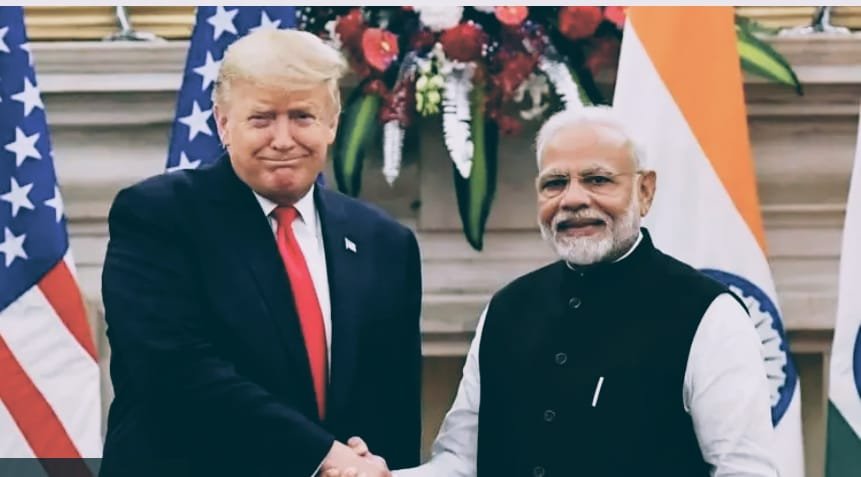
Indian Prime Minister Narendra Modi on Thursday issued a firm message that his government will not compromise on the interests of farmers, even as tensions rise between New Delhi and Washington over an unresolved trade deal. Speaking at an international conference in New Delhi commemorating the centenary of agricultural scientist M.S. Swaminathan—widely credited with spearheading India’s Green Revolution—Modi said, “The interests of our farmers, livestock rearers, and fishermen are of the highest priority. India will never compromise on them.” In a pointed remark widely interpreted as a message to the United States, Modi added, “I know I will have to pay a heavy price personally for this stand. But I am prepared for it. India is ready to protect the interests of its farmers.” His comments come amid mounting friction with the U.S. over trade, particularly involving agriculture and dairy. American officials have reportedly pushed India to open its markets fully to U.S. agricultural products and dairy exports as part of a broader trade agreement. However, Indian negotiators have so far resisted, citing the potential impact on domestic farmers and producers. Tariff Tensions The backdrop to Modi’s speech is an increasingly fraught trade relationship. U.S. President Donald Trump recently announced a second round of tariff hikes, bringing total duties on Indian goods to 50%. The move comes after India continued oil imports from Russia, defying Western pressure to scale back economic ties with Moscow amid the ongoing war in Ukraine. Trump has hinted that further restrictions may be imposed on countries that maintain trade relations with Russia, warning that “many more” punitive measures could be on the way. Although trade negotiations between India and the U.S. are ongoing—with five rounds already completed—officials on both sides acknowledge that a final agreement remains elusive. Talks are expected to resume later this month when a U.S. trade delegation visits New Delhi. India Resists “One-Sided” Deal Sources within India’s commerce ministry say Washington wants unfettered access to Indian markets for U.S. agricultural products, milk, and dairy goods. But New Delhi remains firm that it will not enter into any “one-sided” deal that prioritizes American interests while endangering domestic livelihoods. “There’s no question of rushing into an agreement that only benefits the U.S.,” one government official said, speaking on condition of anonymity. Green Revolution Legacy and Domestic Messaging Analysts see Modi’s remarks as aimed not just at the U.S. but also at a domestic audience increasingly anxious over global pressures on Indian agriculture. The choice to deliver this message at an event honoring M.S. Swaminathan—whose work transformed India from a food-deficient country to a grain-exporting nation—was symbolic. Swaminathan’s legacy is closely tied to Indian self-reliance in agriculture, particularly wheat, which once reduced dependence on U.S. grain imports. Modi’s speech was seen as reinforcing that spirit of independence, even as India navigates the complex landscape of global trade diplomacy. The Prime Minister’s firm stance is likely to resonate with India’s vast rural population and farming community, as his government prepares for general elections in the coming year. For now, the path to a comprehensive India-U.S. trade agreement appears uncertain. And with tariffs mounting and political stakes rising, the gap between economic pragmatism and political priorities may continue to widen.
Bangladesh Travel Agency Flight Expert Shuts Down Amid Fraud Allegations; Customers and Agents Left in Limbo

Online travel agency Flight Expert, a major player in Bangladesh’s digital travel booking market, has abruptly ceased operations amid allegations of large-scale financial fraud, leaving thousands of customers and travel agents in uncertainty over booked air tickets worth millions of takas. Founded in March 2017, Flight Expert offered airline ticketing, hotel bookings, and tour packages through its online platform. The company’s website went offline last Saturday afternoon. Hours earlier, Managing Director Salman Bin Rashid reportedly informed staff via an internal WhatsApp group that he was shutting down the company and leaving the country to “protect himself” from mounting legal trouble. Employees shared the message with local media, sparking public outrage. In his statement, Rashid claimed two senior officials had betrayed him, putting him in jeopardy. Following the sudden shutdown, the owner of Sarkar Tours and Travels filed a complaint at Dhaka’s Motijheel police station. Authorities confirmed three individuals have been arrested in connection with the case, although the main accused remain at large. The arrested individuals were denied bail and are currently in custody. Travel agents who bought tickets in bulk from Flight Expert are now unsure whether they can recover their funds or fulfill customer bookings. One such agent, Tripploy, reported purchasing tickets worth BDT 2.2 million from the now-defunct platform. “Our customers don’t care who Flight Expert is — they only know us, the agents who sold them the tickets,” said Taufiq Mahbub Barshan, CEO of Tripploy. “We don’t know what to tell them now.” Numerous travel agencies are reporting similar situations, with some having spent tens of millions of takas on advance ticket purchases through Flight Expert. While many agents are pledging to honor their commitments to customers, they remain unsure whether they will be reimbursed for the tickets they already issued. A writ petition has been filed seeking a freeze on all financial accounts of Flight Expert Limited, its directors, shareholders, and beneficiaries. The petition also seeks a court order to ban the company’s top executives from leaving the country without judicial permission. Efforts by the Press to reach Flight Expert for comment were unsuccessful as phone lines remained switched off. The scandal has sent shockwaves through the country’s online travel industry, which had seen significant growth in recent years, raising broader questions about regulatory oversight and consumer protection in Bangladesh’s digital marketplace.
Modi to visit China amid U.S. tariff threats and post-Ladakh tensions – first visit since 2020 clash

Prime Minister Narendra Modi is set to visit China later this month to attend the Shanghai Cooperation Organization (SCO) summit, his first trip to the country since the deadly border clash in Ladakh in 2020. The high-stakes diplomatic visit comes at a time when U.S. President Donald Trump has issued fresh tariff threats against India, warning of a potential increase beyond the existing 25% imposed on New Delhi. Washington has linked the punitive trade measures to India’s continued energy and trade ties with Russia. China, also a major buyer of Russian energy, has stepped up efforts to deepen its strategic partnership with India amid the shifting global geopolitical landscape. Modi is expected to travel to the Chinese city of Tianjin for the SCO leaders’ summit, scheduled for August 31 and September 1. The multilateral bloc includes India, China, Russia, and Pakistan, among others. While it remains uncertain whether Pakistan’s Prime Minister Shehbaz Sharif will attend, Modi’s message on counter-terrorism is likely to draw attention in light of recent cross-border incidents, including the Pahalgam killings and “Operation Sindoor” in Jammu and Kashmir. Ahead of the summit, India’s Defence Minister Rajnath Singh and External Affairs Minister S. Jaishankar had visited China for respective SCO ministerial meetings. In both forums, Indian officials strongly reiterated New Delhi’s zero-tolerance stance on terrorism, with Singh notably criticizing Pakistan without naming it, in the presence of Pakistani Defence Minister Khawaja Asif. Should Sharif attend the summit, observers will closely watch whether Modi delivers a pointed message in the leaders’ session, reinforcing India’s regional security concerns.
Toronto Sanskriti Sangstha (TSS) proudly presents TSS Puja Parikrama

Parallel News Digital Desk, 6th August: A vibrant cultural initiative during the Durga Puja celebrations. This unique parikrama brings together members, families, and the wider community to visit and pay homage to various Bengali puja pandals across the Greater Toronto Area. The journey is not just a tour of artistry and devotion, but a celebration of our shared heritage. Participants experience the joy of darshan at different pujas, enjoy cultural performances, partake in bhog and prasad, and connect with fellow devotees in the spirit of unity and festivity. Above all it gives a glimpse of cultural performances showcasing Indian dances, folk music and drama of our community. It also explores exhibits of community artists and children’s performance celebrating Devi Durga and Bengali heritage. TSS Puja Parikrama fosters a deeper appreciation of Bengali traditions while strengthening the bonds within the diaspora community. It is a much-awaited annual event, reflecting TSS’s commitment to cultural engagement and spiritual enrichment. Whether you’re new to Durga Puja or a lifelong devotee, TSS Puja Parikrama offers a warm and inclusive way to connect with Bengal’s rich spiritual and cultural traditions.


