
Trump Vows to Hike Tariffs on India Over Russian Oil Purchases
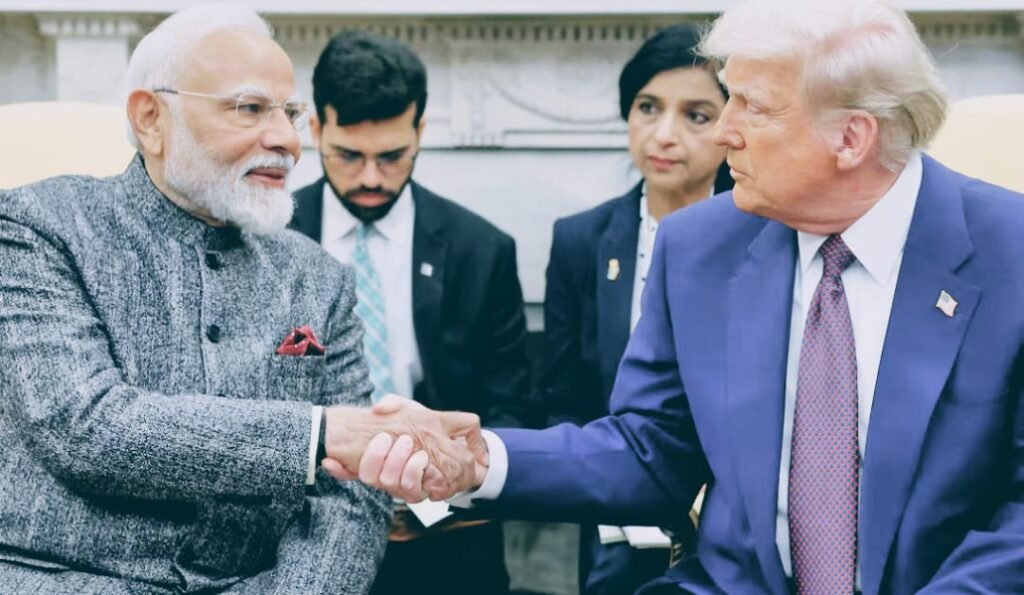
U.S. President Donald Trump has announced plans to sharply increase tariffs on India, accusing New Delhi of profiting from the resale of Russian oil while turning a blind eye to the ongoing war in Ukraine. In a post on his social media platform, Truth Social, on Monday, Mr. Trump said: “India is not only buying massive amounts of Russian oil, they are then, for much of the oil purchased, selling it on the open market for big profits. They don’t care how many people in Ukraine are being killed by the Russian War Machine.” “Because of this, I will be substantially raising the tariff paid by India to the USA,” the president added. The remarks come amid growing scrutiny from the Trump administration over India’s energy ties with Moscow, which have remained robust despite Western sanctions against Russia following its 2022 invasion of Ukraine. On Sunday, Stephen Miller, the White House deputy chief of staff and a close aide to Mr. Trump, echoed the president’s sentiments, suggesting that India’s purchases amounted to indirect support for Russia’s war effort. “What he [President Trump] said very clearly is that it is not acceptable for India to continue financing this war by purchasing oil from Russia,” Mr. Miller told reporters in Washington. India has consistently defended its energy strategy, stating that its imports are guided by national interest and economic needs, and noting that it has remained in dialogue with all key partners, including the United States. The proposed tariff hike marks a sharp escalation in trade tensions between Washington and New Delhi and comes at a time when both nations had been seeking to deepen strategic ties, particularly in the Indo-Pacific region. There has been no immediate response from the Indian government. However, analysts say Mr. Trump’s statement is likely to provoke concern in New Delhi, especially given India’s dependence on exports to the U.S. and the broader implications for the bilateral relationship.
India’s Divya Deshmukh Felicitated with Rs 3 Crore Award after Historic Chess World Cup Win

Maharashtra Chief Minister Devendra Fadnavis on Saturday honoured newly-crowned FIDE Women’s Chess World Cup champion Divya Deshmukh with a public felicitation ceremony in Nagpur, awarding her a cash prize of Rs 3 crore (£280,000) for her remarkable achievement. Deshmukh, 19, became the youngest player to win the Women’s World Cup title, clinching victory in a nail-biting tie-breaker against fellow Indian Grandmaster Koneru Humpy on 28 July in Batumi, Georgia. The triumph not only secured her the prestigious World Cup crown but also earned her the title of Grandmaster. Addressing the gathering, Mr Fadnavis expressed his pride, saying, “As a citizen of India, as the Chief Minister of Maharashtra, and as a son of Nagpur, I am immensely proud that a girl from our city has made the country shine on the global stage.” He added that the felicitation was aimed at inspiring young children across India to pursue excellence in sports. Visibly moved, Deshmukh thanked the Chief Minister, the Maharashtra government, and the Maharashtra Chess Association for their continued support. “This is a very special moment for me. I’m so happy I could, in some small way, become a part of children’s motivation and inspiration,” she said. Sport Minister Manikrao Kokate, also present at the event, reaffirmed the government’s commitment to strengthening sports infrastructure and nurturing talent across Maharashtra. Deshmukh, a native of Nagpur, has been hailed across the country for her resilience and composure during the tournament, especially in the high-pressure finale against the seasoned Koneru. Her victory marks a significant milestone for Indian chess, further underlining the nation’s growing prominence on the international chess stage.
Air India Flight to London Aborts Takeoff at Delhi Airport Due to Technical Glitch

An Air India Dreamliner en route to London was forced to abort takeoff at Delhi’s Indira Gandhi International Airport on Thursday due to a suspected technical issue, the airline confirmed. Flight AI2017, scheduled to depart for London on July 31, was operated with a Boeing 787-9 aircraft. As the plane began its takeoff run, the cockpit crew detected a potential technical anomaly and decided to return the aircraft to the bay for precautionary checks. “Following standard operating procedures, the cockpit crew discontinued the takeoff and brought the aircraft back for technical inspection,” an Air India spokesperson said in a statement. The exact nature of the technical fault has not yet been disclosed. An alternative aircraft is being arranged to operate the flight, the airline added. “Our ground staff is providing all necessary assistance to passengers to minimise inconvenience,” the spokesperson said. There has been no official word on the number of passengers onboard at the time of the incident. The latest disruption adds to a string of recent issues involving Air India aircraft. The airline has faced increasing scrutiny from India’s aviation regulator over safety and maintenance protocols. Earlier this summer, on June 12, another Air India Dreamliner — a Boeing 787-8 operating a flight from Ahmedabad to London Gatwick — tragically crashed into a building shortly after takeoff, killing all 260 people on board. The incident sent shockwaves through the aviation community and led to a full-scale investigation. As regulators continue to examine Air India’s operational safety, the airline has reiterated its commitment to passenger safety and service continuity.
Kyiv Airstrikes Kill Eight, Over 130 Wounded Amid Escalating Russian Offensive

At least eight people, including a six-year-old boy and his mother, were killed and more than 130 others wounded in a massive overnight barrage of Russian drones and missiles on Kyiv, Ukrainian officials said on Wednesday. The assault — one of the most intense in months — struck over two dozen locations across the capital, with cruise missiles and Shahed drones pounding residential buildings and public infrastructure. Mayor Vitali Klitschko confirmed that 12 children were among the injured, making it the highest number of child casualties in a single night in Kyiv since the start of Russia’s full-scale invasion in February 2022. Ukraine’s Air Force reported that Russia launched 309 drones and eight cruise missiles during the night. While Ukrainian air defences intercepted many, multiple projectiles penetrated the defence system, causing widespread destruction. “A red-orange glow lit up the night sky as missiles struck,” said a local resident in Sviatoshynskyi district, one of the hardest hit areas alongside Solomyanskyi. Three fatalities occurred at the site of a collapsed apartment building, according to Interior Minister Ihor Klymenko. “An entire entrance was destroyed. Rescuers are clearing the rubble,” he said. The assault came just days after U.S. President Donald Trump shortened a deadline for a Russian ceasefire from 50 days to “ten or 12 days,” warning of increased sanctions if Moscow did not comply. Trump, on a recent UK visit, said he had expected a ceasefire to be in place and expressed frustration at what he called a “disconnect” between President Vladimir Putin’s private assurances and the continued strikes on Ukrainian cities. “The world has yet again seen Russia’s response to our, America’s and Europe’s desire for peace,” President Volodymyr Zelensky said on social media. “More demonstrative murder. This is why peace without strength is impossible.” Windows of a children’s hospital ward were shattered in Kyiv’s Shevchenkivskyi district, while a school and kindergarten also sustained damage. Thirty of the wounded remained hospitalised by mid-afternoon. Meanwhile, on the eastern front, Russia claimed to have captured the hilltop town of Chasiv Yar in Donetsk region — a claim Ukraine denied. The Ukrainian military reported ongoing combat, while independent analysts from DeepState suggested Russia had gained partial control of the town’s eastern and northern zones. Control of Chasiv Yar would offer Russia a strategic advantage to launch further assaults on cities including Kramatorsk and Sloviansk. Analysts have warned that Pokrovsk, 60km southwest of Chasiv Yar, is becoming increasingly vulnerable to Russian encirclement amid growing pressure along the eastern front.
Gunman Opens Fire in Midtown Manhattan; Four Dead Including Bangladeshi-American NYPD Officer

A gunman opened fire inside a high-rise office building in Midtown Manhattan on Sunday evening, killing four people including a Bangladeshi-American police officer, city officials confirmed. New York City Mayor Eric Adams said during a press briefing that five people were shot during the incident, four of whom were pronounced dead. The victims included NYPD officer Didarul Islam, a three-year veteran of the force and an immigrant from Bangladesh. “Our officer did exactly what we asked of him. He made the ultimate sacrifice,” Adams said. The officer was married with two children, and his wife is currently expecting their third, according to NYPD Commissioner Jessica Tisch. Police said the suspected shooter was also killed, although it remains unclear whether he was shot by police or died by suicide. CBS News, citing law enforcement sources, reported that the gunman died from a self-inflicted gunshot wound. The incident unfolded around 6:45 p.m. local time near the intersection of Lexington Avenue and East 51st Street, according to eyewitnesses and reporters at the scene. BBC correspondent Indrani Basu, who was nearby, reported hearing multiple gunshots. “I saw NYPD vehicles and FDNY trucks rushing to the location. It was chaotic,” she said. Authorities recovered an M4-style rifle, a revolver with a spent magazine, and a Nevada state driver’s license from the suspect’s vehicle, police said. Security camera footage from the area reportedly showed a man walking with a firearm while wearing sunglasses, whom authorities identified as the suspected shooter. Police have not released his identity, but confirmed he acted alone. The NYPD said the situation has been brought under control and there is no ongoing threat to the public. An investigation is underway into the motive and background of the shooter. The FBI and Homeland Security are assisting local law enforcement with the probe.
Israel Faces Global Criticism Over Gaza Famine, Trump Backs UN Concern

Israeli Prime Minister Benjamin Netanyahu’s government is facing mounting international criticism after the United Nations and former U.S. President Donald Trump voiced alarm over what they described as a deepening famine crisis in Gaza. On Sunday, the Israeli government announced a daily 10-hour pause in military operations in three areas of the Gaza Strip—Gaza City, Deir al-Balah, and Al-Muwasi—to facilitate the entry of humanitarian aid. However, the UN said the measures were “insufficient,” adding that limited road and airdrop access barely made a dent in addressing the humanitarian catastrophe. “The worst-case scenario of famine is currently playing out in the Gaza Strip,” the UN-backed Integrated Food Security Phase Classification (IPC) said in a statement, citing “mounting evidence” of starvation, malnutrition, and disease, all contributing to a growing death toll from hunger. Israel has denied the existence of a famine. “No one in Gaza is starving,” Netanyahu said on Monday night. “There is no intention to withhold food from civilians. We have allowed humanitarian aid into Gaza even during the war—otherwise, no one would have survived.” But Trump’s response stood in stark contrast. In a rare rebuke, the former U.S. President said, “There is a famine-like situation in Gaza. Children are starving. The images coming out of Gaza are deeply disturbing.” Gaza’s Hamas-run health ministry claims over 60,000 Palestinians have been killed since Israel launched its offensive following the October 7 attacks by Hamas. Aid agencies have warned that recent Israeli efforts to scale up humanitarian deliveries remain far from adequate. Israel maintains that it has not imposed restrictions on aid. However, Gaza residents have reported going without food for days, and say armed gangs are looting incoming aid trucks and reselling goods on the black market, according to Gaza-based journalist Rushdi Abualouf. Israel does not allow international news organisations, unrestricted access to Gaza. In London, UK Prime Minister Keir Starmer is expected to convene an emergency cabinet meeting as domestic and international pressure builds for the UK to immediately recognise Palestinian statehood.
Aid Airdrops Over Gaza as Malnutrition Crisis Deepens
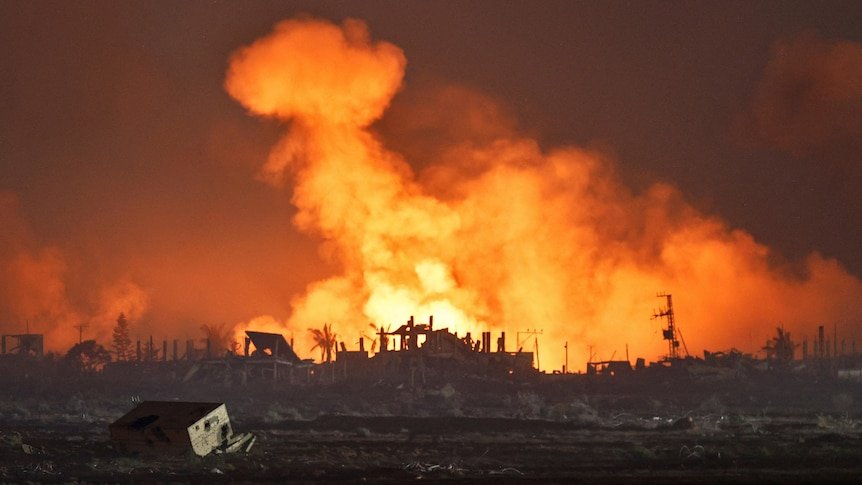
Jordan and the United Arab Emirates have carried out fresh airdrops of humanitarian aid over Gaza, days after Israel announced new measures aimed at facilitating the entry of relief supplies into the besieged enclave, amid growing international alarm over widespread hunger and malnutrition. The Israeli military said it is opening additional aid corridors to “refute the false claim of intentional starvation,” following warnings from aid agencies about an escalating food crisis. The new routes are intended to expedite the delivery of assistance to Gaza’s civilian population, the Israel Defense Forces (IDF) said.Jordan’s state news agency reported that 60 trucks carrying essential food items were also en route to Gaza via land. Egypt is likewise increasing ground deliveries of humanitarian supplies through the Rafah and Kerem Shalom crossings, Egyptian officials confirmed. Despite the airdrops, international aid organisations say the efforts fall far short of meeting Gaza’s needs. “Airdrops are a grotesque distraction from the real humanitarian solution,” said a spokesperson for one group, calling for unfettered land access to the Strip. Experts estimate that at least 160 airdrop flights would be needed daily to provide a single meal to each of Gaza’s two million residents. The World Food Programme and other agencies have warned that aerial operations are logistically inefficient and fail to deliver aid at the scale required. According to the Hamas-run Gaza health ministry, at least 133 people — many of them children — have died of malnutrition since the war began in October. Medical personnel in the enclave have reported cases of severe wasting and starvation-related illnesses, particularly in northern Gaza, where access remains highly restricted. The worsening humanitarian conditions come as diplomatic efforts to reach a ceasefire continue to stall. Israel launched its military campaign in Gaza following the October 7 Hamas-led attack that killed around 1,200 people in southern Israel, according to Israeli officials. More than 38,000 Palestinians have been killed in the ensuing conflict, Gaza health authorities say.
Curfew Imposed in Bangladesh’s Gopalganj After Deadly Clashes at Opposition Rally

Authorities imposed a curfew in Bangladesh’s Gopalganj district, the home region of Prime Minister Sheikh Hasina, late Wednesday night following deadly clashes between ruling party supporters and members of the opposition National Citizens’ Party (NCP). At least four people were killed and several others injured after violence broke out during an NCP rally in Gopalganj town. According to local media reports, including Prothom Alo, the deceased have been identified as Dipta Saha (25), Ramjan Kazi (18), Imon (24), and Sohel Molla (41). One man, Suman Biswas, remains hospitalized with gunshot wounds, and at least eight more people reportedly sustained similar injuries. The violence erupted when hundreds of armed supporters of the ruling Awami League, shouting “Joy Bangla” slogans, allegedly attempted to storm the rally venue at the Gopalganj municipal park. The crowd, led by local Awami League leader Mohammad Pial, reportedly vandalized the stage, set fire to police vehicles, and attacked the district commissioner’s residence, according to the NCP. Security forces responded with tear gas, sound grenades, and gunfire in a bid to regain control of the situation. Troops from the Bangladesh Army and Border Guard Bangladesh (BGB) have since been deployed to enforce the curfew and maintain order. NCP coordinator Nasiruddin Patwari accused ruling party supporters of launching the attack and alleged that both police and the military failed to act impartially. “Awami League cadres were responsible for the assault, while security forces stood by silently,” he told reporters. By Thursday morning, the situation had slightly calmed, though a tense atmosphere remained. Debris from the previous day’s clashes, including bricks, bamboo sticks, and tree branches, still littered the streets of Gopalganj town. The government has not officially confirmed the number of casualties, and no arrests have been announced as of Thursday afternoon.
Trump Says He’s “Disappointed But Not Done” with Putin, Reaffirms Support for NATO

WASHINGTON, July 16: U.S. President Donald Trump said he remains “disappointed but not done” with Russian President Vladimir Putin, in a wide-ranging phone interview with an international news service marking one year since the attempt on Trump’s life at a campaign rally in Butler, Pennsylvania. Speaking from the Oval Office on Monday, Trump addressed rising tensions with Russia, reiterating his demand for a ceasefire in Ukraine within 50 days and announcing plans to send additional U.S. weapons to Kyiv. The president also warned of “severe tariffs” on Moscow if no peace agreement is reached. Asked whether he trusted the Russian leader, Trump responded bluntly: “I trust almost no one.” Trump said he had believed on four separate occasions that a peace deal with Russia was within reach, only for the efforts to collapse. “I’ll say: ‘That’s good, I think we’re close to getting it done,’ and then he’ll knock down a building in Kyiv,” he said, referring to Putin. “I’m disappointed in him, but I’m not done with him.” The 20-minute call came after discussions about a formal interview to commemorate the anniversary of Trump surviving an assassination attempt during a campaign event. Asked whether the incident had changed him, Trump said he prefers not to dwell on it. “I don’t like to think about if it did change me… Dwelling on it could be life-changing.” In contrast to his previous criticism of NATO as “obsolete,” Trump expressed full support for the alliance after meeting with NATO Secretary-General Mark Rutte earlier in the day. “I think NATO is now becoming the opposite of that,” he said, noting that member nations are “paying their own bills.” Trump also reaffirmed his belief in NATO’s principle of collective defense, saying it ensures that smaller countries can defend themselves from larger adversaries. On the United Kingdom, Trump called it a “great place” and confirmed he would make an unprecedented second state visit in September. “Have a good time and respect King Charles, because he’s a great gentleman,” Trump said of his goals for the trip. The interview highlighted Trump’s evolving stance on global alliances and foreign adversaries as he looks ahead to the 2026 general election cycle.
India Urges Bangladesh to Halt Demolition of Satyajit Ray’s Ancestral Home

DHAKA/KOLKATA, July 16: India has urged Bangladesh’s interim government to reconsider the demolition of the ancestral home of legendary filmmaker Satyajit Ray, after reports emerged that the property in Mymensingh district is being razed by local authorities. The residence, located on Harikishore Ray Chowdhury Road, once belonged to Ray’s grandfather, renowned writer and publisher Upendrakishore Ray Chowdhury. The site had been used by the Bangladesh Shishu Academy but has reportedly been lying in disrepair for over a decade. Bangladesh’s interim government, led by Nobel laureate Muhammad Yunus following the recent ouster of Prime Minister Sheikh Hasina’s administration, has initiated demolition of the house citing safety concerns. Local child affairs officer Mohammad Mehedi Zaman told The Daily Star that the structure is at risk of collapse and will be replaced by a semi-concrete building. The development has sparked a political and cultural backlash across the border in India. West Bengal Chief Minister Mamata Banerjee raised strong objections on Tuesday, urging the Bangladesh authorities to preserve the historic site and calling on New Delhi to intervene. Following her appeal, India’s Ministry of External Affairs issued a statement highlighting the property’s historical and cultural significance. “The ancestral home of Satyajit Ray is not just an architectural structure but a symbol of shared heritage and literary excellence. We urge the Bangladesh government to preserve and restore the site instead of demolishing it,” the statement said. India has offered technical and financial assistance for the restoration and proposed converting the property into a literary museum, which officials say could further deepen the cultural ties between the two nations. The incident follows recent attacks on homes of other prominent Bengali cultural icons in Bangladesh. Just weeks ago, unidentified vandals damaged the ancestral estate of Rabindranath Tagore in Kushtia, raising concerns over the protection of heritage sites amid political instability. According to the Bangladesh Department of Archaeology, Ray’s ancestral home is over 100 years old and was taken over by the government following the 1947 Partition. Ray, who passed away in 1992, remains one of the most influential figures in global cinema. His works, including the iconic Apu Trilogy, have earned him international acclaim and India’s highest civilian honours. Cultural commentators in both countries are urging Dhaka to preserve the home as a tribute to Ray’s legacy and a testament to the shared cultural fabric of Bengal that transcends borders.


