
Tesla Launches First India Showroom in Mumbai with Model Y SUVs
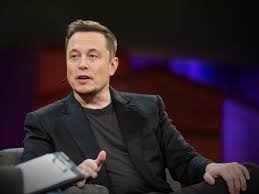
July 15, 2025: Tesla Inc. has officially entered the Indian market, opening its first showroom in the country on Monday in Mumbai’s upscale Bandra Kurla Complex. The 4,000 sq ft showroom, known as the “Tesla Experience Center,” was inaugurated on Tuesday morning by Maharashtra Chief Minister Devendra Fadnavis. “We welcome Tesla to India,” Fadnavis said at the event. “The company has chosen the right state and the right city to begin its journey. We are fully prepared to collaborate and ensure a mutually beneficial relationship.” Tesla’s entry comes after years of negotiations and speculation regarding the EV maker’s India plans. According to sources, the monthly lease for the Mumbai showroom is pegged at INR 3.5 million (approx. $42,000), underscoring the brand’s high-end positioning. The Mumbai outlet features Tesla’s popular electric SUV, the Model Y, with six units imported from the company’s Shanghai facility ahead of the launch. The available variants include the Long Range Rear-Wheel Drive (RWD) and Long Range All-Wheel Drive (AWD), both in dark grey. Equipped with voice command, wireless charging, and internet connectivity, the cars are being marketed as high-tech and premium. The starting price for the Model Y in India has been set at INR 5.989 million ($71,800). However, high import duties — ranging from 70% to 100% — continue to pose a challenge for Tesla’s pricing strategy in the country. CEO Elon Musk has previously expressed frustration over India’s steep tariffs, calling them a barrier to broader market access. Tesla’s India debut comes amid a broader government push toward electric mobility and follows recent policy changes aimed at encouraging foreign EV manufacturers. More showrooms are expected in New Delhi and Bengaluru later this year.
Trump Says He’s “Disappointed But Not Done” with Putin, Reaffirms Support for NATO

WASHINGTON, July 15: U.S. President Donald Trump said he remains “disappointed but not done” with Russian President Vladimir Putin, in a wide-ranging phone interview with an international news service marking one year since the attempt on Trump’s life at a campaign rally in Butler, Pennsylvania. Speaking from the Oval Office on Monday, Trump addressed rising tensions with Russia, reiterating his demand for a ceasefire in Ukraine within 50 days and announcing plans to send additional U.S. weapons to Kyiv. The president also warned of “severe tariffs” on Moscow if no peace agreement is reached. Asked whether he trusted the Russian leader, Trump responded bluntly: “I trust almost no one.” Trump said he had believed on four separate occasions that a peace deal with Russia was within reach, only for the efforts to collapse. “I’ll say: ‘That’s good, I think we’re close to getting it done,’ and then he’ll knock down a building in Kyiv,” he said, referring to Putin. “I’m disappointed in him, but I’m not done with him.” The 20-minute call came after discussions about a formal interview to commemorate the anniversary of Trump surviving an assassination attempt during a campaign event. Asked whether the incident had changed him, Trump said he prefers not to dwell on it. “I don’t like to think about if it did change me… Dwelling on it could be life-changing.” In contrast to his previous criticism of NATO as “obsolete,” Trump expressed full support for the alliance after meeting with NATO Secretary-General Mark Rutte earlier in the day. “I think NATO is now becoming the opposite of that,” he said, noting that member nations are “paying their own bills.” Trump also reaffirmed his belief in NATO’s principle of collective defense, saying it ensures that smaller countries can defend themselves from larger adversaries. On the United Kingdom, Trump called it a “great place” and confirmed he would make an unprecedented second state visit in September. “Have a good time and respect King Charles, because he’s a great gentleman,” Trump said of his goals for the trip. The interview highlighted Trump’s evolving stance on global alliances and foreign adversaries as he looks ahead to the 2026 general election cycle.
India’s Foreign Minister Calls for Candid Talks with China Amid Lingering Tensions
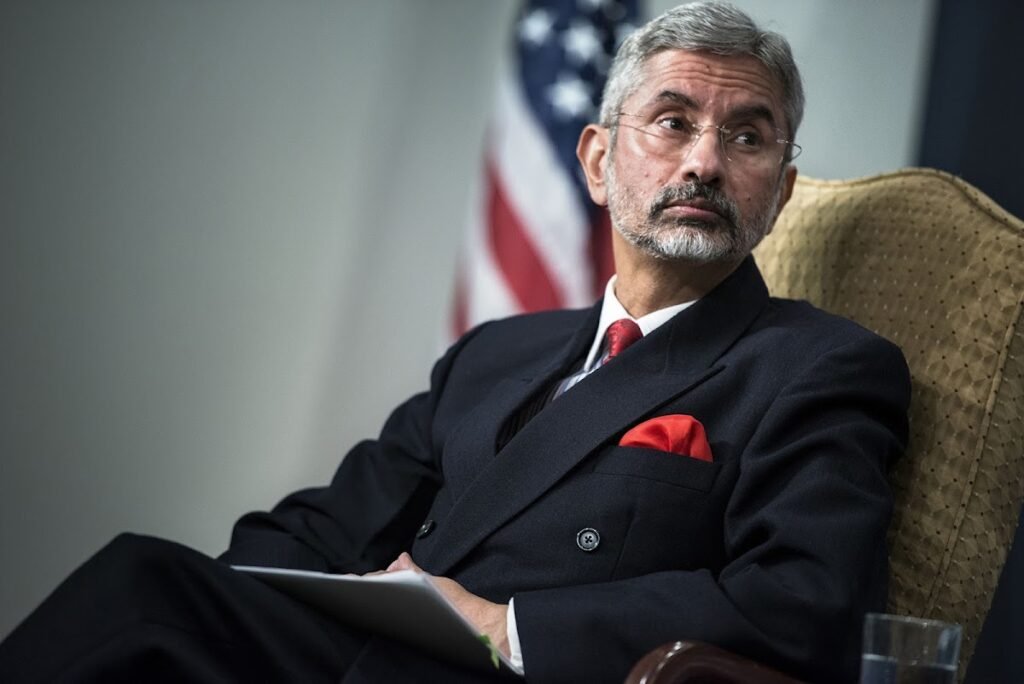
BEIJING– Indian Foreign Minister S. Jaishankar, currently on a visit to Beijing for the Shanghai Cooperation Organisation (SCO) summit, on Monday emphasized the need for “open and candid dialogue” between India and China, as the two Asian giants navigate a complex bilateral relationship strained by military and geopolitical tensions. In his first visit to China since the deadly 2020 border clash in Galwan Valley, Jaishankar met with Chinese Vice President Han Zheng and stressed the importance of cooperation between the two countries amid global uncertainty. “In a turbulent world, it is vital for India and China to engage in frank conversations and support each other,” Jaishankar said, adding that he was “keenly looking forward” to meaningful exchanges during his stay. While border tensions have somewhat stabilized since the Galwan standoff, diplomatic friction persists. India has expressed concerns over China’s support to Pakistan during India’s ‘Operation Sindoor’, as well as ongoing disputes related to the Dalai Lama. Jaishankar’s visit follows recent high-level engagements, including trips by National Security Advisor Ajit Doval and Defence Minister Rajnath Singh, signaling renewed efforts by New Delhi and Beijing to thaw icy ties. Highlighting a possible thaw, Jaishankar announced the resumption of the Kailash Mansarovar Yatra—a sacred pilgrimage route through Tibet—after a five-year suspension. “This step has been widely appreciated in India,” he said. He also recalled last year’s informal meeting between Indian Prime Minister Narendra Modi and Chinese President Xi Jinping in Kazan, which he said had contributed to a positive shift in bilateral ties. “I am confident this visit will further build on those discussions,” Jaishankar noted. During his Beijing visit, the minister is expected to meet his Chinese counterpart and hold bilateral talks with other foreign ministers attending the SCO summit. The visit is being closely watched in diplomatic circles, as both countries continue to jostle for influence in the region while attempting to manage their contentious relationship.
Bangladesh Election Chief Says Poll Date Yet to Be Finalised Amid Political Uncertainty
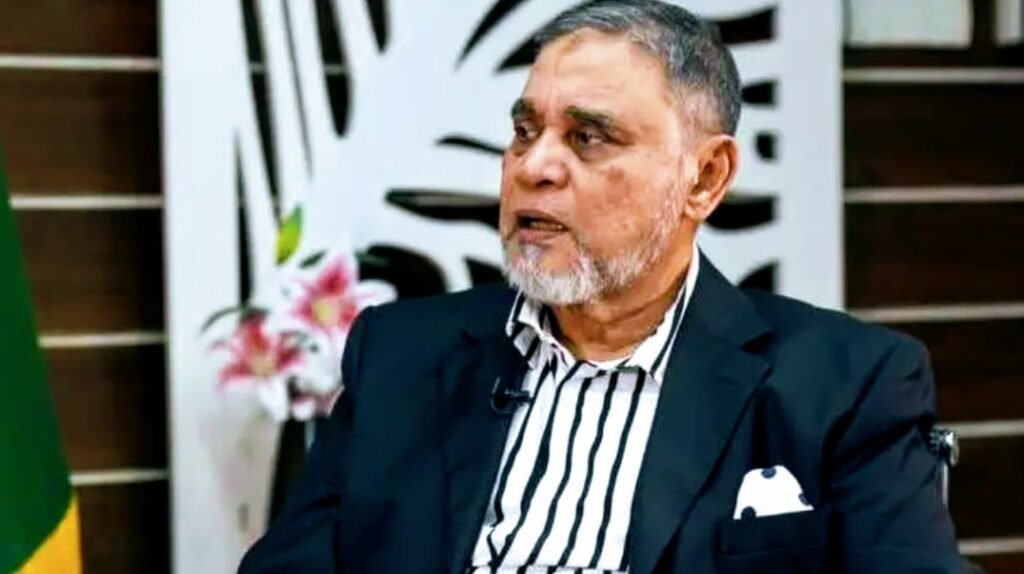
DHAKA: Bangladesh’s Chief Election Commissioner (CEC) A.M.M. Nasir Uddin said the date for the country’s upcoming general election has not yet been finalised, amid political uncertainty and growing concerns over law and order in the run-up to the vote. Speaking in Dhaka this week, Nasir Uddin said the Election Commission has not received any formal communication from the interim government regarding the polling date, though indications suggest the election may be held either before the holy month of Ramadan in early February or during the first half of April. “It’s very difficult for me to respond because I myself don’t know the exact date,” he said, adding that the Commission is operating under assumptions based on public statements made by senior officials of the caretaker government. Preparations for the election had initially been based on a December-to-June timeline, with the Commission targeting December as a potential window, Uddin said. “From day one, we started preparing ourselves with December in mind,” he added. The uncertainty over the election date has heightened tensions in the country’s political landscape, especially following the ousting of the Awami League government earlier this year. Questions remain over whether the party will be allowed to participate in the election, and recent decisions by the Commission—such as the denial of the ‘Shapla’ (water lily) symbol to the newly formed National Consensus Party (NCP)—have also drawn scrutiny. Despite the lack of clarity, the Election Commission has continued its preparatory work, while security forces have reportedly been instructed to remain on alert ahead of the polls. The upcoming vote is expected to be a critical juncture for Bangladesh, which is navigating a period of political transition and public anxiety following months of unrest and economic pressure.
Trump Announces Patriot Missile Deal for Ukraine via NATO Amid Surge in Russian Attacks

WASHINGTON/ROME, July 11; U.S. President Donald Trump has announced plans to send Patriot air defence systems and other weapons to Ukraine through NATO, amid renewed pressure from Kyiv and a sharp rise in Russian drone and missile attacks on Ukrainian cities. Speaking to reporters, Trump said the weapons would be routed through NATO, which would also bear the cost. “We’re going to be sending Patriots to NATO, and then NATO will distribute that,” he said. “NATO is going to reimburse the full cost.” Trump’s comments followed a “positive dialogue” with Ukrainian President Volodymyr Zelensky, who has requested 10 Patriot systems to bolster Ukraine’s air defences. “They’re getting hit very hard now,” Trump said, referring to record waves of Russian attacks. “We have to [send the weapons].” The Patriot missile batteries, which can detect and intercept incoming projectiles, are widely considered one of the most advanced air defence systems globally. In the past week alone, Ukraine endured a record 728 drone attacks in a single night, and Zelensky has warned that Russia aims to increase that number to 1,000. The UN reported that June marked the highest monthly civilian casualty toll in three years, with 232 people killed and over 1,300 injured. Zelensky, speaking in Rome on Thursday, confirmed that Germany has pledged to fund two of the requested Patriot systems, Norway will pay for one, and other European countries have also expressed readiness to contribute. Trump, who last week held a phone call with Russian President Vladimir Putin, expressed disappointment at the lack of progress toward ending the war. “I’m not happy,” he said in an interview with NBC News. “Putin’s very nice attitude turned out to be meaningless.” Trump added he would make a “major statement” on Russia next Monday, without elaborating. U.S. Secretary of State Marco Rubio said on Friday that Washington was urging allies such as Germany and Spain to donate Patriot systems already in their arsenals, saying they could reach Ukraine faster than newly manufactured units. “We have continued to encourage our NATO allies to provide those weapons… since they have them in their stocks,” Rubio said. “Then we can enter into financial agreements where they can purchase the replacements.” Concerns have mounted in Kyiv after the U.S. Department of Defense recently paused some shipments of critical munitions, including Patriot interceptor missiles and precision artillery shells. Zelensky described the Patriots as “real protectors of life” and appealed for immediate resumption of deliveries. NATO funding comes from contributions made by its member states, with the United States as its largest financial contributor.


