
Hasina moves to settle Awami League succession with family at the helm
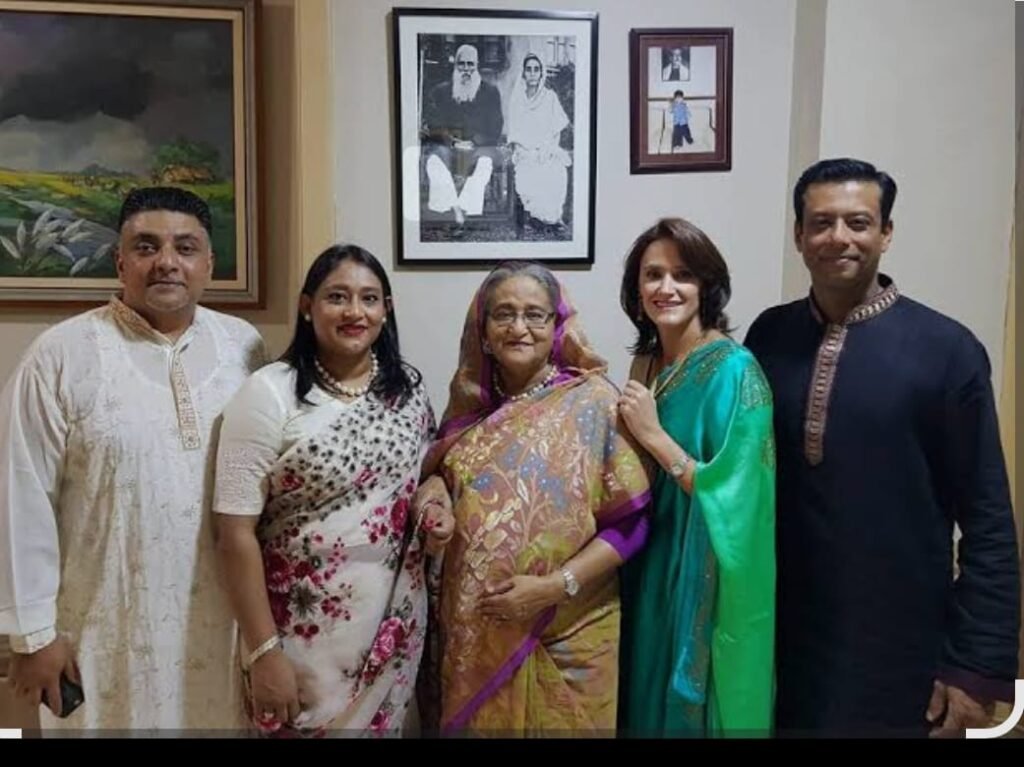
For more than four decades, Sheikh Hasina has been at the helm of Bangladesh’s ruling Awami League, steering the party since May 17, 1981. But after her ouster from power last year, questions of succession that she had long avoided are now forcing their way to the forefront. Hasina, 77 this month, has never publicly outlined how the party would function in her absence. Observers say that lack of a succession plan contributed to the Awami League’s rapid collapse after she was forced from office on Aug. 5, 2024. The interim government that took over subsequently banned the party’s activities, leaving grassroots workers without clear leadership. Since then, Hasina has been living in India as what officials describe as a “guest” of New Delhi, with tight restrictions on her movements and contacts with her followers. From there, under both political pressure and personal considerations of age, she is now preparing to settle the issue of who leads the Awami League after her. Party insiders and political analysts say Hasina has finalized a plan to bring her son, Sajeeb Wazed Joy, and daughter, Saima Wazed Putul, into the party’s top ranks. In addition, her sister Sheikh Rehana’s son, Radwan Mujib Siddiq Bobby, is also expected to play a role. The model, observers note, resembles India’s Congress Party, where Sonia Gandhi positioned her children, Rahul and Priyanka, as future leaders. Joy, a U.S. citizen and permanent resident, has emerged as the Awami League’s chief spokesman abroad, giving frequent media interviews and representing the family’s political line. Putul, until recently the World Health Organization’s regional director in New Delhi, has gone on indefinite leave from the post and is now stepping fully into politics. Hasina’s reliance on her children underscores how dynastic politics continues to dominate in South Asia, where leadership transitions often bypass internal party democracy. Critics argue such moves risk alienating the Awami League’s grassroots and further weaken its organizational base. Still, for Hasina, who has led the party through exile, opposition and long years in office, the urgency to secure her family’s hold on leadership appears stronger than ever.
BNP warns rise in mob violence, right-wing forces threatens Bangladesh’s democracy

Bangladesh’s main opposition party warned that mob violence and the rise of right-wing Islamist forces have become pressing threats to the country’s stability in the aftermath of last year’s political upheaval. Bangladesh Nationalist Party (BNP) Secretary General Mirza Fakhrul Islam Alamgir told the Press that unchecked mob attacks could prove “extremely harmful” for the country. “Some groups and individuals are openly stating that those who say anything that goes against Shariah will not be tolerated, that women will be controlled,” Alamgir said. “This is against the kind of inclusive, liberal democratic society we want to build.” Alamgir said such forces had existed earlier but became more visible after Aug. 5, 2024, when a student-led movement toppled Prime Minister Sheikh Hasina. Since then, an interim government headed by Nobel laureate Muhammad Yunus has suspended activities of Hasina’s Awami League, pending trials of its top leaders on charges including crimes against humanity. Hasina, who is being tried in absentia at the Bangladesh International Crimes Tribunal, has been barred from making statements in the media, with the interim government warning of legal action against outlets that broadcast her remarks. The BNP, once led by former premier Khaleda Zia and now effectively run by her son Tarique Rahman from London, has emerged as the country’s largest party in Hasina’s absence. Though regarded as center-right, the BNP has recently voiced alarm that extremism could supplant liberal politics. Alamgir’s warning came a day after two violent incidents shook the country. In western Rajbari district, an Islamist mob desecrated the grave of Sufi spiritual leader Nura Pagla, exhumed his body and set it ablaze, sparking clashes with his followers that left one person dead and more than 100 injured. Police and administrative vehicles were also torched. Separately, another mob set fire to the central office of the Jatiya Party, a longtime ally of Hasina’s Awami League, in Dhaka. Rights groups say such attacks are becoming increasingly common. The Human Rights Support Society reported at least 25 deaths in 38 mob lynching incidents nationwide in August. A survey last month by the BRAC Institute of Governance and Development and advocacy group Voice for Reform found that 80% of Bangladeshis were concerned about rising mob violence, with many also worried about women’s safety. Alamgir said the trend underscored the urgent need to protect Bangladesh’s democratic values. “A conspiracy is underway to replace liberal politics with extremism,” he warned.
Bangladeshi migrant says U.S. deportation flight left him shackled, hungry

A Bangladeshi man deported from the United States said he was shackled in chains and given little food or water during a 60-hour military flight that carried him and other migrants back home. Rubel, 29, who asked not to use his real name, told Press he travelled to the U.S. on a tourist visa last October in search of a better life but was detained within days. He spent nearly 10 months in a detention centre before being expelled for illegal immigration. “They tied a chain around my waist, handcuffed me and put leg irons on both my feet,” Rubel said, describing the deportation flight that carried him and several other South Asian and African nationals. Rubel alleged the migrants were provided only four slices of bread with cheese and less than half a litre of water over the two-and-a-half-day journey. “We kept asking for water, but they didn’t give us. The officers were drinking bottled water and eating, but we were ignored,” he said. He added that shackles made it difficult to drink or use the toilet. “Even inside the restroom they stood at the door, and if we tried to move from our seats, they forced us back,” Rubel said. U.S. immigration authorities have long faced criticism from rights groups over conditions in detention centres and on deportation flights. Reuters could not independently verify Rubel’s account, and U.S. officials did not immediately respond to a request for comment.
Hindus Outraged by Trump Adviser Navarro’s ‘Anti-Brahmin’ Remark

Hindu groups in the United States are demanding the removal of Donald Trump’s trade adviser Peter Navarro after he made remarks accusing India’s Brahmin community of profiteering from discounted Russian oil, sparking a storm of criticism both in the US and India. Speaking at a recent policy discussion, Navarro claimed that India was acting as a “laundry for the Kremlin,” purchasing crude oil from Russia at discounted prices, refining it, and then selling it to Europe at a profit. In his comments, he singled out “Brahmins,” suggesting they were reaping the benefits of the trade “at the expense of the Indian people.” “India is nothing more than a laundromat for the Kremlin… you’ve helped the Brahmins profit at the expense of ordinary Indians. This has to stop,” Navarro said, without clarifying why he referred specifically to the Brahmin community. The remark has been met with strong backlash from Hindu advocacy groups in the United States, who accuse Navarro of fueling caste-based divisions and displaying what they describe as “colonial arrogance.” Ajay Shah, executive director of the Washington-based advocacy group HinduPACT, called the comment “pure Hinduphobia.” “This has nothing to do with foreign policy,” Shah said. “It is a divisive remark targeting Hindus with a colonial mindset.” Deepthi Mahajan, president of the same organization, added: “If Navarro was addressing Hindus as a community, this is religious bigotry. If he was addressing India’s leadership, it is a diplomatic misstep. Either way, the statement is reckless.” The controversy has spilled over into Indian political circles as well. On X, Indian parliamentarian Sagarika Ghosh sought to contextualize the comment, noting that the phrase “Boston Brahmins” was historically used in the United States to describe wealthy elites. “Even today, some English speakers use ‘Brahmin’ as a shorthand for the rich,” Ghosh explained, suggesting Navarro’s usage may have drawn from that lineage. Still, Hindu groups argue the impact of his words is deeply damaging. “This is an attempt to sow divisions among Hindus,” Shah said. “We reject this rhetoric and call for his immediate dismissal from the Trump campaign.” Navarro, who has been a close adviser to Trump since his first administration, also criticized Indian Prime Minister Narendra Modi’s ties with Russian President Vladimir Putin and Chinese President Xi Jinping. “I don’t understand why the world’s largest democracy would choose to stand with Putin and Xi,” he said. With Trump campaigning for a return to the White House in 2025, Navarro’s remarks threaten to strain relations with Indian-American voters, many of whom see his words as inflammatory and divisive.
Landslide in Sudan’s Darfur kills 1,000, rebel group says
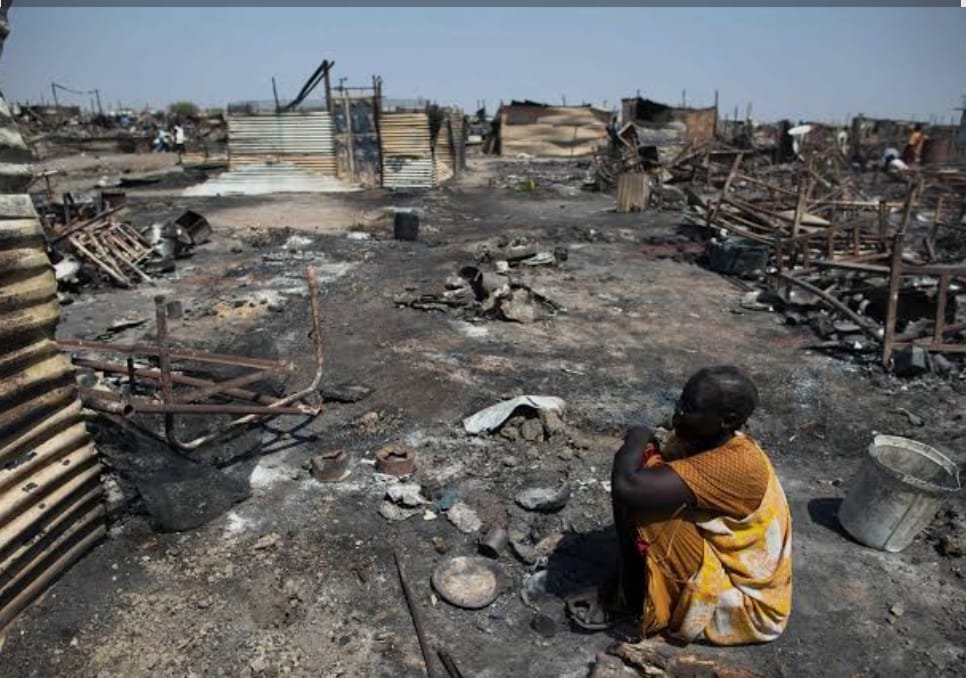
A landslide triggered by heavy rains in Sudan’s western Darfur region has destroyed an entire village, killing around 1,000 people, a rebel group said on Monday. The Sudan Liberation Movement (SLM) said the disaster struck on Aug. 31 in the Tarasin area of the Marra Mountains after days of torrential rainfall. Only one villager was pulled out alive from the rubble, the group added. The SLM appealed to the United Nations and international humanitarian agencies to help recover bodies buried under the debris. Sudan has been gripped by civil war since April 2023, when the army, led by General Abdel Fattah al-Burhan, and the paramilitary Rapid Support Forces (RSF), commanded by General Mohamed Hamdan Dagalo, turned their power struggle into open conflict. Both sides have been accused of atrocities, including killings, rape and looting. The war has killed more than 20,000 people nationwide, according to estimates, with Darfur among the hardest-hit regions. Thousands of civilians displaced by the fighting had sought refuge in the Marra Mountains, where they were caught by the landslide. Darfur’s army-backed governor, Minni Minnawi, described the disaster as a “humanitarian catastrophe.” But rescue efforts have been hampered by the ongoing fighting, leaving survivors with little assistance.
Powerful earthquake kills hundreds in Afghanistan, tremors felt across region
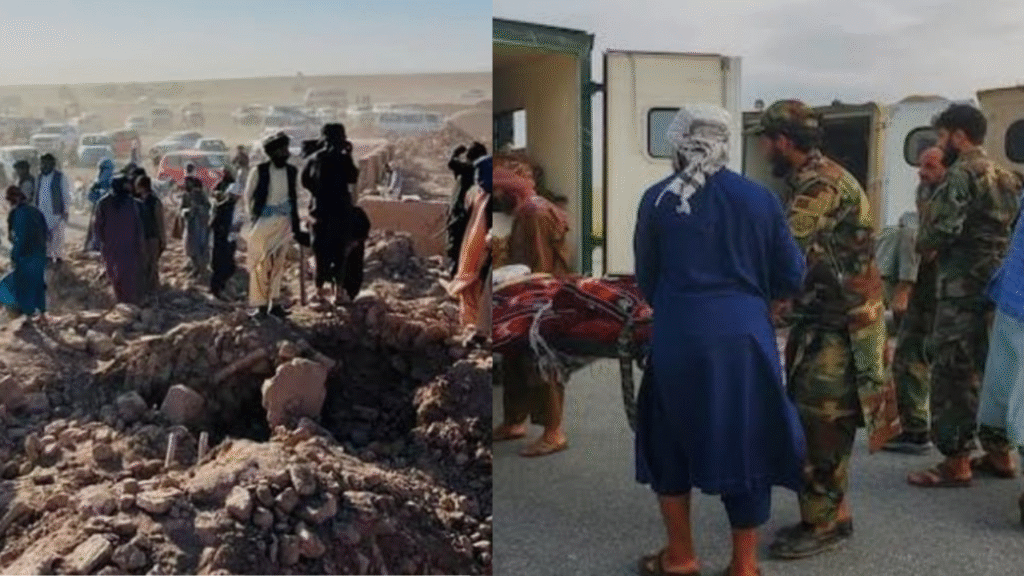
A powerful earthquake struck eastern Afghanistan late on Sunday, killing at least 600 people and injuring more than 1,000, local media reported, as officials warned the toll could rise in remote mountainous areas. The 6.3-magnitude quake hit at 11:47 p.m. local time near Nangarhar province, about 27 km northeast of Jalalabad, at a shallow depth of eight kilometers, the U.S. Geological Survey said. Shaking was felt as far away as Pakistan, India, Tajikistan and Uzbekistan, with aftershocks rattling New Delhi and parts of Pakistan. Afghanistan’s government said 250 people had been confirmed dead and 500 injured, while state broadcaster Radio Television Afghanistan (RTA) put the toll at more than 600 killed and 1,000 injured. The discrepancy could not be immediately reconciled. Rescue operations were hampered by landslides and damaged infrastructure in Kunar province, where heavy rains and flooding earlier this month had already battered roads and villages. The defense ministry said it dispatched 30 doctors and 800 kg of medical supplies to the affected area. Taliban minister for disaster management, Mullah Nooruddin Turabi, traveled to the region to oversee relief efforts. Hospitals in nearby towns reported being overwhelmed by the influx of casualties. “The number of wounded is rising every hour,” a provincial health official told Press, asking not to be named because they were not authorized to speak publicly. Afghanistan sits on the seismically active Hindu Kush region at the junction of the Eurasian and Indian tectonic plates, making it prone to devastating earthquakes. In October 2023, a 6.3-magnitude tremor in western Afghanistan killed nearly 2,000 people.
Indian-born UK industrialist and philanthropist Swaraj Paul dies at 94
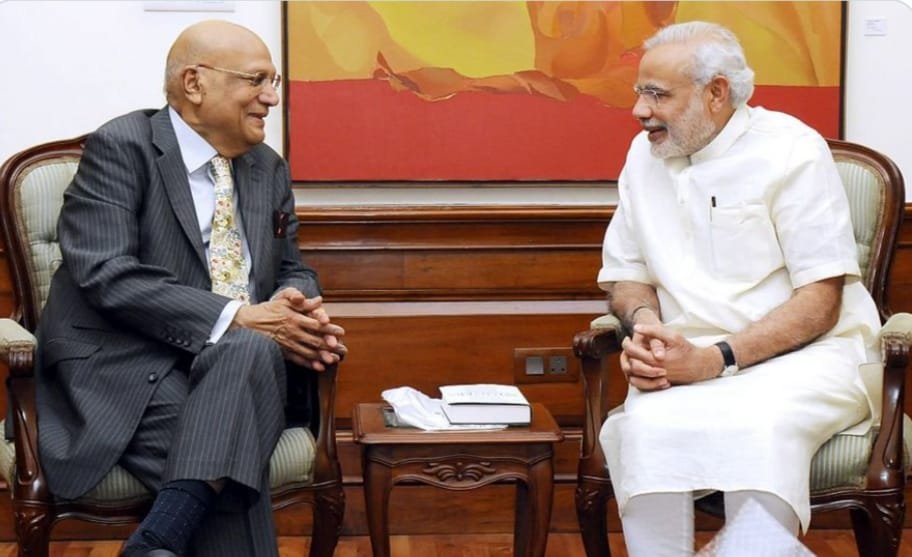
Indian-origin industrialist and philanthropist Lord Swaraj Paul, founder of the Caparo Group, has died at the age of 94 in London, his family said on Thursday. Paul, a member of Britain’s House of Lords, passed away in a London hospital where he had been admitted recently due to age-related illness. Born in Jalandhar, India, Paul moved to the UK in the 1960s, initially for his young daughter Ambika’s cancer treatment. After her death at the age of four, he settled in Britain and went on to build Caparo Group, a diversified engineering firm with operations across the UK, North America, India and the Middle East. His son Akash Paul became CEO of the group in 1992. Paul also set up the Ambika Paul Foundation, supporting children’s health and education, and later established other charitable ventures after the deaths of his son Angad in 2015 and wife Aruna in 2022. Tributes poured in from across the world, including Indian Prime Minister Narendra Modi, who called Paul’s passing a loss to industry and philanthropy. Fellow peer Lord Rami Ranger also expressed condolences. Despite living abroad for decades, Paul maintained close ties with India, enjoying warm relations with leaders from former Prime Minister Indira Gandhi to current West Bengal Chief Minister Mamata Banerjee. Paul was widely recognised for his philanthropy and contributions to UK-India relations.
71 killed as bus catches fire in western Afghanistan crash

A devastating road accident in western Afghanistan has killed at least 71 people, including 17 children, when a passenger bus caught fire following a collision with a truck and a motorcycle, officials said. The incident took place on Tuesday in Herat province. Local police said the bus, which was carrying Afghan migrants deported from Iran, burst into flames after the impact. “The driver was speeding, and his negligence caused the tragedy,” provincial police said in a statement. Videos circulating on social media showed the bus engulfed in flames as residents rushed to the scene, but few passengers could be rescued. Mohammad Yousuf Zaidi, spokesperson for Herat’s provincial administration, confirmed that all the passengers were Afghan returnees traveling from Islam Qala – a border town with Iran – to Kabul. “They were migrants deported from Iran. Unfortunately, none reached their destination,” he told reporters. The crash comes just a day after Iran’s deputy interior minister, Eskandar Momeni, announced that nearly 800,000 undocumented Afghan migrants would be expelled by next month. Iran has long hosted millions of Afghans fleeing conflict, poverty, and Taliban rule, but Tehran has tightened restrictions in recent years amid economic hardship. Road accidents are frequent in Afghanistan, where poor infrastructure, reckless driving, and overloaded vehicles contribute to high fatality rates. However, Tuesday’s crash is among the deadliest in recent memory, adding to the hardship faced by Afghan families displaced across borders.
China move to reset strained ties as Wang Yi visits New Delhi
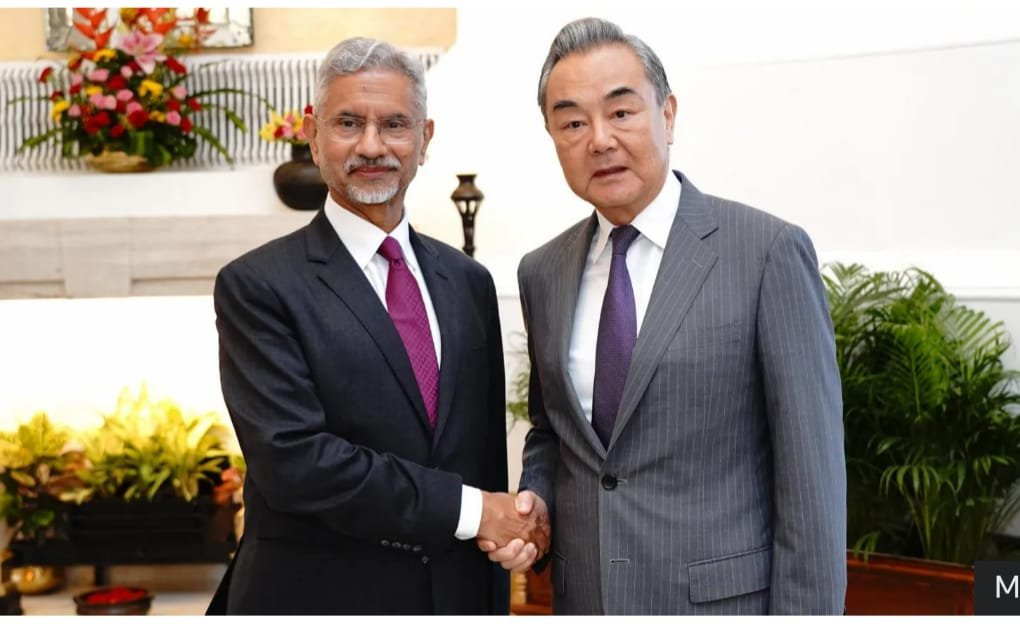
India and China signalled a cautious thaw in their strained relationship on Monday, as Chinese Foreign Minister Wang Yi arrived in New Delhi for a two-day visit aimed at stabilising ties that ruptured after deadly border clashes in 2020. “India and China should see each other as partners, not adversaries or threats,” Wang told reporters after meeting his Indian counterpart, S Jaishankar. Relations, he said, were now on a “positive trend” toward cooperation. The visit marks only the second ministerial-level meeting between the neighbours since the Galwan Valley clashes in Ladakh, where soldiers on both sides were killed in the bloodiest confrontation in decades. Jaishankar struck a cautiously optimistic tone, saying the two sides were working to “move ahead from a difficult period in our ties”. The ministers discussed a range of issues including trade, river data sharing, and religious pilgrimages to Tibet. On Tuesday, Wang also met India’s National Security Adviser Ajit Doval, with both sides reaffirming progress in negotiations to resolve the long-running boundary dispute. “Stability has now been restored at the borders,” Wang said during delegation-level talks. Signs of rapprochement The two Asian powers have taken tentative steps to normalise relations since October last year, when they agreed on new patrolling arrangements along their contested Himalayan frontier. Beijing has since allowed Indian pilgrims to visit sites in Tibet, while New Delhi has resumed visas for Chinese tourists and revived talks on reopening border trade through designated passes. There are also indications that direct flights between the two countries could resume later this year. Wang’s trip is expected to prepare the ground for Prime Minister Narendra Modi’s upcoming visit to China for the Shanghai Cooperation Organisation (SCO) summit — his first in seven years. Reports suggest a possible bilateral meeting with Chinese President Xi Jinping, though neither side has confirmed it. US pressure The rapprochement comes as New Delhi’s ties with Washington face fresh strain. Earlier this month, President Donald Trump imposed additional 25 percent tariffs on Indian imports, raising overall duties to 50 percent — the steepest in Asia — in retaliation for India’s continued purchases of Russian oil and weapons. White House Trade Adviser Peter Navarro accused India of “cozying up to both Russia and China” in an opinion piece for the Financial Times, arguing that India was acting as a “global clearinghouse” for Moscow’s crude exports despite Western sanctions. “If India wants to be treated as a strategic partner of the US, it needs to start acting like one,” Navarro wrote. Multipolar ambitions Speaking after his talks with Wang, Jaishankar pushed back against suggestions that India was aligning with any single power bloc. “We seek a fair, balanced and multipolar world order, including a multipolar Asia,” he said. “Reformed multilateralism is the call of the day.” For both Beijing and New Delhi, analysts say, the reset reflects a pragmatic calculation: stabilising a volatile border while navigating an increasingly fractured global order.
Bangladesh denies approval for mosque construction near revered Hindu temple in Sitakunda
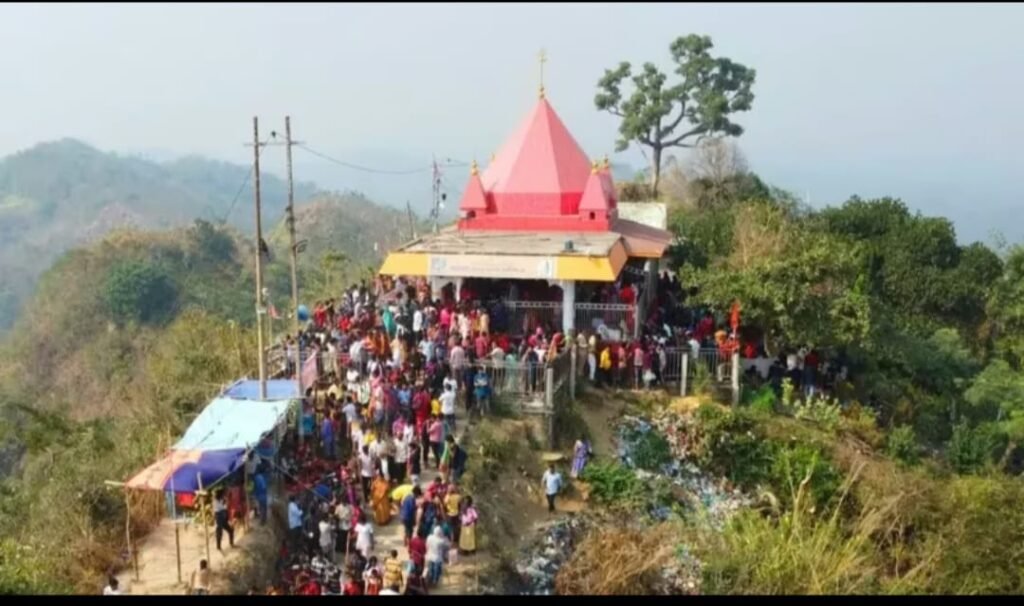
Chattogram, Bangladesh – Authorities in Bangladesh have denied granting permission for the construction of a mosque on Chandranath Hill in Sitakunda, a site that is home to one of the subcontinent’s most sacred Hindu pilgrimage destinations. In a statement issued on Sunday, August 17, Sitakunda Upazila Executive Officer Mohammad Fakhrul Islam said a viral social media post claiming that a mosque was being built near the Chandranath Temple was “misleading” and “without basis.” “As soon as the post came to our attention, law enforcement agencies and intelligence units were instructed to closely monitor the matter and take necessary action,” the statement read. It further clarified that no individual or group has formally approached the administration seeking approval for mosque construction in the area. Chandranath Hill, located in Chattogram’s Sitakunda upazila, is revered as a holy site by Hindu devotees from across South Asia. Pilgrims visit year-round to worship at temples dedicated to Lord Shiva and other deities. Local officials, including police officers, shrine committee members, and forest department staff, inspected the site on Sunday and reported no evidence of mosque construction. “We assure our Hindu community that no approval has been given for building a mosque at Chandranath Temple premises,” the administration said. The statement also warned against attempts to use social media to spread “rumours, propaganda, or disinformation” aimed at disturbing communal harmony. Legal action will be taken against those seeking to incite tensions, the administration cautioned. Sitakunda is often held up as an example of religious coexistence in Bangladesh, where Muslims, Hindus, Buddhists, and Christians have lived peacefully for generations. “The people of Sitakunda deeply respect the beliefs and sentiments associated with Chandranath Temple,” the statement said. The announcement comes after a series of Facebook posts alleging mosque construction near the temple went viral, triggering concerns among local Hindu devotees. By publicly clarifying the situation, authorities said they hoped to preserve peace and reassure communities that no such project had been authorised.


