
BJP Youh Leader’s Murder Sparks Political Row in West Bengal
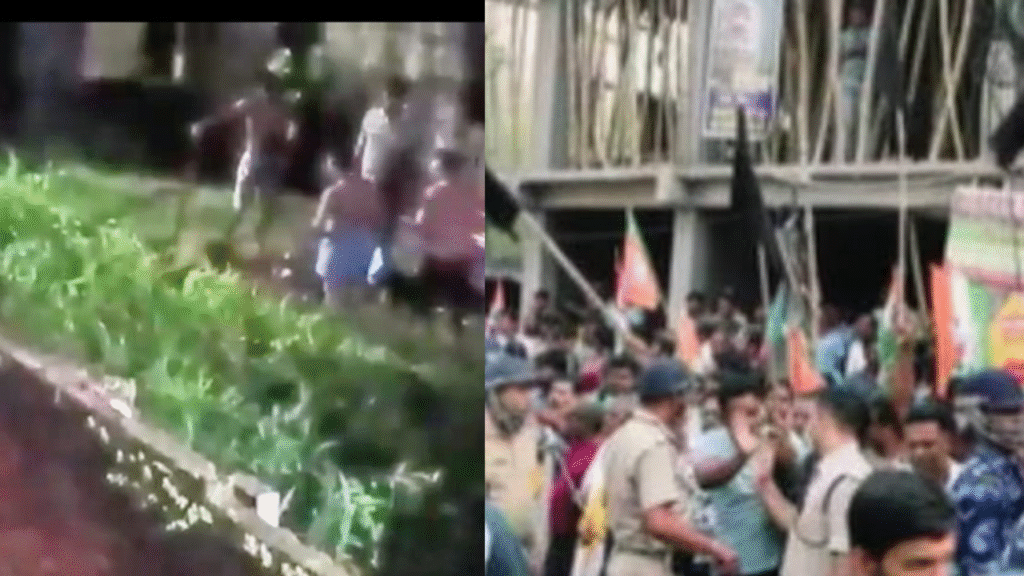
The brutal killing of a local Bharatiya Janata Party (BJP) leader in West Bengal’s South 24 Parganas district has triggered a political firestorm, with the state’s ruling Trinamool Congress (TMC) and the opposition BJP trading accusations over the motive behind the crime. Police said on Sunday that a search is underway for two more suspects in connection with the death of Rajib Biswas, a BJP booth president in Baruipur, who was assaulted and set ablaze on August 8. His father and brother, both accused of leading the attack, have already been arrested. According to investigators, Biswas was kicked, punched, and beaten with bamboo sticks and sharp weapons before being set on fire inside a house, which has since been sealed. He later succumbed to his injuries. Authorities have described the incident as a fallout of a long-running family feud. The BJP, however, has rejected the police version, insisting that the murder was politically motivated. Party leaders allege that Biswas’s father and brother were members of the TMC and claim that the two other men still at large are also affiliated with the ruling party. “This was not just a family matter. Rajib Biswas was murdered because he refused to bow down,” BJP leader Sankudeb Panda said. He alleged that the killing followed a dispute over putting up BJP flags and posters of Suvendu Adhikari, the Leader of the Opposition in the state assembly. Panda also shared a video on social media purportedly showing the attack, in which two men can be seen beating a youth as he screams for help, while two others stand by. The footage has not been independently verified by PTI or other news outlets. Calling the murder “an act of political vendetta,” Panda demanded that the investigation be handed over to a central agency, arguing that the state police could not be trusted to act impartially. The TMC has strongly denied any link to the incident. Local councillor Archana Mallick said that those arrested were not members of the ruling party. “On August 9, I was informed by some family members that the youth was in critical condition. I advised them to take him to hospital, and later I heard he had died. This is purely a family dispute. The BJP is trying to give it a political twist,” Mallick said. She added: “We don’t believe in the politics of murder. Those responsible must be punished.” The killing has deepened tensions in the politically volatile district, which has long witnessed clashes between supporters of the BJP and TMC.
CBI questions TMC lawmaker Sudipto Roy in RG Kar Medical College corruption probe
The Central Bureau of Investigation (CBI) on Saturday visited the residence of Trinamool Congress (TMC) legislator Sudipta Roy in Kolkata’s Sinthee area as part of its ongoing probe into alleged corruption at RG Kar Medical College and Hospital. According to sources, two CBI officers arrived at Roy’s house in the afternoon to question him. However, the Shrirampur MLA was not present at the time. Officials are expected to record his statement once he returns. Roy, who once headed the hospital’s Patients’ Welfare Committee, has been under the agency’s scrutiny for several months. In September last year, CBI’s anti-corruption wing had raided his residence. Opposition leaders, including BJP’s Suvendu Adhikari, have accused Roy of diverting hospital equipment to his private nursing home – a charge the lawmaker has strongly denied. Speaking earlier, Roy said his nursing home was established in 1984 and grew during the Left Front era. “Anyone can visit and verify for themselves. The allegations are baseless,” he maintained. The renewed CBI action comes against the backdrop of last year’s brutal rape and murder of a woman doctor inside RG Kar Medical College. Her body was discovered in a bloodied state in a seminar hall on the morning of August 9, 2024. A civic volunteer, Sanjay Roy, was arrested that night. The incident triggered outrage across West Bengal and led to the removal of Sudipta Roy as chair of the hospital’s welfare panel, with senior TMC leader Shantanu Sen appointed in his place. The investigation into both the murder and the hospital’s alleged irregularities continues to place pressure on the ruling TMC, already grappling with a series of corruption scandals.
Victor Banerjee petitions for Bengal release of ‘The Bengal Files’, but Kolkata cinemas hesitant
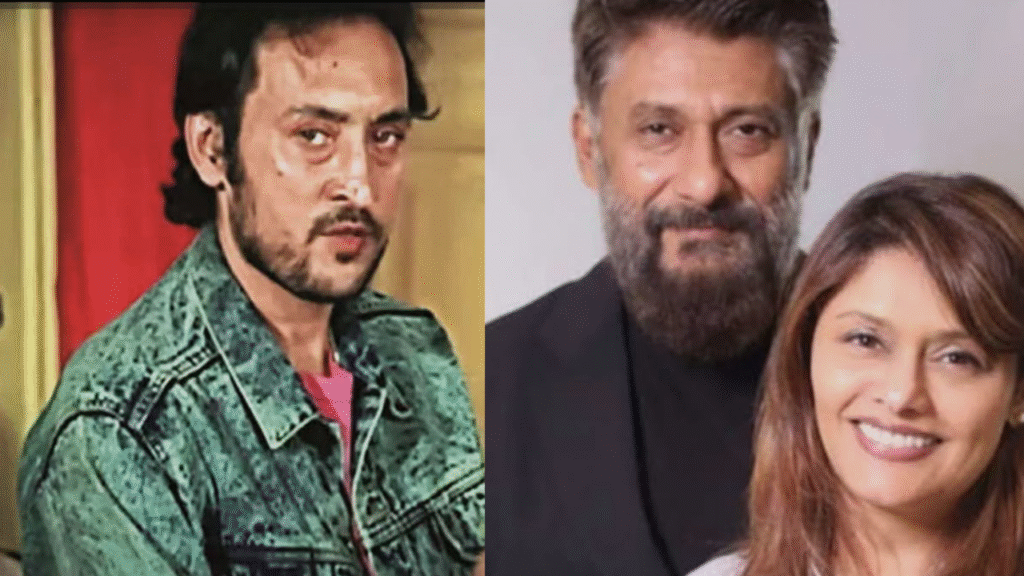
Veteran actor Victor Banerjee has launched a petition campaign urging authorities to ensure the smooth release of The Bengal Files in West Bengal, amid growing uncertainty over whether cinemas in the state will screen the controversial film. The movie, directed by filmmaker Vivek Agnihotri, is scheduled to release nationwide on September 5, 2025. Promoted as an attempt to bring to light a “dark and painful chapter” of Bengal and India’s history, the film has already run into turbulence in Kolkata. Earlier this month, its trailer launch event in the city was forcibly shut down, drawing criticism from free speech advocates. Speaking about his concerns, Banerjee said he feared deliberate attempts might be made to block the film’s release in his home state. “We have strong reasons to believe that there could be intentional obstacles to the scheduled release in Bengal,” he said in a statement. “Such actions violate artistic freedom and deny citizens their constitutional right to truth and free thought. We appeal to the Honourable President of India to ensure that this film can be shown peacefully, without intimidation or interference, and that the rights of both artists and audiences are fully protected.” Director Agnihotri, who previously made The Kashmir Files, echoed those concerns, claiming the disruption of the trailer launch was “illegal and forceful.” Yet, despite Banerjee’s appeal, many cinemas in Kolkata remain cautious. A prominent single-screen owner told Al Jazeera that he was unwilling to take risks. “We are not planning to screen this film. We don’t want to get dragged into trouble. We would rather run four shows of Bengali films,” the cinema manager said, requesting anonymity. Another hall operator, also speaking on condition of anonymity, said political tensions were weighing heavily on exhibitors’ decisions. “The pressure is increasing around this film. By the morning of September 5, we will know which cinemas are willing to take the chance. But we also need to be alert about whether any untoward incident takes place,” he said. The hesitation underscores the volatile climate surrounding politically charged films in Bengal, where cinema owners fear backlash from both sides of the political spectrum. For now, the petition led by Banerjee has amplified the debate, but whether The Bengal Files will reach audiences in Kolkata and across West Bengal on its release date remains uncertain.
Heavy rains flood Burdwan, zoo underwater as authorities scramble to protect animals
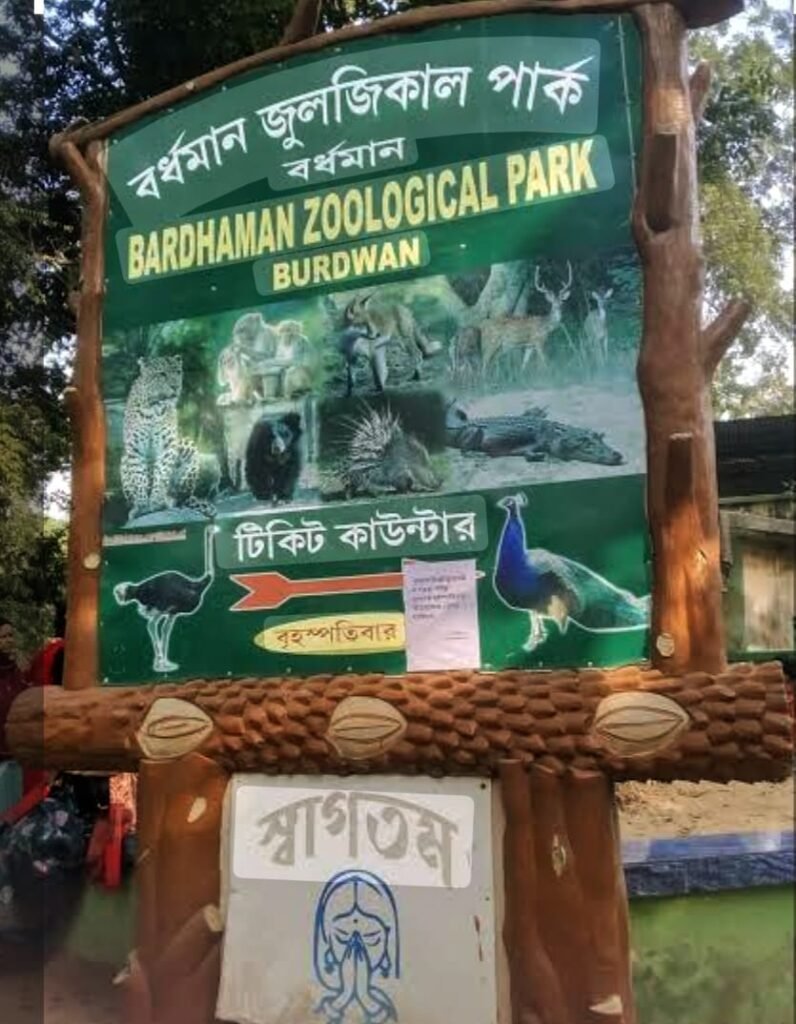
Torrential rains over the past 28 hours have battered Burdwan city in West Bengal, submerging several neighbourhoods, inundating homes, and forcing authorities to shut down the city’s zoo after floodwaters swept into animal enclosures. According to the state weather department, Burdwan recorded more than 200 millimetres of rainfall in just over a day – one of the heaviest spells in recent years. The downpour left many wards waterlogged, with streets under knee-deep water and drains overflowing. One of the worst-affected sites is the Ramnabagan Wildlife Sanctuary and zoo, where water from Burdwan University’s nearby canal spilled into the grounds late Friday night. By Saturday morning, large portions of the zoo were underwater, prompting officials to close its gates to visitors. “Protecting the animals is our first priority,” said Sanchita Sharma, Divisional Forest Officer of Burdwan. “We are pumping out water with ten pumps and taking measures to ensure that no animals are harmed.” Zoo authorities said that while no animals have been injured, some species remain vulnerable if exposed to stagnant water for long periods. Deer and leopards are considered most at risk. Temporary arrangements have been made to relocate them to higher, drier ground within their enclosures. Bears, hyenas and other animals have also been confined to secure areas to prevent them from straying into waterlogged spaces. To shield birds, keepers have covered cages with tarpaulin sheets and installed fans to reduce humidity. Two ponds inside the zoo are also being drained to reduce the water level. Forest department staff have been working round the clock since Friday night to safeguard the animals, Sharma said. “Most species can tolerate these conditions for a short while, but we are moving quickly to restore normalcy.” The flooding has also disrupted civic life beyond the sanctuary. On Tuesday, Chief Minister Mamata Banerjee is scheduled to address a public rally at Burdwan Municipal High School ground. But that venue, too, has been left waterlogged, forcing local administration to begin urgent repair and drainage work. Residents say the flooding has been severe this time, worsened by overflowing canals and blocked drains. “In my neighbourhood, water has entered several houses for the first time in years,” said Anupam Roy, a shopkeeper near Ramnabagan. “People are worried about diseases if this water doesn’t clear soon.” Officials believe the situation may ease if rainfall intensity reduces over the next two days. Weather forecasts suggest lighter showers from Sunday, which could allow drainage operations to restore normal conditions. Until then, Burdwan remains on alert – a city battling both the fury of monsoon rains and the challenge of protecting its animals from rising waters.
Painting Teacher Assaulted After Protesting Against Public Drinking in West Bengal
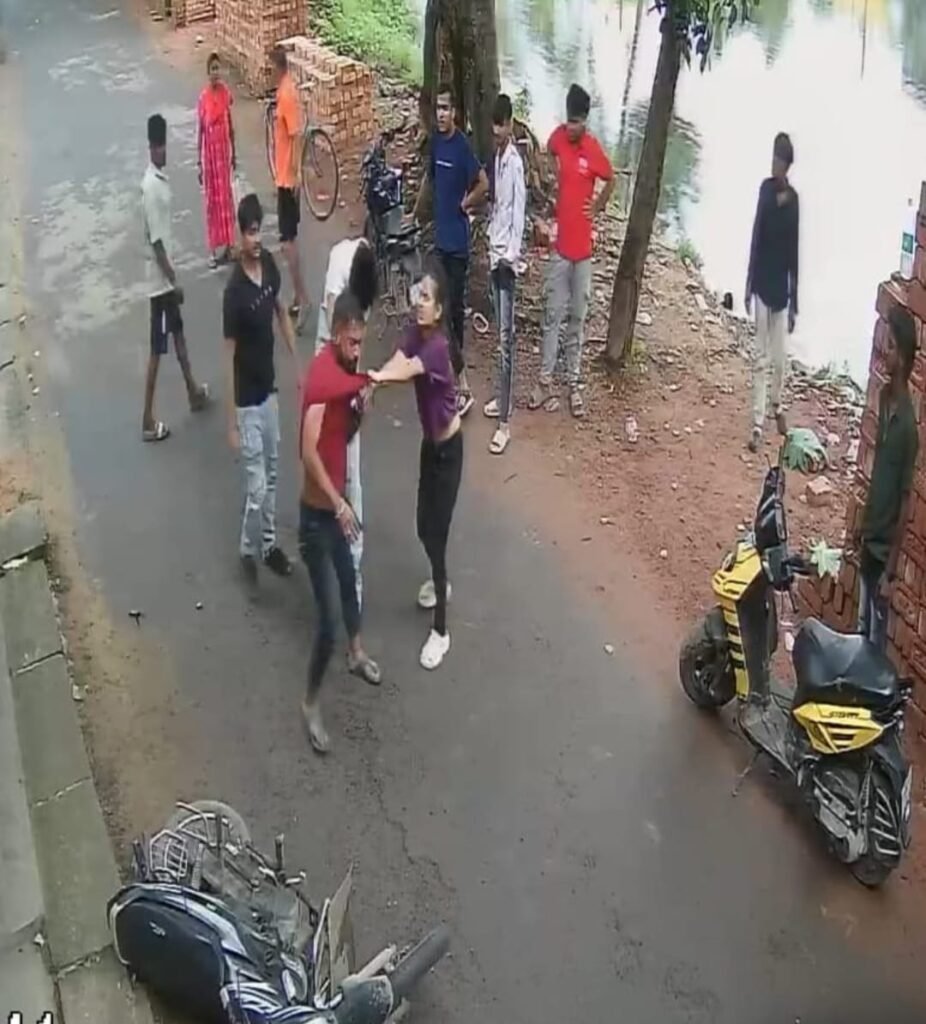
A school teacher was brutally assaulted in broad daylight after objecting to a group of young men and women drinking alcohol in public in Kamarhati, on the northern outskirts of Kolkata. The incident, which left the victim — identified as 45-year-old art teacher Nirupam Pal — seriously injured, took place on Saturday morning in Ward No. 31 of Kamarhati Municipality, sparking panic among local residents. Police said Mr Pal, a resident of Nandannagar, was returning home from a community function when he saw several people drinking by the roadside. Disturbed by the sight of public drinking early in the morning, he confronted the group. According to the complaint lodged at Belgharia police station, the youths and a woman then attacked him, dragging him to the ground and beating him severely. Local residents who rushed to the spot managed to rescue the teacher, while the assailants fled. The attackers also allegedly threatened to kill Mr Pal. Police confirmed that CCTV footage from the area captured the assault. One suspect has been taken in for questioning, while efforts are on to identify and trace the others, believed to be outsiders. The incident has triggered political controversy. Sayanadeep Mitra, a member of the CPI(M) state committee, visited the site and accused the police of inaction. “Belgharia and Kamarhati are increasingly becoming safe havens for miscreants. It was the duty of the police to prevent public drinking, but when they failed to do so, Nirupam Sir took a stand and paid the price,” he said. Police have launched an investigation, but the accused remain absconding.
Kolkata mountaineers conquer Unam peak amid landslides and adversity
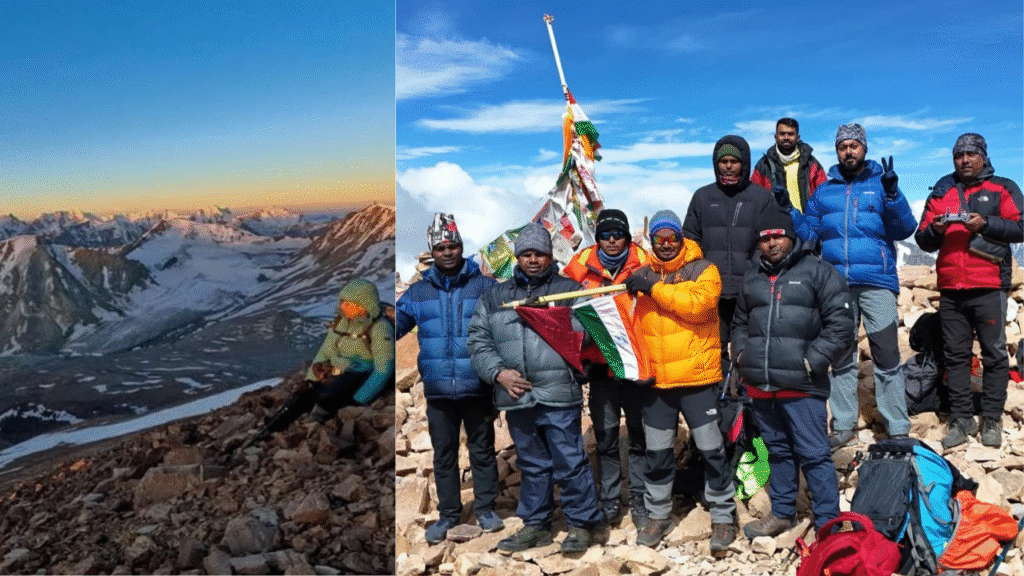
After six long years, the Mountaineers’ Association returned to the high Himalayas this August, sending a 25-member team to scale the formidable Unam peak (6,111 metres) in Himachal Pradesh’s remote Lahaul-Spiti region. What unfolded was a tale of grit, altitude sickness, triumph—and an arduous return through landslide-ravaged roads. The expedition began on 8 August, with the team leaving Kolkata by train for Chandigarh before embarking on the rugged road journey to Manali. Heavy rains forced them to change buses three times—from Chandigarh to Mandi, onward to Kullu, and finally into Manali. Lugging 24 heavy rucksacks packed with climbing gear, tents, and supplies through multiple bus changes was an expedition in itself. “Over four decades of mountaineering, I have rarely seen such a chaotic approach journey,” said one veteran climber. “Even reaching Manali felt like a battle won.” At 6,726 feet, Manali served as the base for two nights of acclimatisation. The weather was fickle—rain and clouds breaking through brief spells of clear skies. Yet, the team pressed on with preparations, before setting off in two tempo travellers on 12 August. The road ahead was dizzying. Manali to Bharatpur (15,420 feet) meant an ascent of nearly 8,700 feet in a single day. The route, once over Rohtang Pass, now passes through the 9-km-long Atal Tunnel, one of the longest high-altitude road tunnels in the world. The sharp altitude gain left many members struggling with nausea and headaches. “Everyone was warned,” recalled expedition manager Subrata Banerjee. “We knew altitude sickness was inevitable. That is why we had pre-planned a two-night halt at Bharatpur.” From Bharatpur, the climbers ferried loads to the base camp. Despite illness, members including deputy leader Amiya Mitra, Ajay Debnath, Soum Jyoti Seal, and NIMAS instructor Saurav Rajak established the camp on 13 August. Two members were evacuated back to Manali due to severe sickness. By 14 August, the full team had consolidated at base camp, ready for the summit push. Then came the decisive night. At 12:43 a.m. on 15 August—India’s Independence Day—twelve climbers set off under headlamps, roped together against the icy winds. Hours later, at 9:22 a.m., ten of them stood victorious on the summit of Unam, gazing across the frozen expanse of Lahaul-Spiti. The successful summiteers included climbing leader Nitai Mondal, deputy leader Mitra, instructor Rajak, and young climbers such as Sayak Mondal and Raunak Dutta. Two others—Amit Das and Bikram Dasgupta, both fresh from a rock-climbing course—had to halt just below the summit, exhausted but elated at their first Himalayan experience. The triumph was short-lived. On the return journey to Chandigarh, the team was caught in devastating landslides and flash floods that paralysed Himachal’s road network. For nearly 30 hours, the climbers were stranded—without food for 27 hours—while vehicles remained trapped in tunnels and mountain passes. Many spent the night sleeping on roadsides. With the help of local authorities and medical aid from Dr. Rabikar Pal, the team eventually made it through, exhausted but safe. On 22 August, they boarded the Kalka Mail back to Kolkata, carrying not just the story of a successful summit but also of endurance, resilience, and the unpredictability of the mountains. “Climbing Unam was hard,” said one member with a weary smile. “But the descent through nature’s fury was even harder. This was not just a mountaineering expedition—it was a reminder of how small we are before the Himalayas.”
Radhashtami festival to be celebrated in grand style at ISKCON Mayapur
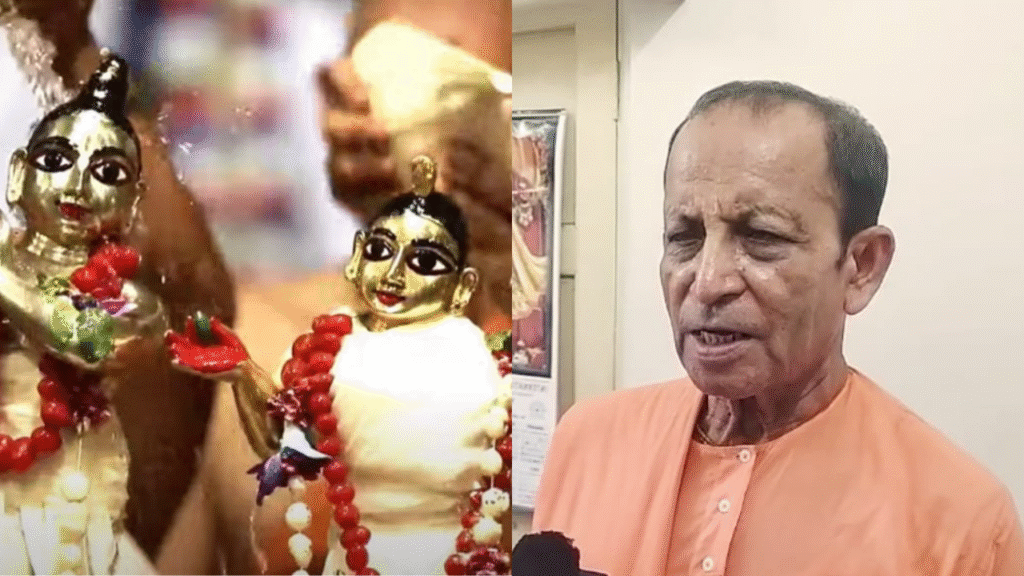
The International Society for Krishna Consciousness (ISKCON) is preparing to celebrate Radhashtami — the birth anniversary of Srimati Radharani, consort of Lord Krishna — with grandeur and devotion at its global headquarters in Mayapur, West Bengal, on Sunday, 31 August 2025. The festival, one of the most significant in the Vaishnava calendar, will also be observed across ISKCON centres worldwide. According to ISKCON’s public relations officer, Rasik Gauranga Das, the Mayapur temple complex will be decorated with flowers and lights, with thousands of devotees from India and abroad expected to participate in the celebrations. Authorities said special arrangements are being made for crowd management and security as pilgrims are likely to gather in large numbers. Radhashtami, which falls on the eighth day of the bright fortnight of the month of Bhadra in the Hindu lunar calendar, marks the appearance of Radharani more than 5,200 years ago in the village of Raval, near Vrindavan, as the daughter of King Vrishabhanu and Queen Kirtida. In the Vaishnava tradition, Radharani is revered as the embodiment of divine love and the feminine counterpart of Krishna. “Just as milk and its whiteness or fire and its burning power cannot be separated, so too Radha and Krishna are one soul in two forms,” explained Rasik Gauranga Das. “Her pure, unconditional love for Krishna represents the highest form of devotion. If humanity can imbibe even a fraction of that love, it will bring blessings to the entire world.” The festival will include traditional rituals, devotional singing (bhajans and kirtans), scriptural discourses, cultural performances, and distribution of sanctified food (prasadam). In Mayapur, ISKCON leaders will also lead prayers for peace and spiritual awakening in the face of global conflicts and crises. ISKCON officials said the Radhashtami celebrations are not limited to India. From New York to London, Nairobi to Sydney, and in more than 700 ISKCON centres around the world, devotees are preparing similar events. In London’s Bhaktivedanta Manor, for instance, thousands of worshippers are expected to gather for special midnight prayers, while in New York, the festival will include a cultural parade and community feast. For ISKCON, which has grown into a global spiritual movement since its founding in 1966, Radhashtami is not only a religious observance but also an occasion to highlight Radharani’s message of unconditional love and the power of the feminine principle. “Her life and teachings remind us that only the awakening of true maternal strength can lead humanity towards light,” said an ISKCON spokesperson. “On this auspicious day, we pray for her grace to guide society towards peace, unity and higher consciousness.”
CBI files case against Anil Ambani’s Reliance Communications in ₹2,000 crore bank fraud
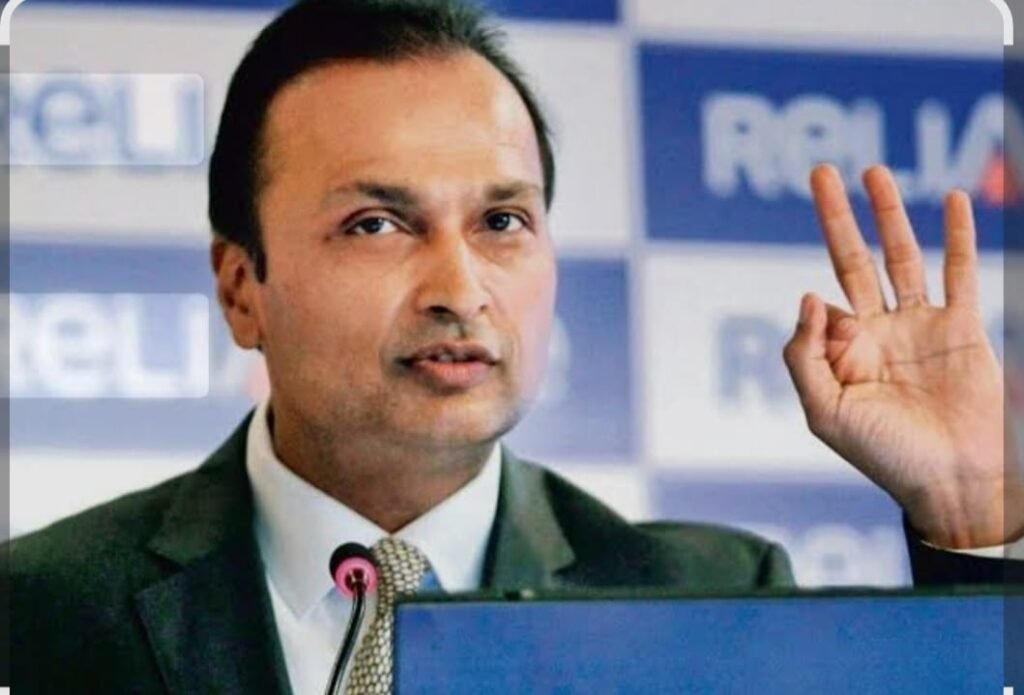
India’s federal police, the Central Bureau of Investigation (CBI), has registered a case against Anil Ambani-promoted Reliance Communications (RCom) in connection with an alleged bank fraud, officials said on Saturday. The agency conducted searches at multiple locations linked to the company and its promoters in Mumbai earlier in the day. Investigators said the alleged fraud caused a loss of about ₹2,000 crore ($240 million) to State Bank of India (SBI). On June 13, SBI classified RCom’s loan account as “fraudulent,” adding Anil Ambani’s name to its report under Reserve Bank of India (RBI) guidelines. The bank formally reported the case to the RBI on June 24 and initiated proceedings with the CBI, junior finance minister Pankaj Chaudhary informed parliament last month. Under RBI norms, once an account is declared fraudulent, banks are required to report it to the regulator within 21 days and also lodge a complaint with the police or CBI. Ambani, who has faced multiple investigations into his group companies, was questioned by the Enforcement Directorate (ED) in July in connection with a separate alleged loan fraud involving about ₹17,000 crore. That case includes ₹3,000 crore in loans from Yes Bank, which ED says were irregularly disbursed and possibly linked to kickbacks. ED officials last month raided over 35 offices connected to Ambani’s group across Mumbai, covering about 50 companies tied to him. On Saturday, CBI teams also reached Ambani’s ‘Sea Wind’ residence in Mumbai as part of their searches, sources said.
Modi Borrows Ritwik Ghatak’s Iconic Cry “Dada Ami Bachte Chai” to Frame Bengal Political Battle
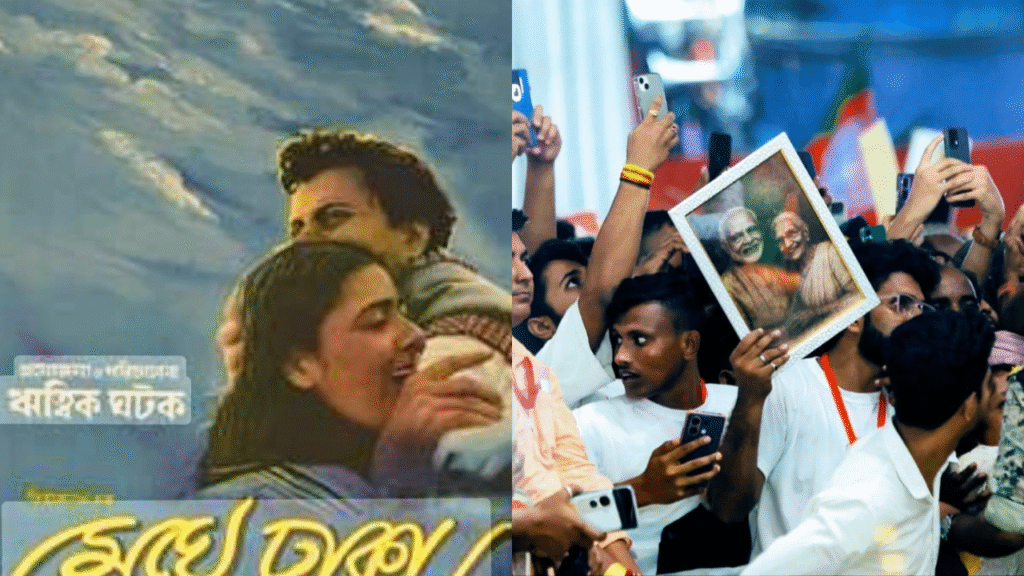
Prime Minister Narendra Modi on Friday invoked one of the most iconic lines in Indian cinema – Ritwik Ghatak’s ‘dada ami bachte chai” (Dada, I want to live) from Meghe Dhaka Tara – to frame his political narrative in West Bengal. The line, delivered by the tragic character Neeta in the 1960 classic, has long symbolized the pain and survival struggles of Partition refugees. Modi used the phrase in his speech to suggest that the Bharatiya Janata Party (BJP) represents the survival instinct of Bengal itself. “ami bachte chai BJP tai” (I want to live so I want BJP) he declared, echoing Neeta’s desperate cry, and linked it to the plight of those who fled East Pakistan, now Bangladesh, during Partition. Political commentators immediately noted the weight of the choice. Ghatak’s Meghe Dhaka Tara is not just a film but a social document of uprooted lives, particularly refugees who lost everything in the division of Bengal. Neeta, played by Supriya Devi, sacrifices herself for her family only to collapse under the unbearable weight of exploitation and despair. Her final cry, “Dada, I want to live!” spoken to her brother Shankar, continues to resonate across generations as a universal expression of human suffering and resistance. By placing himself in that emotional lineage, Modi signaled two things: his party’s identification with displaced Hindus who crossed into Bengal for survival, and his resolve to prevent a repeat of that displacement. In the same breath, however, he reaffirmed his hard line against what he termed “illegal infiltrators,” vowing to “drive them out of Bengal.” The BJP’s opponents accused Modi of emotional manipulation. West Bengal Pradesh Congress spokesperson Soumya Aich Roy said the prime minister was “stealing the emotional history of Bengalis to capture power in the state.” He argued that while BJP tries to appropriate Ghatak’s imagery for political gain, the party simultaneously fuels hostility against Bengalis in other parts of India. “Partition was not just a Hindu-Muslim divide; it was the trauma of millions,” Roy said. “To use Ghatak’s words in a campaign against so-called infiltrators is not only cynical, it is an insult to Bengal’s history.” For the BJP, however, cultural symbols are proving to be powerful tools in the run-up to the 2026 state elections. Party sources suggest that Modi’s reference is part of a wider attempt to anchor its campaign in Bengal’s collective memory of displacement, survival, and identity. The symbolism also arrives in a heated cultural moment. Filmmaker Vivek Agnihotri, known for The Kashmir Files, has announced his new film The Bengal Files, which he says will document Bengal’s political violence. Chief Minister Mamata Banerjee has signaled she may block its release in the state. Against that backdrop, Modi’s borrowing of Ghatak – one of Bengal’s most revered filmmakers, born in Rajshahi in undivided East Bengal – is being seen as a deliberate attempt to outmaneuver the Trinamool Congress by seizing the cultural high ground. “Ghatak’s cinema is the greatest testament to the wounds of Partition,” said one political analyst in Kolkata. “By invoking him, Modi is telling Bengal: we, the BJP, are the true inheritors of your pain, and the guardians of your survival.” For Bengal, however, the question remains: can a line that once captured the existential cry of refugees now be transformed into a political slogan? And will voters see it as empathy, or exploitation?
Modi Defends Controversial Constitutional Amendment Bill, Trinamool Hits Back
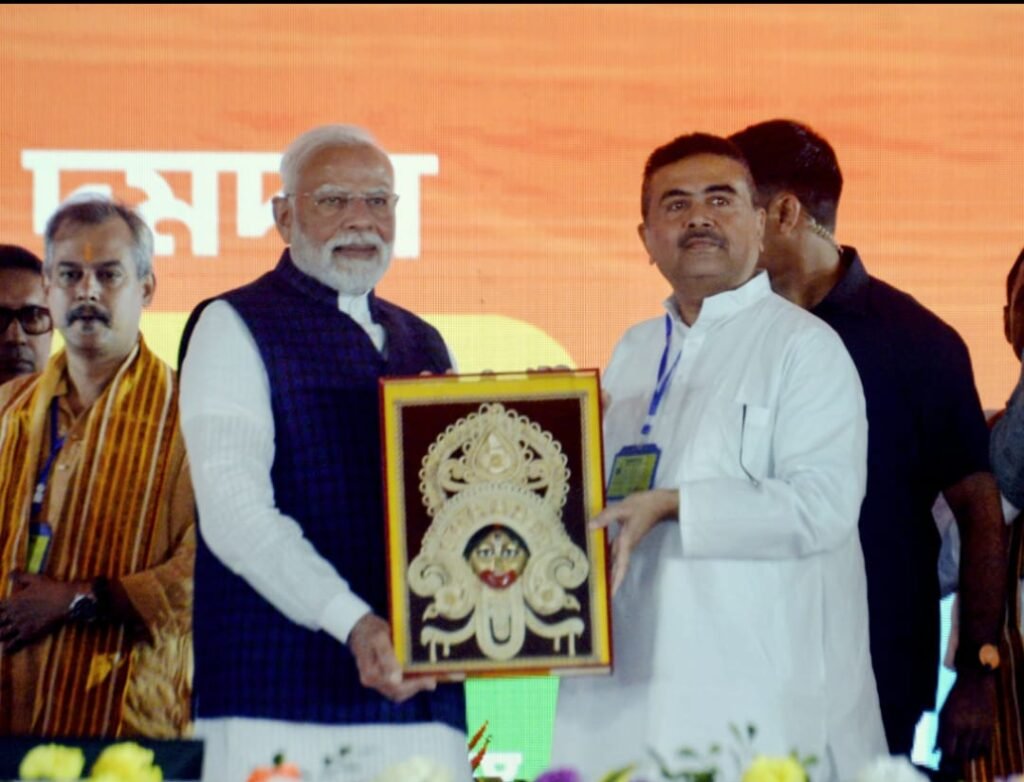
Kolkata, India – The political storm over the 130th Constitutional Amendment Bill intensified on Friday as Prime Minister Narendra Modi defended the legislation during a Bharatiya Janata Party (BJP) rally in West Bengal, drawing sharp rebuttals from the state’s ruling Trinamool Congress (TMC). Introduced in the Lok Sabha earlier this week despite fierce opposition, the bill has been branded by critics as a tool for the federal government to sideline elected state administrations. The TMC has led protests, warning that the amendment would allow New Delhi to bypass courts and dissolve opposition-ruled governments at will. Addressing BJP supporters at Dum Dum Central Jail grounds near Kolkata, Modi sought to justify the bill by invoking recent corruption scandals involving TMC ministers. Without naming them, he referred to the arrests of former state education minister Partha Chatterjee and food minister Jyotipriya Mallick, both jailed on graft charges. “Government employees lose their jobs if they spend more than 50 hours in jail. Why then should a chief minister, a minister, or even a prime minister continue to run a government from prison?” Modi asked, echoing remarks he made earlier in Bihar. “One minister was caught in the teachers’ recruitment scam, with piles of cash found in his house. Another looted rations meant for the poor. Yet both refused to resign, showing contempt for the people and the Constitution,” he said. The TMC fired back, accusing Modi of hypocrisy. “The prime minister is throwing stones from a glass house,” senior minister Shashi Panja said. “He points fingers at others while ignoring serious charges against his own party leaders.” Panja alleged that 94 of the BJP’s 240 MPs face criminal cases, including 63 involving serious charges. The TMC also accused the BJP of political opportunism, noting that corruption allegations against several leaders disappeared once they switched sides and joined the saffron camp. “The same leaders Modi once denounced are now his own,” Panja added. For the TMC, the amendment bill represents not reform but an assault on India’s federal structure. And as both parties exchange accusations of graft, the looming battle over corruption and power has become a key flashpoint ahead of the 2026 West Bengal elections.


