
Shah set to inaugurate Durga Puja celebrations in Kolkata, BJP signals cultural push before polls
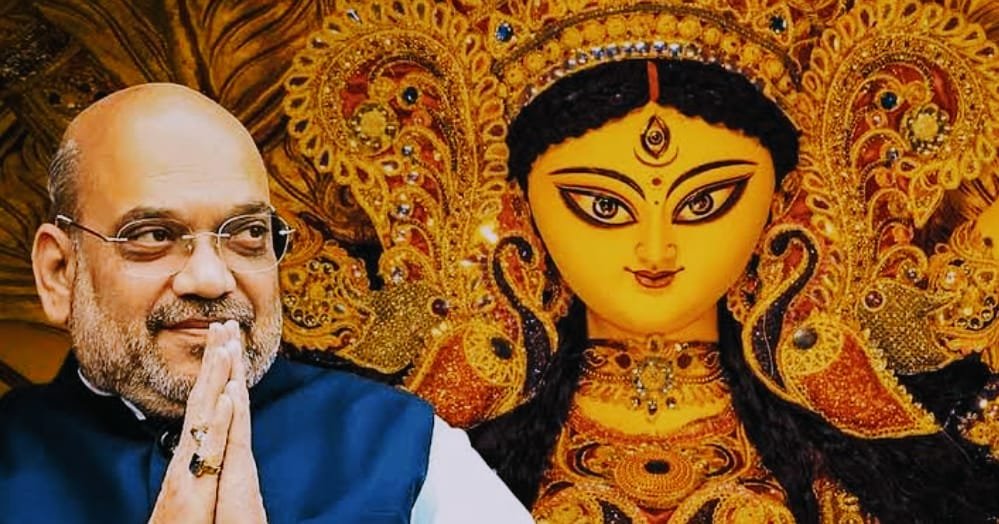
Kolkata, India – India’s Home Minister Amit Shah is expected to inaugurate two Durga Puja celebrations in Kolkata this September, marking his return to Bengal’s biggest cultural festival after a year’s gap. The move comes just months ahead of the 2026 state elections, underscoring the Bharatiya Janata Party’s (BJP) bid to deepen its presence in West Bengal’s cultural landscape. According to BJP sources, Shah is scheduled to arrive in Kolkata on September 22, a day after Mahalaya which signals the beginning of the festival’s Devi Paksha (the fortnight dedicated to the goddess). He is likely to inaugurate the Durga Puja at Santosh Mitra Square — a high-profile community puja in central Kolkata — followed by another at the Eastern Zonal Cultural Centre (EZCC) in Salt Lake, organised under the banner of the “Paschimbanga Sanskriti Mancha,” a BJP-backed cultural platform. In 2023, Shah inaugurated the Santosh Mitra Square puja, themed around the Ram Mandir in Ayodhya. The EZCC puja, meanwhile, has been a BJP initiative since 2020, when Prime Minister Narendra Modi virtually launched it during the pandemic. This year, Santosh Mitra Square is adopting the theme “Operation Sindoor,” while BJP’s cultural cell, led by actor-turned-politician Rudranil Ghosh, is steering the EZCC celebration. Despite BJP’s confidence, the official confirmation of Shah’s visit is still awaited from the Ministry of Home Affairs. Until then, both puja committees are refraining from public announcements. Durga Puja, recently recognised by UNESCO as an Intangible Cultural Heritage of Humanity, is Bengal’s largest festival and a significant stage for political signalling. While Kolkata’s marquee pujas are usually helmed by non-political community groups, the BJP has sought to carve out its own space in the celebrations, projecting the involvement of its central leaders as a show of strength. Shah’s last inauguration in 2023 came months after the BJP suffered setbacks in the Lok Sabha elections in Bengal. His return to the city’s festive stage this year, BJP insiders suggest, is aimed at energising the party’s cadre and reclaiming lost ground before the assembly polls.
HC warns Abhishek Banerjee of ex-parte order in Diamond Harbour poll case
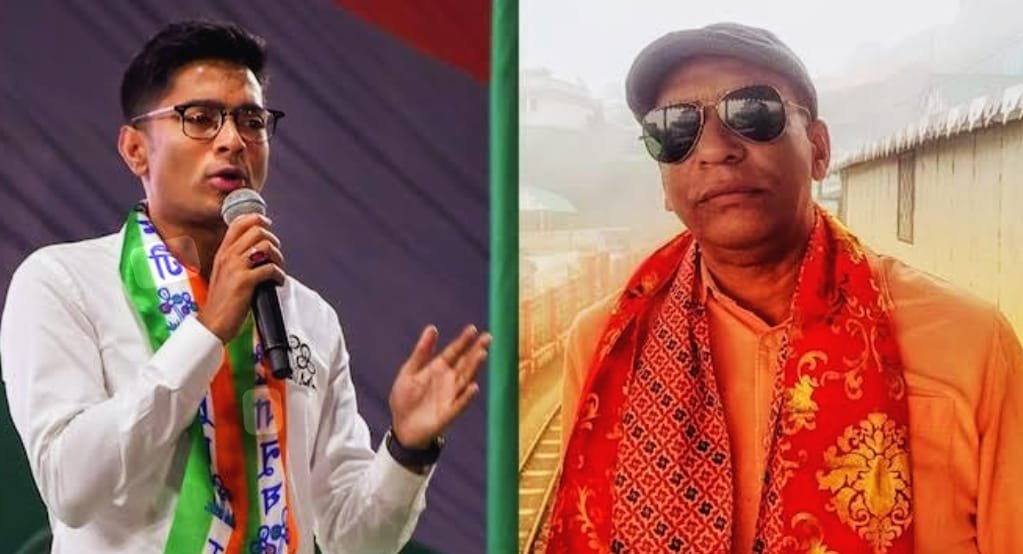
The Calcutta High Court on Tuesday warned Trinamool Congress leader and MP Abhishek Banerjee that it may pass an ex-parte order in an election petition filed against him over alleged irregularities in the 2024 Lok Sabha polls from Diamond Harbour, after his counsel sought more time to file a written response. The matter, listed as EP/05/2024 (Abhijit Das Bobby vs Abhishek Banerjee), was heard by Justice Sugato Majumdar, who expressed displeasure over repeated delays. Banerjee’s legal team has already sought adjournments on three earlier occasions but has yet to file a written reply. On Tuesday, Banerjee’s counsel again sought time, drawing sharp objections from senior advocate Bilwadal Bhattacharya, appearing for petitioner Abhijit Das, a rival candidate. Justice Majumdar initially proposed imposing a fine of 5,000 rupees ($60) for the delay but later waived the penalty at the request of the defence counsel. He nevertheless set August 28, 2025, as the “final opportunity” for Banerjee to submit his response, cautioning that failure to do so would result in an ex-parte order. Preservation of records The case relates to allegations of malpractice and “booth capturing” during the general elections. On April 8 this year, the High Court directed the Chief Election Commissioner of India and the District Magistrate-cum-District Election Officer of South 24 Parganas to preserve all election-related documents, devices, and CCTV footage. That order remains in force, ensuring that key evidence is secured. Call for forensic testing During Tuesday’s hearing, Bhattacharya urged the court to send electronic voting machines (EVMs), CCTV recordings and other election materials for forensic examination. In response, counsel for the Election Commission of India (ECI) said the Commission would file a written application opposing such a move. Court records also show that ECI’s counsel appeared in the matter even before the Commission was formally served notice. The judge remarked that such conduct raised “serious doubts” about the neutrality of the constitutional body. Wider significance The petition against Banerjee, who is the nephew of West Bengal Chief Minister Mamata Banerjee and a prominent face of the ruling Trinamool Congress, has drawn close attention in the state’s political circles. Each hearing has seen sharp exchanges, with the court’s directions and observations adding to the controversy. The next hearing has been scheduled for September 4, 2025. Analysts say the High Court’s firm stance, the demand for forensic scrutiny, and questions over the Election Commission’s role have made the case a political flashpoint in West Bengal, potentially influencing the broader narrative around electoral integrity.
Rains Wreak Havoc Across States, Toll In Kishtwar Cloudburst Touches 63

Heavy rains wreaked havoc across several states on Monday. Maharashtra was the worst-hit as 200 people were stranded and five reported missing prompting authorities to deploy the Army for rescue efforts even as multiple landslides in Himachal Pradesh led to closure of nearly 400 roads. In the cloudburst-hit village in Jammu and Kashmir’s Kishtwar district, two more bodies were recovered from the debris taking the death toll in the August 14 disaster to 63, as a search operation continued for the fifth day despite intermittent rains. In Mumbai, relentless downpours brought the city to a standstill, prompting the civic body to declare a holiday for schools and colleges. Several parts of the country’s financial capital received more than 100 mm rainfall in nine hours on Monday. Incessant rains in Mumbai also resulted in hardships to those visiting a hospital in Chembur hit by waterlogging. Several people were seen carrying ailing kin on their backs to gain access to the Maa General Hospital, which is run by the Brihanmumbai Municipal Corporation (BMC). The situation was brought under control by evening, an official said. In Maharashtra’s Nanded district, more than 200 people were stranded in floods amid incessant rains, forcing authorities to call the Army for rescue and relief efforts. Chief Minister Devendra Fadnavis said five persons are reported missing from Mukhed taluka of the district, around 600 km from Mumbai. Many flights were affected due to poor weather conditions in Mumbai, with some executing “go-arounds” and one flight diverted. The heavy downpour led to low visibility and increased congestion on access roads, causing inconvenience to both arriving and departing passengers, an airport official said. Fadnavis said Mumbai received 177 mm rain in six to eight hours on Monday and asked citizens to observe all precautions since more is expected through the day along with high tides. District collectors of Nanded, Latur, and Bidar are coordinating with each other to carry out rescue operations, he said. “One NDRF team, one military unit, and a police team are working in coordination for the rescue efforts. A military unit from Chhatrapati Sambhajinagar has also been dispatched,” Fadnavis said. As heavy rains lashed Mumbai on Monday, waterlogging was reported in several pockets, leading to traffic jams. In light of the incessant showers lashing Mumbai, the BMC declared a holiday for all schools and colleges in the city operating in the second shift (post 12 pm).
West Bengal CM Questions AIIMS Survey, Links It to NRC Exercise
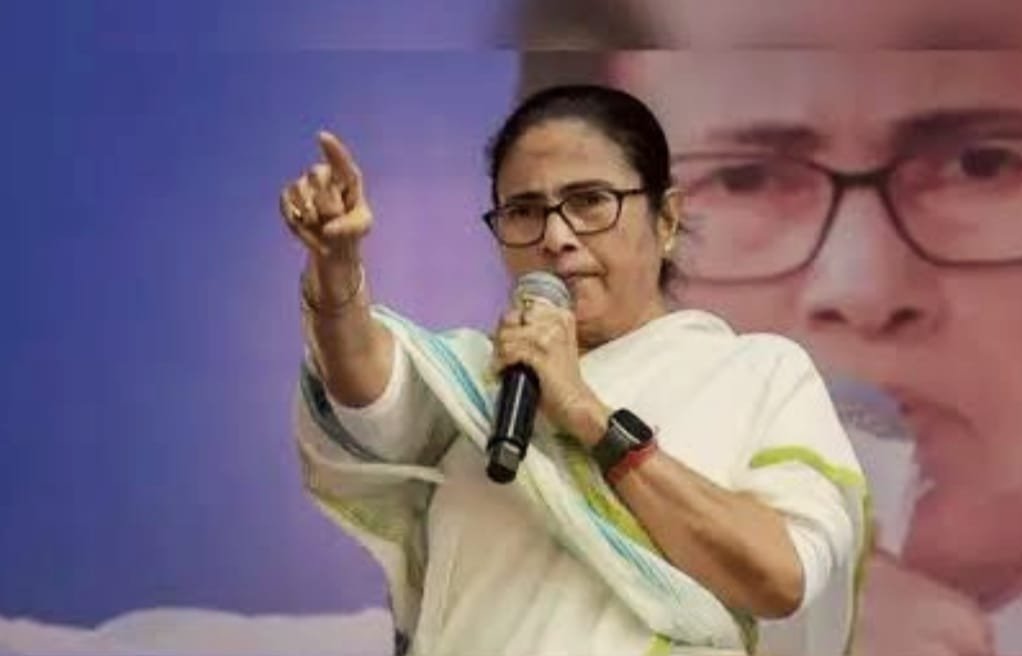
West Bengal Chief Minister Mamata Banerjee has raised strong objections to a survey being conducted by the All India Institute of Medical Sciences (AIIMS) Kalyani, alleging that the exercise—ostensibly on mental health—was in fact aimed at collecting data for a future National Register of Citizens (NRC). Speaking at a press conference in Nabanna on Monday following a state cabinet meeting, Ms Banerjee warned citizens against sharing personal information with surveyors. “I have learnt that AIIMS Kalyani, for which we had given land, is carrying out a survey in the name of mental health, but the real purpose is NRC,” she told reporters. The Chief Minister further stressed that the state government had no involvement in the survey. “If the state conducts such an exercise, people will be informed beforehand. But this direct involvement in political work is not acceptable. I urge AIIMS not to play this game,” she said, cautioning residents to “stay alert and not provide details to anyone.” According to sources, Ms Banerjee also flagged the matter during the cabinet meeting, reiterating that health was a subject under the state list and accusing a central institution of overstepping its mandate. AIIMS Kalyani has since issued a statement clarifying its position, although details of the clarification remain limited. The controversy touches a raw nerve in West Bengal, where the NRC—implemented in Assam in 2019—remains a politically charged issue.
Boy, 6, dies after waiting hours for treatment at Kolkata children’s hospital

A six-year-old boy died at a state-run children’s hospital in Kolkata on Monday after his family alleged he was made to wait for hours in soaring heat before receiving treatment. The boy, identified as Shakib from Howrah’s Bankra area, had been running a high fever for several days. His family rushed him to Dr B.C. Roy Post Graduate Institute of Paediatric Sciences after his condition worsened, relatives said. They alleged that emergency staff directed them to the outpatient department and asked them to queue for a registration card despite repeated pleas that the child was critically ill. The family said they waited for nearly two hours in the heat before the boy collapsed and died before he could be admitted to a ward. “We kept requesting them to check him immediately but no one listened. He was burning with fever,” one relative told reporters outside the hospital. Hospital authorities said an internal inquiry had been ordered into the incident.
Kolkata zoo director replaced after report of missing animals sparks probe

Authorities in West Bengal have reshuffled the administration of Kolkata’s Alipore Zoo after a report showed the number of animals had halved in recent years, triggering a court case and a public outcry over possible trafficking. A forest department order transferred Arun Mukhopadhyay, who had been holding additional charge as zoo director, to Darjeeling’s Padmaja Naidu Himalayan Zoological Park, where he will serve as director and chief wildlife warden. He has been replaced by IFS officer Tripti Shah, who previously worked as additional project director at the Institute of Environment and Wetland Management. Officials said the overhaul of the zoo administration comes amid mounting pressure after documents suggested the zoo’s recorded animal population fell from 672 to 351, leaving 321 animals unaccounted for. Animal rights groups have alleged possible smuggling or sales, while others suspect land-sale plans may be behind the reduction. The controversy has already reached the Calcutta High Court, where a public interest petition has sought explanations from the state and zoo authorities. The next hearing is scheduled for Sept. 1. In response, the forest department has ordered an internal inquiry, tightened security at animal enclosures with additional CCTV and guards, and moved to install new leadership. “An investigation is under way, both by the department and the zoo itself,” a senior forest official said. “We will not comment until the full report is ready. For now, the priority is ensuring smooth functioning under the new director.” The zoo, one of India’s oldest, has faced criticism from conservationists and the public after the report sparked fears that hundreds of animals may have vanished without explanation.
West Bengal police detain teacher leader ahead of SSC protest over alleged audio leak
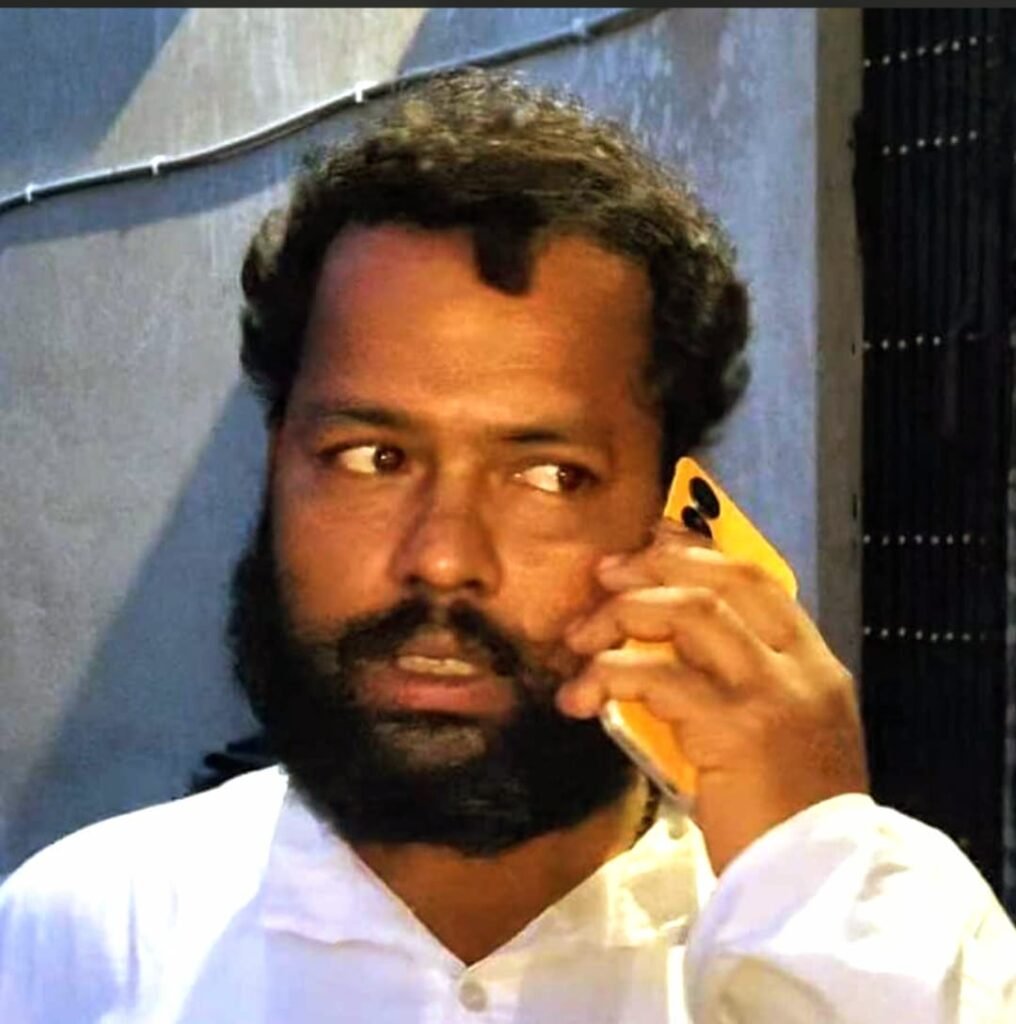
Police in West Bengal have detained a leader of unemployed teachers’ protests, a day before a planned march on the School Service Commission (SSC) office in Kolkata, after his name was linked to an alleged audio clip discussing attacks on police. On Monday morning, a team from Chandannagar Police Commissionerate detained protest organiser Suman Biswas from Adisaptagram railway station in Hooghly district. His family said police had earlier searched their house in nearby Bandel before picking him up while he was on his way to join the demonstration. According to Suman’s brother Sanjay Biswas, “We just learnt that my brother was taken away from Adisaptagram station. He was not even allowed to say anything. We don’t know which police station he has been taken to. Is it a crime that he got his job in 2016? If government employees themselves face such humiliation, where do we go for justice?” The detention follows the release of a six-minute audio clip on Sunday by Bidhannagar Police Commissionerate, which allegedly featured protest leaders discussing plans to hurl crude bombs and set fire to property during the SSC protest. Police officials claimed the voice belonged to Biswas, though the authenticity of the recording has not been independently verified. Deputy Commissioner of Police (Bidhannagar), Anish Sarkar, said Biswas had earlier sought permission via email for the SSC protest march, but it was denied. He alleged that the subsequent phone recording revealed plans for a violent attack on police during the demonstration. A case has been registered on the basis of the clip. Biswas, however, dismissed the allegations on Sunday, calling them an attempt by the state government to discredit the movement. “We do not believe in violent protests. The government is trying to malign us and destroy the agitation,” he told reporters. The teachers’ body ‘Chakrihara Jogyota Shikshak Mancha’ (Forum of Unemployed Qualified Teachers) has called for the SSC office march on Monday, demanding jobs they say they were unfairly denied despite qualifying in recruitment examinations as far back as 2016. The controversy has heightened tensions ahead of the demonstration, with police on alert to prevent any violence.
Modi inaugurates Delhi expressways worth $1.3bn to cut traffic congestion

New Delhi, India – Prime Minister Narendra Modi on Sunday inaugurated two major road projects in the national capital region, the Delhi section of the Dwarka Expressway and the Urban Extension Road-II (UER-II), together worth nearly 11,000 crore rupees ($1.3bn). The projects, built under the government’s broader plan to ease traffic congestion in Delhi and its surrounding areas, are expected to significantly reduce travel time to the Indira Gandhi International (IGI) Airport from Sonipat, Rohtak, Bahadurgarh and Gurugram. “Dwarka Expressway and UER-II will benefit people of Delhi-NCR. Our government is making consistent efforts to remove all difficulties of citizens,” Modi said at the inauguration ceremony. He added that Delhi is being developed as a “model of growth” to represent India’s aspirations as a rising economy. The prime minister underlined the innovative use of technology in the new infrastructure, noting that millions of tonnes of municipal waste were recycled to construct sections of UER-II. “This scientific and sustainable approach has reduced the mountains of garbage in Delhi while turning waste into a valuable resource,” Modi said. Union Road Transport and Highways Minister Nitin Gadkari, who joined Modi at the event, claimed the two projects would reduce traffic jams in the capital by “at least 50 percent”. The Delhi section of the Dwarka Expressway, stretching 10.1km, has been built at a cost of 5,360 crore rupees. It is designed to integrate multiple modes of transport, linking Yashobhoomi Convention Centre, Delhi Metro’s Blue and Orange lines, the upcoming Bijwasan railway station and the Dwarka bus depot. The project is split into two packages, connecting Shiv Murti intersection to the Delhi-Haryana border. The prime minister also inaugurated a 19km segment of UER-II between Alipur and Dichaon Kalan, including new spurs to Bahadurgarh and Sonipat. Developed at a cost of 5,580 crore rupees, the road is expected to ease congestion on Delhi’s Inner and Outer Ring Roads and busy intersections like Dhaula Kuan, Mukarba Chowk and NH-09. Officials say it will also improve freight movement by connecting industrial hubs directly with the national highways. During the visit, Modi interacted with labourers who worked on the expressway and later held a roadshow at the Mundka-Bakkarwala Village Toll Plaza. The Haryana section of the Dwarka Expressway was inaugurated earlier in March 2024. Supporters of the government hailed the projects as symbols of India’s fast-paced infrastructure expansion, while critics argue that congestion in Delhi cannot be solved without deeper reforms in urban planning, public transport and pollution control.
Alipore Zoo Welcomes Six New Species as Festive Gift Before Durga Puja

Ahead of the Durga Puja festivities, Kolkata’s iconic Alipore Zoological Gardens has welcomed from Jharkhand’s Bhagwan Birsa Zoological Park in Ranchi.The new arrivals include two gharials, two ostriches and two Himalayan black bears, brought to Kolkata through an animal exchange programme approved by the Central Zoo Authority. Last year nine new animals from neighbouring Odisha’s Nandankanan Zoological Park, in a move that has delighted wildlife enthusiasts and conservationists alike. Zoo officials confirmed that the fresh arrivals include a pair of lions, a tigress, two Himalayan black bears and four mouse deer — the last being a species on the brink of extinction due to rampant poaching and shrinking habitats. For now, the animals have been placed in specially designed night shelters within the zoo premises. Authorities say they will remain in quarantine for at least a week to acclimatise to their new environment before being introduced to the public. “This is part of an exchange programme between the two zoos. The animals will only be released for public viewing once they have fully adjusted,” said a senior official at Alipore Zoo. Rare and endangered The arrival of the mouse deer, also known as chevrotain, has drawn particular attention. Often described as looking like large rodents with delicate limbs, the species has become rare in India. Illegal hunting and the destruction of forested habitats have drastically reduced their numbers. “The mouse deer is a very shy, nocturnal animal. In the wild, they are almost impossible to spot. Having them in Alipore Zoo offers a chance to create awareness about their conservation,” said a Kolkata-based wildlife activist. The Himalayan black bears and the tigress are also expected to attract large crowds once they are moved to their enclosures. A tradition before Puja This is not the first time the Alipore Zoo has brought in new residents ahead of Durga Puja, West Bengal’s biggest festival. Last year too, animals from other Indian states were relocated to Kolkata before the holiday season, boosting footfall at the zoo. During Puja, thousands of families visit the zoo as part of their festive outings, making it one of the busiest public attractions in the city. “For many children, seeing a lion or a bear up close is unforgettable. These additions will make the zoo a bigger draw this year,” said a parent visiting the facility on Saturday. Conservation and concerns While the news has been welcomed, animal welfare groups have urged authorities to ensure that the new arrivals are not overexposed to crowds too quickly. “Acclimatisation is crucial, especially for animals brought from a different climate. Their health must come before visitor excitement,” said a representative of a local NGO. For now, the animals remain out of public view, but the anticipation in Kolkata is growing. As one zoo official remarked, “These new guests are our pride. They symbolise not just attraction, but also the urgent need for conservation.”
Kolkata marks Sukanta Bhattacharya’s centenary with poems on city walls

Kolkata, long celebrated as the city of poets and revolutionaries, paid tribute on Saturday to one of its most cherished literary voices — Sukanta Bhattacharya — as the city began year-long celebrations marking the centenary of the “poet of the youth.” The programme was launched at Jadavpur’s Sukanta Setu, where educationist Pabitra Sarkar announced that the poet’s verses would soon adorn the city’s walls. “For the next one year, we will celebrate Sukanta’s birth centenary. His poems will be written across Kolkata’s walls,” he said. A procession followed by a cultural event took place in Jadavpur, while in the afternoon the youth organisation Kishore Bahini led a colourful rally from Sealdah station to College Street. Thousands of children and teenagers joined, with performances of stick games, magic, music and dance along the route. The event concluded with a street play, while artists painted murals inspired by Bhattacharya’s poetry. Prominent cultural figures including Rajat Bandyopadhyay and Srijan Bhattacharya joined Sarkar at the Jadavpur celebrations, organised by the Sukanta Bhattacharya Birth Centenary Committee. Rajat Bandyopadhyay, general secretary of the Ganatantrik Lekhok Shilpi Sangha (Democratic Writers and Artists’ Association), said: “We will celebrate Sukanta’s centenary throughout the year. A documentary directed by Kamaleswar Mukherjee is in production and will be screened at colleges and universities once completed. We are also demanding the re-introduction of Sukanta’s poems into Bengal’s academic syllabus.” Meanwhile, DYFI (Democratic Youth Federation of India) members paid homage at the poet’s birthplace in Kalighat. In East Kolkata’s Beleghata, however, commemorations took a confrontational turn. The Kolkata Nagarik Sammelan (Kolkata Citizens’ Conference) staged a sit-in demanding the reopening of a community hall named after Bhattacharya, which has remained shut for years. The group alleged that their protest stage was torn down by miscreants. Bhattacharya, who died in 1947 at just 21, remains one of Bengal’s most iconic literary voices, known for blending youthful rebellion with a deep social conscience.


