
Kolkata protesters to ‘reclaim the night’ on 14 August anniversary of RG Kar rape and murder
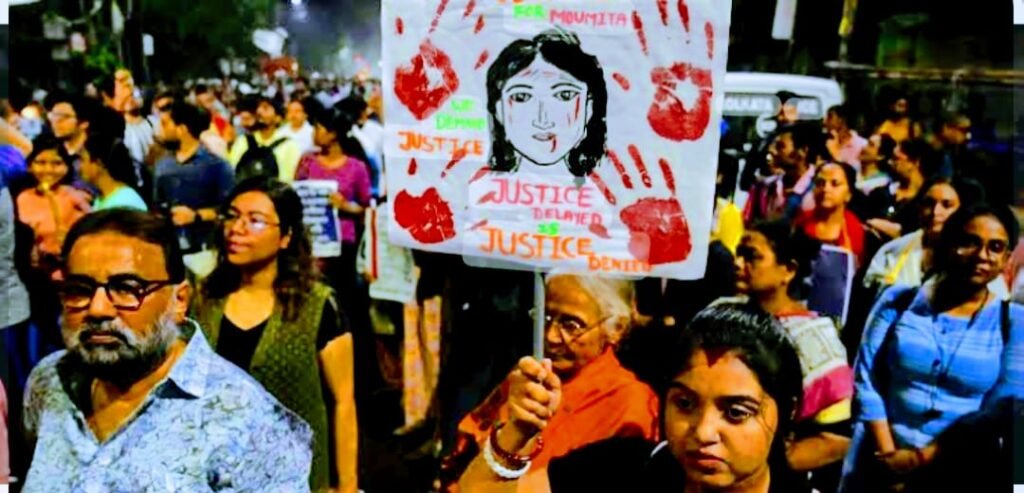
Kolkata, India–Streets in Kolkata and nearby districts are set to fill once again on the night of August 14 as activists, doctors, and citizens mark the first anniversary of the rape and murder of a young trainee doctor at RG Kar Medical College and Hospital. Under the banner Raat Dokhol – or Reclaim the Night – organisers say the demonstrations will run from 9pm on August 14 until dawn on Independence Day, echoing the mass vigils that swept West Bengal last year after the killing. “We will raise our voice for women’s rights and demand justice for our beloved daughter,” said Shatabdi Das, convener of the Raat Dokhol Oikko Mancha, a coalition of rights groups and cultural organisations. “Songs, plays, and films will help carry our message.” The Joint Platform of Doctors (JPD) says vigils will take place in Kolkata, North and South 24 Parganas, Howrah, and Hooghly. “The people will once again reclaim the night and fill the streets with their demand,” said JPD convenor Dr Punyabrata Goon. Left-wing youth groups, including the Students’ Federation of India (SFI) and the Democratic Youth Federation of India (DYFI), have announced sit-ins, marches, and overnight protests. DYFI state secretary Dhrubajyoti Saha said members were prepared to relaunch continuous demonstrations if justice remains elusive. The killing on August 9, 2024, shocked India and sparked criticism of authorities over the investigation. Activists allege the victim’s body was removed without the family’s consent and cremated hastily, fuelling public anger. For organisers, this year’s events are both a memorial and a message: that women’s safety remains a fight waged in the open, and the night belongs to them.
Threat to blow up Puri’s Jagannath temple sparks security concerns
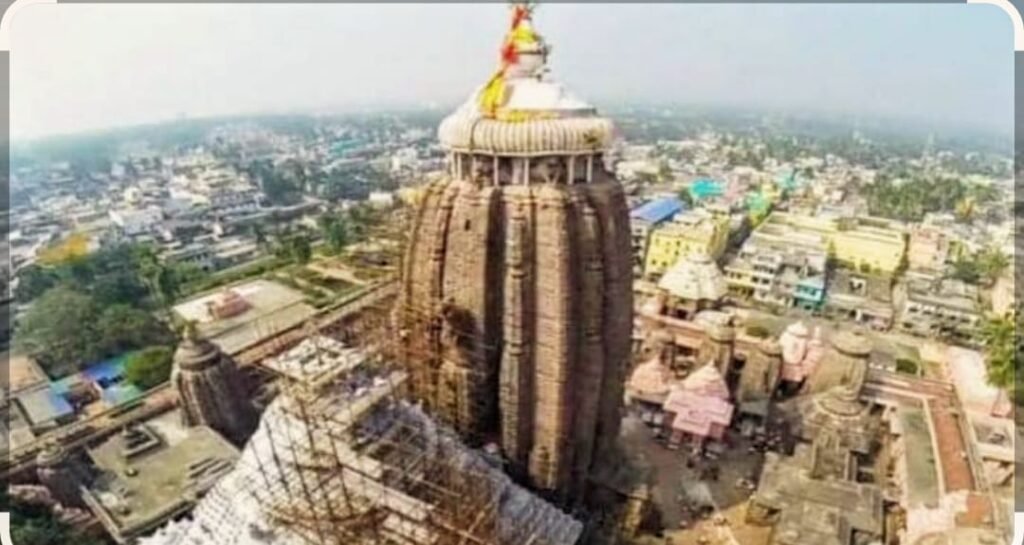
Authorities in the eastern Indian state of Odisha have launched an investigation after a threat to blow up the famed Jagannath temple in Puri was found scrawled on a wall near the shrine, officials and local media said on Tuesday. The message, written in both Odia and English, warned that the centuries-old Hindu temple would be destroyed in a militant attack and included several phone numbers, urging locals to call them. The wall, located close to the high-security temple complex, also showed signs of damage, and several street lights and poles in the area were found broken, local reports said. The incident has raised questions about police vigilance, as the temple and surrounding areas are monitored by CCTV cameras and patrolled regularly by security personnel. “How could such graffiti appear in a high-security zone?” one temple servitor was quoted as saying by local media. The warning comes amid a series of recent incidents that have unsettled some of the temple’s priests and staff, including a disruption during the annual Rath Yatra chariot festival, overcrowding that led to stampede-like situations, and a flag being carried away by an eagle. Police said they were examining CCTV footage and attempting to trace the individuals responsible for the graffiti. “An investigation is under way to identify and apprehend those involved,” a senior officer said. The Jagannath temple, one of Hinduism’s holiest sites, attracts millions of pilgrims and tourists annually, and has been a declared high-security zone for years.
Three women attempt self-immolation outside Calcutta High Court over alleged cooperative fraud
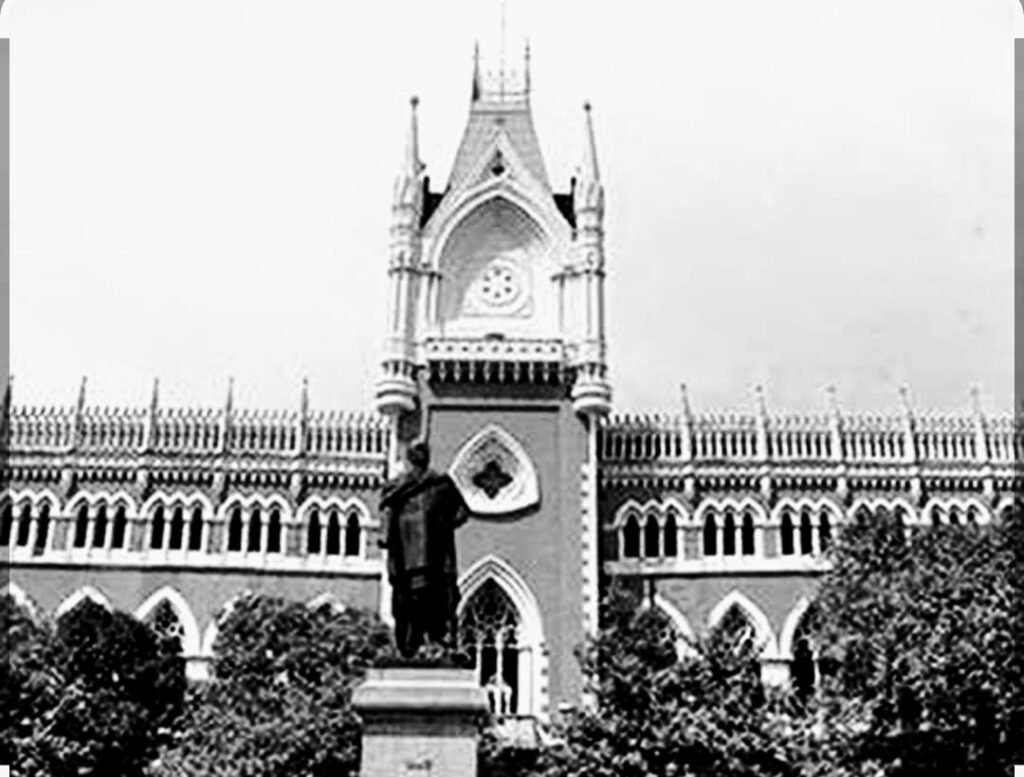
Three women tried to set themselves on fire outside Gate ‘E’ of the Calcutta High Court on Tuesday, protesting alleged corruption and voter list manipulation by a cooperative society in West Bengal’s South 24 Parganas district, police said. The women, identified as members of the Amgachhia Srishti Sangha Primary Multi-Purpose Cooperative Society Ltd., were stopped by police moments before one of them could ignite herself after pouring kerosene. Officers overpowered them and took them to SSKM Hospital for medical examination before moving them to Hare Street police station for questioning. According to police, the women alleged that despite depositing large sums of money with the cooperative, they had neither received their returns on time nor a refund. They claimed the society had for years enticed members with promises of high interest rates but failed to honour its commitments. The cooperative, established in 2017, held its latest election earlier this year. The women alleged that their names were deliberately omitted from the voter list despite an order from a Calcutta High Court division bench directing the publication of a fresh list. The society’s management allegedly ignored the court’s directive, they said. “This is a huge scam. There is an entire crime racket operating from within this cooperative, but we are getting no justice,” one of the women told reporters before being escorted away by police. The attempted self-immolation, which took place mid-morning, drew a large crowd outside the court complex and briefly disrupted normal proceedings as bystanders gathered at the scene. A senior police official said an investigation had been launched into the allegations and the events leading to the protest. “We will examine the claims made against the cooperative society and take action as per law,” the official said. The cooperative’s management was not immediately available for comment. Financial irregularities in rural and semi-urban cooperative societies have been a recurring issue in West Bengal, often leading to protracted legal disputes and protests by aggrieved depositors.
Severe overnight erosion sweeps homes into Ganges in West Bengal; dozens displaced
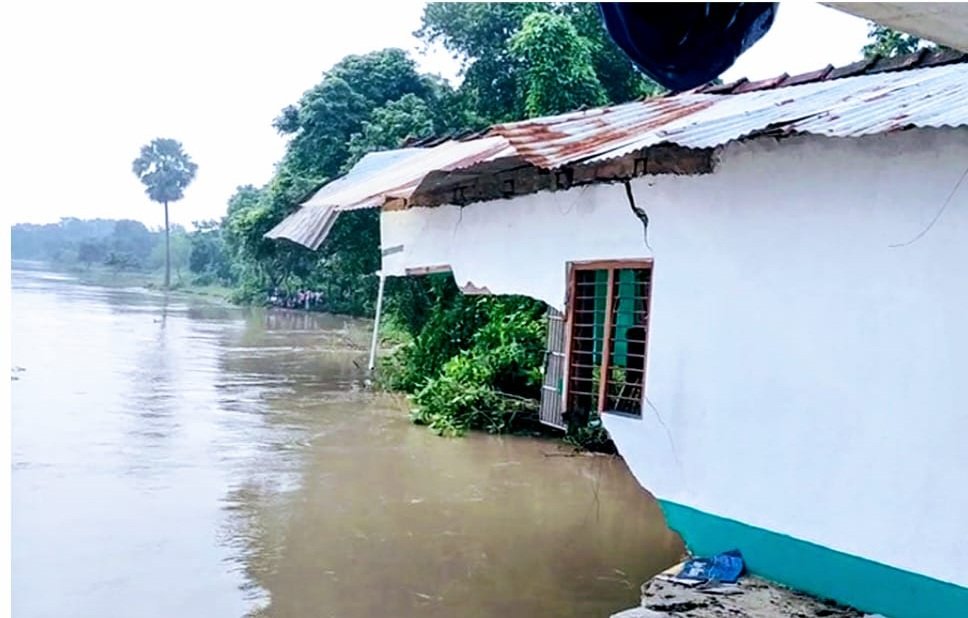
Several homes were swallowed by the Ganges River in West Bengal’s Murshidabad district after severe overnight erosion, forcing dozens of families to flee, local officials and residents said on Tuesday. The incident occurred late Monday in Samserganj’s Uttar Chachand and Madhya Chachand areas, where residents were asleep when a loud cracking sound alerted them to part of their houses collapsing into the river. Many escaped with only a few belongings, but cattle, trees and household goods were lost. No casualties were reported, but hundreds of families remain at risk as riverbank cracks spread to nearby houses and a riverside temple. Officials said the Ganges water level at the Farakka Barrage was flowing 7.10 feet above the danger mark early Tuesday, with upstream levels at 80.10 feet and downstream at 78.95 feet. Authorities had begun public announcements on Monday night urging residents along the Ganges and Bagmari rivers to move to safer ground as floodwaters entered several villages. Relief teams have reached the affected areas, but residents have called for immediate, stronger intervention to prevent further damage. Erosion along the Ganges is a recurring threat in Samserganj, where homes, temples and farmland have been lost to the river in previous years.
Udaipur Erupts in Protest Over Minor’s Rape — Citizens Demand Swift Justice
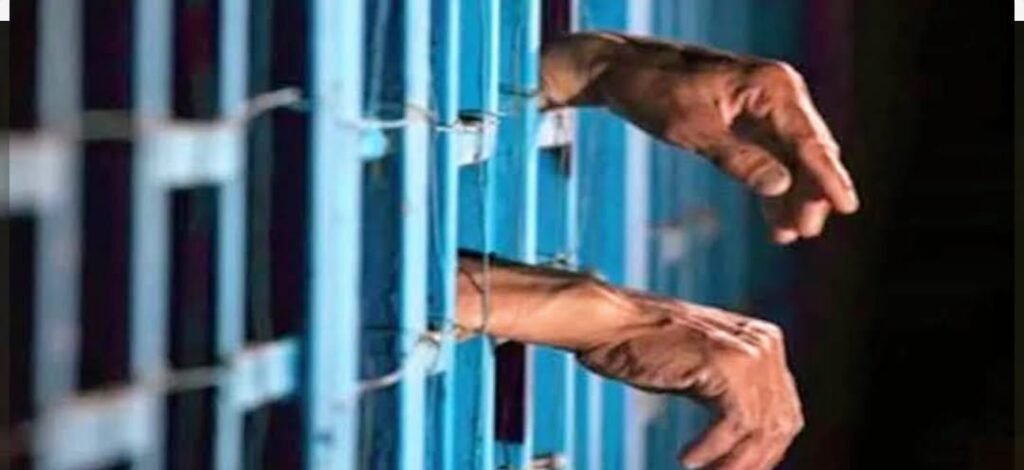
Udaipur, Rajasthan, witnessed a surge of public anger after the shocking rape of a minor. Outraged residents took to the streets, demanding immediate and severe punishment for the accused. Roads were blocked as protesters voiced their frustration, and attempts by police to lift the blockade only intensified tensions. The confrontation escalated, with clashes breaking out between demonstrators and security forces. The incident has triggered a wider debate about women’s safety, the vulnerability of children, and the urgent need for justice delivery without delay. Social activists stress that such crimes not only destroy lives but also erode the community’s sense of security. They urge stronger preventive measures, swift trials in sexual assault cases, and public awareness campaigns to ensure such incidents are never repeated.
TMC MP Kalyan Banerjee Seen Beside Modi on Day of Opposition’s EC Protest
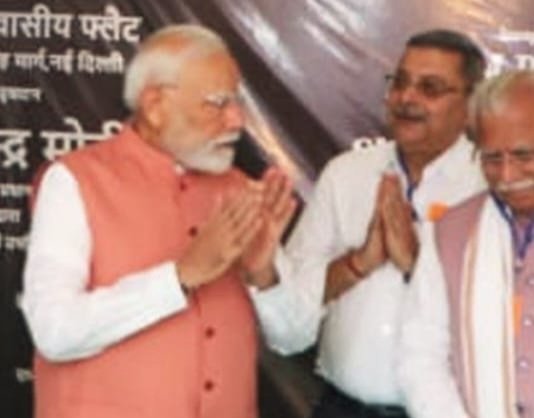
On the day opposition parties marched to the Election Commission over alleged “vote theft” linked to the Statewide Integrated Register (SIR), senior Trinamool Congress (TMC) lawmaker Kalyan Banerjee was seen alongside Prime Minister Narendra Modi at a government function in New Delhi. Banerjee, a six-term MP from Serampore, attended Monday’s inauguration of a newly built parliamentarians’ housing complex on Baba Kharak Singh Marg, where Modi formally opened 184 flats. Eyewitnesses said Modi greeted Banerjee with a smile, asking, “Kya Kalyanji, Kalyan hai to?” (“Mr. Kalyan, are you well?”), to which the MP replied affirmatively. Modi repeated the question, and Banerjee again responded positively. During a group photograph, Modi asked for chairs on the stage to be removed so everyone could stand together, personally moving one of them. Banerjee joined him in shifting the chairs, and in the final photograph the TMC MP stood next to the Prime Minister. The event was also attended by Lok Sabha Speaker Om Birla, Union ministers Manohar Lal Khattar and Kiren Rijiju, among others. Banerjee said he missed the opposition’s Election Commission protest because he was occupied with a Supreme Court case the TMC has filed over the SIR issue, and had informed party leader Mamata Banerjee in advance. As a member of the House Standing Committee, Banerjee had overseen interior furnishing for the new housing project’s final phase. The appearance comes eight days after Banerjee resigned as TMC’s chief whip in the Lok Sabha, a move accepted by Mamata Banerjee last week. His presence next to Modi has triggered speculation within TMC circles, with some questioning whether it was intended to exert pressure on the party. Banerjee’s associates deny this, noting he has publicly expressed regret over earlier critical remarks about the TMC chief and spoke to her several times in recent days. The optics of a senior TMC MP with Modi on a day the opposition staged a high-profile protest has added fresh fuel to political chatter in West Bengal.
IISER Kolkata dean quits after wife accused in PhD student’s suicide case, Researchers demand immediate arrest of accused woman
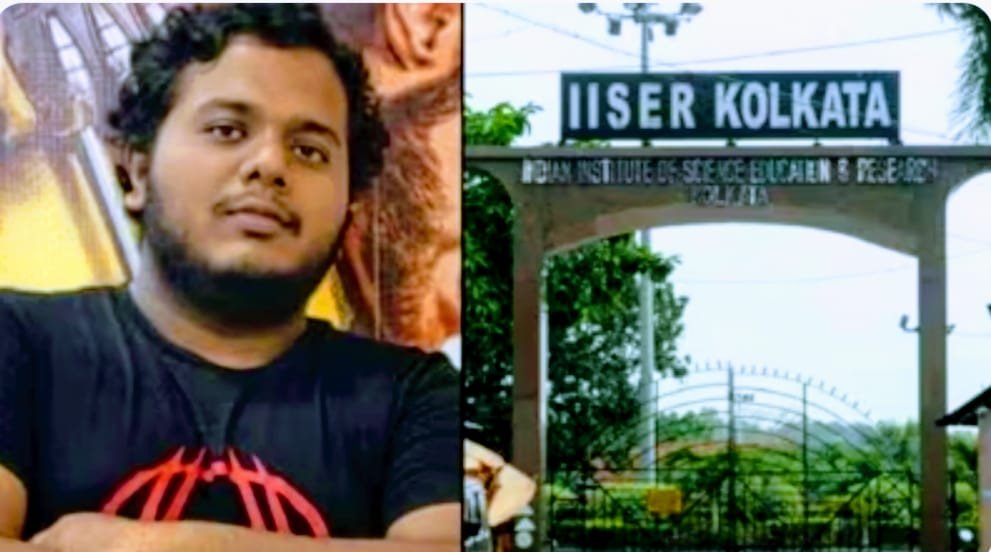
The dean of student affairs at the Indian Institute of Science Education and Research (IISER) in Kolkata has resigned after his wife, a faculty member, was accused of abetting the suicide of a 26-year-old doctoral researcher, officials and students said on Sunday. Research scholar Anamitra Roy, who was on the autism spectrum, died on Aug. 2, a day after attempting suicide inside a laboratory on the IISER campus in Kalyani, West Bengal. In a note recovered later, Roy alleged repeated harassment by fellow researcher Saurav Biswas and accused his supervisor, Anindita Bhadra, of ignoring his complaints. Bhadra’s husband, Ayan Banerjee, headed the institute’s anti-ragging committee in addition to serving as dean of student affairs – raising what students said was a conflict of interest. Student groups had demanded his removal from the post. IISER has now dissolved the anti-ragging panel and plans to reconstitute it, according to sources. “I also want an impartial probe,” Banerjee told reporters, adding he had stepped down “in the interest of fairness.” Roy’s note claimed his complaints to both his supervisor and the anti-ragging cell were not taken seriously. He expressed anguish over seeing those who mistreated him socialising normally with others, and said his request for an apology was ignored. Police in Nadia district have launched an investigation based on a complaint filed by Roy’s relatives, though no arrests have been made. IISER has set up an internal fact-finding panel in parallel.
Ex-vice president Jagdeep Dhankhar’s absence sparks concern, Sanjay Raut seeks answers
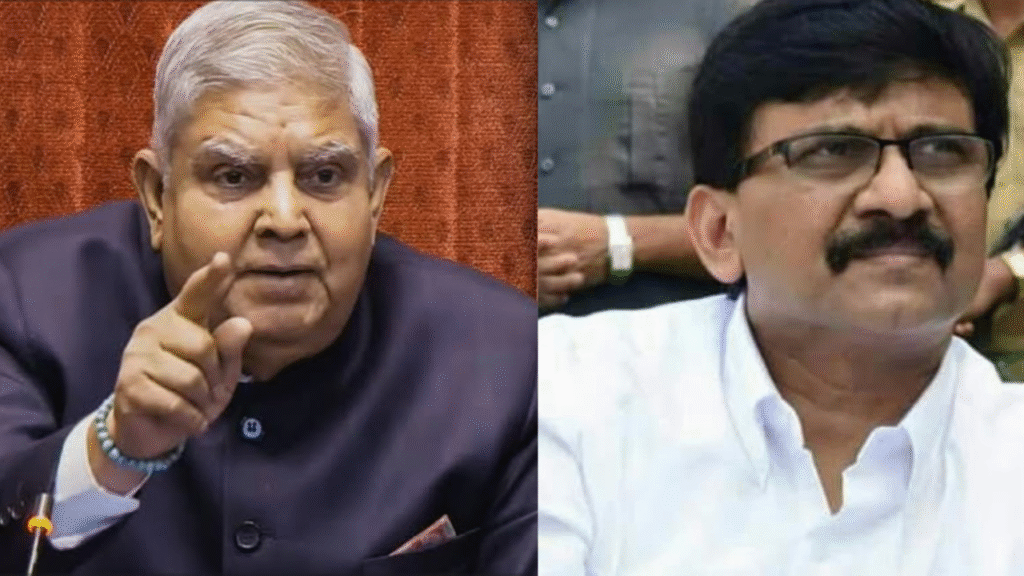
The unexplained absence of former Indian vice president Jagdeep Dhankhar from public view since his sudden resignation last month has prompted concern among opposition leaders, with Shiv Sena (UBT) MP Sanjay Raut formally writing to Home Minister Amit Shah for clarity. In his letter, Raut said repeated attempts to contact Dhankhar had failed and there was no official word on his whereabouts or health. “From July 21 till today, there has been no information about the whereabouts of our (former) vice president. What is his current location? How is his health? There is no clarity on these matters,” Raut wrote. Dhankhar resigned as vice president on 21 July, the first day of Parliament’s Monsoon session – a move that surprised both government and opposition ranks. He also vacated his official residence soon after stepping down. Raut voiced fears for Dhankhar’s safety, saying “the nation deserves to know the truth” amid unverified rumours that the former vice president had been confined to his residence. He added that he may file a writ petition in the Supreme Court if the government fails to respond. Three senior opposition leaders – Congress’s Mallikarjun Kharge, NCP (Sharadchandra Pawar) chief Sharad Pawar and leaders from the Aam Aadmi Party – are said to have sought meetings with Dhankhar after his resignation but were unable to secure appointments. The Home Ministry has yet to comment on Raut’s letter.
Civil society group urges govt to block ICICI Bank minimum balance hike
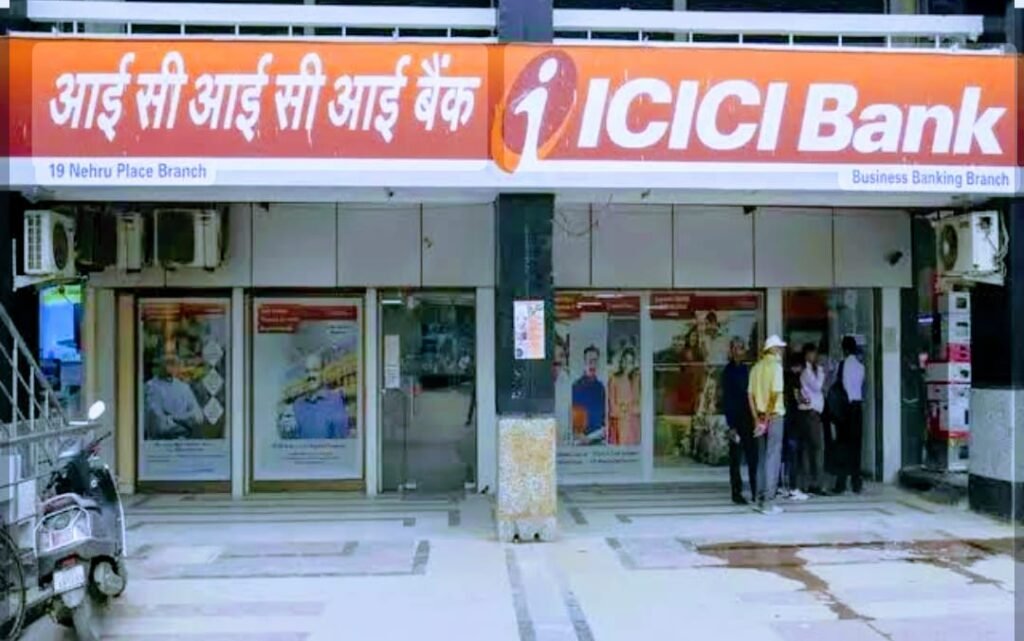
A civil society forum has urged the Indian government to intervene in ICICI Bank’s decision to sharply raise minimum average balance (MAB) requirements for new savings accounts, calling the move “unjust and regressive.” In a letter to the finance secretary, the Bank Bachao Desh Bachao Manch said the private lender’s decision was detrimental to the government’s vision of inclusive banking and growth. Effective Aug. 1, the bank increased the MAB for new savings accounts by five times to 50,000 rupees in metro and urban areas, from 10,000 rupees earlier, according to its website. MAB in semi-urban branches was raised to 25,000 rupees from 5,000, and in rural branches to 10,000 rupees from 2,000. “This retrograde decision undermines the principle of inclusive banking,” forum conveners Biswaranjan Ray and Soumya Datta said in the letter, calling for an immediate withdrawal of the policy. Public sector banks typically maintain lower minimum balance thresholds and have waived them entirely for Jan Dhan accounts, a government-backed financial inclusion programme. Several state-owned banks have removed penalties for customers failing to maintain minimum balances. ICICI Bank did not immediately respond to a Reuters request for comment.
Migrant worker from West Bengal found dead in Kerala, family alleges murder
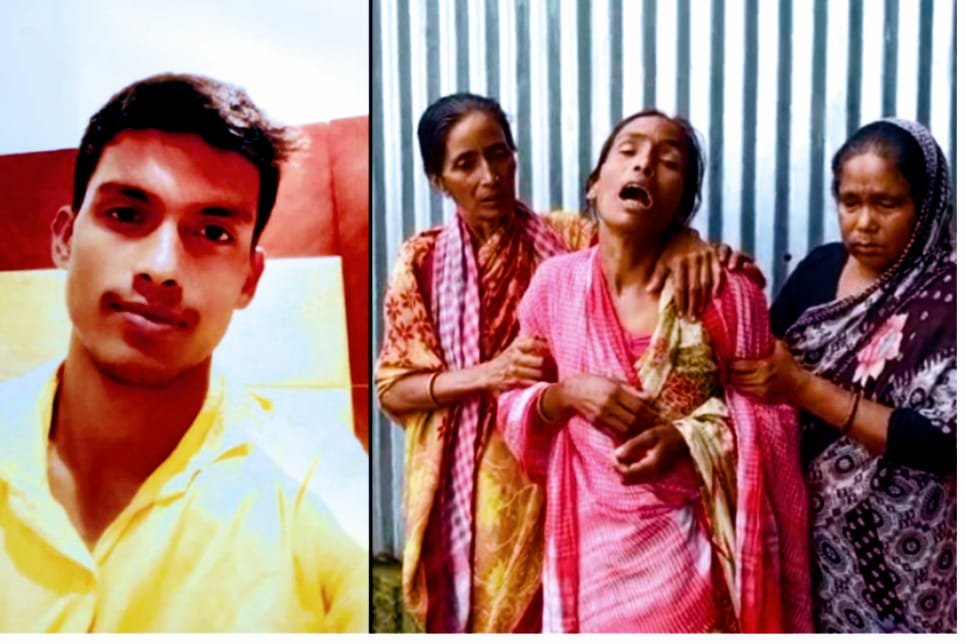
A 27-year-old migrant worker from West Bengal was found dead in Kerala, prompting his family to allege that he was murdered, local officials and relatives said on Sunday. The victim, identified as Abul Hossain from College Para in Ward 7 of Falakata municipality in Alipurduar district, had travelled to Kerala on July 27 to work as a house painter, his family said. His body was recovered on Friday from bushes in the Kottakkal police station area, reportedly with his hands and feet tied. “We have been told the body was found bound. This is a murder. The police are investigating, and we demand a high-level probe,” said his uncle, Aminul Haque. Hossain’s relatives travelled to Kerala to identify the body. His funeral was held there on Sunday, according to family members. The incident has sparked concern in Falakata. Local Trinamool Congress leader Subhabrata Dey and Ward 7 councillor Bhagirath Mondal visited the family, pledging support. Mondal said the family is “very poor” and that the circumstances raised questions about possible harassment of Bengali workers in other states. The death comes amid heightened political debate over alleged mistreatment of Bengali-speaking migrants across India, with opposition parties accusing the ruling Bharatiya Janata Party of fostering a hostile climate in some states. Police in Kerala have not yet confirmed the cause of death.


