
Barackpore Police Bust Interstate Bike Theft Racket, Arrest 6, Recover 12 Stolen Bikes
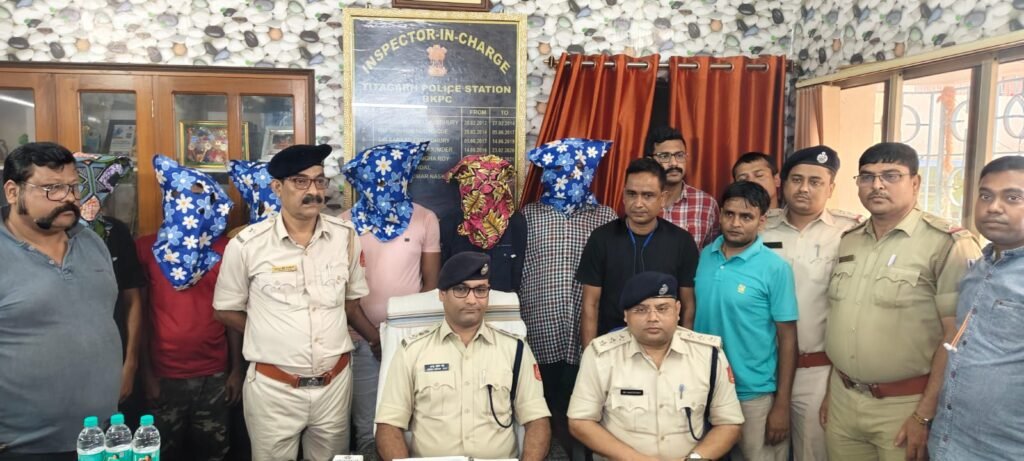
Just fifteen days after dismantling a major interstate car theft syndicate, the Barackpore Police Commissionerate has struck again—this time cracking an elaborate motorcycle theft racket that spanned state lines. Acting on a tip-off and following an investigation into a recent theft, police arrested six individuals and recovered 12 stolen motorcycles. According to officials, a complaint was lodged at Titagarh Police Station on July 30 regarding a stolen bike. The ensuing investigation led the police to neighbouring Hooghly district, where six suspects were apprehended. All six are believed to be part of a larger network involved in trafficking two-wheelers across state borders. The breakthrough was formally announced on Saturday during a press briefing at Titagarh Police Station, where Deputy Commissioner (Central), Indra Badan Jha, hailed the operation as another milestone in the Commissionerate’s recent crime-fighting efforts. Earlier, on July 18, the Commissionerate’s Special Task Force had made headlines by busting an interstate gang involved in four-wheeler thefts. That operation also led to multiple arrests and vehicle recoveries. Officials say the two operations, conducted just two weeks apart, reflect growing coordination and intelligence-driven policing within the Commissionerate. Investigations are ongoing to determine the full extent of the bike trafficking network and whether the two rackets are interlinked. The recovered motorcycles are being matched against outstanding theft reports, and further arrests have not been ruled out. Police sources indicate that stolen vehicles were being sold in other states using forged documents. Authorities are also probing possible involvement of organised crime elements in the illegal trade.
Five-Month-Old Baby Dies After Falling into Stagnant Water in TMC senior minister’s Assembly area, Residents Blame Civic Apathy
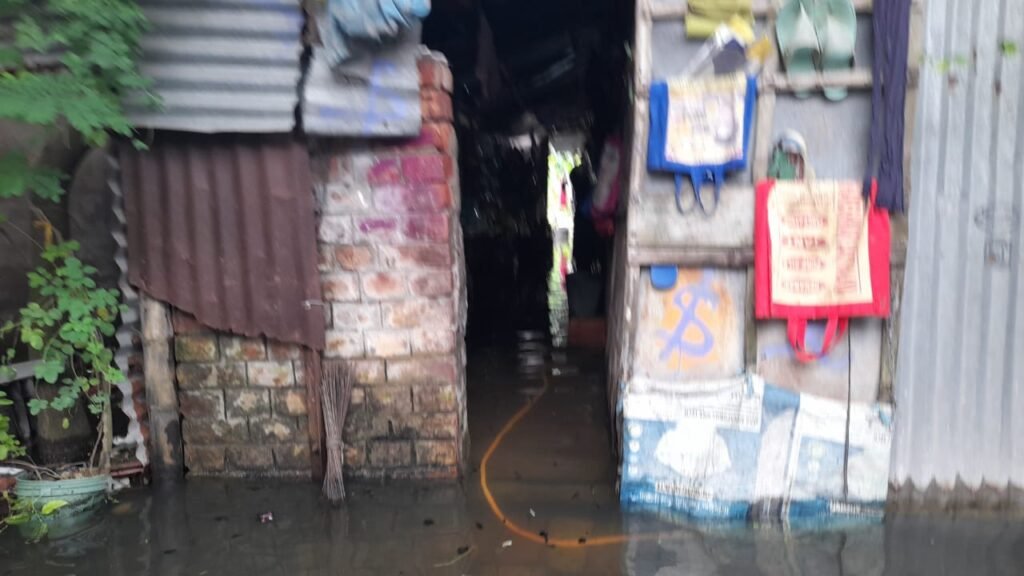
A five-month-old baby girl died tragically after slipping into stagnant water accumulated inside her home in the Debinagar area of Birati, a suburb of Kolkata, on Saturday morning. The incident has triggered shock and grief in the locality, with residents blaming prolonged civic negligence for the fatality. The child, who lived with her family in a low-income settlement under Ward 13 of the North Dum Dum Municipality, slipped from her mother’s arms and fell into a pool of filthy, waist-deep water that has flooded the area for nearly a month. The mother reportedly lost her footing while carrying the infant in their water-logged home. The baby was first rushed to the local North Dum Dum Municipal Health Centre and then referred to Kolkata’s B.C. Roy Children’s Hospital, where she was declared dead on arrival. The child’s father, Papan Ghorai, is a civic volunteer posted at Nimta Police Station. Upon hearing the news, he rushed to the hospital. Family members, including the child’s grandparents, broke down in tears as the news of the death spread. “She died because of this water. We’ve been pleading for help for weeks. No one listened,” wept the child’s grandmother. The baby’s body has been sent to NRS Medical College and Hospital for post-mortem. Police have initiated a case of unnatural death and are investigating the circumstances. Residents allege that for the past month, the entire area has been submerged in stagnant water following repeated monsoon rains. With no effective drainage in place, water has entered homes, posing severe health and safety risks. Despite repeated complaints to municipal authorities, no action has been taken. “We are living in fear. Children, elderly people — everyone is falling ill. Now, a child has died. What more has to happen before the authorities wake up?” said Ratna De, a local resident. Many residents, however, are reluctant to speak to the media, fearing reprisals or simply out of helplessness. “There’s been no visit from any official, not even after the child’s death,” one resident told this reporter on condition of anonymity. The incident occurred in the North Dum Dum Assembly constituency, represented by Chandrima Bhattacharya, a minister of state in charge of Health and Finance in the West Bengal government. Questions are now being raised over the condition of civic infrastructure in her constituency. “This is nothing short of administrative murder. We’ve been highlighting the issue for weeks. Now a child is dead. Will the Chief Minister or the minister concerned take note at last?” another resident asked. As of Friday, there has been no official statement from either the municipality or the minister. But the community is left grieving — and asking the same haunting question: How many more lives must be lost before the water recedes?
Two Militants Killed in Kulgam Gunfight, Operation Ongoing

Two militants were killed in an encounter with security forces in the Kulgam district of Jammu and Kashmir on Saturday, according to officials. The gunfight, which erupted in the forested Akhal area of south Kashmir, continued into its second day amid heavy security deployment. The operation began late Friday afternoon when joint security forces launched a cordon and search operation in the dense forest following “credible intelligence inputs” about the presence of militants, a police official said. Initial contact was established with the suspected militants on Friday evening, leading to a brief exchange of gunfire. The operation was subsequently paused overnight as darkness and difficult terrain posed operational challenges, officials said. Reinforcements were deployed and the cordon tightened to prevent the militants from escaping. Firing resumed at first light on Saturday, culminating in the killing of two militants during the fresh exchange. The identities and group affiliations of the slain individuals are yet to be confirmed, a senior police officer said, adding that efforts are underway to establish their background and possible links to any terror outfit. There were no reports of casualties among the security forces. However, officials indicated that combing operations were still ongoing in the area to ensure the site is fully sanitised and to rule out the possibility of additional militants being present. Akhal, located in the southern fringes of Kulgam, has seen intermittent militant activity in recent years. Forested terrain and proximity to arterial routes often make such regions vulnerable to insurgent movements, security analysts say. The latest encounter comes amid a series of counter-terrorism operations launched across Jammu and Kashmir in recent weeks. Security officials have heightened vigilance ahead of the upcoming festivals and amid increased infiltration attempts along the Line of Control. Authorities have urged residents in the vicinity to remain indoors and cooperate with the ongoing security measures. Mobile internet services were temporarily suspended in parts of the district as a precautionary step to prevent the spread of rumours or misinformation.
TMC MP Kirti Azad Seeks CBI, ED Probe into ‘Systemic’ Corruption in Eastern Coalfields, BJP ridicules TMC MP
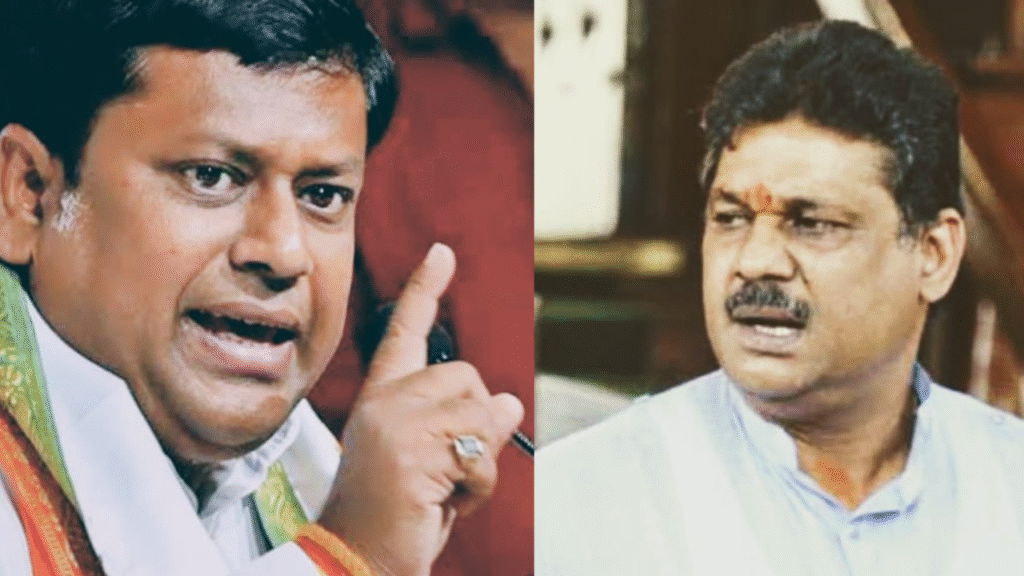
Trinamool Congress (TMC) MP Kirti Azad has written to Union Coal and Mines Minister G. Kishan Reddy demanding a comprehensive investigation by federal agencies into what he described as “pervasive and systemic corruption” within Eastern Coalfields Limited (ECL), a subsidiary of Coal India Limited operating in West Bengal and Jharkhand. In the letter dated July 31, Azad expressed “deep concern” over a series of alleged financial and operational irregularities in ECL’s mining zones, including Kunustoria, Kajora, Pandaveswar, and Rajmahal. He urged immediate intervention by the Central Bureau of Investigation (CBI) and the Enforcement Directorate (ED), citing what he called an entrenched “criminal nexus” involving ECL officials and external contractors. The former cricketer-turned-MP, who also heads the Parliamentary Standing Committee on Chemicals and Fertilizers, said he was approached by whistleblowers and NGOs who flagged large-scale bid rigging, coal pilferage, grade manipulation, and loss-making contracts that have drained public resources. Azad accused a cartel of 14 companies, all allegedly registered at a single address and controlled by two individuals, of monopolizing the tender process through collusion with ECL officials. These firms, he claimed, had formed a “one-man cartel” that dominates procurement, mining, transportation, and coal sales across multiple collieries. The letter further referred to a suspected coal pilferage racket centered in West Bengal’s Kunustoria and Kajora mining regions that, according to Azad, caused losses amounting to Rs 1,300 crore. He noted that hawala transactions and the arrest of seven ECL officials, including general managers and security staff, pointed to a wider institutional failure. Citing a recent Comptroller and Auditor General (CAG) report, Azad highlighted irregularities in contractor payments due to coal shortages during transportation, resulting in a loss of Rs 17.39 crore. He also alleged that officers were deliberately downgrading high-grade coal to lower grades to benefit private contractors. Azad’s letter also named Ambey Mining Private Limited as a central player in the alleged wrongdoing. He accused the firm’s top executives of bribing officials and manipulating tender norms in violation of Central Vigilance Commission guidelines. “The depth and breadth of these issues point not to sporadic corruption, but to an entrenched criminal nexus,” Azad wrote. He emphasized that only a federal investigation could restore accountability and public faith in ECL’s operations. The letter was also marked to the secretaries of the Coal and Mines Ministry, the ED, the CBI, and the Chairman-cum-Managing Director of ECL. Reacting to the development, BJP MP and Union Minister Sukanta Majumdar took a swipe at Azad and the TMC, saying on X (formerly Twitter): “At last TMC MPs have also started demanding investigation by central agencies like CBI & ED. This letter of MP Kirti Azad shows that he has lost faith in West Bengal Police.” He also noted that many of the individuals named in Azad’s complaint were allegedly close to Narendra Nath Chakraborty, the TMC district president of Paschim Burdwan. Eastern Coalfields Limited has not issued an official response. The Coal Ministry has also not commented on whether it will recommend a federal probe.
Woman and her Bangladeshi accomplice held for robbing man in Kolkata
A Bangladeshi national and a woman were arrested from the city’s airport area for allegedly robbing a man they had targeted through a matrimonial website, police said on Friday. The victim had recently created a profile on a matrimonial platform and connected with the woman, with whom he developed a “relationship” over phone conversations, an officer said. “Eventually, they agreed to meet in person at a hotel near the city airport in Dum Dum. The man alleged that after consuming the coffee prepared by the woman inside the hotel room, he fell unwell and lost consciousness. Hours later, he regained consciousness to find his mobile phone, money, and bag missing. The woman had disappeared as well,” the officer said. With the help of hotel authorities, the man filed a complaint at the airport police station on 27 July, he said, adding that following the complaint, police collected CCTV footage from the hotel and began tracing the woman using her phone number. “Our officers posed as potential grooms and contacted her. Using mobile tower location tracking, the woman was eventually arrested. Upon interrogation, she revealed the identity of her accomplice, a young man who was arrested from the Dum Dum Cantonment area,” he said. Investigations revealed that the person was a Bangladeshi national, and police seized his Bangladeshi passport and visa from his possession.”The woman said she would hand over the stolen items to the Bangladeshi man, who would return to Bangladesh. We are probing whether more people are connected to this cross-border racket or not,” he added.
RG Kar PGT rape and murder case protesters demonstrate outside CBI office

Representatives of the ‘Abhaya Mancha’, a doctors’ forum formed after the RG Kar hospital rape and murder case last year, on Friday took out a rally in front of the CBI’s office at the CGO Complex in Salt Lake. The protesters, holding broomsticks, alleged that the “delay” in the CBI’s probe into the case was because they were working in cahoots with the state government. “The CBI is working on an understanding with the state government. Even after so many months since the crime took place in the RG Kar Medical College and Hospital, they are yet to come out with any conclusion of the matter,” claimed Abhaya Mancha’s joint convenor Tamonas Chaudhuri. An on-duty post-graduate trainee was raped and murdered inside the RG Kar Medical College and Hospital here on August 9 last year, triggering outrage across the country. The Kolkata Police arrested one person, and the CBI, which took over the investigation on a Calcutta High Court order, also made him the sole accused in the case. The trial court on 20 January sentenced the accused Sanjay Roy to life imprisonment till death. The central agency is continuing its investigation into the alleged conspiracy angle of the case. Incidentally, two programmes related to the crime are scheduled to take place in Kolkata on 9 August to mark one year since the incident. On that day, a procession is scheduled to march to Kalighat, where Chief Minister Mamata Banerjee resides. ‘Abhaya Mancha’ members would observe ‘Raksha Bandhan’ on 9 August , and on 14 August, the forum has called for a ‘Reclaim the Night’ march across Kolkata and the adjoining suburban areas from 9 pm to midnight.
Student protest erupts at Presidency University over delayed UG admissions

Members of the Students’ Federation of India (SFI) continued their sit-in demonstration at Kolkata’s Presidency University on Friday, demanding the immediate commencement of undergraduate admissions and timely publication of entrance examination results. The protest, which began on Thursday, centres around the delay in announcing the results of the Presidency University Bachelor’s Degree Entrance Test (PUBDET), conducted by the West Bengal Joint Entrance Examinations Board (WBJEEB). Students allege that the prolonged wait has created uncertainty and anxiety among aspirants seeking admission to one of West Bengal’s premier institutions. Speaking to reporters, SFI leader Bitan Islam said the delay was unjustified and could affect the academic calendar. “We are demanding the immediate publication of PUBDET results and commencement of the undergraduate admission process. The university and the WBJEEB cannot remain silent while thousands of students are in limbo,” he said. Islam also called for the release of application forms for the Presidency University Master’s Degree Entrance Test (PUMDET), which is also pending. “Both undergraduate and postgraduate aspirants are suffering due to administrative inertia. Presidency University must intervene and pressure the board to expedite the process,” he added. Dozens of students have occupied a section of the university campus, holding placards and shouting slogans demanding transparency and urgency in the admission process. While the university administration has not issued an official response, insiders suggest the delay stems from procedural issues between the university and the entrance board. The Presidency University, a historic institution known for its academic excellence, draws students from across the state. The protest highlights growing concern over bureaucratic delays in West Bengal’s higher education system, especially as colleges and universities aim to resume normal schedules following disruptions during the COVID-19 pandemic.
CPIM alleges, YouTube & facebook blocking Videos criticising economic policies, labels move as ‘digital censorship’

The West Bengal unit of the Communist Party of India (Marxist) has accused social media giant Facebook of blocking the upload of a party-produced video highlighting the plight of migrant workers from the state, calling it a case of “digital censorship” and “ideological bias” against left-wing content. The 2-minute-32-second video, titled “Ora Kaj Kore” (“They Work”), was created by the CPIM state committee’s IT cell. The video seeks to question why lakhs of people from West Bengal are forced to migrate to other states for work and blames both central and state governments’ economic policies for the unemployment crisis in the state. Despite multiple attempts, party leaders say they were unable to upload the video on Facebook, which reportedly flagged several phrases as problematic. According to Sayandeep Mitra, a senior CPIM state committee member, the video was also denied promotion on YouTube due to the use of words like “class struggle”, “revolution”, “imperialism”, and “capitalism must be destroyed”. “Facebook is now afraid of the ghost of Marxism,” Mitra told The Statesman. “While the platform allows violent rhetoric from ruling parties and communal hate speeches to circulate, any content that highlights the struggles of workers or criticises capitalism is treated as dangerous.” He alleged that social media platforms have been complicit in shaping a narrative aligned with the political status quo—particularly what he called the “binary politics” of the BJP and Trinamul Congress. According to CPIM leaders, the video was designed to bring public attention to questions such as: Why is there no work in West Bengal? Why are workers forced to migrate? Who is responsible for this economic stagnation? Sources within the party said Facebook suggested “softer” alternatives for words like “class struggle” (to be replaced with “worker mobilisation”) and advised against using phrases such as “overthrow capitalism” or “take to the streets”. “It’s like being told to say ‘pleasant greetings’ instead of ‘revolution’,” Mitra quipped, adding, “Had Salil Chowdhury been alive today, even his timeless protest songs would’ve been flagged as unsafe.” CPIM argues that this selective filtering reflects the deepening alliance between authoritarian states and global tech platforms, which increasingly act to suppress working-class resistance and anti-imperialist narratives. The video in question portrays the lives of migrant workers from West Bengal, their harsh realities, and the socio-economic reasons that compel them to leave their homes. The party insists the content was factual, non-violent, and within the bounds of public discourse. This isn’t the first time the Left has accused digital platforms of bias. CPIM says their growing support among working classes—visible in both street-level movements and digital engagement—is being deliberately suppressed. The party sees the episode as part of a broader trend: a shrinking digital space for dissenting voices, particularly those that challenge neoliberal economic models and call for systemic change. Facebook, owned by Meta Platforms Inc., has not responded publicly to the allegations at the time of publishing.
Multinational Axis Bank and Antara Hospital Unite to Realise Mother Teresa’s Dream of Mental Health for the Poor
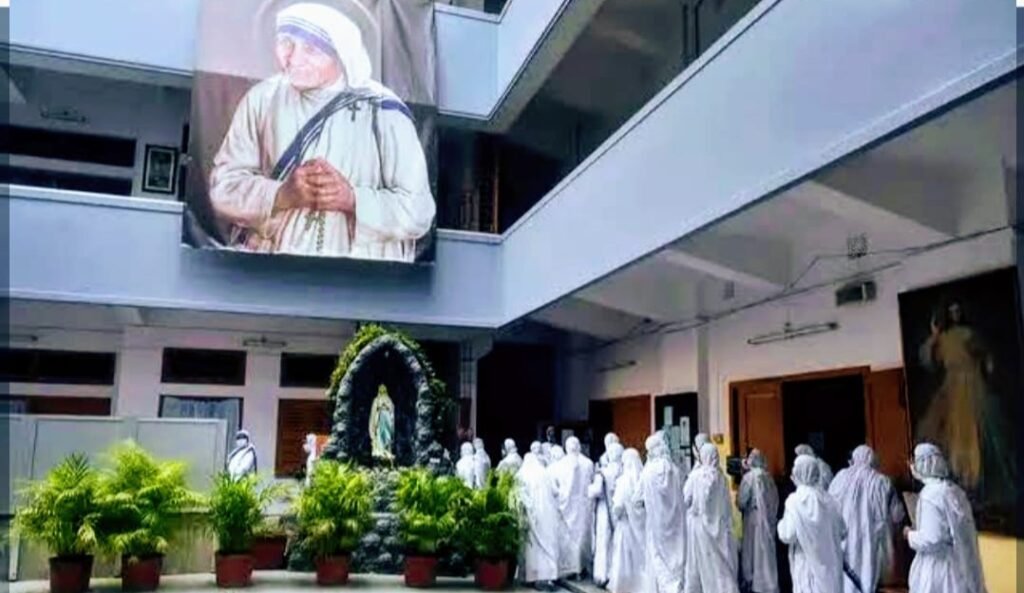
She walked the streets of Calcutta in her white-bordered blue sari, tending to the dying, the destitute, the forgotten. To the world, she was Mother Teresa — a saint in every sense. But to countless voiceless souls, she was simply Ma. While much of the world remembers her for feeding the hungry and sheltering the homeless, few know of another dream she held close — a hospital for the mentally ill, where the poorest of the poor could receive dignity, care, and healing of the mind, not just the body. That unfulfilled vision is now finding shape in a groundbreaking partnership between Antara Psychiatric Hospital — an institution deeply influenced by Mother Teresa’s legacy — and Axis Bank, one of India’s leading private-sector banks. A New Chapter: The Axis Bank Antara Institute of Health Sciences In a landmark move, Axis Bank has signed a Memorandum of Understanding (MoU) with Antara to establish the Axis Bank Antara Institute of Health Sciences in Kolkata. This will be one of Eastern India’s first dedicated mental health educational facilities, offering accredited programs in psychiatry, psychology, nursing, social work, and counselling. The MoU was signed at Axis House in Mumbai’s Worli area in the presence of Mr. Amitabh Chaudhry (MD & CEO, Axis Bank), Mr. Vijay Mulbagal (Group Executive, Axis Bank), Mr. Kamal Prakash (President, Antara), and Dr. Matthew P. John (Hon. General Secretary, Antara). Dr. John, a long-time mental health advocate, recalls his early conversations with Mother Teresa. “She told us that beyond feeding mouths, we must heal broken minds. That message stayed with us.” It was that inspiration, he says, that led to the foundation of Antara in the early 1970s — a clinic that has grown quietly, serving thousands with dignity and devotion. Now, with Axis Bank stepping in, the dream expands. A Mental Health Crisis Meets a Bold Response India, a country of over 1.4 billion, has a severe shortage of mental health professionals. According to government estimates, the ratio of psychiatrists to patients is around 0.75 per 100,000 people, far below WHO recommendations. Facilities are few, stigma is rampant, and training opportunities are limited. Axis Bank’s Group Executive, Mr. Vijay Mulbagal, described the initiative as “a testament to inclusive growth”. He added, “Mental health is not a side note — it is central to national well-being. We are honoured to be part of something that uplifts lives and builds capacity for a healthier India.” The partnership is not only about charity — it is strategic. The Institute is set to launch its academic programs in phases from 2026, aiming to enrol over 200 students annually by 2028. With Antara already receiving DNB (Psychiatry) accreditation from the National Board of Examinations in May 2025 — a first for any mental health institution in West Bengal — the groundwork is well laid. Inspired by Mother Teresa, Powered by Compassion Antara’s ethos is steeped in the spirit of its early years. The staff — many of whom come from humble backgrounds — speak often of Mother Teresa’s visits, her words, her presence. Anita Brooke, Communications Manager at Antara, says the team sees themselves as continuing her mission. “We are not just treating illnesses. We are serving humanity, often the invisible and neglected. Many of our doctors and nurses have given up more lucrative careers to work here.” She adds that Axis Bank’s involvement has encouraged other institutions to come forward. “This is no longer just a clinic. It’s a movement.” Hope on the Horizon From its modest campus in Kolkata, Antara has grown into a beacon of hope for the mentally ill, especially those who cannot afford care. With Axis Bank’s investment, this vision is entering a new phase — one that fuses philanthropy with systemic reform. As Kolkata prepares to host one of Eastern India’s first large-scale mental health education institutes, an old dream is stirring once more — not with grand gestures, but with trained minds, caring hearts, and open doors. In the quiet corridors of Antara, Mother Teresa’s spirit seems to whisper: “Do small things with great love.” Now, thanks to a bank, a hospital, and a legacy of compassion, those small things are becoming something extraordinary.
WBJEE results to be announced on 7 August after OBC quota row delayed release
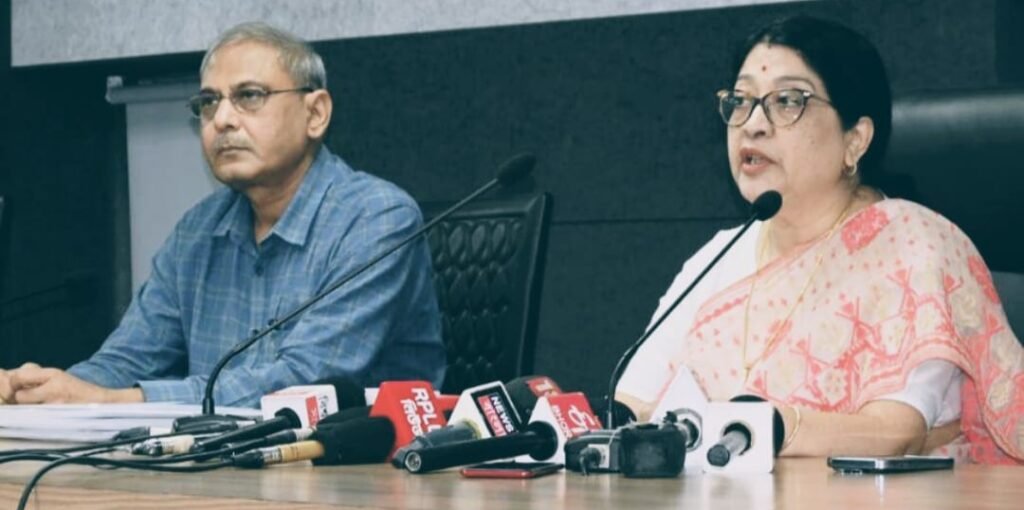
The results of the West Bengal Joint Entrance Examination (WBJEE) will be announced on August 7, nearly three months after the engineering entrance test was held on 27 April, officials said on Wednesday. Sonali Chakraborty Banerjee, chairperson of the West Bengal Joint Entrance Examination Board, confirmed the revised date, stating that the delay was caused by a legal dispute over the state’s OBC reservation policy. “We are hopeful of declaring the results on 7 August. The delay occurred as the OBC certificate matter was sub-judice,” she said. The delay stemmed from a Calcutta High Court order in May that put an interim stay on the West Bengal government’s 2010 notification recognizing OBC status in higher education admissions. The matter reached the Supreme Court, which on Monday issued a partial stay on the High Court order, allowing state authorities to resume procedural activities. In response, the state higher education department sought legal advice and instructed the Joint Entrance Board to proceed with results, pending final adjudication. The Board has also requested all candidates to update their caste certificates between 31 July and 2 August via the official portal. Approximately 100,000 students took the WBJEE for engineering courses across the state. The Board earlier intended to publish results by 5 June but had to suspend the process due to the legal uncertainty. On Tuesday, a division bench of the Calcutta High Court comprising Justices Sujoy Paul and Smita Das Dey ordered the Board and the state government to declare results within a week. Failing that, they must file affidavits explaining the delay by 7 August. Earlier SFI and other Left Front students unions staged agitation in College Street demanding immediate release of results.


