
India court acquits all accused including Sadhvi in 2008 Malegaon blast case, citing lack of evidence

A special National Investigation Agency (NIA) court on Monday acquitted all seven accused, including Bharatiya Janata Party (BJP) lawmaker Pragya Singh Thakur and Lieutenant Colonel Prasad Purohit, in the 2008 Malegaon bomb blast case, citing insufficient evidence and procedural lapses in the investigation. The court observed that the prosecution failed to establish the charges against the accused, adding that critical lapses by the investigating agencies had weakened the case beyond repair. The September 29, 2008 explosion in Malegaon, a communally sensitive town in Maharashtra, killed six people and injured over a hundred. The case drew nationwide attention due to its political and religious overtones, and the trial lasted for over 17 years. Reading out the verdict, the judge noted that the prosecution could not conclusively prove whether the bomb was planted on a motorcycle. No evidence linked Col. Purohit to either assembling or supplying the explosive device, and it remained unclear who had placed the bomb. Key forensic evidence, including fingerprints from the blast site and the motorcycle chassis number, was either not collected or lost. Investigators also failed to establish whether the vehicle used for the bombing was registered in Thakur’s name. The court said the panchanama — a legal description of the crime scene — was not conducted properly, and experts failed to preserve crucial material evidence. “No conviction can be made solely on the basis of suspicion,” the court said, reiterating that terrorism has no religion. It also noted that no conclusive voice tests or credible proof of alleged secret meetings were presented during trial. All seven accused were declared not guilty by the court.
India’s Fish Importers Urge Bangladesh to Allow Hilsa Exports Ahead of Durga Puja

Durga Puja approaches, fish traders in India have formally requested Bangladesh to permit the export of Hilsa — the prized river fish often considered synonymous with festive feasts in Bengal. In a letter sent on Tuesday to Touhid Hossain, Adviser to Bangladesh’s caretaker government’s Ministry of Foreign Affairs, the Fish Importers’ Association of India sought early approval for the export of Hilsa from the Padma River. “Last year, Bangladesh had allowed the export of 2,420 metric tonnes of Hilsa, for which we remain deeply grateful,” wrote Syed Anwar Maqsood, Secretary of the association. “This year, we are requesting approval ahead of the Durga Puja festival, without imposing a fixed export time frame.” Maqsood pointed out that despite last year’s export approval, only 577 metric tonnes of Hilsa eventually reached India due to the narrow time window — typically 30 to 45 days — set by Dhaka. “Such a short period is insufficient to handle such a large volume of fish exports,” the letter said. Hilsa, considered a delicacy during Durga Puja — especially on the eighth day or Ashtami — holds immense cultural and culinary significance among Bengalis. A plate of Hilsa, many believe, completes the celebration. The appeal comes at a sensitive juncture in India-Bangladesh relations, which have been strained following the fall of Sheikh Hasina’s government. Issues such as border tensions and concerns over the treatment of minorities in Bangladesh have led to increased diplomatic friction. Despite the chill in bilateral ties, Indian traders are hopeful that Dhaka will consider the cultural significance of Hilsa during the festive season and grant the export request in time.
Kolkata Tram Users to Hold Sit-In Protest Against Bituminisation of Tracks

A group of tram enthusiasts in Kolkata will stage a sit-in protest outside the Kolkata Municipal Corporation (KMC) headquarters on August 1, opposing what they allege is a deliberate attempt to phase out the city’s heritage tram network under the guise of road maintenance. The Calcutta Tram Users Association (CUTA), a forum of over 600 members, accused the state government and civic agencies of systematically dismantling the once-extensive tram service. “Tram routes have shrunk from 37 in 2011 to just two at present,” said CUTA spokesperson Debashis Bhattacharya. The association alleged that KMC has been using asphalt to cover tram tracks in several areas, including Chitpur in the north and parts of south Kolkata, in violation of a recent Calcutta High Court directive prohibiting such activities. A senior KMC official denied knowledge of any bituminisation on tram tracks and maintained that current underground pipeline repair work was essential. However, CUTA questioned the continued suspension of tram services on the Tollygunge–Ballygunge route for over a year, calling it a pretext to replace trams with app-based cab and auto-rickshaw services. “About 200 protesters will begin their demonstration outside KMC headquarters at 1 p.m. and later march along a defunct tram route,” Bhattacharya said. According to a transport department official, the city’s tram network has been in steady decline, with operational lines reducing from 61 km in 2011 to just 12 km in 2022. Passenger numbers have also dropped from around 70,000 daily commuters in 2011 to only a few thousand today. No state funding has been allocated for trams since 2018. However, Transport Minister Snehasis Chakraborty has stated that the government intends to preserve tram services along select heritage routes. As the matter remains sub-judice, the government will await the court’s decision before making further moves.
BJP MP from Kanthi urges cyber cell of Delhi police to inquire over CM’s assault claim on Bengali-speaking woman

BJP MP Soumendu Adhikari has lodged a police complaint in Delhi against West Bengal Chief Minister Mamata Banerjee, alleging the dissemination of fabricated and communally provocative content through social media. Adhikari urged the Delhi Police to register an FIR against Mamata Banerjee under the Indian Penal Code (IPC) and the IT Act, preserve and examine the original social media content, investigate the alleged conspiracy involving a political worker and a journalist, and initiate appropriate penal action. In his letter addressed to the station house officer of the Cyber Crime Branch of Delhi Police, Adhikari accused Banerjee of sharing false information with the intent to defame the city police and disturb public order. According to Adhikari’s letter, on 27 July, Mamata Banerjee posted a message on her social media account alleging that a Bengali-speaking woman and her child were brutally assaulted by Delhi Police officers during a verification drive. “The post further insinuated that the act was communal in nature and sought to project the Delhi Police as oppressors of linguistic minorities,” he said. The Kanthi MP claimed that such a post, coming from a constitutional functionary, was widely circulated online, sparking public outrage and causing reputational harm to the police force. BJP MP mentioned the clarification of Abhishek Dhania, Deputy Commissioner of Police, East Delhi, Monday that the woman, Sajnur Parveen, had fabricated her story. Initially, she alleged that four men in civil clothes abducted her and her children on 26 July and extorted Rs 25,000. However, scrutiny of CCTV footage and technical evidence revealed that she left her home voluntarily with her children, and no coercion was involved. Further interrogation revealed that Parveen confessed to fabricating the story under the influence of her uncle, a political worker in West Bengal’s Malda district, and a journalist. “The intention behind the video was to create a false narrative and circulate it in social media for political and defamatory purposes,” alleged Adhikari in his letter.
ONGC Secures Land for Oil Project in Ashoknagar Without Major Disputes

India’s state-run Oil and Natural Gas Corporation (ONGC) has secured land for crude oil extraction in Ashoknagar, West Bengal, without any significant land acquisition disputes, thanks to intervention by a core committee formed by the state government. The development marks a major breakthrough in a project that had earlier stalled for years due to land availability issues. ONGC had first discovered oil reserves around a decade ago in the Baigachi area of Ashoknagar in North 24 Parganas district. A second discovery was later made in Pumlia under the Bhurkunda Panchayat. Most recently, fresh reserves were found in Kakpul, located in Ashoknagar’s Daulatpur area. To address potential land disputes, the West Bengal government devised a special compensation package. Local MLA and North 24 Parganas Zilla Parishad Chairperson Narayan Goswami said, “Under the Chief Minister’s directive, we formed a core committee comprising the district magistrate, block development officer, and panchayat officials to directly engage with landowners. That helped us secure the land.” Earlier, ONGC had halted operations in Baigachi after completing preliminary drilling due to a lack of additional land. However, West Bengal Chief Minister Mamata Banerjee had allocated 15 acres to ONGC at a token lease of just one rupee to support further exploration. Over the past five to six months, ONGC sought formal clearance from the state to begin full-fledged drilling in the area. It has since acquired land on lease from owners in the two earlier locations and has now added the Kakpul site to its exploration portfolio. Officials say similar efforts are underway at other prospective sites nearby. Goswami emphasized the state’s commitment to an industry-friendly environment, stating, “The Chief Minister has made it clear that land issues should not hinder industrial progress. In coordination with local municipalities and panchayats, we’ve ensured a smooth path for investors.” Plans are also being drawn up to provide employment opportunities to the families of land donors, especially for their children, as part of a broader compensation package. However, questions have emerged regarding delays in the project’s execution. Addressing the concerns, Goswami said, “Criticism is easy, but such large-scale projects involve complex technical processes. Once those are resolved, work will proceed as planned.”
West Bengal CM Mamata Banerjee Accuses Centre of Withholding Funds, Vows to Continue Development
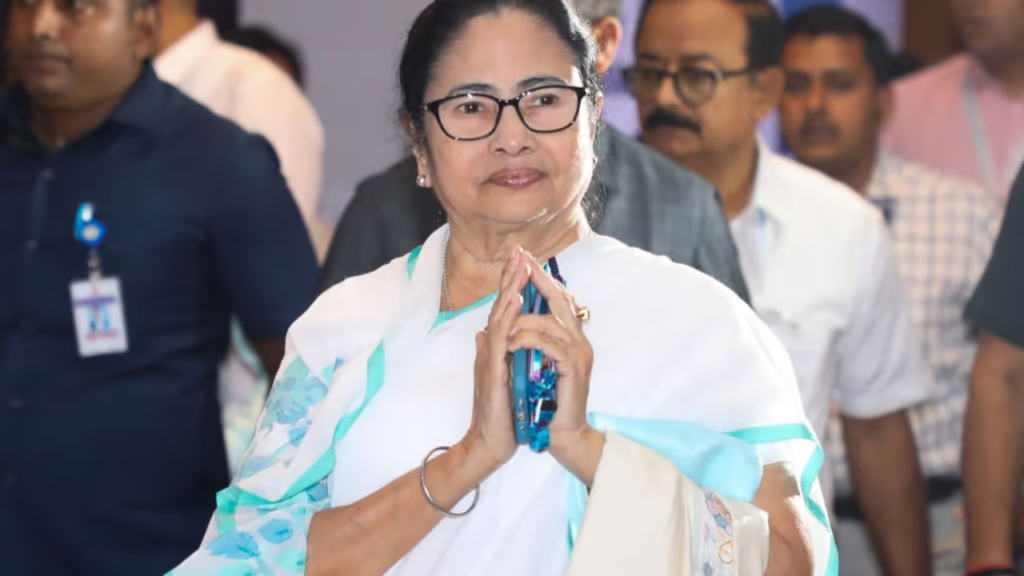
West Bengal Chief Minister Mamata Banerjee on Monday accused the central government of deliberately withholding funds owed to the state, but said development work would continue regardless of what she described as “political discrimination.” Speaking at an administrative review meeting in Bolpur, Banerjee reiterated allegations that the Centre has been persistently depriving West Bengal after failing to “gain political control” over it. She also referred to recent reports of alleged harassment of Bengali communities in several BJP-ruled states. “The Centre has stopped releasing funds. But even in this situation, we must carry forward development work,” Banerjee told senior officials and elected representatives. “The work will be funded entirely by the state.” She outlined a decentralised funding plan in which district councils (Zilla Parishads) and Panchayat Samitis will each contribute 5% of local development funds, while Members of the Legislative Assembly (MLAs) will allocate INR 1 million (approximately $12,000) each from their local area development budgets. The remaining funds will be provided by the state government, she said, adding that all contributions will be coordinated through the respective District Magistrates. Banerjee has frequently accused Prime Minister Narendra Modi’s government of financially discriminating against opposition-ruled states, particularly West Bengal, where her Trinamool Congress party has held power since 2011. The federal government has not immediately responded to her latest allegations.
West Bengal CM Protests BLO Training, Says State Was Not Informed
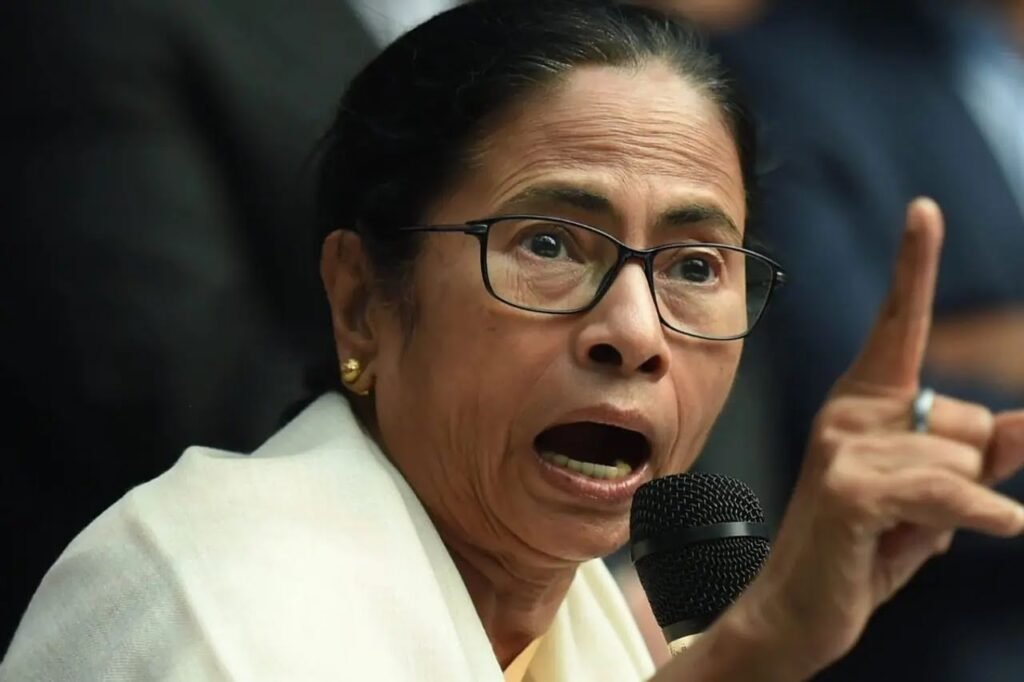
West Bengal Chief Minister Mamata Banerjee on Sunday expressed strong objections over the Election Commission’s ongoing training of Booth Level Officers (BLOs), claiming her administration had not been informed in advance. Speaking at a public event in Kolkata, Banerjee said she was unaware that the Election Commission of India (ECI) had initiated the training process under the ongoing Special Intensive Revision (SIR) of electoral rolls. She alleged that no permission was sought from the state’s chief secretary, raising questions over what she described as a unilateral move by the ECI. “The training has started without informing me or the state government. Why was the state kept in the dark?” Banerjee asked, adding that district magistrates had also failed to notify her office. She warned BLOs not to exclude any legitimate voters from the rolls and reminded them that they remain employees of the state government. “I urge BLOs to ensure that no name is wrongly deleted from the voter list. If someone is away for a few days or has gone on vacation, that doesn’t mean their name should be removed,” Banerjee said. “Many Bengali-speaking citizens are already facing harassment. We must stand by them.” The ECI has commenced training for BLOs across multiple districts including Nadia, North and South 24 Parganas, and Murshidabad as part of the SIR process, which aims to update electoral rolls and ensure that only eligible Indian citizens remain registered. Similar exercises have recently begun in Bihar, marking the first SIR there since 2003. According to officials, the current drive will expand to other regions in phases and is being seen as part of preliminary preparations ahead of nationwide electoral roll revisions. The controversy comes amid a politically sensitive time in West Bengal, where concerns over voter eligibility, alleged infiltration, and electoral transparency have heightened tensions between the state government and the central election authority.
West Bengal CM Mamata Banerjee Accuses Centre of Withholding Funds, Vows to Continue Development

West Bengal Chief Minister Mamata Banerjee on Monday accused the central government of deliberately withholding funds owed to the state, but said development work would continue regardless of what she described as “political discrimination.” Speaking at an administrative review meeting in Bolpur, Banerjee reiterated allegations that the Centre has been persistently depriving West Bengal after failing to “gain political control” over it. She also referred to recent reports of alleged harassment of Bengali communities in several BJP-ruled states. “The Centre has stopped releasing funds. But even in this situation, we must carry forward development work,” Banerjee told senior officials and elected representatives. “The work will be funded entirely by the state.” She outlined a decentralised funding plan in which district councils (Zilla Parishads) and Panchayat Samitis will each contribute 5% of local development funds, while Members of the Legislative Assembly (MLAs) will allocate INR 1 million (approximately $12,000) each from their local area development budgets. The remaining funds will be provided by the state government, she said, adding that all contributions will be coordinated through the respective District Magistrates. Banerjee has frequently accused Prime Minister Narendra Modi’s government of financially discriminating against opposition-ruled states, particularly West Bengal, where her Trinamool Congress party has held power since 2011. The federal government has not immediately responded to her latest allegations.
Is Speaking Bengali a Crime? Fear Grips Migrant Workers After Arrests in Haryana
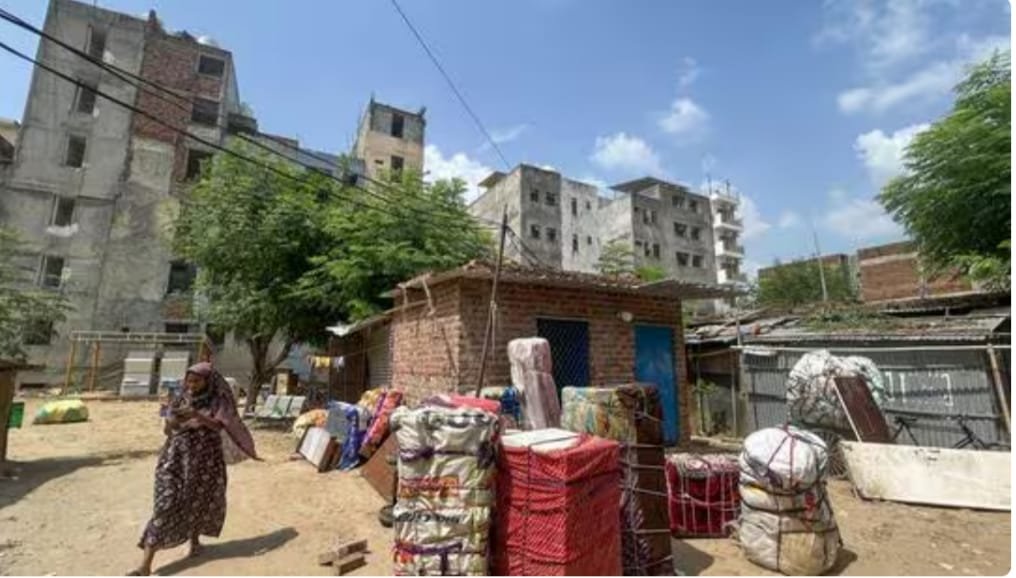
A wave of fear has swept through Bengali-speaking migrant communities in Gurugram, Haryana, following a string of arrests where police allegedly targeted individuals suspected of being “illegal Bangladeshis” — despite possessing Indian identity documents. Tensions escalated after Assam Chief Minister Himanta Biswa Sarma recently remarked that the number of people listing Bengali as their mother tongue in the national census would help identify the scale of “foreigners” in Assam. The comment drew sharp criticism from political leaders and civil society alike, who accused the BJP leader of equating Bengali identity with illegal immigration. Now, similar sentiments appear to be playing out hundreds of miles away in Haryana. Police in Gurugram have arrested at least 10 Bengali-speaking residents on suspicion of being undocumented Bangladeshis. Residents of makeshift settlements in the city’s outskirts say they are being harassed, picked up at night, and detained — often violently — without due verification. “They kicked the door and dragged him away” Anjarul, a daily-wage painter originally from Malda district in West Bengal, was one such victim. Living in Gurugram’s Tigra village for the past five years, he says he was forcibly taken from his home a few nights ago despite showing a valid Aadhaar identity card. “They hit me, dragged me, and called me a Bangladeshi,” he said. “I showed my Aadhaar card, but they didn’t care. Now, even though I’ve been released, the police have kept my Aadhaar card.” His wife alleged that she was also assaulted when she pleaded with officers not to take her husband away. “I asked them to at least verify our documents. Instead, one officer slapped me so hard that I can’t hear properly from my right ear,” she said tearfully. Entire neighborhoods abandoned The police crackdown has left entire Bengali-populated neighborhoods in disarray. Many residents have fled, fearing detention. “I’m packing my bags and leaving for Malda,” said one resident. “Better to go back than live in this constant fear.” Most of the homes in the area now sit locked and abandoned, with community leaders warning of an atmosphere of distrust and discrimination. Those who remain live in fear of midnight raids. Community hall turned into detention center. Local sources told reporters that a government community center in Gurugram’s Sector 40 has been functioning as a makeshift detention center over the past week. More than 100 Bengali-speaking individuals were reportedly held there under suspicion of being undocumented immigrants. While officials now say the facility is largely empty, some detainees may have already been moved to other undisclosed locations. The Haryana police have yet to issue a formal statement addressing allegations of harassment and illegal detentions. Activists, however, are demanding an investigation and legal recourse. Bengali identity under siege? The developments in Gurugram follow a broader pattern of heightened scrutiny of Bengali speakers across several Indian states. Critics argue that linguistic identity is being dangerously conflated with nationality, fueling xenophobic policies and vigilantism. “What we are witnessing is the criminalization of language and ethnicity,” said a Delhi-based rights activist. “No Indian should be treated as an outsider in their own country simply because they speak Bengali.” As political discourse around migration and citizenship intensifies, many fear that vulnerable communities — especially migrant workers — will continue to bear the brunt of profiling and persecution.
‘Bengali Identity Under Attack’: TMC Minister Warns of Growing Hostility, Calls for Global Solidarity
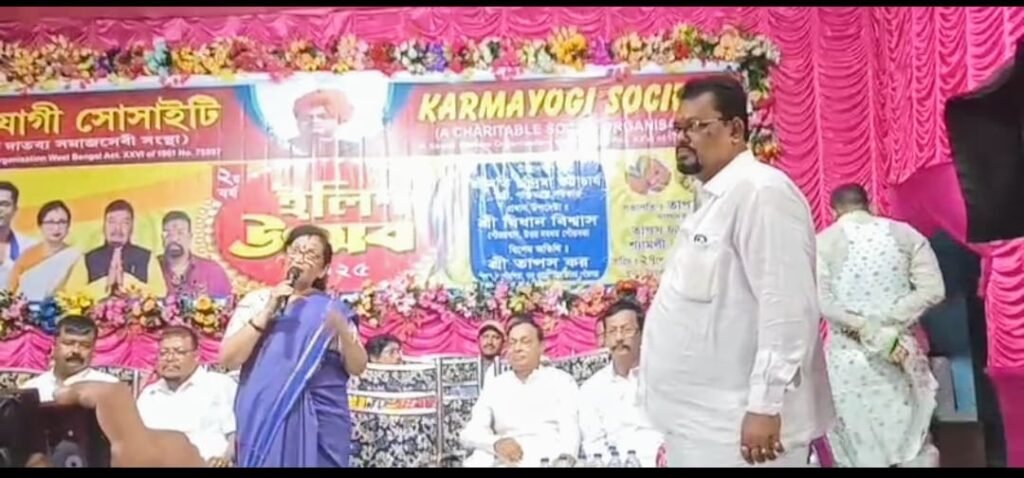
West Bengal minister and senior Trinamool Congress leader Chandrima Bhattacharya has accused the BJP-led central government of orchestrating a “systematic and shameful” attack on Bengali identity, calling on Bengalis across the globe to unite in defence of their cultural and linguistic pride. Speaking at a culturally symbolic Ilish Utsav (Hilsa Festival) in Nimta on Sunday—organised by the local organisation Karmayogi Society—Bhattacharya alleged that Bengali-speaking citizens were being targeted and vilified in several BJP-ruled states in India. “Bengalis are being harassed, detained, even killed, simply for speaking their language,” she told the gathering. “Bengal has never humiliated those from Assam, Bihar, Jharkhand or Odisha. Why, then, is the rest of the country targeting Bengalis? This is no longer accidental—it is deliberate, and we will resist.” Her remarks follow West Bengal Chief Minister Mamata Banerjee’s invocation of a recent Human Rights Watch report which, according to her, detailed the illegal deportation and persecution of Bengali-speaking people in India. Citing the New York-based organisation’s findings, Banerjee had sharply criticised Prime Minister Narendra Modi and Home Minister Amit Shah for “weaponising identity” and fanning communal divisions. Bhattacharya echoed this concern and warned, “The central government will be made answerable. The global Bengali community will not stay silent.” The festival itself, a celebration of Bengal’s love for ilish maachh (hilsa fish), carried an undertone of cultural unity. Organisers said the event was meant to act as a counterpoint to divisive rhetoric. “We invited people from all linguistic backgrounds—Bihari, Odia, Assamese—to join in. Our message is simple: diversity is not a threat, it’s a strength,” said Tapan Chakraborty, president of the Karmayogi Society. In a sharp jibe at the growing politicisation of dietary and cultural habits, Bhattacharya remarked: “Now even what we eat—singara, jilipi—is being politicised. Who gave anyone the right to decide what a citizen can eat or speak? This is not nationalism, it’s narrow-mindedness.” Targeting Home Minister Amit Shah by name, she said: “Stop this divisive politics. Bengalis live in the US, in China, in every corner of the world. You will soon realise what it means to attack the pride of Bengal.” The event closed with references to Bengal’s cultural icons—from Rabindranath Tagore and Kazi Nazrul Islam to Saratchandra Chattopadhyay and Swami Vivekananda—as Chakraborty declared, “Those who chew gutka and abuse others’ culture won’t understand the richness of Bengal.” As India heads towards a contentious electoral season, including assembly elections in West Bengal in 2026, issues of regional identity, linguistic rights, and citizenship are once again emerging as politically potent and deeply emotional subjects. The Trinamool Congress is now clearly positioning itself as a defender of Bengali pride, while accusing the BJP of erasing cultural plurality in the name of nationalism.


