
ED Expands Betting App Probe, Summons Mimi Chakraborty and Urvashi Rautela

The Enforcement Directorate (ED) has summoned actor-turned-politician Mimi Chakraborty in connection with its probe into a betting app case, officials said Saturday. The actress has been asked to appear in New Delhi on 15 September. Bollywood actress Urvashi Rautela has also been summoned, with her questioning scheduled for 16 September. The agency has already questioned several high-profile celebrities in recent weeks, including former cricketers Suresh Raina and Shikhar Dhawan, over their association with the promotion of the app. Chakraborty, a former Trinamul Congress parliamentarian, is one of Bengal’s most recognizable film stars. She has worked extensively in both television and films, while also endorsing several brands. Investigators allege that she, along with fellow Bengali actor Ankush Hazra, appeared in advertisements linked to the betting app now under scrutiny. The ED believes the celebrities’ endorsements played a key role in promoting the app to a wider audience. Officials said their questioning will focus on whether the stars were aware of the app’s alleged illegal operations and whether payments received for promotions were routed through legitimate channels. The betting app case has widened rapidly, with the agency summoning at least 29 celebrities from across India. Among them are actors Rana Daggubati, Prakash Raj and Vijay Deverakonda, all of whom were reportedly associated with the app’s promotion. Hazra, another prominent Tollywood actor, was called earlier this week. Sources said the questioning of Chakraborty and Rautela is expected to shed further light on the financial trail the agency is probing. The betting app is alleged to have violated Indian gambling and money laundering laws, with investigators claiming that large sums of money were routed abroad through shell companies. The ED is also examining possible links between the app’s operators and hawala channels.
Modi Arrives in Kolkata for Military Commanders’ Meet; Police Impose Traffic Curbs
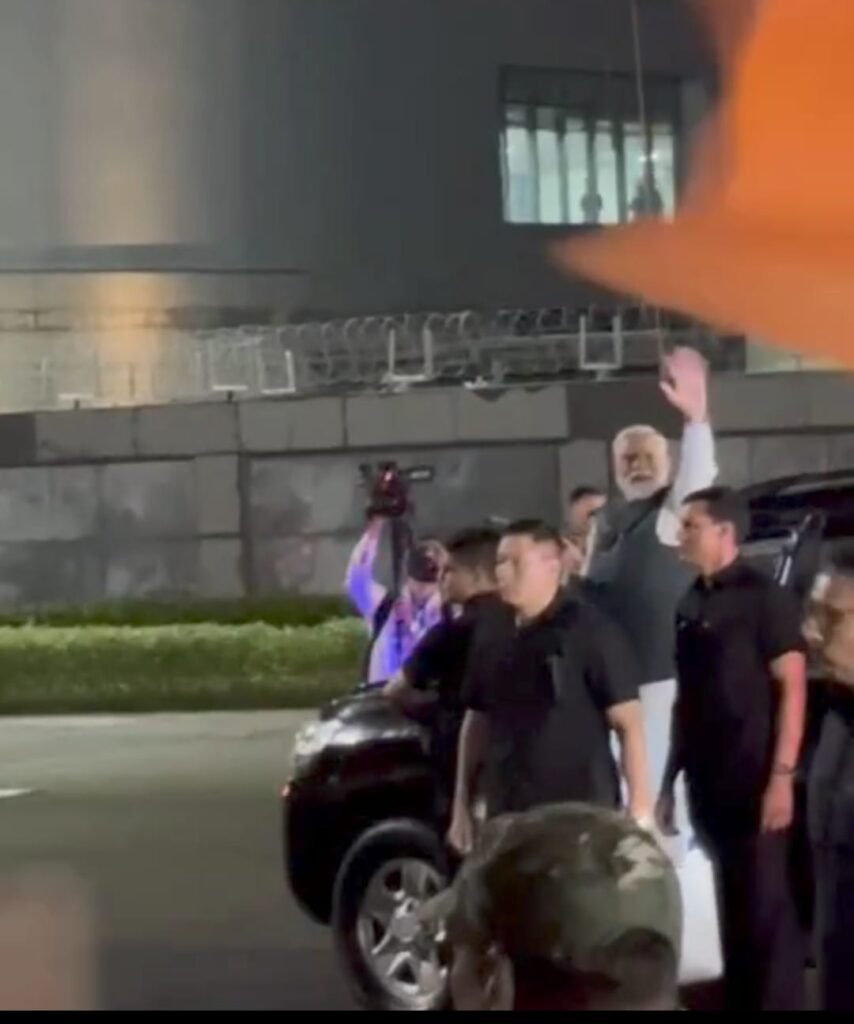
Prime Minister Narendra Modi arrived in Kolkata on Sunday night to inaugurate one of the Indian armed forces’ biggest strategic gatherings since last year’s Operation Sindoor. The Combined Commanders’ Conference (CCC) will run from Sunday to Tuesday at Fort William, the headquarters of the Eastern Command. Mr Modi flew in late in the evening and headed straight to Raj Bhavan, the colonial-era Governor’s House, where he will spend the night. On Sunday morning he is due to open the conference, which will bring together Defence Minister Rajnath Singh, National Security Adviser Ajit Doval, Chief of Defence Staff General Anil Chauhan and the chiefs of the Army, Navy and Air Force. The high-level meeting will focus on border security, institutional reform and accelerating the modernisation of the armed forces. Senior defence officials said lessons drawn from Operation Sindoor — India’s cross-border strikes following the Pahalgam terror attack that killed 26 tourists — would also shape the deliberations. The CCC has long been a forum for frank exchanges between military commanders and the political leadership. The last edition, in Bhopal in 2023, was also opened by Mr Modi, but this year’s event in Kolkata carries additional weight in the aftermath of Operation Sindoor. The prime minister’s presence, however, also means disruption for the city. Kolkata Police have imposed sweeping traffic restrictions through the weekend. Commissioner Manoj Verma said the movement of goods vehicles on major arteries was banned between 3.30 p.m. and 8 p.m. on Saturday, and again from 7.30 a.m. to 4 p.m. on Sunday. Streets around Raj Bhavan are shut to heavy traffic until late Saturday night, while extra barricades and checkpoints have been put in place near Fort William. For many residents, the curbs are a familiar inconvenience whenever a VVIP comes to town. But officials insisted they were essential, given the scale of the security operation and the sensitivity of the conference. Defence ministry sources said the final day of discussions on Monday would be attended by senior bureaucrats, including Defence Secretary Rajesh Kumar Singh, before the prime minister returns to Delhi.
Allegations of Abuse Surface at Hooghly Private Home; Four Arrested

Police in Hooghly district arrested four people, including the owner, secretary, and two staff members of a private home in Nabagram, on charges of physically abusing a 26-year-old woman resident. The woman lodged a complaint with the Serampore Women’s Police Station on Thursday, police officials said. Acting swiftly, investigators arrested the four accused on Friday. One of them has been remanded to three days of police custody by a Serampore court, while the others have been sent to 14 days of judicial custody. Among those arrested is the home’s secretary, Ajay Chattopadhyay, a former Trinamool Congress (TMC) member of the Nabagram panchayat. Police sources said Chattopadhyay wields influence locally through his connections in various institutions. Trinamool leaders moved quickly to distance the party from the controversy. Apurba Majumdar, the party’s Nabagram area president, said: “The victim is a bright young woman preparing for a government job. She had earlier brought complaints against the home to our office, and we advised her to go to the police. Ajay is no longer with TMC, though he still has influence. Whoever is guilty will face punishment.” Opposition leaders, however, seized the opportunity to attack the ruling party. CPI(M) leader Ashish Dey alleged: “TMC is now trying to wash its hands of responsibility. Ajay contested the Nabagram Cooperative Bank election as a TMC candidate and served earlier as a director on its board. He has long been an active TMC worker. The party cannot escape accountability.” BJP leaders also weighed in. Rajesh Rajak, BJP’s Nabagram mandal president, said: “We know Ajay well; he has multiple faces. He has been part of TMC, so naturally he had close ties with the panchayat. If the allegations are true, police must act strictly.” Some staff members of the home defended its owner, claiming they had never witnessed Ajay behave inappropriately. The case comes amid a spate of controversies involving private homes and rehabilitation centers in Uttarpara. On Friday, the head of a de-addiction center was bludgeoned to death by two residents. Months earlier, another resident died under suspicious circumstances at a separate facility. Repeated allegations have sparked fresh scrutiny of private institutions in the district.
PM Modi unveils Rs 9000 cr development package for Mizoram, inaugurates historic rail link to Aizawl
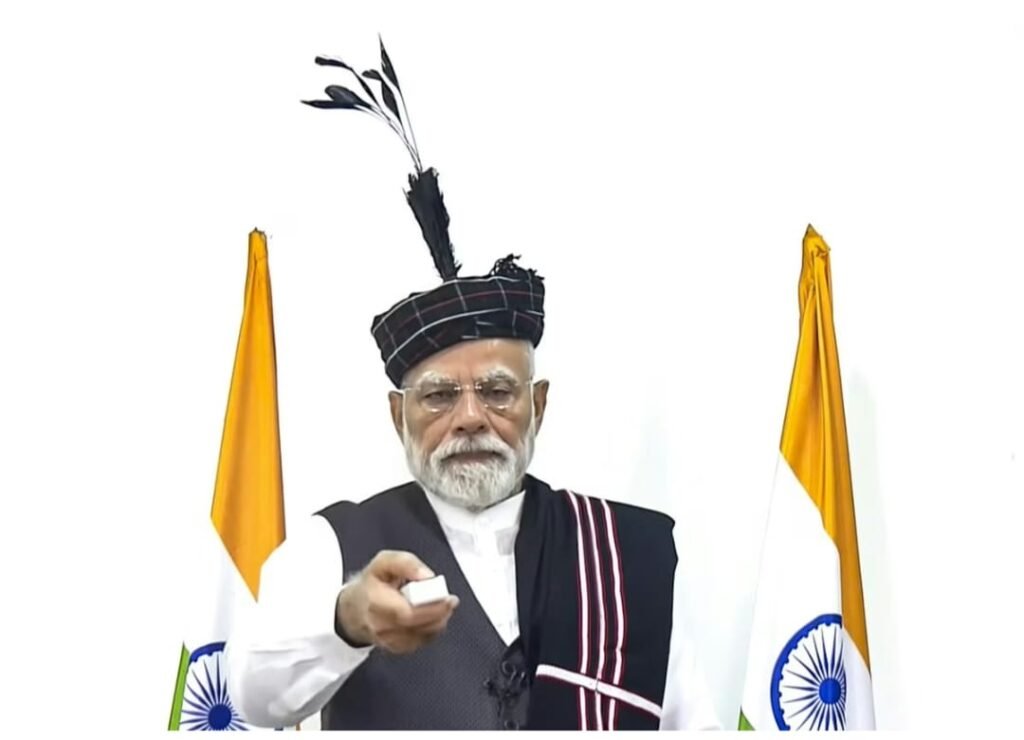
Prime Minister Narendra Modi on Saturday announced a development push of more than 9,000 crore rupees ($1.1 billion) for Mizoram, including the inauguration of the state’s first rail link to its capital, Aizawl — a project he hailed as a historic milestone for India’s Northeast. While poor weather prevented Modi from attending a public gathering in the city, he addressed the people virtually from Lengpui Airport and expressed gratitude for what he called the “warm reception of the Mizo people.” The highlight of the day was the launch of the 51.4-kilometer Bairabi-Sairang rail line, built at a cost of 8,070 crore rupees. The line connects Aizawl to India’s railway network for the first time, with Sairang set to be linked to Delhi by the Rajdhani Express. Modi called the project a “lifeline of transformation” for Mizoram and the broader Northeast. “This is not just a railway track,” Modi said. “It will bring progress in agriculture, education, healthcare, tourism, transport and employment for the people of Mizoram.” The project posed major engineering challenges due to the hilly terrain, requiring 45 tunnels, 55 major bridges and 88 smaller bridges. Modi praised the engineers and workers who carried out the construction in difficult conditions. The prime minister also used his address to attack what he described as decades of “vote-bank politics” by previous governments, which he said neglected the Northeast because of its small number of parliamentary seats. “Our government has brought those who were kept on the margins into the mainstream,” he said. Modi highlighted his government’s record in the region over the past 11 years, citing investments in rural roads, national highways, internet connectivity, electricity, LPG and clean drinking water. He said Mizoram will also benefit from expanded air services under the UDAN scheme, with new helicopter routes to remote areas starting soon. Underlining Mizoram’s strategic importance, Modi said the state is central to India’s Act East Policy, which seeks closer economic ties with Southeast Asia. He noted projects such as the Kaladan Multimodal Transport initiative and the planned Sairang-Hmawngbuchhuah rail link, which will connect Mizoram to the Bay of Bengal and beyond. The prime minister also focused on youth and entrepreneurship. He said the region already hosts more than 4,500 startups and 25 incubators, while residential schools under the A-Club model are expanding. “The innovation ecosystem is growing in the Northeast, and Mizoram’s youth are at its center,” Modi said. Sport was another theme of the address, with Modi praising Mizoram’s football culture and promising more infrastructure under the Khelo India scheme. He said a new national sports policy will boost opportunities and strengthen the sports economy. Modi encouraged promotion of local products such as bamboo, organic ginger, turmeric and bananas, while pointing to tax reforms under the Goods and Services Tax that reduced costs of essential goods. Citing India’s 7.8% GDP growth in the first quarter of the current fiscal year, Modi described the country as the fastest-growing major economy. He said economic growth was tied to national security, referencing Operation Sindoor, where domestically produced weapons played a role. “Mizoram is not only a part of India’s story of development but also a crucial partner in building a developed India,” Modi said. The inauguration of the Bairabi-Sairang rail line, long awaited by the people of Mizoram, is expected to redefine connectivity in the state and give a major push to economic growth across the Northeast.
Madhya Pradesh High Court issues notice over ‘Jolly LLB 3’ song
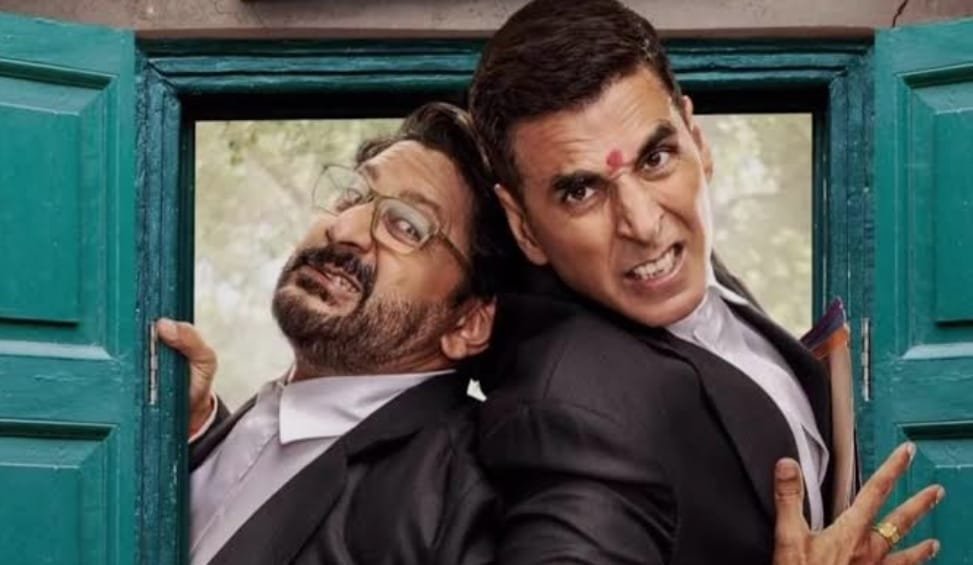
The Madhya Pradesh High Court has issued notices to Bollywood actors Akshay Kumar and Arshad Warsi, along with producer Alok Jain, director Subhash Kapoor and others, in response to a public interest litigation challenging a song from the upcoming film Jolly LLB 3. A division bench of Chief Justice Sanjeev Sachdeva and Justice Vinay Saraf on Friday directed the parties to file their replies by Sept. 17, just two days before the film’s scheduled release on Sept. 19. The petition, filed by advocate Pranjal Tiwari of Jabalpur, argues that the song “Bhai Vakeel Hai” undermines the dignity of the legal profession. Tiwari, represented by advocates Pramod Singh Tomar and Arzoo Ali, cited lyrics including “Rago mein tigdambaazi hai, har taale ki chaabi hai … har case ki package deal hai, fikr na kar tera bhai vakeel hai” as portraying lawyers in a derogatory and frivolous light. The petition claims the song defames the legal profession, mocks the sanctity of courtroom attire and violates Section 5(b) of the Cinematograph Act, 1952, which restricts content affecting public morality and decency. Kumar and Warsi are shown dancing in lawyers’ gowns and neckbands, which the petitioner said ridicules judicial decorum and could negatively influence young viewers. The state’s counsel told the court that the Allahabad High Court had earlier dismissed a similar plea seeking a stay on the film’s release. Taking note, the Madhya Pradesh High Court said the inclusion of the producer and director was crucial for judicial consideration. Other respondents in the case include the state government, the principal secretary of the home department, the secretary of information and broadcasting, and the chairman of the Central Board of Film Certification. With the hearing set just before the film’s release, the court’s decision will be closely watched by both the legal fraternity and the film industry.
Teen Stabbed to Death at Dakshineswar Metro Station, Panic Among Commuters
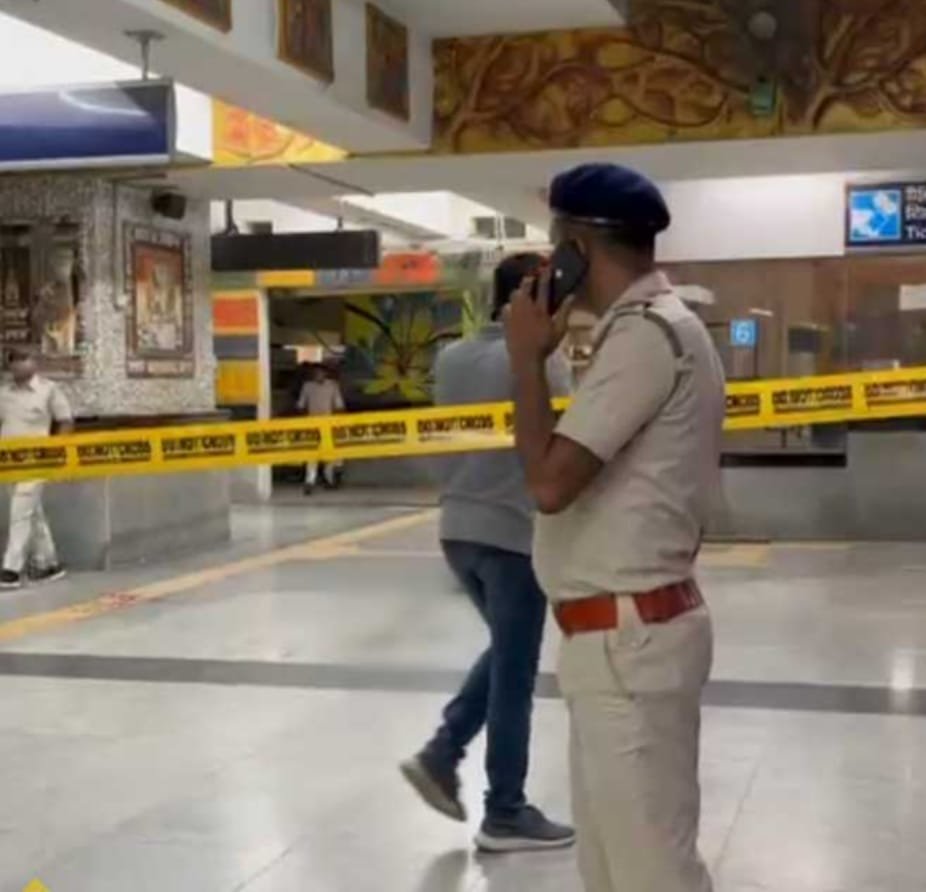
Kolkata was rocked on Friday afternoon after a brutal incident inside Dakshineswar Metro Station, where a 17-year-old boy was allegedly stabbed to death following a clash between two groups of teenagers. According to preliminary reports, an altercation broke out near the ticket counter between the two groups, which quickly escalated into a violent scuffle. Witnesses claimed that during the fight, one boy was surrounded and repeatedly attacked with a sharp weapon. He collapsed on the station floor in a pool of blood, sparking chaos among commuters. The injured boy, a resident of Alambazar and a Class XI student, was rushed to a nearby hospital. As his condition deteriorated, he was shifted to another hospital, where doctors declared him dead. Police sources confirmed that the deceased was a minor. Eyewitnesses stated that the clash was between students, and suspicions point to a love affair dispute as the possible trigger. However, officials stressed that the exact motive is yet to be confirmed. The attackers, also believed to be minors, fled the spot immediately after the incident. Scenes of panic and fear unfolded inside the busy metro station, which was crowded with passengers at the time. Photographs showed bloodstains on the station floor as authorities cordoned off the area. Regular commuters raised questions over how sharp weapons were carried inside the metro premises despite security checks. Metro authorities issued a statement saying the entire incident is under review, and police have been informed. They clarified that metro services were not disrupted. Police teams have launched a search to trace the absconding attackers. Investigators are scanning CCTV footage to identify those involved. The shocking murder has left the Alambazar locality in deep grief, with neighbours describing the victim as a bright and soft-spoken student whose life was cut short in a senseless act of violence.
Bangladesh Faces Ongoing Shortage of Routine Childhood Vaccines in Several Districts
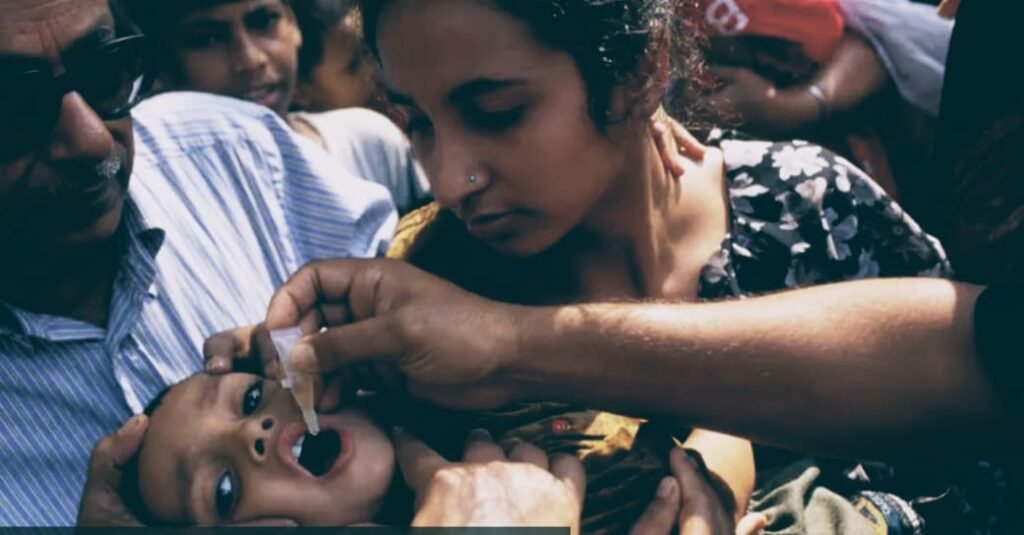
Several districts across Bangladesh have been grappling with shortages of childhood vaccines under the Expanded Program on Immunization (EPI) for more than a month, health officials said. Civil surgeons from multiple districts reported that supplies of certain vaccines have been inconsistent, leaving children unable to receive their scheduled immunizations. The shortages vary by region, with some districts facing gaps in specific vaccines while others have received adequate stock after delayed shipments. “This problem has persisted for weeks,” said one district civil surgeon, who noted that children in his area had missed their doses due to a lack of supply. “Once vaccines arrive, we are able to continue the program, but the disruptions are worrying.” Bangladesh, for the first time, began purchasing EPI vaccines last year. Until then, the program was largely supported by international donors and vaccines were provided free of cost. Officials said the transition has created logistical challenges in procurement and distribution. Despite field-level reports of shortages, the national EPI office has denied any systemic problem. A.F.M. Shahabuddin, project manager of the Expanded Program on Immunization, insisted there was “no shortage or crisis.” “The vaccines are arriving as scheduled,” Shahabuddin said. “What happens is that it takes some time to distribute them to all districts once the shipment reaches Bangladesh. That lag can create the impression of shortages, but there is no real supply gap.” Health workers and parents, however, remain concerned. Delays in administering vaccines could leave children vulnerable to preventable diseases such as measles, polio and diphtheria. Public health experts warn that even short-term disruptions in immunization schedules can have long-term consequences, especially in densely populated countries like Bangladesh. The Ministry of Health has not announced any new measures to address the delays, but officials say they are monitoring distribution more closely.
Student’s Death at Jadavpur University Sparks Outcry, Demands for Security
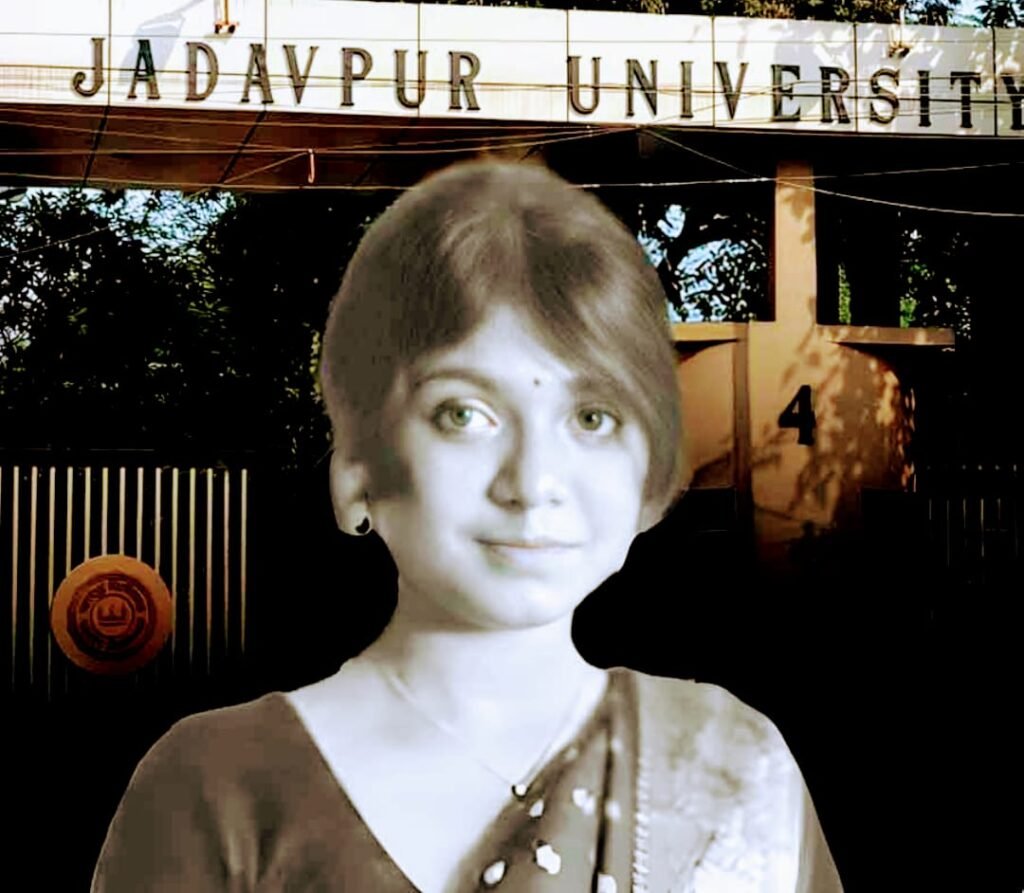
A third-year English undergraduate student at Jadavpur University was found dead Thursday night after being pulled unconscious from a pond near the campus’ Gate No. 4, triggering outrage among student groups and reigniting debates over campus safety. The victim, identified as Anamika Mondal, a resident of Nimta in Belgharia, was discovered around 10:20 p.m. floating in the pond adjacent to the Arts Faculty Students’ Union room, where a cultural program organized by the university’s “Drama Club” was underway. The event featured folk singer Gaur Das Baul and his troupe, and was attended by both students and alumni. According to eyewitnesses, Mondal was rushed out of the water by fellow students, who attempted CPR and tried to drain water from her lungs before taking her to KPC Medical College and Hospital nearby. Doctors there declared her dead on arrival. Police have registered a case of “unnatural death” and sent her body for post-mortem examination. Forensic teams are expected to visit the campus Friday. Investigators said they are examining footage from three CCTV cameras installed near Gate No. 4 — one facing the entrance, another near the security room, and a third covering the Arts Faculty area. Authorities are probing whether Mondal had slipped into the pond while walking toward two toilets located beyond the narrow pathway skirting the waterbody. “How exactly she fell into the pond remains unclear. CCTV footage may help us reconstruct the sequence of events,” a police official said. The incident quickly sparked political and student reactions. The Trinamool Congress Chhatra Parishad (TMCP) questioned why the university administration had permitted a late-night program. TMCP state president Trinankur Bhattacharya said, “This is extremely unfortunate. Two years ago, we lost Swapnadeep. Now again another student. These are not normal deaths. We have long demanded CCTV surveillance across campus and a permanent police outpost. Those who opposed these measures cannot shirk responsibility. The absence of a permanent vice-chancellor has only worsened matters.” TMCP vice president Sudip Raha echoed the demand, writing on X (formerly Twitter), “The necessity of CCTV at Jadavpur University has been proved again.” The rival Students’ Federation of India (SFI), however, criticized what it called opportunistic politics. SFI’s all-India general secretary and Jadavpur alumnus Srijan Bhattacharya said, “As an alumnus, I am shocked. Only Trinamool can indulge in political one-upmanship in such a tragic moment. There were CCTVs at RG Kar Medical College, yet Tilottama had to die there. At South Calcutta Law College, where there is no Left presence, another incident occurred. So CCTV alone is not the answer.” The tragedy drew chilling parallels to a 2023 incident, when a first-year Bengali student, allegedly a victim of ragging, fell to his death from a hostel balcony on the same campus. That episode had led to increased surveillance and installation of more cameras, though students say entry IDs are still not strictly checked. The latest death has left the campus in mourning and raised fresh concerns about the safety of students, especially in the absence of strong administrative leadership. As Mondal’s family awaits answers, students and alumni alike are bracing for yet another round of debate over whether Jadavpur University has done enough to protect its community.
Election Commission Signals Special Voter Roll Revision Post-Puja
After Bihar, the Election Commission of India (ECI) is set to roll out a Special Intensive Revision (SIR) of the electoral rolls across the country, directing all states to complete preparations by Sept. 30. Officials said a formal notification could be issued in October, though no exact date has been announced. At a meeting in New Delhi on Wednesday, the ECI instructed chief electoral officers of all states to wrap up infrastructure readiness within this month. What remains unclear is whether the process will begin simultaneously nationwide or be prioritized in states heading to assembly elections next year. Five states — West Bengal, Tamil Nadu, Assam, Kerala and Puducherry — are scheduled for polls in 2026, making them likely candidates for the first phase of the SIR. But political tensions have already surfaced in West Bengal. Chief Minister Mamata Banerjee, while touring north Bengal, voiced strong objections, saying the process cannot be completed within a few months. “SIR is not a two- or three-month exercise. It takes two to three years to conduct properly,” Banerjee said. She accused the commission of acting in favor of the Bharatiya Janata Party (BJP), echoing charges her Trinamool Congress has made repeatedly in the past. Despite the criticism, the state election machinery has informed the national commission that Bengal is ready to begin the exercise, with infrastructure and staff in place. The controversy is not without precedent. In Bihar, opposition parties alleged that the recent SIR resulted in 6.5 million names being deleted from the rolls, accusing the commission of bias. The ECI countered that safeguards had been introduced to prevent genuine voters from being removed. An election commission official noted that Bengal had a turbulent history with such revisions. “In 2002, nearly 2.8 million names were deleted from the state’s 45.8 million voters. This time, lessons have been learned, and the process will be more transparent and technology-driven,” the official said. Still, Banerjee’s open opposition has raised expectations of fresh political confrontations. Observers say the coming weeks will show whether the Election Commission sticks to its nationwide rollout plan or makes exceptions for politically sensitive states.
Nepal unrest may delay Mamata Banerjee’s return from north Bengal
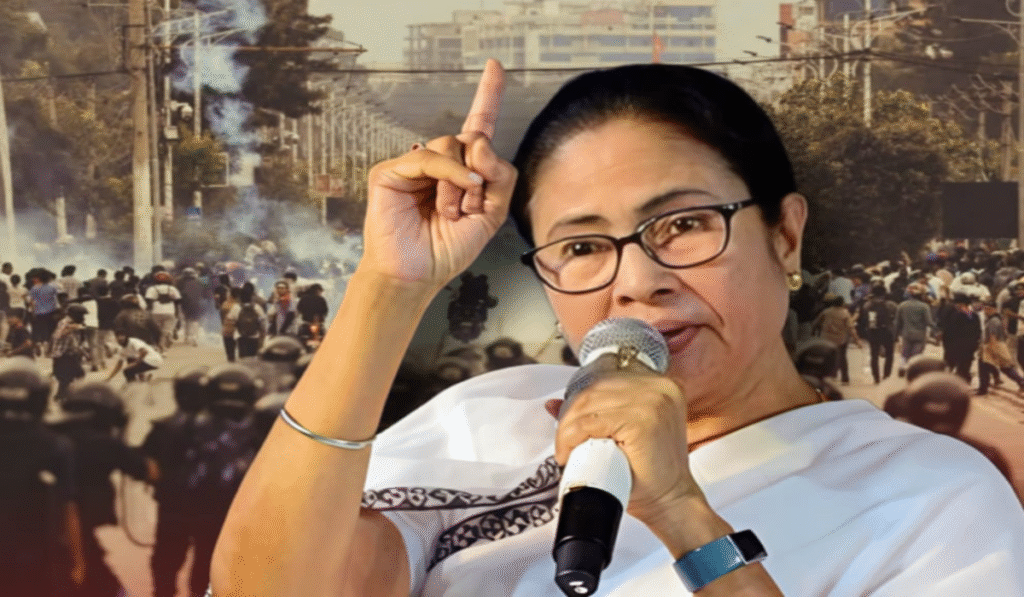
West Bengal Chief Minister Mamata Banerjee said Wednesday she may stay back in north Bengal for another day as political violence and unrest continue in neighboring Nepal. At a Press conference at Uttarkanya, the state government’s north Bengal headquarters, Banerjee said she would not return to Kolkata until the situation across the border stabilizes. “If the situation does not calm down, I will remain here,” she said. “I feel a sense of duty. I have always wanted to stand by people in times of crisis — be it a rail accident or floods in Malda. I try to be by their side.” Banerjee said she had already held meetings with district magistrates from eight districts and would decide on her return only after reviewing the situation. Taking a swipe at her opponents, she cautioned people to remain vigilant against those who “try to fish in troubled waters” for political gain. “Standing by people and exploiting a crisis are not the same,” she said. Expressing anguish over the violence in Nepal, Banerjee said she had penned a poem the previous night. “It felt terrible,” she said. “A man was set on fire alive, and people celebrated in different ways. What kind of civilization is this? Differences of opinion can exist, but burning people alive and inflicting atrocities cannot be accepted. There is no trace of humanity in this.” Reiterating her stance as an administrator, she added: “For me, people come first, before party or politics. Even if someone from my own party is at fault, I don’t spare them.” Earlier in Jalpaiguri, Banerjee announced that the state government would arrange to bring back residents of Bengal stranded in Nepal within a couple of days. She urged them not to panic. “Do not rush. Don’t invite danger upon yourselves. We are monitoring the situation closely,” she said. The chief minister spent Tuesday night at Uttarkanya, overseeing developments. “You can sleep peacefully. We are here to take care of things,” she told reporters, recalling how she had guarded the state without taking leave even during the COVID-19 pandemic. On her arrival in north Bengal, Banerjee held meetings with senior police officers. Following her instructions, surveillance along the Indo-Nepal border has been intensified. State police officials held a high-level meeting with the Sashastra Seema Bal (SSB), which guards the frontier. SSB’s 41st Battalion Commandant Yogesh Kumar Singh met with North Bengal Inspector General Rajesh Kumar Yadav and Darjeeling Superintendent of Police Praveen Prakash to discuss border security. Police stations in the border belt have since been put on alert, with naka checks underway at Panitanki and other points. Darjeeling’s police superintendent said regular communication is being maintained with Nepal Police. A district police helpline has been activated for Indians in distress.


