
Borja Herrera leaves FC Goa due to uncertainty over ISL

Borja Herrera Gonzalez announced his exit from Goa’s ISL club FC Goa on Friday. The Spanish midfielder spent two-and-a-half seasons with the club. Borja, also the club captain, said the situation has become too anxious for him and his family, and the people in charge have pushed him to make this decision, clearly hinting at the dire straits Indian football finds itself in and the uncertainty over the Indian Super League (ISL).’ ‘Before I leave, I want to thank each and every person at this club, my wonderful teammates who are more than that—they’re my friends—and all the fans who have always shown me their support and respect,” Borja said in an Instagram post. “I’m leaving with a heavy heart because I’ve enjoyed these last two years immensely, through the good times and the bad, like these last few months where I’ve truly seen what it means to have a team that’s like a family, and who, despite the problems, have tried to come to training every day with a smile. “My family and I have been very happy, and we’re taking away many unforgettable memories of Goa. All that’s left for me to say is thank you again, and I’ll always carry you in my heart,” Borja added.
Resumption of the ISL sees a ray of hope as AIFF floats 20-year proposal to ISL clubs
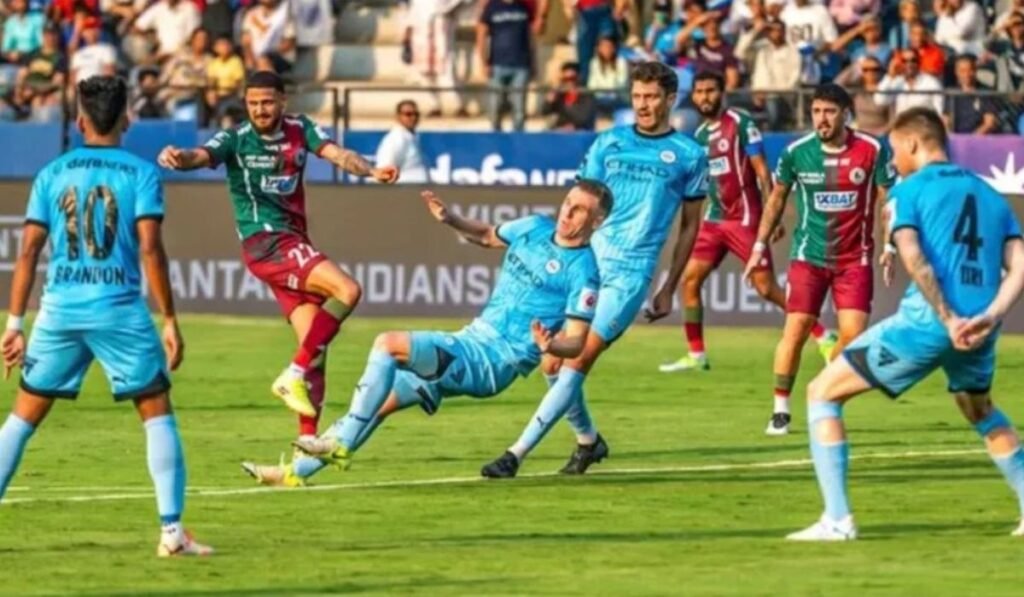
The AIFF has designed a 20-season plan for the Indian Super League (ISL), in which competing clubs must pay a Rs 1 Crore participation fee under an ‘open model’, inclusive of promotion and relegation. AIFF, as well as the clubs, feel this framework could be strong and can protect the interests of both parties. Though owned and operated by AIFF as mandated in its Supreme Court-approved constitution, governance of the league would rest on a board formed with approval from its general body that would enjoy “certain operational autonomy over commercial matters”, addressing concerns over financial viability and salability. “The jurisdiction of the board would be limited to the utilization of unrestricted funds within the yearly operational budget earmarked for the same,” it was written in the AIFF document shared with clubs. Clubs displayed no reservations on the idea of a governing board, details of which would be worked out in due course. In a meeting attended by all 13 ISL clubs for the first year, the operational budget is estimated at approximately Rs 70 crore, with AIFF’s fixed revenue share being 10 per cent, with a yearly contribution of Rs 7 crore, which they will invest in their youth leagues. Clubs are entitled to 50 per cent of shares, contributing Rs 35 crore to the general revenue pool, while the commercial partner will commit Rs 21 crore. The remaining 10 per cent share is earmarked for club allocation for ‘fixed revenue share’, amounting to Rs 7 crore, which will proceed towards the general revenue pool. Clubs are willing to consider it and would engage in internal discussions to go through the nitty-gritty of operational expenses, salary cap, and protection of investment before engaging with AIFF again on December 29 to iron out the details. They would also meet a day before to finalise one among the condensed models that AIFF has presented for the stalled 2025-26 edition. In that case, the tentative kick-off of the ISL this season might take place on 5th February. Clubs had earlier proposed to AIFF a cumulative Rs 10 crore per year for perpetual ownership of the League, which was turned down by its general body after AIFF had sought discussions on joint-organisation. If hand-shakes between the clubs and the AIFF happen finally happen on December 29, AIFF needs to get it ratified in its general meeting then place the proposal before the ministry for approval from the Court, possibly on 5th January when it resumes after the winter break., clubs had a good feeling when they spoke to AIFF’s three-member committee specifically formed to find a way through on 24th December.
AIFF to get ‘election breather’ for implementation of Sports Governance Act!
The upcoming elections of all national sports federations (NSFs) have been postponed by a year to facilitate the flawless adoption of the new electoral framework as laid down in the National Sports Governance Act, a move that will impact the All India Football Federation. In a letter to the presidents of the Indian Olympic Association and NSFs on Monday, the Union sports ministry said postponement of upcoming elections till 31st December, 2026, has been decided as a part of transitional assessment to adopt the new NSG Act. It means the NSF elections of football would be held only in 2027, and the existing Kalyan Chaubey-led executive committee would continue to remain in charge, subject to the approval of the general bodies of respective NSFs. AIFF elections were due in September 2026, after completion of the Chaubey-led committee’s four-year term. The AIFF president Chaubey is also the joint-secretary of IOA. Since NSFs require considerable “statutory, structural and procedural” changes once the Act gets notified, the ministry decided on a “one-time extension” for adequate preparation. “In order to facilitate the smooth transition under the new governance framework as also to allow adequate time for implementation of the statutory requirements under the NSG Act, 2025 by the NSFs, it has been decided that those NSFs, whose elections are scheduled to be held in the coming months, except the cases where there are specific directions by Courts of Law, are allowed to defer the elections up to 31st December, 2026 – as a transitional measure,” Harikumar M, Director (Sports), of the ministry said.
AIFF struggles to survive with Rs 19.89 crore savings! A ray of hope with sponsorship for IWL and the government’s promise
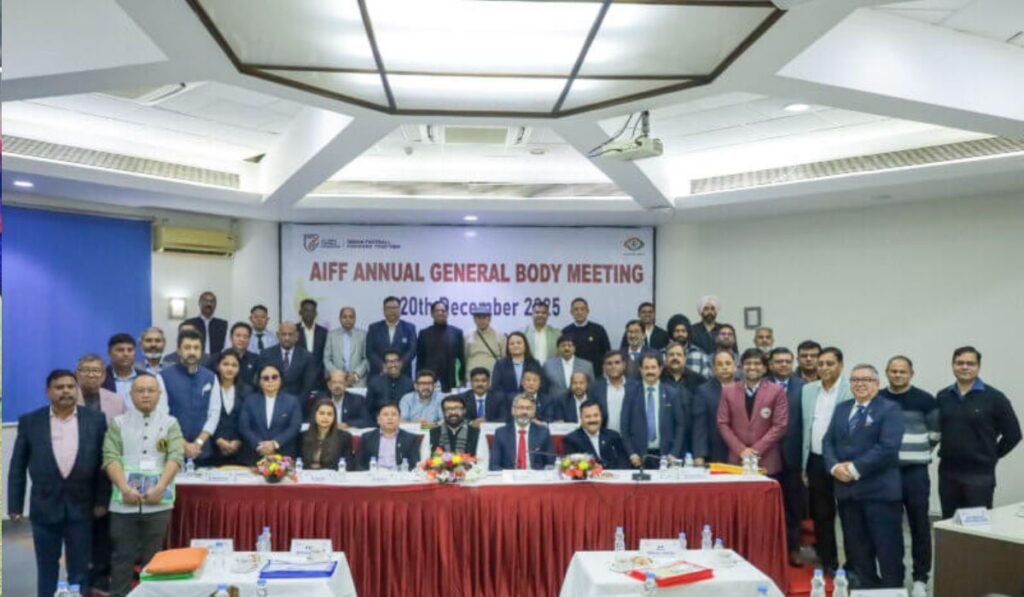
Is Indian football nearing a financial downfall? According to a report from Khel Now, the All India Football Federation (AIFF) has only Rs 19.89 Crore in its savings account, which the organization can use freely, not the illusory amount of Rs 50 Crore! In the AGM, held on 20th December, AIFF has shown that it has a fund of Rs 50.57 Crore. But in reality, the number looks fantasy! The truth is that the AIFF has a bank balance of Rs 19.89 Crore, which it can use freely. It has a fixed-deposit of Rs 21. 63 Crore, which s locked in and also has nearly Rs 10 Crore which belongs to Fifia projects! The money granted by FIFA cannot be freely used as it comes with strict conditions. The federation still projects an approximate deficit of Rs 23 Crore by 31st May this year. Along with this, if the unpaid bills and liabilities are added, the deficiency goes to Rs 25.88 Crore! One of the senior AIFF executives, when asked about the issue by Parallel Sports, divulged on condition of anonymity, “Yes, the AIFF is going through a severe financial crisis. Still, we are optimistic that the situation will change.” Despite the struggle, the ongoing Indian Women’s League (IWL) has got an investment of approximately Rs 3 Crore. But the Federation has to bear the whole expenses of the Santosh Trophy, which goes to approximately Rs 4 Crore. If sponsorship cannot be obtained, then the AIFF has plans to go for cost curtailment, and in that case, a couple of age-group tournaments, which were introduced a couple of years ago as a part of youth development programs, may be stopped for this season. However, the AIFF seems to have a ray of hope amidst the dwindling present, that the Union Sports Ministry has promised to come forward for the training of the junior and men’s junior national teams, even financially, who have earned qualification for the Asian Cup main round.
AIFF initiates for a separate footballers’ union! Receives wrath from the world body
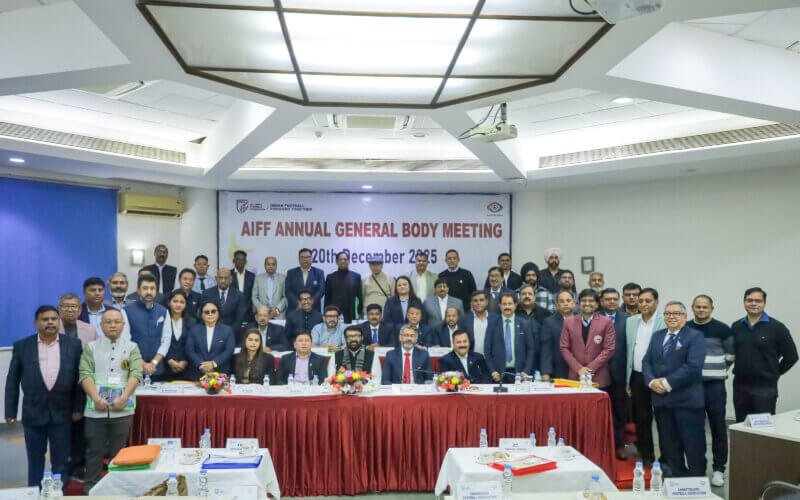
The AIFF has initiated for the build-up a separate Football Players’ Association! But this move faces criticism from the the world body of Professional Footballers’ Union, FIPRO. FIPRO is concerned with the attempt to control players rather than allow genuine independent representation. The organization expressed deep concern on Sunday about the All India Football Federation’s (AIFF) initiative to introduce its own footballers’ association. Last week, the AIFF opened registrations to form its own National Players’ Association (NPA), which included a set of criteria for interested applicants, including playing the sport at an elite level in the country. The NPA is an independent body represented by football players. Despite being an independent body, the NPA will not have a separate identity according to the AIFF Constitution’s Schedule IV, Article 1.4. And therefore, the body will not have the authority to act on behalf of AIFF or to represent it to any third parties. The most interesting part of AIFF’s initiative is that NPA will not have any authority to legally bind or commit AIFF in any way. The AIFF said elections for the office bearers of the NPA board will be conducted by the federation’s election committee. FIFPRO is deeply concerned by the All India Football Federation’s (AIFF) decision to start a process to create a players’ association under its own control. This is an attempt to bypass the Football Players’ Association of India (FPAI), the legitimate representative body of professional footballers in India,” FIFPRO said in a statement. “A players’ association effectively controlled by the federation would deprive players of an independent union, as well as meaningful influence and collective bargaining power, all of which are fundamental to effective worker representation under International Labour Organisation standards,” the Body added. “All top professional football leagues around the world have independent player unions. Regrettably, AIFF is following a broader and increasingly visible tactic in football governance, whereby so-called “yellow unions” are created to weaken, bypass, or delegitimise genuine and independent player representation.” FIFPRO also stated that it had already reached out to AIFF, FIFA, and AFC via a letter in October, addressing the issues plaguing Indian football. FIFPRO emphasized that authorities must respect international labour standards, democratic principles, and the right of Indian professional footballers to be represented by an independent, player-led union, highlighting their belief that AIFF’s move undermines these rights.
Cash-strapped AIFF forms two separate committees to review ISL and I-League clubs’ proposals again
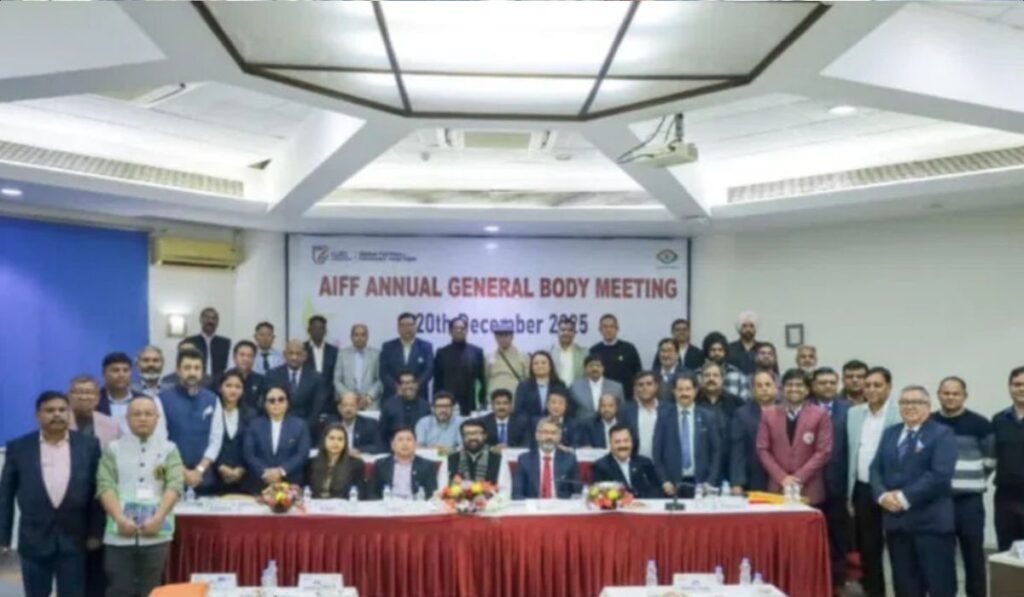
The All India Football Federation (AIFF) formed two separate committees after its annual general meeting on Saturday to discuss proposals of ISL and I-League clubs before formulating a plan to organize the country’s two topmost competitions. Having received offers that would have only regulatory and statutory authority and rights fee amounts far less than what it has received from its erstwhile commercial partner, Reliance-owned FSDL (Rs 50 crore per annum on average), the AIFF has decided to explore whether it could conduct the league on its own. ISL clubs insist they were compelled to put forward an offer where they would enjoy absolute authority over key areas since AIFF hasn’t yet put any plan for consideration. The AIFF faced a blow as it announced a deficit of Rs 25.88 crore in the budget for January to May 2026, at the AGM. Despite the acute financial crisis one of the senior executive committee members asserted that that AIFF itself would organize the league after some members expressed reservations n proposals of guaranteed income of Rs 10 crore from 2026-27 for grant of Rs 10 Crores perpetually and Rs 50 crore in 15 years from I-League sides (Rs 2.75 crore per annum for first five years, Rs 3.25 crore per annum for the next five and Rs 4 crore for the last 15). No immediate indication was forthcoming regarding the procurement of funds to organize the two leagues. However, two separate four-member committees, involving three state unit officials and Deputy Secretary M. Satyanarayan as chairperson of both, would engage with the clubs to find a feasible way. AIFF has a fixed deposit of Rs 50 crore, though it wasn’t instantly clear if it would be used in these times of acute stress. The two committees would submit reports by 29th December, which could then be taken up by the Union Sports Ministry for placement in front of the Supreme Court when it resumes on 5th January in the new year after a winter break. “If necessary, the AIFF will consult with FIFA and the AFC to review how similar situations in other nations were handled as precedents,” AIFF said in its statement.
I-League Clubs’ proposal to the AIFF for a new League with 18 teams!
I-League clubs have submitted a proposal to revive the I-League. According to the plans, a new league, to be named Indian Football Premier League (IFPL) can be hosted by the clubs themselves. According to the proposed plans I-League clubs will form a consortium and they are reportedly ready to contribute Rs. 50 crore in total to AIFF for the next 15 years to make this vision a reality. Meanwhile, AIFF executive committee member Avijit Paul has sent a strong email to AIFF President Kalyan Chaubey opposing the Indian Super League (ISL) clubs’ offer of Rs 10 Crore to the AIFF from the next season. Paul calls the proposal “unacceptable” and an attempt to undermine the authority of Indian football’s top governing body. In his letter, Paul responded to the joint communication sent by a majority of ISL clubs to the AIFF and the Ministry of Youth Affairs and Sports, which proposed granting perpetual rights to a club-owned company to operate India’s top-tier professional league under its regulatory oversight. The AIFF Executive Committee member said the proposal conflicts with its Constitution and ongoing legal proceedings before the Supreme Court of India.
Now, FPAI moves to the Delhi Court against the AIFF !
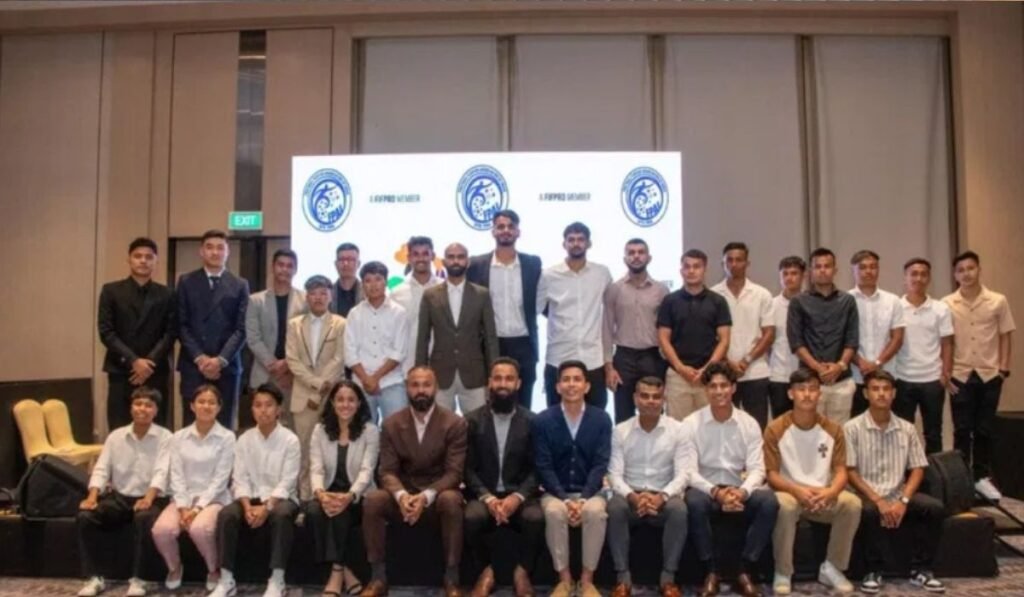
Football Players Association of India (FPAI) has moved to the Delhi High Court on Tuesday, alleging that the All India Football Federation (AIFF) deliberately avoided including them in its upcoming annual general meeting, according to a report from News9 Sports. The former football players claimed they made repeated requests for representation in accordance with the newly adopted constitution, but these were ignored by AIFF. FPAI referred to Article 20.2 of AIFF’s new constitution, asserting that their urgent appeal is in response to what they perceive as the Federation’s intentional and arbitrary attempt to remove FPAI’s status as the recognized national players’ association ahead of the AGM. As per the Supreme Court-approved constitution, AIFF is mandated to form the NPA, inclusive of 15 “eminent” players, who will have voting rights in its general body. Since they are the only representative body of players in the country with the strength of 550 active members, FPAI requested AIFF for inclusion in the AGM on 2nd December. As FPAI received no clear response, they have now argued that AIFF is creating a deception of neutrality so that players remain voiceless in the 20th December meeting, where several crucial agendas are scheduled to be discussed, which are related to footballers’ welfare. The AIFF issued a formal notice for its AGM on 20th November, but sought applications for NPA, national referees’ association (NRA) and national coaches’ association (NCA) only on 12th December, with a deadline for submission open till January 11, 2026. “The timing and manner of such exclusion clearly indicate the oblique motive of the Respondents (AIFF and its president Kalyan Chowbey to frustrate the representation of players in the AGM and obfuscate their vote. This is in direct breach of the express provisions of the AIFF Constitution, particularly Article 20.03 and the Hon’ble Supreme Court’s judgment,” FPAI said in its appeal, which will be heard on Wednesday.
I-League also without a ‘commercial bidder’ like ISL!
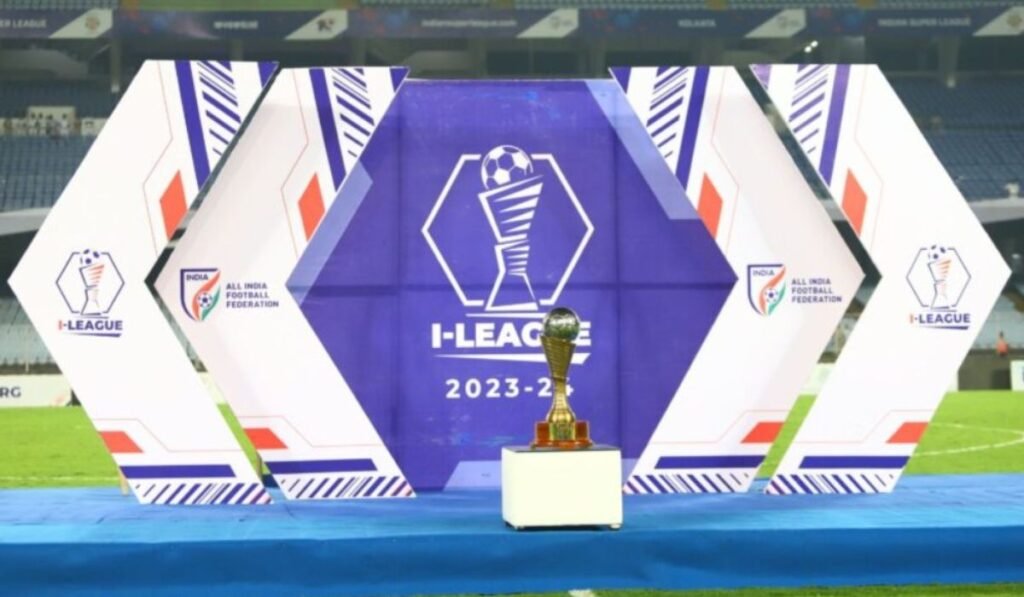
I-League also failed to generate interest among potential investors, as the All India Football Federation‘s second-tier competition didn’t receive any bids for commercial rights in its tender, according to a report from News9 Sports. AIFF floated the ‘Request for Proposal (RFP)’ on 8th November, and the deadline for submission was 13th December. But at the time of the opening of bids on Sunday, none had landed in the federation’s lap. An indication that the tender was failing to attract any proposals became apparent when no entity attended AIFF’s pre-bid meeting on 5th December to seek clarifications. But the Federation, in its tender, set prices Rs 6 crore (I-League: Rs 4 CR + I-League 2: Rs 1.25 CR + I-League 3: Rs 75 Lakh), and also the terms and conditions, similar to those set for the Indian Women’s League (IWL). Still, the failed tender reflects that the possible bidders who have shown interest in India’s club football fraternity seemed not willing to get further clarifications. Now, AIFF officials would have to scratch their heads on how to resume the league after floating a tender till the end of its 2029-30 season, even as they have been assuring the clubs about the resumption of the I-League, also like the ISL. Companies or three-member consortia with a minimum turnover of Rs 30 crore at the end of the 2024-25 financial year were eligible to place bids. AIFF is yet to issue any statement on the matter and has very little time to come up with a plan, with half of the season already over without a match being held. I-League club officials had earlier met the Union Sports Minister to raise concerns over its organisation. The budget for its elite I-League was already reduced by Rs 4.02 crore to Rs 10.18 crore from Rs 14.20 crore in the last financial year. A separate tender for IWL and IWL 2 at Rs 3 crore attracted one bid (Capri Sports).
ISL clubs send strong reply! seek amendment in AIFF constitution in the next AGM

All ISL clubs, except East Bengal, have sent a strong reply to the All India Football Federation (AIFF) telling that the discussions of hosting by the consortium set by the clubs themselves would only be purposeful if two crucial articles in the AIFF constitution, Article 1.54 and 63 are not amended at the earliest. The letter, sent on Thursday, comes a day after AIFF’s Deputy Secretary General, M. Satyanarayan, wrote to the clubs asking for a call to explore the possibility of jointly hosting the league, to which the reply reads ‘deflects responsibility onto the Clubs while simultaneously citing constitutional restrictions as justification for the Federation’s inaction’. The Article 1.54 and 63 pertain to the power of authorisation of ownership of the league and its entities, both of which are owned by the AIFF. “The Clubs remain open and committed to working with the AIFF towards a club-led model, consistent with global best practices. However, for such a model to be financially and operationally viable, Clubs must have commercial flexibility—including the ability to attract sponsors, investors, and long-term partners,” the letter, written by Vinay Chopra, the director of Mohun Bagan Super Giant, on behalf of all clubs, read. “This is not possible until the commercially restrictive clauses in the AIFF Constitution are amended or removed. Without this change, no sustainable league structure can be built, regardless of good intentions.” The letter also has mentioned that If the process of finding out a suitable commercial partner through the initiative of AIFF, Union Sports Ministry and the clubs after amendment of the two said articles fails, then Federation may hand over the long-term rights of the league to the clubs, who are prepared.


