
CISF holds special conferences to make air travel more secure

Senior security officials from across southern India gathered at Cochin International Airport this week for a two-day Central Industrial Security Force (CISF) operational conference aimed at making air travel both secure and passenger-friendly. The conference, held Sept. 11–12, was inaugurated by Praveer Ranjan, IPS, Special Director General (APS), in the presence of Jose Mohan, IPS, Inspector General of CISF. Top airport security chiefs discussed issues that directly affect travelers, including smoother security checks, improved coordination between agencies, and reducing hassles while maintaining safety. Cochin airport’s IT team showcased new technologies designed to streamline procedures without compromising security. Demonstrations included AI-enabled surveillance, full-body scanners, advanced intrusion detection systems, and cyber security upgrades. Officials said the tools are expected to cut down on long lines while keeping airports more efficient. “The focus is on making security dynamic and people-centric,” Ranjan said, stressing that while threats continue to evolve, passenger comfort and convenience must remain priorities. The Kochi conference was part of a series of regional workshops following a high-level meeting in New Delhi earlier this year. Similar events in Guwahati and now Kochi provide opportunities for security officials to share ground-level feedback and implement practical improvements. For passengers, this translates into faster screening, simplified processes, and safer journeys. The event also saw the inauguration of new welfare facilities for CISF personnel, underscoring the force’s emphasis on staff well-being. Officials said investing in workforce morale indirectly benefits travelers by ensuring alert and motivated security teams. With Cochin International Airport serving as a major gateway in southern India, authorities emphasized that adopting advanced technologies and people-friendly practices is essential. The conference highlighted the dual mission of strengthening defenses while ensuring air travel remains smooth and stress-free for millions of passengers each year.
CISF launches training course to build hybrid port security model
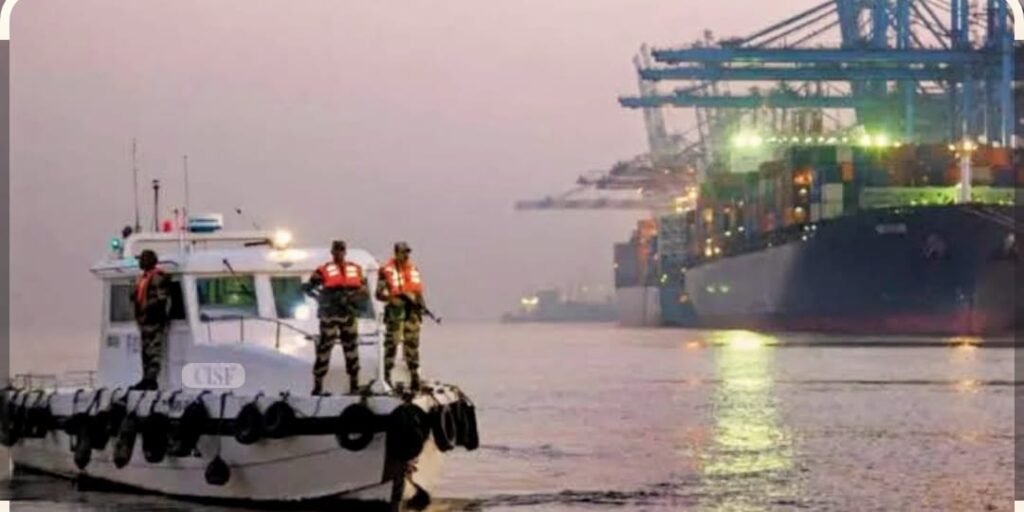
India’s Central Industrial Security Force (CISF) has launched its first specialised training course for private security personnel deployed at ports, in a move aimed at creating a “hybrid” port security model and strengthening compliance with international maritime codes. The pilot programme, rolled out simultaneously at Jawaharlal Nehru Port Authority (JNPA) near Mumbai and Chennai Port Authority (ChPA), will equip private guards with skills in threat identification, port operations and emergency response, CISF said on Tuesday. While CISF secures all 13 major ports, smaller and intermediate ports across the country rely heavily on private security agencies to protect cargo zones, warehouses and access gates. India has nearly 200 ports, of which about 65–68 are active in cargo operations. “By providing focused training tailored to the complex environment of ports, we are empowering security personnel to perform their duties with confidence and professionalism, ultimately safeguarding critical infrastructure and trade,” said S.R. Saravanan, Inspector General of CISF (South Sector). The two-week “Port Facility Security Course,” designed with inputs from the Directorate General of Shipping, Customs and other stakeholders, will also cover the use of technical security equipment and standards under the International Ship and Port Facility Security (ISPS) Code. So far, 40 private security personnel from JNPA, Deendayal Port in Kandla and Mumbai Port have enrolled at the JNPA training centre, while 26 participants from New Mangalore, Ennore, Chennai and Tuticorin ports joined at the ChPA centre. CISF plans to expand the programme to other ports in the coming months. The training comes at a time when Indian ports had earlier this year elevated security to MARSEC Level 2, requiring stricter checks amid heightened geopolitical tensions. “The introduction of this course marks a critical advancement in port security management,” said Sunil Paliwal, Chairperson of Chennai Port Authority.
Kolkata airport marks Rakshabandhan with CISF, security forces
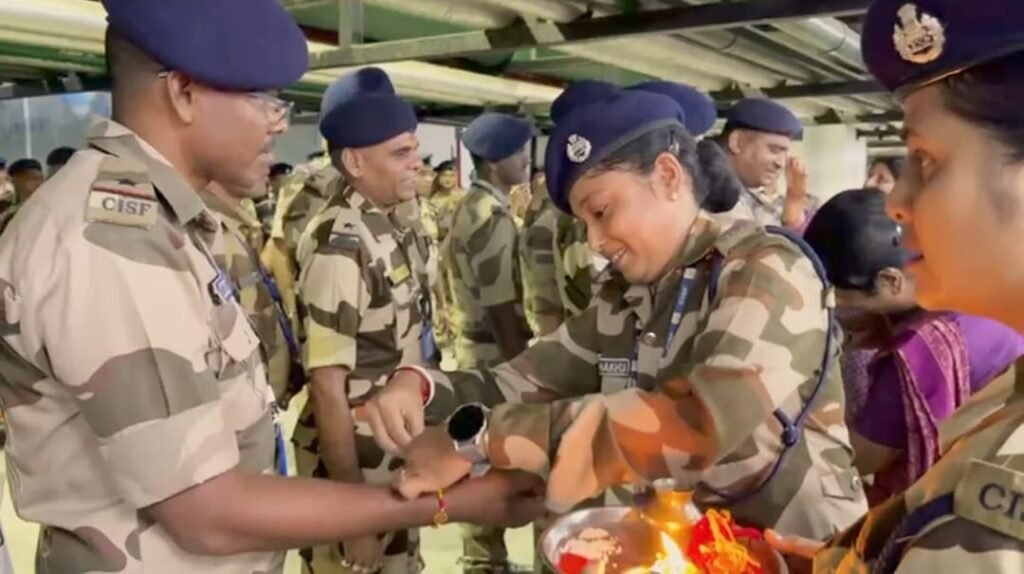
Staff at Kolkata’s Netaji Subhas Chandra Bose International Airport tied rakhis to Central Industrial Security Force (CISF) personnel on Saturday, marking the Hindu festival of Rakshabandhan with a show of gratitude for those safeguarding the facility. The event was organised by Kalyanmayee, the Airports Authority of India’s women’s welfare association, along with the airport administration. Participants also distributed national flags under the government’s “Har Ghar Tiranga” campaign to encourage citizens to display the tricolour ahead of India’s 79th Independence Day on Aug. 15. “Our security personnel work tirelessly, often away from their families, to ensure the safety of passengers and airport operations,” Airport Director Dr. Beuria said. “Celebrating Rakshabandhan with them is our way of expressing gratitude and affection.” Kalyanmayee, which conducts social and charitable activities across Indian airports, said the celebration sought to reinforce unity and patriotism within the airport community.
Joint Army Training to Boost Battle Readiness
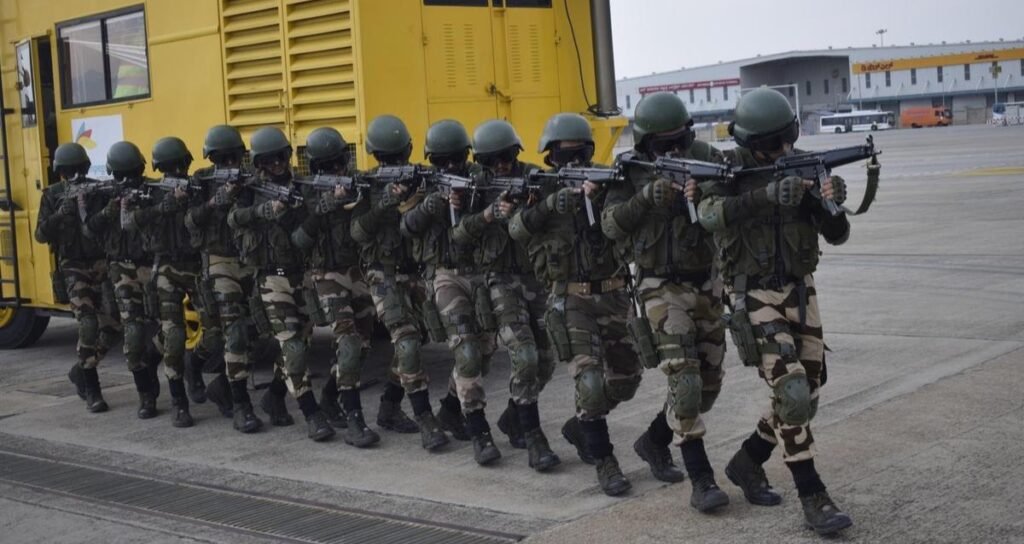
India’s Central Industrial Security Force (CISF) has begun intensive joint training with the Indian Army in a bid to enhance its preparedness against emerging hybrid and unconventional security threats, officials said on Monday. The move is part of a broader strategy to make the paramilitary force “battle ready” for defending critical infrastructure such as airports, nuclear plants, government buildings, and Parliament in the event of high-impact threats such as coordinated terrorist attacks, drone intrusions, or sabotage operations. For the first time, full batches of CISF personnel are undergoing training at Indian Army installations in the Kashmir Valley. Previously, access to such training was limited to a small number of personnel. The current modules include night operations, jungle warfare, close-quarter combat, and endurance-building exercises. “These joint drills will significantly enhance the operational effectiveness of our Quick Reaction Teams deployed at high-value installations,” a senior CISF officer told Reuters on condition of anonymity. “The emphasis is on speed, precision, and composure under high-pressure scenarios.” The trainees are drawn from CISF’s elite Quick Reaction Teams (QRTs), the first responders to any emergency across the force’s 369 units. Only personnel under the age of 35 who have passed the Battle Physical Efficiency Test (BPET), benchmarked to National Security Guard (NSG) standards, are being selected. All participants have already completed six months of in-house tactical training prior to joining the Army module. The Indian Army’s involvement marks a deeper civil-military collaboration aimed at bolstering internal security preparedness at a time of heightened concerns over non-traditional threats. CISF officials said the force plans to gradually extend the Army-led advanced training programme to more units, focusing first on those stationed at high-risk locations. “Our goal is to raise the entire force’s physical resilience, tactical skills, and psychological preparedness to deal with evolving threats,” the official added. CISF, which operates under the Ministry of Home Affairs, plays a critical role in securing India’s key government and industrial assets, including over 60 airports, space centres, and strategic installations.


