
Protests Against Social Media Ban in Nepal Leave at Least 19 Dead, Hundreds Injured
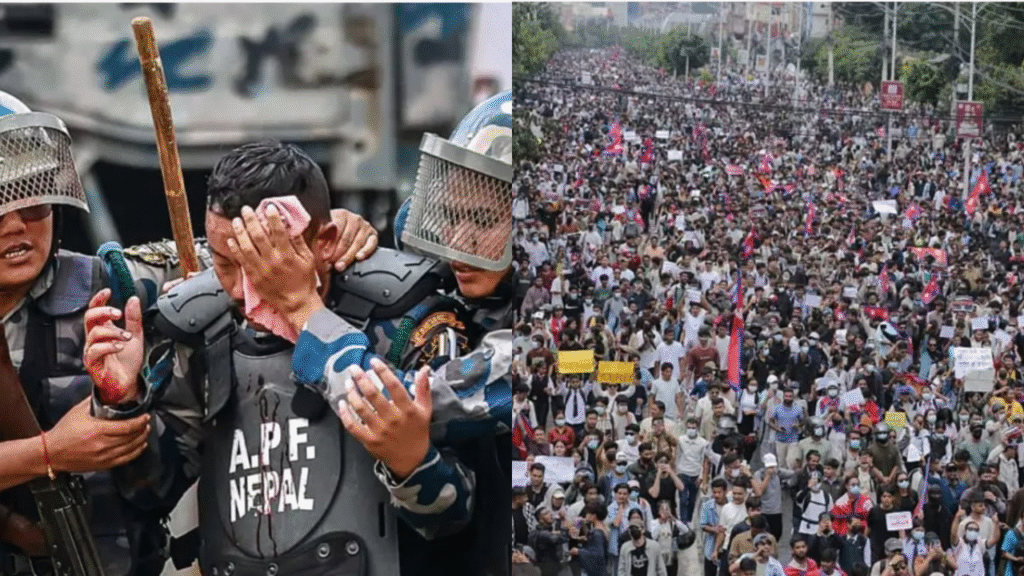
At least 19 people, including a 12-year-old child, were killed and more than 100 others injured Monday in violent clashes between security forces and protesters in Nepal’s capital after the government imposed sweeping restrictions on social media platforms. The violence erupted outside Nepal’s Parliament building in Kathmandu after thousands of young demonstrators, mobilized largely under the banner of “Generation Z,” defied curfew orders to protest the ban on Facebook, X (formerly Twitter), YouTube and several other platforms. Police fired rubber bullets, water cannons and tear gas shells to disperse the crowds after protesters broke through barricades and tried to storm the Parliament complex, officials said. Batons were also used as the situation spun out of control. “Protesters forcibly entered a restricted area, leaving security forces with no option but to use force,” Police spokesperson Shekhar Khanal told Press. The government last week ordered the blocking of 26 social media platforms that failed to register with the Ministry of Communication and Information Technology. Officials argued the ban was necessary to curb the spread of fake news, hate speech and online fraud. But the move sparked outrage among Nepal’s vast online population, many of whom rely on platforms such as Instagram and YouTube for news, entertainment, education and small businesses. “This protest is not only about social media,” said 24-year-old student Yuzan Rajbhandari. “We are also speaking against entrenched corruption that has become institutional in Nepal.” Some demonstrators carried placards reading “Enough is Enough” and “End Corruption.” Others chanted slogans against what they described as the government’s “authoritarian mindset.” In one video widely circulated on VPN-enabled feeds, a protester shouted, “If the children of ministers can have a bright future, why not ours?” Another demonstrator, student Ikshama Tumrok, said: “We want change. Our previous generations tolerated injustice, but we want this suffering to end with us.” The protests quickly spread beyond Kathmandu to other parts of Nepal as anger mounted over the restrictions. Curfew and Army Deployment Initially, authorities declared a curfew in Kathmandu’s Baneshwor neighborhood, where Parliament is located, but later extended it to all high-security areas of the capital, including the presidential palace, the prime minister’s residence at Baluwatar, Singha Durbar government complex, and the vice president’s home. Residents were ordered to stay indoors and avoid gatherings. Army spokesperson Rajaram Basnet told the Press that a “small unit” of soldiers had been deployed after the curfew was imposed, underscoring the seriousness of the unrest. Communication Minister Prithvi Subba said security forces had no alternative but to resort to force once protesters stormed into protected zones. “The situation became such that the use of water cannons, rubber bullets and batons was unavoidable,” Subba said. Ban Triggers Wider Debate The government has maintained it does not intend to “ban social media” but wants platforms to comply with Nepali laws and register locally. Two companies have since registered, and their services were unblocked, officials said. Still, analysts say the restrictions risk further alienating young Nepalis, many of whom see social media as a vital part of their lives and livelihoods. Nepal’s Supreme Court in September 2024 directed the government to regulate social media platforms more strictly. Authorities have since taken steps to enforce compliance. Earlier, the government had temporarily banned TikTok, lifting the restriction only after the platform pledged to follow national laws. In July, authorities also blocked the Telegram messaging app, alleging its use in online fraud and money laundering. Monday’s crackdown marks the bloodiest episode yet in Nepal’s escalating confrontation over digital freedom. Government May Reconsider In the wake of the deadly clashes, government sources told local media that authorities were now considering lifting or easing the restrictions. The violence has drawn criticism from rights groups, who warned that suppressing online platforms and cracking down on peaceful assembly would deepen political instability. “The government underestimated the anger of a young generation that views social media as more than just entertainment — it is their link to the world, their livelihood and their voice,” said one Kathmandu-based analyst. As Nepal reels from the violence, many fear more unrest ahead unless the government quickly addresses both the ban and broader grievances over corruption and governance.


