
Modi Vows Not to Compromise on Farmers’ Interests Amid Strained India-U.S. Trade Talks
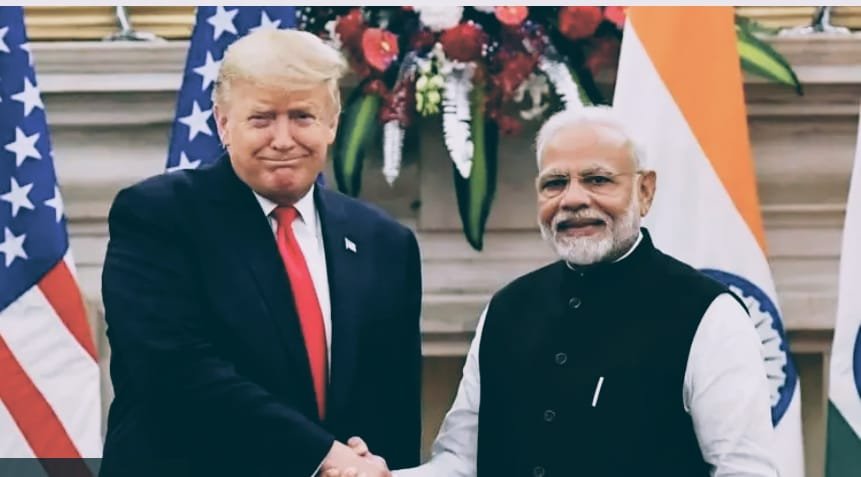
Indian Prime Minister Narendra Modi on Thursday issued a firm message that his government will not compromise on the interests of farmers, even as tensions rise between New Delhi and Washington over an unresolved trade deal. Speaking at an international conference in New Delhi commemorating the centenary of agricultural scientist M.S. Swaminathan—widely credited with spearheading India’s Green Revolution—Modi said, “The interests of our farmers, livestock rearers, and fishermen are of the highest priority. India will never compromise on them.” In a pointed remark widely interpreted as a message to the United States, Modi added, “I know I will have to pay a heavy price personally for this stand. But I am prepared for it. India is ready to protect the interests of its farmers.” His comments come amid mounting friction with the U.S. over trade, particularly involving agriculture and dairy. American officials have reportedly pushed India to open its markets fully to U.S. agricultural products and dairy exports as part of a broader trade agreement. However, Indian negotiators have so far resisted, citing the potential impact on domestic farmers and producers. Tariff Tensions The backdrop to Modi’s speech is an increasingly fraught trade relationship. U.S. President Donald Trump recently announced a second round of tariff hikes, bringing total duties on Indian goods to 50%. The move comes after India continued oil imports from Russia, defying Western pressure to scale back economic ties with Moscow amid the ongoing war in Ukraine. Trump has hinted that further restrictions may be imposed on countries that maintain trade relations with Russia, warning that “many more” punitive measures could be on the way. Although trade negotiations between India and the U.S. are ongoing—with five rounds already completed—officials on both sides acknowledge that a final agreement remains elusive. Talks are expected to resume later this month when a U.S. trade delegation visits New Delhi. India Resists “One-Sided” Deal Sources within India’s commerce ministry say Washington wants unfettered access to Indian markets for U.S. agricultural products, milk, and dairy goods. But New Delhi remains firm that it will not enter into any “one-sided” deal that prioritizes American interests while endangering domestic livelihoods. “There’s no question of rushing into an agreement that only benefits the U.S.,” one government official said, speaking on condition of anonymity. Green Revolution Legacy and Domestic Messaging Analysts see Modi’s remarks as aimed not just at the U.S. but also at a domestic audience increasingly anxious over global pressures on Indian agriculture. The choice to deliver this message at an event honoring M.S. Swaminathan—whose work transformed India from a food-deficient country to a grain-exporting nation—was symbolic. Swaminathan’s legacy is closely tied to Indian self-reliance in agriculture, particularly wheat, which once reduced dependence on U.S. grain imports. Modi’s speech was seen as reinforcing that spirit of independence, even as India navigates the complex landscape of global trade diplomacy. The Prime Minister’s firm stance is likely to resonate with India’s vast rural population and farming community, as his government prepares for general elections in the coming year. For now, the path to a comprehensive India-U.S. trade agreement appears uncertain. And with tariffs mounting and political stakes rising, the gap between economic pragmatism and political priorities may continue to widen.
Trump Vows to Hike Tariffs on India Over Russian Oil Purchases
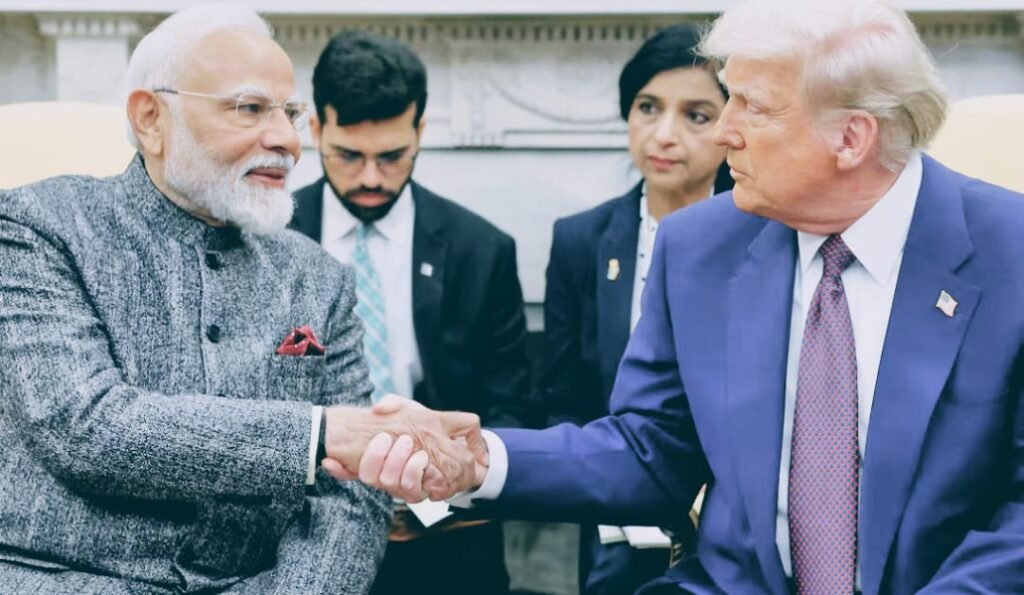
U.S. President Donald Trump has announced plans to sharply increase tariffs on India, accusing New Delhi of profiting from the resale of Russian oil while turning a blind eye to the ongoing war in Ukraine. In a post on his social media platform, Truth Social, on Monday, Mr. Trump said: “India is not only buying massive amounts of Russian oil, they are then, for much of the oil purchased, selling it on the open market for big profits. They don’t care how many people in Ukraine are being killed by the Russian War Machine.” “Because of this, I will be substantially raising the tariff paid by India to the USA,” the president added. The remarks come amid growing scrutiny from the Trump administration over India’s energy ties with Moscow, which have remained robust despite Western sanctions against Russia following its 2022 invasion of Ukraine. On Sunday, Stephen Miller, the White House deputy chief of staff and a close aide to Mr. Trump, echoed the president’s sentiments, suggesting that India’s purchases amounted to indirect support for Russia’s war effort. “What he [President Trump] said very clearly is that it is not acceptable for India to continue financing this war by purchasing oil from Russia,” Mr. Miller told reporters in Washington. India has consistently defended its energy strategy, stating that its imports are guided by national interest and economic needs, and noting that it has remained in dialogue with all key partners, including the United States. The proposed tariff hike marks a sharp escalation in trade tensions between Washington and New Delhi and comes at a time when both nations had been seeking to deepen strategic ties, particularly in the Indo-Pacific region. There has been no immediate response from the Indian government. However, analysts say Mr. Trump’s statement is likely to provoke concern in New Delhi, especially given India’s dependence on exports to the U.S. and the broader implications for the bilateral relationship.
Israel Faces Global Criticism Over Gaza Famine, Trump Backs UN Concern

Israeli Prime Minister Benjamin Netanyahu’s government is facing mounting international criticism after the United Nations and former U.S. President Donald Trump voiced alarm over what they described as a deepening famine crisis in Gaza. On Sunday, the Israeli government announced a daily 10-hour pause in military operations in three areas of the Gaza Strip—Gaza City, Deir al-Balah, and Al-Muwasi—to facilitate the entry of humanitarian aid. However, the UN said the measures were “insufficient,” adding that limited road and airdrop access barely made a dent in addressing the humanitarian catastrophe. “The worst-case scenario of famine is currently playing out in the Gaza Strip,” the UN-backed Integrated Food Security Phase Classification (IPC) said in a statement, citing “mounting evidence” of starvation, malnutrition, and disease, all contributing to a growing death toll from hunger. Israel has denied the existence of a famine. “No one in Gaza is starving,” Netanyahu said on Monday night. “There is no intention to withhold food from civilians. We have allowed humanitarian aid into Gaza even during the war—otherwise, no one would have survived.” But Trump’s response stood in stark contrast. In a rare rebuke, the former U.S. President said, “There is a famine-like situation in Gaza. Children are starving. The images coming out of Gaza are deeply disturbing.” Gaza’s Hamas-run health ministry claims over 60,000 Palestinians have been killed since Israel launched its offensive following the October 7 attacks by Hamas. Aid agencies have warned that recent Israeli efforts to scale up humanitarian deliveries remain far from adequate. Israel maintains that it has not imposed restrictions on aid. However, Gaza residents have reported going without food for days, and say armed gangs are looting incoming aid trucks and reselling goods on the black market, according to Gaza-based journalist Rushdi Abualouf. Israel does not allow international news organisations, unrestricted access to Gaza. In London, UK Prime Minister Keir Starmer is expected to convene an emergency cabinet meeting as domestic and international pressure builds for the UK to immediately recognise Palestinian statehood.
Trump Says He’s “Disappointed But Not Done” with Putin, Reaffirms Support for NATO

WASHINGTON, July 16: U.S. President Donald Trump said he remains “disappointed but not done” with Russian President Vladimir Putin, in a wide-ranging phone interview with an international news service marking one year since the attempt on Trump’s life at a campaign rally in Butler, Pennsylvania. Speaking from the Oval Office on Monday, Trump addressed rising tensions with Russia, reiterating his demand for a ceasefire in Ukraine within 50 days and announcing plans to send additional U.S. weapons to Kyiv. The president also warned of “severe tariffs” on Moscow if no peace agreement is reached. Asked whether he trusted the Russian leader, Trump responded bluntly: “I trust almost no one.” Trump said he had believed on four separate occasions that a peace deal with Russia was within reach, only for the efforts to collapse. “I’ll say: ‘That’s good, I think we’re close to getting it done,’ and then he’ll knock down a building in Kyiv,” he said, referring to Putin. “I’m disappointed in him, but I’m not done with him.” The 20-minute call came after discussions about a formal interview to commemorate the anniversary of Trump surviving an assassination attempt during a campaign event. Asked whether the incident had changed him, Trump said he prefers not to dwell on it. “I don’t like to think about if it did change me… Dwelling on it could be life-changing.” In contrast to his previous criticism of NATO as “obsolete,” Trump expressed full support for the alliance after meeting with NATO Secretary-General Mark Rutte earlier in the day. “I think NATO is now becoming the opposite of that,” he said, noting that member nations are “paying their own bills.” Trump also reaffirmed his belief in NATO’s principle of collective defense, saying it ensures that smaller countries can defend themselves from larger adversaries. On the United Kingdom, Trump called it a “great place” and confirmed he would make an unprecedented second state visit in September. “Have a good time and respect King Charles, because he’s a great gentleman,” Trump said of his goals for the trip. The interview highlighted Trump’s evolving stance on global alliances and foreign adversaries as he looks ahead to the 2026 general election cycle.
Trump Says He’s “Disappointed But Not Done” with Putin, Reaffirms Support for NATO
WASHINGTON, July 15: U.S. President Donald Trump said he remains “disappointed but not done” with Russian President Vladimir Putin, in a wide-ranging phone interview with an international news service marking one year since the attempt on Trump’s life at a campaign rally in Butler, Pennsylvania. Speaking from the Oval Office on Monday, Trump addressed rising tensions with Russia, reiterating his demand for a ceasefire in Ukraine within 50 days and announcing plans to send additional U.S. weapons to Kyiv. The president also warned of “severe tariffs” on Moscow if no peace agreement is reached. Asked whether he trusted the Russian leader, Trump responded bluntly: “I trust almost no one.” Trump said he had believed on four separate occasions that a peace deal with Russia was within reach, only for the efforts to collapse. “I’ll say: ‘That’s good, I think we’re close to getting it done,’ and then he’ll knock down a building in Kyiv,” he said, referring to Putin. “I’m disappointed in him, but I’m not done with him.” The 20-minute call came after discussions about a formal interview to commemorate the anniversary of Trump surviving an assassination attempt during a campaign event. Asked whether the incident had changed him, Trump said he prefers not to dwell on it. “I don’t like to think about if it did change me… Dwelling on it could be life-changing.” In contrast to his previous criticism of NATO as “obsolete,” Trump expressed full support for the alliance after meeting with NATO Secretary-General Mark Rutte earlier in the day. “I think NATO is now becoming the opposite of that,” he said, noting that member nations are “paying their own bills.” Trump also reaffirmed his belief in NATO’s principle of collective defense, saying it ensures that smaller countries can defend themselves from larger adversaries. On the United Kingdom, Trump called it a “great place” and confirmed he would make an unprecedented second state visit in September. “Have a good time and respect King Charles, because he’s a great gentleman,” Trump said of his goals for the trip. The interview highlighted Trump’s evolving stance on global alliances and foreign adversaries as he looks ahead to the 2026 general election cycle.


