
CEO office asks for report of BLO after Suvendu Adhikari’s complaint

The office of the Chief Electoral Officer (CEO) of West Bengal has sought a detailed report regarding allegations that a Trinamool Congress functionary was included in the list of booth-level officers (BLOs) under the Diamond Harbour Assembly constituency in South 24 Parganas district. According to sources in the CEO’s office, the report was sought after Leader of the Opposition in the West Bengal Assembly, Suvendu Adhikari, drew the attention of the Election Commission of India (ECI) to the alleged inclusion of ruling party office bearers in the BLO lists. Adhikari cited the case of Diamond Harbour as an example, claiming that the integrity of the electoral process could be compromised if politically affiliated individuals were appointed to such positions. As per information provided by Adhikari, the officer in question, Md. Alauddin Molla, has been named as a BLO in the Diamond Harbour constituency. He alleged that Molla is an area president of the Trinamool Congress and that his wife, Liala Bibi, serves as an elected Trinamool panchayat member from Block No. 2 of Diamond Harbour. Following the complaint, West Bengal CEO Ariz Aftab Agarwal sought a comprehensive report from the District Magistrate of South 24 Parganas, who also serves as the District Election Officer, to verify the allegations and ascertain whether due procedure was followed in Molla’s appointment as a BLO. Adhikari, speaking yesterday, warned that allowing politically linked individuals to function as booth-level officers could open avenues for manipulation of the electoral process. He urged the Election Commission to intervene and ensure neutrality and transparency while appointing field-level electoral personnel. The selection of BLOs in West Bengal has been contentious in recent months. Earlier, allegations surfaced that contractual government employees and para-teachers were being appointed as BLOs, despite the Election Commission’s guideline specifying that only permanent state government employees and regular teachers in state-run schools should be considered for such roles. Concerns have also been raised over the appointment of electoral registration officers (EROs). The ECI mandates that only officers from the West Bengal Civil Service (WBCS) cadre—such as sub-divisional officers, sub-divisional magistrates, or rural development officers—should serve as EROs.
Suvendu Adhikari demands ECI action

Leader of Opposition Suvendu Adhikari today sought attention of the Chief Election Commission of India that the West Bengal ruling party Trinamool Congress was brazenly violating the sanctity of the electoral process as several Booth Level Officers (BLOs) took part in the party meeting of the ruling party in Kharagpur in West Medinipur. “In a shameless display of political favoritism, several Booth Level Officers (BLOs) from the 224 Kharagpur Sadar constituency were spotted openly participating in a TMC party meeting, where they were proudly introduced by none other than TMC’s Paschim Medinipur district leader, Debasish Choudhary (alias Munmun). This is nothing short of a direct assault on the principles of free and fair elections,” Adhikari shared, naming the BLOs, on his X handle. Adhikari giving details of the BLOs said the booth No. 34: Anima Mukherjee, booth No. 35: M. Durga Rani, booth No. 36: Chandana Das Mohanti, booth No. 37: Ramanand Tewari, booth No. 38: Rabindranath, booth No. 39: R. Jyoti Lakshmi, booth No. 40: Dibakar Singh and booth No. 41: Malabika Mandal. The BJP leader alleged these BLOs, all of them school teachers, have been entrusted with the duty of ensuring impartiality at the grassroots level, but instead they were hobnobbing with TMC leaders openly.”How can we expect fair polls when BLOs are publicly aligning with the ruling party, potentially manipulating voter lists, intimidating opposition workers, and tilting the scales in TMC’s favor?,” the Nandigram MLA said. Adhikari demanded the ECI to immediately take cognizance of this violation and initiate stringent action and these BLOs put under suspension and barred from any involvement in the upcoming assembly elections. “These biased Officers must be suspended forthwith and barred from any involvement in the upcoming elections. A thorough investigation is warranted to uncover the full extent of TMC’s infiltration into the electoral machinery. Failure to act decisively will only embolden such corrupt practices and erode public faith in our democratic institutions,” the LoP said.
Election Commission Signals Special Voter Roll Revision Post-Puja
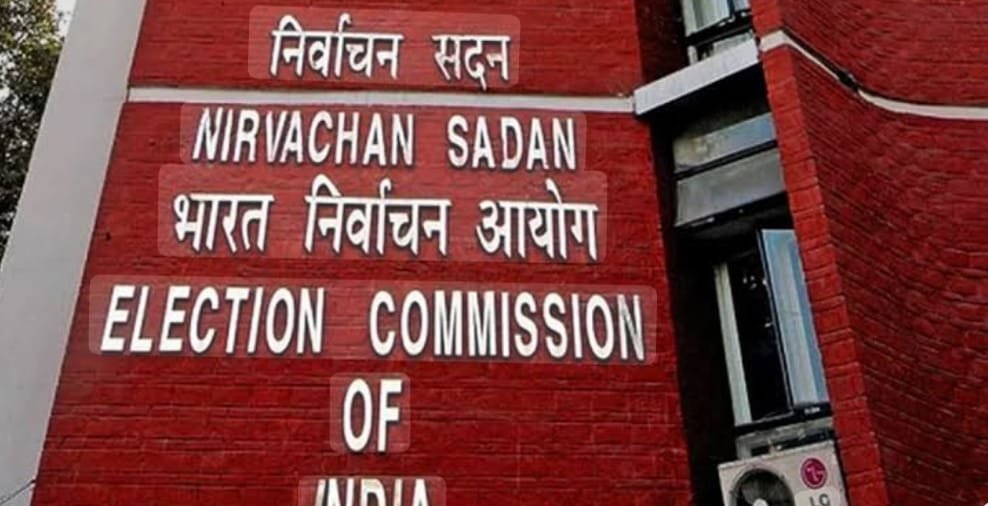
After Bihar, the Election Commission of India (ECI) is set to roll out a Special Intensive Revision (SIR) of the electoral rolls across the country, directing all states to complete preparations by Sept. 30. Officials said a formal notification could be issued in October, though no exact date has been announced. At a meeting in New Delhi on Wednesday, the ECI instructed chief electoral officers of all states to wrap up infrastructure readiness within this month. What remains unclear is whether the process will begin simultaneously nationwide or be prioritized in states heading to assembly elections next year. Five states — West Bengal, Tamil Nadu, Assam, Kerala and Puducherry — are scheduled for polls in 2026, making them likely candidates for the first phase of the SIR. But political tensions have already surfaced in West Bengal. Chief Minister Mamata Banerjee, while touring north Bengal, voiced strong objections, saying the process cannot be completed within a few months. “SIR is not a two- or three-month exercise. It takes two to three years to conduct properly,” Banerjee said. She accused the commission of acting in favor of the Bharatiya Janata Party (BJP), echoing charges her Trinamool Congress has made repeatedly in the past. Despite the criticism, the state election machinery has informed the national commission that Bengal is ready to begin the exercise, with infrastructure and staff in place. The controversy is not without precedent. In Bihar, opposition parties alleged that the recent SIR resulted in 6.5 million names being deleted from the rolls, accusing the commission of bias. The ECI countered that safeguards had been introduced to prevent genuine voters from being removed. An election commission official noted that Bengal had a turbulent history with such revisions. “In 2002, nearly 2.8 million names were deleted from the state’s 45.8 million voters. This time, lessons have been learned, and the process will be more transparent and technology-driven,” the official said. Still, Banerjee’s open opposition has raised expectations of fresh political confrontations. Observers say the coming weeks will show whether the Election Commission sticks to its nationwide rollout plan or makes exceptions for politically sensitive states.
BJP Slams Rahul Gandhi’s Election Fraud Allegation as “Calculated Deceit”, Accuses Congress of Undermining Democracy
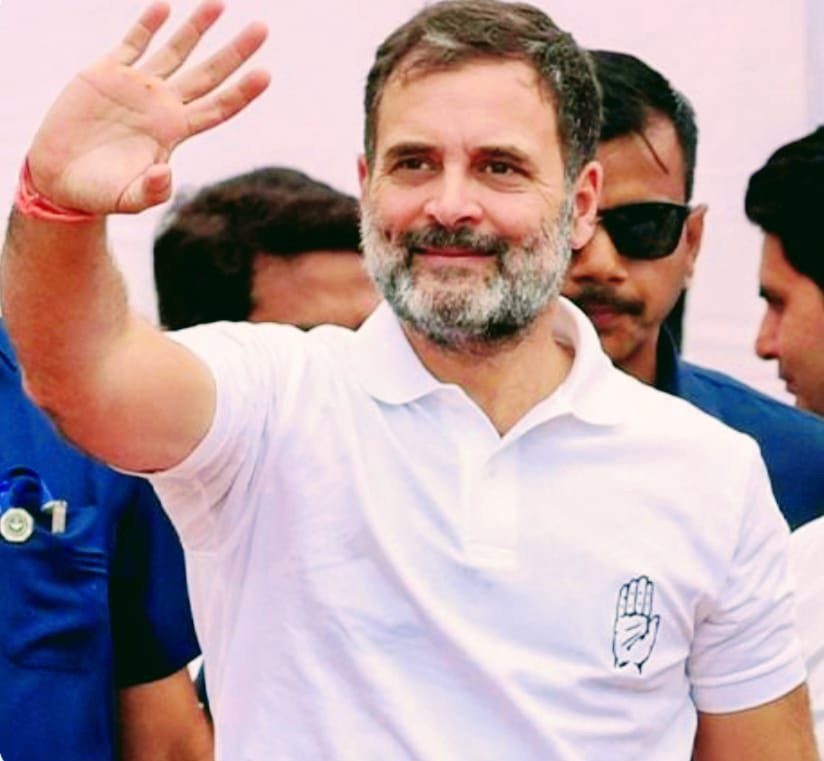
India’s ruling Bharatiya Janata Party (BJP) on Thursday hit back at opposition leader Rahul Gandhi for alleging electoral fraud, calling his remarks a “calculated deceit” and part of a broader Congress conspiracy to undermine democratic institutions. Gandhi, the Leader of Opposition in Parliament, had earlier accused the Election Commission of colluding with the BJP to manipulate voter data in a Karnataka constituency during the 2024 general election, terming it a “criminal fraud”. “There is a huge criminal fraud being perpetrated across the country by the Election Commission and the party in power,” Gandhi told reporters, without naming the BJP directly. Reacting sharply, senior BJP leader and former Union minister Ravi Shankar Prasad condemned the comments as “irresponsible and shameless”, saying Gandhi was attacking a constitutional body out of “frustration and anger” over repeated electoral losses. “You are insulting the people of the country who voted for Prime Minister Narendra Modi for his work, honesty and leadership,” Prasad told reporters at the Parliament complex. “Calling the Election Commission a fraud crosses all limits.” Prasad also accused Gandhi of adopting “double standards” by questioning the poll panel only when the Congress loses elections. Union Minister Dharmendra Pradhan echoed the criticism, calling Gandhi “Bayan Bahadur” (a habitual statement-maker) and accusing the Congress of systematically targeting constitutional institutions. “In the agony of losing power, Rahul Gandhi has completely lost his composure,” Pradhan said in a post on social media platform X. “This calculated deceit points to a larger conspiracy against India’s democracy and Constitution.” He added that the Congress party’s “ideological hollowness” and history, including the imposition of the Emergency in the 1970s, reflected its “authoritarian mindset”. Pradhan also questioned Gandhi’s silence when the Election Commission had invited political parties to raise concerns about the State-wise Information Reports (SIR) in Bihar, suggesting the Congress had failed to act at the appropriate time. “People of Bihar and across India are ready to give a fitting reply to such opponents of democracy,” he said. The BJP’s pushback comes amid rising political tensions as the opposition ramps up its scrutiny of electoral processes following the party’s third consecutive win in the general elections. Gandhi and the Congress have accused the BJP of misusing institutions to retain power — a charge the BJP has consistently denied.
Election Commission to Launch Special Voter List Revision; Trinamool Raises Objections

The Election Commission of India (ECI) is set to begin a Special Intensive Revision (SIR) of the electoral rolls across the country starting from August or September, prompting sharp political reactions in West Bengal. The revision, aimed at ensuring only eligible citizens are included in the voters’ list, will involve booth-level officers (BLOs) visiting households to assist with form filling and document verification. Applicants will be required to furnish any one of 11 listed documents, including birth certificates, passports, educational certificates, government-issued IDs, or proof of residence. However, Aadhaar, PAN and driving licences will not be accepted as standalone proof. Trinamool Congress MP Kakoli Ghosh Dastidar has strongly objected to the exercise, alleging that the move is politically motivated and designed to disenfranchise voters in West Bengal. She accused the Bharatiya Janata Party (BJP) of attempting to manipulate the voter list for electoral gain. In response, a BJP leader claimed that the state’s voter list contains numerous fictitious names and said the SIR process is essential to remove ineligible voters and detect illegal immigrants. The ECI has clarified that citizens who were enrolled during the last SIR held in 2002 in West Bengal will not be required to produce documents again. Those included in the voter list after 2002, however, must provide one of the 11 valid documents. Individuals born before July 1987 will only need to submit their own document. Those born between 1987 and 2002 must submit either a parent’s document or proof of inclusion in the 2002 voter list. For voters born after 2002, documents from both parents may be required unless their names already appeared in the previous SIR. Amid confusion over requirements, officials have clarified that a birth certificate is just one of several acceptable documents and not mandatory. The SIR is aimed at preventing ineligible individuals, including illegal immigrants, from registering as voters, while ensuring that no genuine citizen is excluded. The revision process will be conducted both offline and online, enabling those residing outside their home states to participate. The ECI stressed that refugees and infiltrators must not be conflated and urged people not to be misled by misinformation. The upcoming revision marks the first major overhaul of the voters’ list in West Bengal since the last SIR conducted in 2002 during the Left Front government. Failure to fill the requisite forms may result in exclusion from the electoral rolls, officials warned. The ECI maintains that the SIR process is a routine administrative exercise that has been carried out periodically since the 1950s in different parts of the country to ensure the accuracy of the electoral rolls.


