
India Urges Bangladesh to Halt Demolition of Satyajit Ray’s Ancestral Home
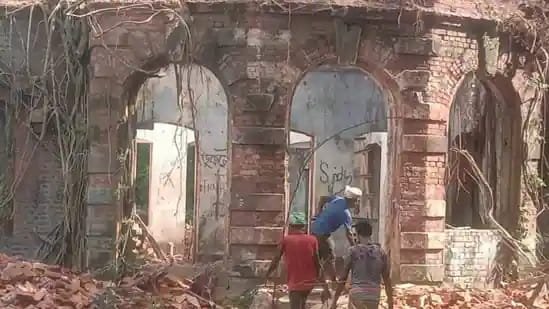
DHAKA/KOLKATA, July 16: India has urged Bangladesh’s interim government to reconsider the demolition of the ancestral home of legendary filmmaker Satyajit Ray, after reports emerged that the property in Mymensingh district is being razed by local authorities. The residence, located on Harikishore Ray Chowdhury Road, once belonged to Ray’s grandfather, renowned writer and publisher Upendrakishore Ray Chowdhury. The site had been used by the Bangladesh Shishu Academy but has reportedly been lying in disrepair for over a decade. Bangladesh’s interim government, led by Nobel laureate Muhammad Yunus following the recent ouster of Prime Minister Sheikh Hasina’s administration, has initiated demolition of the house citing safety concerns. Local child affairs officer Mohammad Mehedi Zaman told The Daily Star that the structure is at risk of collapse and will be replaced by a semi-concrete building. The development has sparked a political and cultural backlash across the border in India. West Bengal Chief Minister Mamata Banerjee raised strong objections on Tuesday, urging the Bangladesh authorities to preserve the historic site and calling on New Delhi to intervene. Following her appeal, India’s Ministry of External Affairs issued a statement highlighting the property’s historical and cultural significance. “The ancestral home of Satyajit Ray is not just an architectural structure but a symbol of shared heritage and literary excellence. We urge the Bangladesh government to preserve and restore the site instead of demolishing it,” the statement said. India has offered technical and financial assistance for the restoration and proposed converting the property into a literary museum, which officials say could further deepen the cultural ties between the two nations. The incident follows recent attacks on homes of other prominent Bengali cultural icons in Bangladesh. Just weeks ago, unidentified vandals damaged the ancestral estate of Rabindranath Tagore in Kushtia, raising concerns over the protection of heritage sites amid political instability. According to the Bangladesh Department of Archaeology, Ray’s ancestral home is over 100 years old and was taken over by the government following the 1947 Partition. Ray, who passed away in 1992, remains one of the most influential figures in global cinema. His works, including the iconic Apu Trilogy, have earned him international acclaim and India’s highest civilian honours. Cultural commentators in both countries are urging Dhaka to preserve the home as a tribute to Ray’s legacy and a testament to the shared cultural fabric of Bengal that transcends borders.
Odisha Moves to Copyright Rituals of Jagannath Temple Amid Dispute With West Bengal
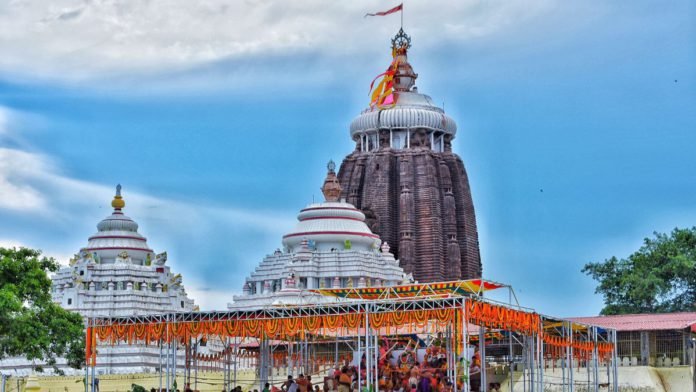
BHUBANESWAR/KOLKATA, July 13: The Odisha government has initiated steps to obtain copyright protection for the centuries-old rituals and traditions of the Jagannath Temple in Puri, a move prompted by growing concerns over perceived misuse and replication of the temple’s customs outside the state. Gajapati Maharaja Dibyasingha Deb, the titular king of Puri and chairman of the temple’s managing committee, confirmed in an interview with local media that the process is underway. “The state government has already begun taking legal advice on how to proceed with copyrighting Jagannath rituals. This should be viewed from a legal perspective,” he said. The development comes amid tensions between Odisha and West Bengal over the construction of a Jagannath temple in Digha, a seaside town in Bengal, which has been referred to as “Jagannath Dham” by Chief Minister Mamata Banerjee’s government. The use of the term “Dham,” which signifies a divine abode, has drawn objections from both the Odisha government and religious authorities in Puri, who argue it violates centuries-old spiritual and cultural sanctity. Odisha Chief Minister Mohan Charan Majhi had earlier written to Banerjee expressing concerns about the naming and presentation of rituals in the Digha temple. The temple’s daily worship is currently overseen by ISKCON (International Society for Krishna Consciousness), whose involvement has further intensified the controversy. Critics, including the Shankaracharya of the Govardhan Peeth in Puri, Swami Nischalananda Saraswati, allege that ISKCON has deviated from traditional observances by conducting festivals like the Rath Yatra and Snan Yatra on dates that do not align with those observed in Puri. “Such actions are hurting the sentiments of Jagannath devotees across the world,” said Dibyasingha Deb. “We are also in discussions with ISKCON’s headquarters in Mayapur,” he added, referring to the organisation’s global base in West Bengal’s Nadia district. “The goal is to ensure that sacred traditions are not distorted or misrepresented.” In recent years, Odisha has sought to protect the unique identity of Jagannath worship practices, which are deeply rooted in regional customs and history. The move to copyright these rituals is seen as part of a broader attempt to prevent what authorities describe as the “misuse” or “commercial replication” of the temple’s heritage. Deb said the dispute between Odisha and West Bengal should ideally be resolved through mutual dialogue. “We are hopeful that the two state governments will engage in discussions to settle the issue. But if that does not happen, we will be compelled to consider other measures to protect our traditions.” The controversy reflects growing concerns over cultural appropriation and the need to preserve religious heritage in an era of increasing replication and globalisation of spiritual practices.


