
Mamata Inaugurates Puja Pandals, Voices Concern Over Humiliation of Bengalis Outside the State
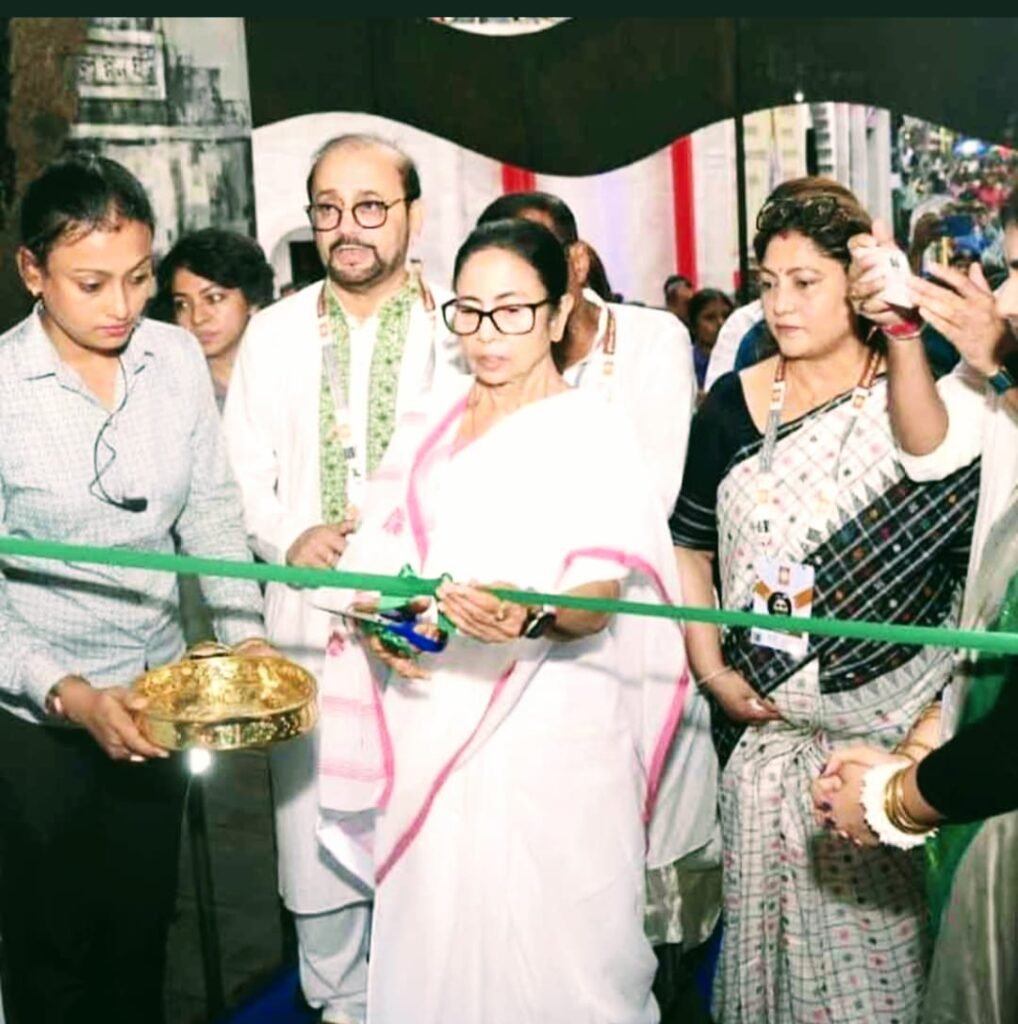
Chief Minister Mamata Banerjee on Saturday inaugurated three major Durga Puja pandals in Kolkata, but pointedly refrained from entering the marquees to view the idols. “I have come here to inaugurate the pandals, not the idols. From Mahalaya, I will begin inaugurating the idols of the Goddess,” she told reporters. The Chief Minister inaugurated the Hatibagan Sarbojanin, Tala Pratyay, and the crowd-pulling Sreebhumi Sporting Club puja, marking the start of the festive season in the city. While the organisers had hoped she would tour the elaborately decorated pandals, Ms. Banerjee kept her visit brief, limiting herself to lighting lamps and cutting ceremonial ribbons. Her remarks, however, were not confined to the rituals of Durga Puja. Ms. Banerjee used the occasion to highlight what she described as the humiliation faced by Bengalis in other parts of India. “Wherever Bengalis go, they face harassment. We must not forget that Bengalis have made enormous contributions to the country’s culture, politics, economy, and education,” she said. Ms. Banerjee urged puja committees to play Bengali songs during the festival and ensure the state’s cultural identity remained strong. “This is our biggest festival. Let it showcase Bengal’s art, music, and literature. Let the world see our tradition and creativity,” she said, underlining her call for unity around language and culture. The Chief Minister’s comments come at a time when the state government has been promoting Durga Puja as a symbol of Bengal’s cultural pride, especially after UNESCO accorded the festival recognition as an Intangible Cultural Heritage of Humanity in 2021. Officials said this year’s celebrations are expected to draw record crowds, both domestic and international. Observers noted that Ms. Banerjee’s remarks also carried a political undertone, aimed at countering both the BJP and other critics who have often accused her government of neglecting cultural identity. With elections still more than a year away, she appeared keen to reinforce her image as both custodian of Bengal’s traditions and defender of its people’s dignity. Even as the city prepared for the onrush of pandal-hoppers, police and civic authorities were working to manage crowds and traffic. State officials said more than 10,000 additional personnel would be deployed across districts from Mahalaya onwards. For Ms. Banerjee, the day’s message was clear: Durga Puja is not only about lights, pandals, and festivities, but also about asserting Bengal’s identity in the face of perceived slights.
West Bengal CM Mamata Banerjee inaugurates new 10-story ‘Anannya’ ward at SSKM Hospital
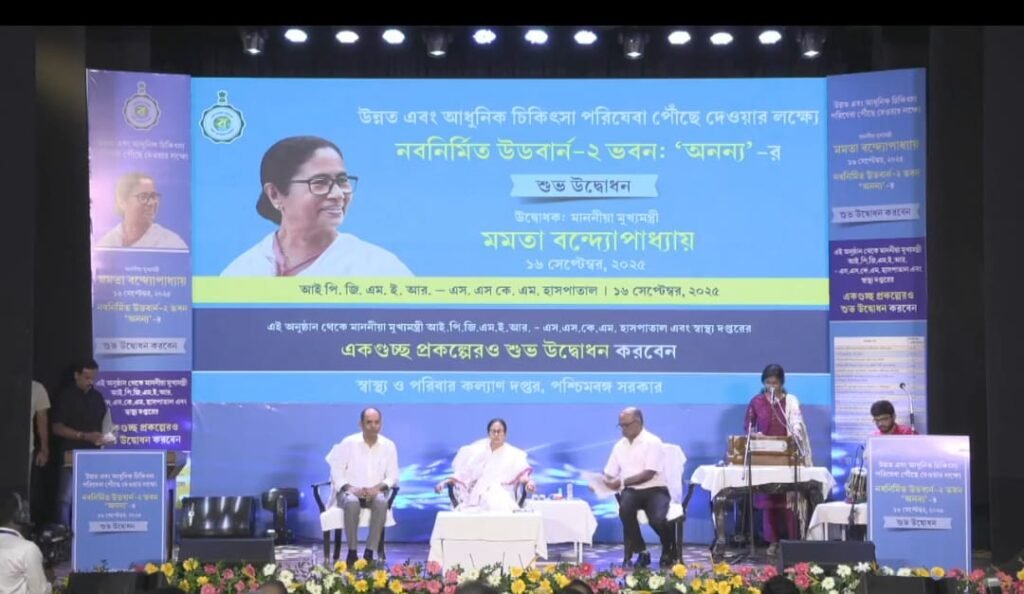
West Bengal Chief Minister and Health Minister Mamata Banerjee on Monday inaugurated a new 10-story building at SSKM Hospital in Kolkata, underscoring her government’s investments in public healthcare and marking the opening of several other health-related projects across the state. Built at a cost of 6.7 billion rupees ($80 million), the newly inaugurated “Woodburn 2” building has been renamed “Anannya” by Banerjee herself. The block houses 131 cabins and aims to provide infrastructure on par with leading private hospitals in the city. Banerjee also announced the daily rental charges for different categories of cabins and beds. Single cabins will cost 5,000 rupees, single suites 8,000 rupees, HDU-equipped beds 12,000 rupees, and ITU beds 15,000 rupees. She said hospital authorities had initially proposed rates 2,000 rupees higher, but she reduced them to make the facilities more affordable. “This infrastructure will rival even the best private hospitals,” Banerjee said at the event, which also saw the inauguration of 15 projects and the foundation stone for three others, most of them linked to healthcare. Among them was a bone bank at Sambhunath Pandit Hospital and the remote inauguration of a building constructed by the Khilafat Committee. The launch came almost exactly a year after West Bengal’s health system faced massive public protests following the rape and murder of a young doctor at R.G. Kar Hospital in Kolkata. That episode triggered unprecedented demonstrations by junior doctors and pushed Banerjee’s administration into crisis, with demands for the removal of senior officials including Health Secretary Narayan Swaroop Nigam. On Monday, Nigam was present on stage with Banerjee, a sign of how far the situation has changed in a year. Banerjee used the occasion to highlight her government’s record in healthcare spending. “In 2011, the state’s health budget was just 36.84 billion rupees. Today it stands at 213.55 billion rupees,” she said. She pointed to free pediatric heart surgeries and the Health Sathi scheme as examples of how the expansion has benefited ordinary citizens. According to her, more than 80 million people in the state have availed services under Health Sathi, with about 7,000 patients using the program daily. During the event, Banerjee was also informed that SSKM Hospital had been included in the BRICS Network. In celebration, she announced a grant of 1 million rupees for the institution. Analysts said the high-profile inauguration, along with Banerjee’s emphasis on expanded health spending, reflected both governance priorities and the political importance of healthcare after last year’s turmoil.
PM Modi unveils Rs 9000 cr development package for Mizoram, inaugurates historic rail link to Aizawl
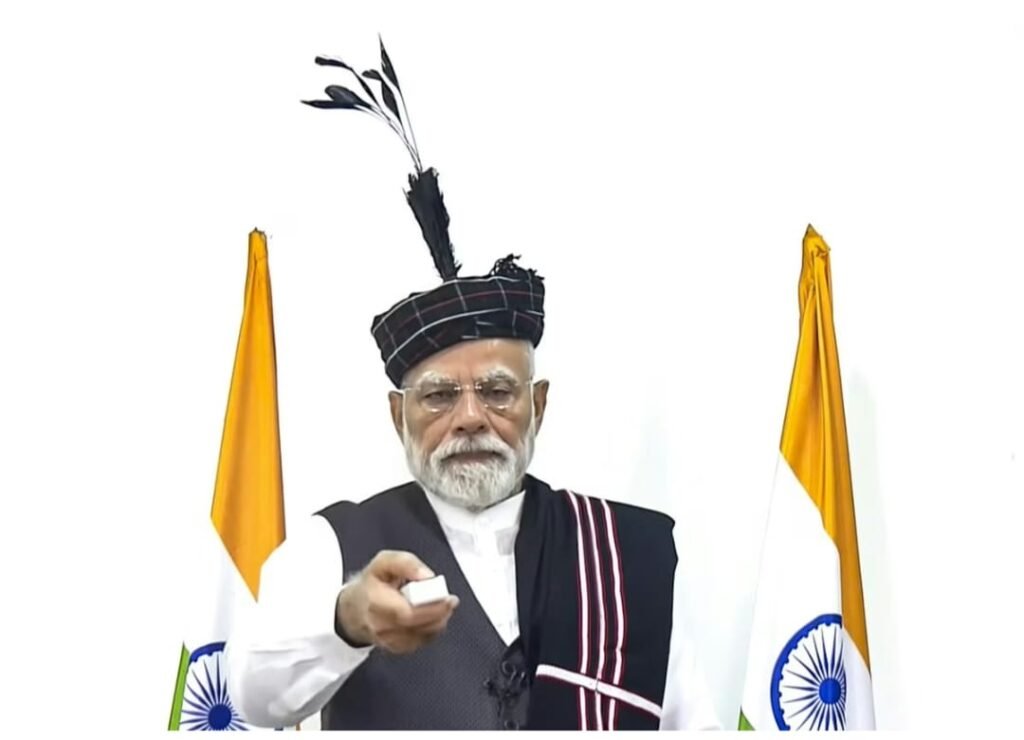
Prime Minister Narendra Modi on Saturday announced a development push of more than 9,000 crore rupees ($1.1 billion) for Mizoram, including the inauguration of the state’s first rail link to its capital, Aizawl — a project he hailed as a historic milestone for India’s Northeast. While poor weather prevented Modi from attending a public gathering in the city, he addressed the people virtually from Lengpui Airport and expressed gratitude for what he called the “warm reception of the Mizo people.” The highlight of the day was the launch of the 51.4-kilometer Bairabi-Sairang rail line, built at a cost of 8,070 crore rupees. The line connects Aizawl to India’s railway network for the first time, with Sairang set to be linked to Delhi by the Rajdhani Express. Modi called the project a “lifeline of transformation” for Mizoram and the broader Northeast. “This is not just a railway track,” Modi said. “It will bring progress in agriculture, education, healthcare, tourism, transport and employment for the people of Mizoram.” The project posed major engineering challenges due to the hilly terrain, requiring 45 tunnels, 55 major bridges and 88 smaller bridges. Modi praised the engineers and workers who carried out the construction in difficult conditions. The prime minister also used his address to attack what he described as decades of “vote-bank politics” by previous governments, which he said neglected the Northeast because of its small number of parliamentary seats. “Our government has brought those who were kept on the margins into the mainstream,” he said. Modi highlighted his government’s record in the region over the past 11 years, citing investments in rural roads, national highways, internet connectivity, electricity, LPG and clean drinking water. He said Mizoram will also benefit from expanded air services under the UDAN scheme, with new helicopter routes to remote areas starting soon. Underlining Mizoram’s strategic importance, Modi said the state is central to India’s Act East Policy, which seeks closer economic ties with Southeast Asia. He noted projects such as the Kaladan Multimodal Transport initiative and the planned Sairang-Hmawngbuchhuah rail link, which will connect Mizoram to the Bay of Bengal and beyond. The prime minister also focused on youth and entrepreneurship. He said the region already hosts more than 4,500 startups and 25 incubators, while residential schools under the A-Club model are expanding. “The innovation ecosystem is growing in the Northeast, and Mizoram’s youth are at its center,” Modi said. Sport was another theme of the address, with Modi praising Mizoram’s football culture and promising more infrastructure under the Khelo India scheme. He said a new national sports policy will boost opportunities and strengthen the sports economy. Modi encouraged promotion of local products such as bamboo, organic ginger, turmeric and bananas, while pointing to tax reforms under the Goods and Services Tax that reduced costs of essential goods. Citing India’s 7.8% GDP growth in the first quarter of the current fiscal year, Modi described the country as the fastest-growing major economy. He said economic growth was tied to national security, referencing Operation Sindoor, where domestically produced weapons played a role. “Mizoram is not only a part of India’s story of development but also a crucial partner in building a developed India,” Modi said. The inauguration of the Bairabi-Sairang rail line, long awaited by the people of Mizoram, is expected to redefine connectivity in the state and give a major push to economic growth across the Northeast.


