
Kerala Blasters mull over pulling out of the ISL after Odisha FC; Clubs worried about no commercial partner and obtaining AFC slot
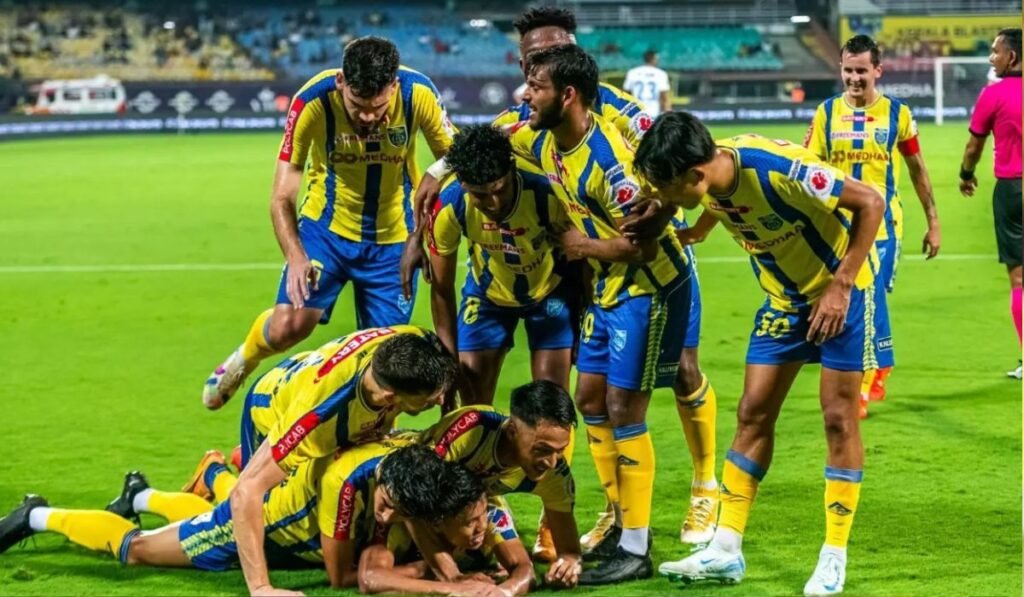
After Odisha FC, another ISL club, Kerala Blasters, is mulling pulling out of the country’s top-tier league, and they are reportedly planning to shut down! It is believed that the club has assessed that it could face losses of up to Rs. 40 crore if ISL runs a truncated season without a commercial partner, mainly due to no home matches, ticket revenue, or central income. Other ISL clubs also seem worried as AIFF’s centralised plan could cross Rs. 60 crore in costs. Goa leg alone is likely to be staged against the approximate expenditure of Rs. 42 crore. The clubs have to possibly pay Rs 2.5 crore each. Still, the ISL clubs seem to be worried about the fewer matches of a single-leg League and also anxious about whether the AFC will allot slots, and finally, no commercial partner has been roped in. So, the uncertainty grows as usual. Despite the uncertainty, ISL and I-League players based in Goa have reportedly been called for practice sessions. Most players based in Goa have already left to join their respective clubs.
AIFF eyes centralized venue and waits for AFC slots to resume ISL
The Indian Super League (ISL) this season, even if it can be resumed, has a chance of being staged at only two or three centralized venues. With any new commercial partner yet to be confirmed, the AIFF and the clubs (seven ISL clubs attended the meeting virtually), in a scheduled meeting on Monday, spent the whole day on budgeting of the ISL this season in a new format. Along with the budgeting, which is expected to take shape in Tuesday’s meeting again, AIFF is also likely to appeal to the Asian Football Confederation (AFC,) whether they allot any slot for the ISL champions in any AFC club competitions if a single-leg League or the League is staged at centralized venue.s. Simultaneously, AFC is expected to get confirmation from the AIFF about the number of teams participating in the League this season. However, one of the AIFF officials, when asked whether it would be possible for the Federation to resume the League without the support of FSDL, revealed on condition of anonymity, “We are sure that the ISL will resume this season and it will take off from the next season.”
AIFF optimistic about ISL clubs’ consent to its 20-year proposal; also finds interest from new corporates!
The All India Football Federation (AIFF) seems optimistic that the clubs that were handed a long-term (20-year) proposal to run the country’s top-tier football league on Friday will finally agree. The Federation is waiting for the clubs’ consent in the next crucial meeting on 29th December, scheduled at the Football House in New Delhi. The club representatives, however, will reportedly convince the respective club owners before agreeing to the AIFF proposal. They are also expected to confirm the model of the ISL, proposed by the three-man committee. AIFF, however, is aware that with the resumption of the ISL this year, operated by the clubs themselves, it will not be able to gain financial profit. But it is believed that three multi-national corporate houses have expressed a desire to invest in Indian football in the near future. They are reportedly keen to join the ISL as commercial partners, but from the next season. It is also believed that once the AIFF gets clubs’ official consent in its 29th December meeting, the Federation has planned to appeal to the Union Sports Ministry to ask the respective state governments to come forward with their support for the ISL clubs who will be hosting their home matches, after choosing the proposed model.
Borja Herrera leaves FC Goa due to uncertainty over ISL

Borja Herrera Gonzalez announced his exit from Goa’s ISL club FC Goa on Friday. The Spanish midfielder spent two-and-a-half seasons with the club. Borja, also the club captain, said the situation has become too anxious for him and his family, and the people in charge have pushed him to make this decision, clearly hinting at the dire straits Indian football finds itself in and the uncertainty over the Indian Super League (ISL).’ ‘Before I leave, I want to thank each and every person at this club, my wonderful teammates who are more than that—they’re my friends—and all the fans who have always shown me their support and respect,” Borja said in an Instagram post. “I’m leaving with a heavy heart because I’ve enjoyed these last two years immensely, through the good times and the bad, like these last few months where I’ve truly seen what it means to have a team that’s like a family, and who, despite the problems, have tried to come to training every day with a smile. “My family and I have been very happy, and we’re taking away many unforgettable memories of Goa. All that’s left for me to say is thank you again, and I’ll always carry you in my heart,” Borja added.
Resumption of the ISL sees a ray of hope as AIFF floats 20-year proposal to ISL clubs
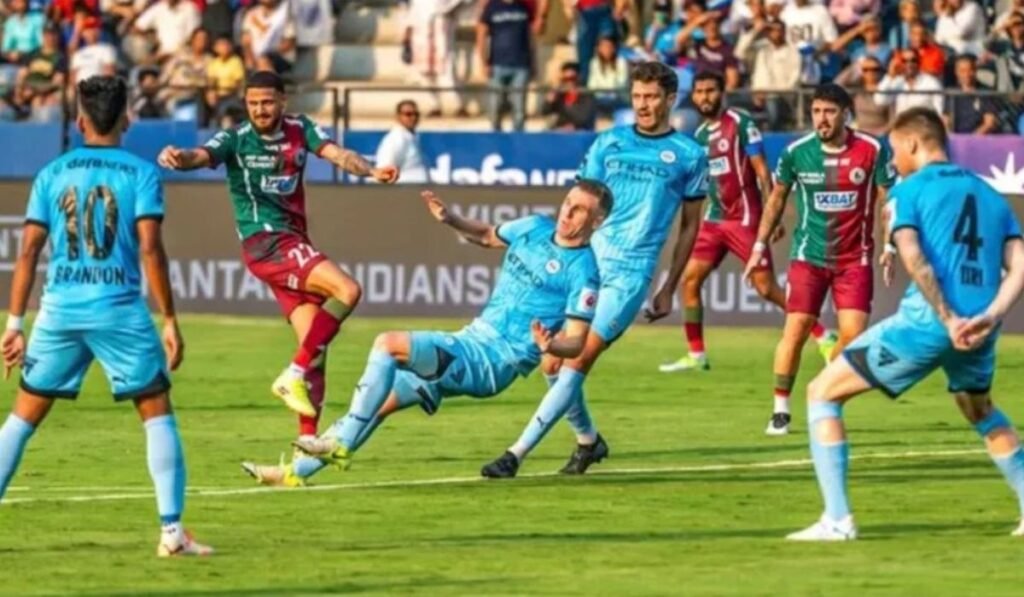
The AIFF has designed a 20-season plan for the Indian Super League (ISL), in which competing clubs must pay a Rs 1 Crore participation fee under an ‘open model’, inclusive of promotion and relegation. AIFF, as well as the clubs, feel this framework could be strong and can protect the interests of both parties. Though owned and operated by AIFF as mandated in its Supreme Court-approved constitution, governance of the league would rest on a board formed with approval from its general body that would enjoy “certain operational autonomy over commercial matters”, addressing concerns over financial viability and salability. “The jurisdiction of the board would be limited to the utilization of unrestricted funds within the yearly operational budget earmarked for the same,” it was written in the AIFF document shared with clubs. Clubs displayed no reservations on the idea of a governing board, details of which would be worked out in due course. In a meeting attended by all 13 ISL clubs for the first year, the operational budget is estimated at approximately Rs 70 crore, with AIFF’s fixed revenue share being 10 per cent, with a yearly contribution of Rs 7 crore, which they will invest in their youth leagues. Clubs are entitled to 50 per cent of shares, contributing Rs 35 crore to the general revenue pool, while the commercial partner will commit Rs 21 crore. The remaining 10 per cent share is earmarked for club allocation for ‘fixed revenue share’, amounting to Rs 7 crore, which will proceed towards the general revenue pool. Clubs are willing to consider it and would engage in internal discussions to go through the nitty-gritty of operational expenses, salary cap, and protection of investment before engaging with AIFF again on December 29 to iron out the details. They would also meet a day before to finalise one among the condensed models that AIFF has presented for the stalled 2025-26 edition. In that case, the tentative kick-off of the ISL this season might take place on 5th February. Clubs had earlier proposed to AIFF a cumulative Rs 10 crore per year for perpetual ownership of the League, which was turned down by its general body after AIFF had sought discussions on joint-organisation. If hand-shakes between the clubs and the AIFF happen finally happen on December 29, AIFF needs to get it ratified in its general meeting then place the proposal before the ministry for approval from the Court, possibly on 5th January when it resumes after the winter break., clubs had a good feeling when they spoke to AIFF’s three-member committee specifically formed to find a way through on 24th December.
Cash-strapped AIFF forms two separate committees to review ISL and I-League clubs’ proposals again
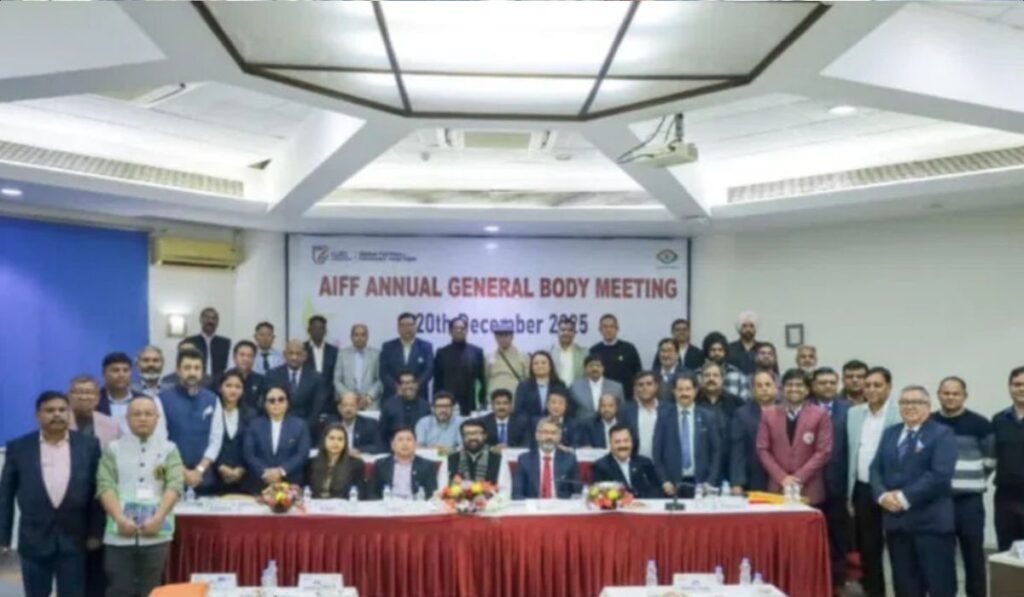
The All India Football Federation (AIFF) formed two separate committees after its annual general meeting on Saturday to discuss proposals of ISL and I-League clubs before formulating a plan to organize the country’s two topmost competitions. Having received offers that would have only regulatory and statutory authority and rights fee amounts far less than what it has received from its erstwhile commercial partner, Reliance-owned FSDL (Rs 50 crore per annum on average), the AIFF has decided to explore whether it could conduct the league on its own. ISL clubs insist they were compelled to put forward an offer where they would enjoy absolute authority over key areas since AIFF hasn’t yet put any plan for consideration. The AIFF faced a blow as it announced a deficit of Rs 25.88 crore in the budget for January to May 2026, at the AGM. Despite the acute financial crisis one of the senior executive committee members asserted that that AIFF itself would organize the league after some members expressed reservations n proposals of guaranteed income of Rs 10 crore from 2026-27 for grant of Rs 10 Crores perpetually and Rs 50 crore in 15 years from I-League sides (Rs 2.75 crore per annum for first five years, Rs 3.25 crore per annum for the next five and Rs 4 crore for the last 15). No immediate indication was forthcoming regarding the procurement of funds to organize the two leagues. However, two separate four-member committees, involving three state unit officials and Deputy Secretary M. Satyanarayan as chairperson of both, would engage with the clubs to find a feasible way. AIFF has a fixed deposit of Rs 50 crore, though it wasn’t instantly clear if it would be used in these times of acute stress. The two committees would submit reports by 29th December, which could then be taken up by the Union Sports Ministry for placement in front of the Supreme Court when it resumes on 5th January in the new year after a winter break. “If necessary, the AIFF will consult with FIFA and the AFC to review how similar situations in other nations were handled as precedents,” AIFF said in its statement.
ISL clubs’ proposal: Only Rs 10 crore to the AIFF from next season and demand for total rights of League!
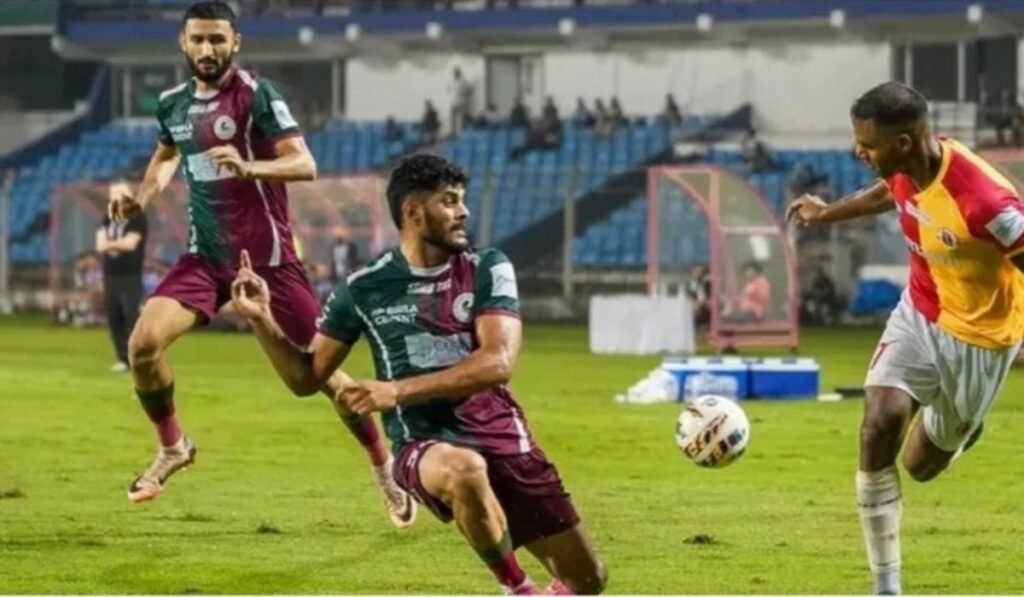
Indian Super League clubs, except East Bengal, following a meeting on Friday has proposed to the AIFF and Union Sports Ministry in a joint email where the clubs have sought perpetual rights to “operate, manage, and commercially exploit” the top-tier professional league and at the same time, they have mentioned unwillingness to pay any amount to the AIFF this season. Rather, in their e-mail the clubs have mentioned they will pay an amount to the AIFF, but only Rs 10 crores, and that will start from 2026-27 onwards. The clubs have also pointed out that the Federation can utilize the amount for grassroots and youth development, referee, coach, and technical development, apart from administrative and governance expenses. It has also been proposed that AIFF should give them an official approval for the rights of the League and ownership structure to a “dedicated league company in perpetuity, where the clubs shall collectively hold a “permanent” majority shareholding pattern. “AIFF shall hold one special share, safeguarding sporting integrity, regulatory authority, and statutory compliance; and the Clubs shall have the flexibility to induct a commercial or strategic partner at the league level, provided always that the Clubs, individually and collectively, retain majority ownership and voting control,” it is written in the letter. The clubs want to have the majority of shareholding in the League company even after dilution of stakes to induct a commercial partner, with AIFF having the perpetual right to nominate only one director on its board. Surprisingly, the clubs have not mentioned the promotion and relegation from the ISL in their proposal e-mail. In the proposed framework, AIFF role would only be limited to “regulatory and governance functions”, which would include framing and enforcing competition regulations, disciplinary codes, club licensing requirements, referees and match officials and preparation of the schedule calendar, but would not bear any “commercial risk” or responsibility to operate the league. AIFF received Rs 50 crore of an average for the last 10 years as per its 15-year agreeement with Reliance-subsidiary FSDL that ended on December 8.
Union Sports Ministry’s nod to the clubs to conduct ISL; Asks AIFF for AFC allotment
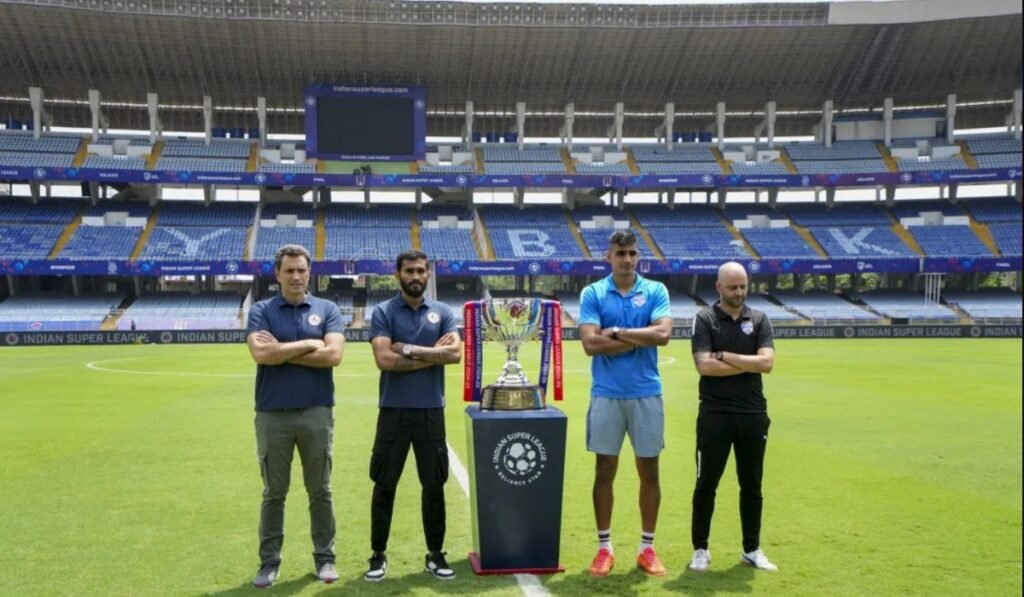
Union Sports Ministry, in a virtual meeting with the ISL clubs and the All India Football Federation (AIFF) top brass, has given a green signal to the clubs to conduct ISL, which is in a stalemate. The joint secretary of the ministry has asked the clubs to submit proposals for the ISL, both on a short-term and long-term basis. The ministry, however, has simultaneously asked the clubs to reduce the budget for the stadiums and training expenditures they spend on their home matches. The Union Sports Ministry, at the same time, has reminded the clubs to coordinate with the Asian Football Confederation (AFC) through the AIFF for its permission if a short-term ISL is proposed by the clubs for this season only. According to the AFC rule, the country’s top-tier league must have at least 27 matches. However, the ISL clubs requested the Union Sports Ministry and the AIFF representative to introduce a salary-cap for the players, divulging that they already spent an amount, out of their budget for the players amidst the ongoing impasse. East Bengal representative in the virtual meeting opined if the ISL is continued for the long term by the clubs themselves, then they will take part in the League but will not be a part of stake-holders. However, the clubs have informed Union Sports Ministry that they will submit proposals following a meeting in between them and submit the proposal to the Union Sports Ministry which will be deposited to the Supreme Court finally. Former vice-president of the Federation, Subrata Dutta, however, said, “Even if the Supreme Court approves proposal, then also ISL cannot be resumed by February.”
I-League also without a ‘commercial bidder’ like ISL!
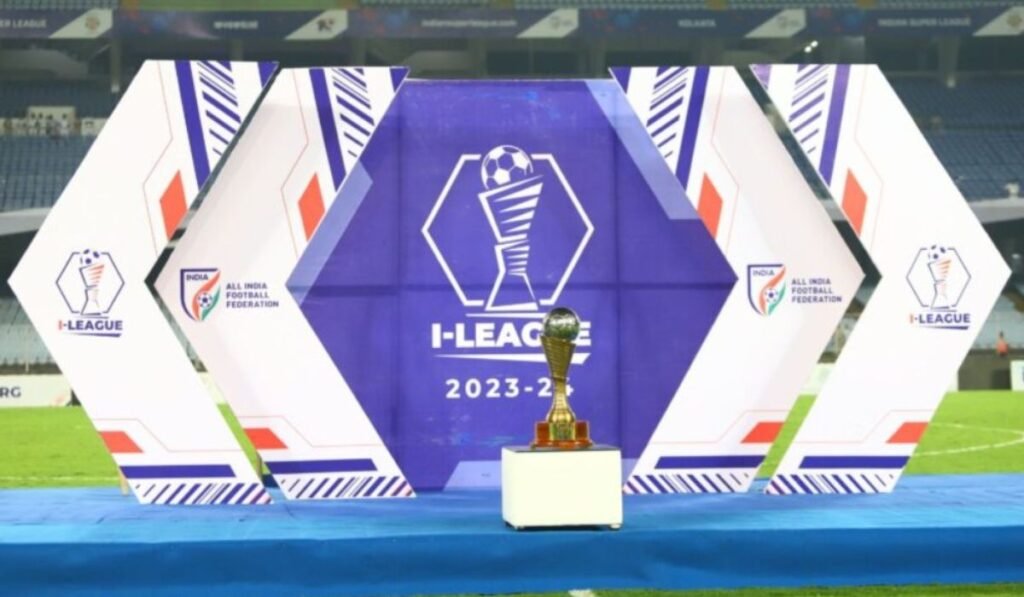
I-League also failed to generate interest among potential investors, as the All India Football Federation‘s second-tier competition didn’t receive any bids for commercial rights in its tender, according to a report from News9 Sports. AIFF floated the ‘Request for Proposal (RFP)’ on 8th November, and the deadline for submission was 13th December. But at the time of the opening of bids on Sunday, none had landed in the federation’s lap. An indication that the tender was failing to attract any proposals became apparent when no entity attended AIFF’s pre-bid meeting on 5th December to seek clarifications. But the Federation, in its tender, set prices Rs 6 crore (I-League: Rs 4 CR + I-League 2: Rs 1.25 CR + I-League 3: Rs 75 Lakh), and also the terms and conditions, similar to those set for the Indian Women’s League (IWL). Still, the failed tender reflects that the possible bidders who have shown interest in India’s club football fraternity seemed not willing to get further clarifications. Now, AIFF officials would have to scratch their heads on how to resume the league after floating a tender till the end of its 2029-30 season, even as they have been assuring the clubs about the resumption of the I-League, also like the ISL. Companies or three-member consortia with a minimum turnover of Rs 30 crore at the end of the 2024-25 financial year were eligible to place bids. AIFF is yet to issue any statement on the matter and has very little time to come up with a plan, with half of the season already over without a match being held. I-League club officials had earlier met the Union Sports Minister to raise concerns over its organisation. The budget for its elite I-League was already reduced by Rs 4.02 crore to Rs 10.18 crore from Rs 14.20 crore in the last financial year. A separate tender for IWL and IWL 2 at Rs 3 crore attracted one bid (Capri Sports).
ISL clubs send strong reply! seek amendment in AIFF constitution in the next AGM

All ISL clubs, except East Bengal, have sent a strong reply to the All India Football Federation (AIFF) telling that the discussions of hosting by the consortium set by the clubs themselves would only be purposeful if two crucial articles in the AIFF constitution, Article 1.54 and 63 are not amended at the earliest. The letter, sent on Thursday, comes a day after AIFF’s Deputy Secretary General, M. Satyanarayan, wrote to the clubs asking for a call to explore the possibility of jointly hosting the league, to which the reply reads ‘deflects responsibility onto the Clubs while simultaneously citing constitutional restrictions as justification for the Federation’s inaction’. The Article 1.54 and 63 pertain to the power of authorisation of ownership of the league and its entities, both of which are owned by the AIFF. “The Clubs remain open and committed to working with the AIFF towards a club-led model, consistent with global best practices. However, for such a model to be financially and operationally viable, Clubs must have commercial flexibility—including the ability to attract sponsors, investors, and long-term partners,” the letter, written by Vinay Chopra, the director of Mohun Bagan Super Giant, on behalf of all clubs, read. “This is not possible until the commercially restrictive clauses in the AIFF Constitution are amended or removed. Without this change, no sustainable league structure can be built, regardless of good intentions.” The letter also has mentioned that If the process of finding out a suitable commercial partner through the initiative of AIFF, Union Sports Ministry and the clubs after amendment of the two said articles fails, then Federation may hand over the long-term rights of the league to the clubs, who are prepared.


