
DGCA declares Puri’s Jagannath Dham as Red Zone

The pilgrim town of Puri, home to the sacred Jagannath Dham, has been marked as a Red Zone on the flight map of the Directorate General of Civil Aviation (DGCA). According to the DGCA notification, aircraft are prohibited from flying within 50,000 meters above sea level over Puri, particularly above the Sri Jagannath Temple. The restriction came into effect on September 26, 2025, and will remain valid until September 25, 2028. However, the decision has sparked mixed reactions among devotees, many of whom have demanded the installation of anti-drone systems to prevent drones from flying near the 12th century temple, a nationally protected monument. In recent months, several incidents of drones flying close to the temple have been reported. Police have detained multiple operators, who were later released with warnings after claiming ignorance of the restrictions and stating that they were capturing visuals for social media. Yesterday, another drone operator was detained after his drone was seen flying near the temple and was later released with a warning. Devotees and locals have expressed concerns that unmanned drones could pose security threats to the historic shrine. They have urged authorities to declare the temple and its surroundings a complete no-fly zone and install drone-jamming systems to enhance protection.
Animal sacrifice held en masse at Odisha shrine despite opposition
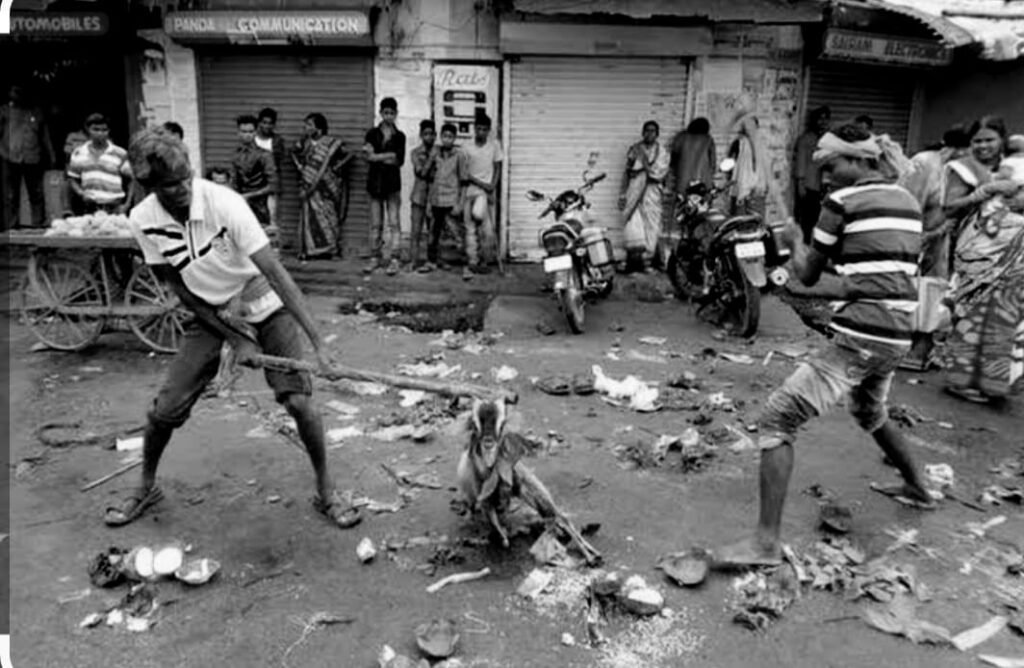
Animals were slaughtered en masse in the early hours today during the Chhatar Yatra festival in Odisha’s Kalahandi district, despite widespread opposition to the age-old custom. The famous Chhatar Yatra of the presiding deity, Maa Manikeswari, was taken out on the streets of Bhawanipatna, the district headquarters township, traversing a three-kilometre route. Devotees sacrificed numerous animals, mainly goats, along both sides of the road as a mark of fulfilling their wishes. The ritual lasted for several hours, with the cries of the animals filling the air, amidst the frenzied beating of drums. The local administration refrained from intervening to end the practice, allowing hundreds of garlanded animals to be slaughtered. This lack of intervention meant that tradition prevailed over legal objections. Residents defended the practice, stating that the goddess Manikeswari shields the region from natural fury. They view the animal offering as a gesture of reverence to ensure the safety of lives, crops, and livestock. According to locals, the mass sacrifice is performed annually as an age-old ritual followed by worshippers of the Shakti cult. Elaborate security arrangements ensured the annual event concluded peacefully, with no untoward incident reported. The bloody ritual, however, culminated in devotees releasing doves into the air as a traditional mark of peace.
Seven killed, over 20 injured in Odisha road accident

As many as seven people were killed and more than 20 injured, around 12 of them seriously, when a truck hit a private passenger bus in Odisha’s Sundargarha district today, police said. The deceased included the bus conductor, four women and two men. The identity of the deceased in the mishap on National Highway 520 under Koida Police station has not yet been ascertained. DIG Western Range Brijesh Ray said the accident occurred around 11 am when the bus was on its way from Rourkela to Koida. Ray said the seriously injured persons have been rushed to the hospital in IGH Rourkela. Police have been deployed in the area for the smooth conduct of the rescue operation and traffic flow.
Gang rape of college student reported near temple town Puri: police arrest two

A 19-year-old college student was allegedly gang-raped by a group of youths in a casuarina grove near a beach in Odisha’s Puri district, police said Monday. The incident, which occurred on Saturday evening about 20 kilometers from Puri town, has led to the arrest of two suspects, while one more has been detained. Police said additional individuals are believed to be involved and a search operation is underway. According to the complaint, the woman had gone to the beach with a male friend when several local youths allegedly began filming and photographing them on their mobile phones. When the couple objected, the group attacked them, police said. The friend was reportedly beaten and tied up, while the assailants dragged the woman into a nearby casuarina grove about 500 meters away, where she was gang-raped. The woman lodged a complaint at the local police station two days later, on Monday evening. Puri Superintendent of Police Prateek Singh said the survivor initially hesitated to narrate the ordeal because of trauma. “After women police officers spoke to her, she gathered courage and filed a complaint. We immediately arrested two men and detained another. We suspect more people are involved and are investigating further,” Singh told reporters. Another police official said the accused had also attempted to extort money from the couple by threatening to circulate the photographs and videos they had taken. “When the demand was resisted, the situation escalated,” the officer said. The case has drawn comparisons to a similar crime reported in May in Odisha’s Ganjam district, where a college student was allegedly abducted from Gopalpur beach and gang-raped by a group of youths. Puri’s beaches are popular tourist destinations and remain crowded throughout the year, though the latest survivor and her friend are both residents of the district, police said. The incident has raised concerns about the safety of women in coastal areas of the state, with calls for stronger policing of isolated stretches near beaches. Police said they are analyzing digital evidence and continuing raids to apprehend the remaining suspects.
Threat to blow up Puri’s Jagannath temple sparks security concerns
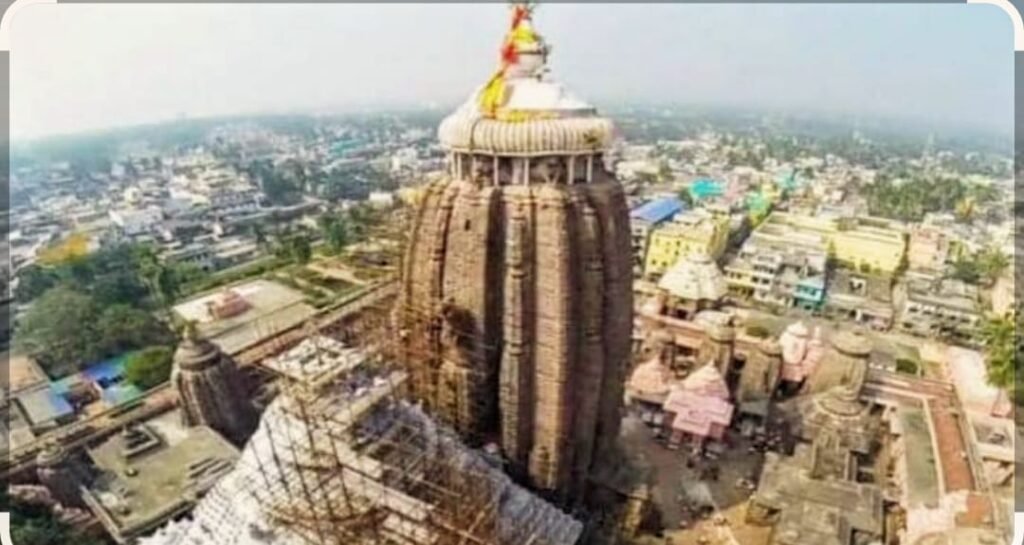
Authorities in the eastern Indian state of Odisha have launched an investigation after a threat to blow up the famed Jagannath temple in Puri was found scrawled on a wall near the shrine, officials and local media said on Tuesday. The message, written in both Odia and English, warned that the centuries-old Hindu temple would be destroyed in a militant attack and included several phone numbers, urging locals to call them. The wall, located close to the high-security temple complex, also showed signs of damage, and several street lights and poles in the area were found broken, local reports said. The incident has raised questions about police vigilance, as the temple and surrounding areas are monitored by CCTV cameras and patrolled regularly by security personnel. “How could such graffiti appear in a high-security zone?” one temple servitor was quoted as saying by local media. The warning comes amid a series of recent incidents that have unsettled some of the temple’s priests and staff, including a disruption during the annual Rath Yatra chariot festival, overcrowding that led to stampede-like situations, and a flag being carried away by an eagle. Police said they were examining CCTV footage and attempting to trace the individuals responsible for the graffiti. “An investigation is under way to identify and apprehend those involved,” a senior officer said. The Jagannath temple, one of Hinduism’s holiest sites, attracts millions of pilgrims and tourists annually, and has been a declared high-security zone for years.
Odisha Student Dies After Setting Herself on Fire Over Harassment Complaint; CM Announces Compensation

BHUBANESWAR, July 16: Odisha Chief Minister Mohan Charan Majhi on Tuesday announced a compensation of ₹2 million ($24,000) for the family of a college student who died after setting herself on fire in protest against alleged inaction on her sexual harassment complaint. The 22-year-old second-year B.Ed student from Fakir Mohan Autonomous College in Balasore died at AIIMS-Bhubaneswar on Monday night after battling for her life for three days. She had suffered 95% burns following the self-immolation on campus last Saturday. The student had reportedly accused a professor of sexual harassment and resorted to the extreme step after authorities allegedly failed to take action on her complaint. “The Chief Minister has directed officials to ensure a thorough investigation and strict punishment for all those found guilty,” the Chief Minister’s Office (CMO) said in a statement. Odisha Governor Hari Babu Kambhampati also expressed deep sorrow over the incident. “Shattered to learn of the untimely loss of a young student from Fakir Mohan Autonomous College,” he posted on social media platform X. “Her passing is not just a tragedy—it is a stark reminder of the urgent need to safeguard our campuses. The law will take its toughest course.” Police have arrested the principal and the head of the Education Department of the college in connection with the case. The incident has triggered outrage across the state, with students and activists demanding accountability and stronger mechanisms to address harassment complaints in educational institutions.
Odisha Moves to Copyright Rituals of Jagannath Temple Amid Dispute With West Bengal
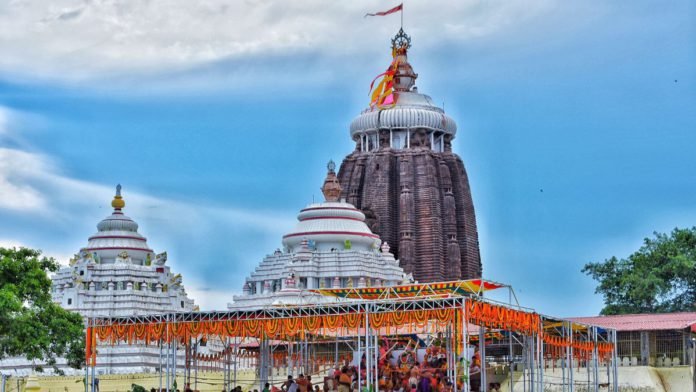
BHUBANESWAR/KOLKATA, July 13: The Odisha government has initiated steps to obtain copyright protection for the centuries-old rituals and traditions of the Jagannath Temple in Puri, a move prompted by growing concerns over perceived misuse and replication of the temple’s customs outside the state. Gajapati Maharaja Dibyasingha Deb, the titular king of Puri and chairman of the temple’s managing committee, confirmed in an interview with local media that the process is underway. “The state government has already begun taking legal advice on how to proceed with copyrighting Jagannath rituals. This should be viewed from a legal perspective,” he said. The development comes amid tensions between Odisha and West Bengal over the construction of a Jagannath temple in Digha, a seaside town in Bengal, which has been referred to as “Jagannath Dham” by Chief Minister Mamata Banerjee’s government. The use of the term “Dham,” which signifies a divine abode, has drawn objections from both the Odisha government and religious authorities in Puri, who argue it violates centuries-old spiritual and cultural sanctity. Odisha Chief Minister Mohan Charan Majhi had earlier written to Banerjee expressing concerns about the naming and presentation of rituals in the Digha temple. The temple’s daily worship is currently overseen by ISKCON (International Society for Krishna Consciousness), whose involvement has further intensified the controversy. Critics, including the Shankaracharya of the Govardhan Peeth in Puri, Swami Nischalananda Saraswati, allege that ISKCON has deviated from traditional observances by conducting festivals like the Rath Yatra and Snan Yatra on dates that do not align with those observed in Puri. “Such actions are hurting the sentiments of Jagannath devotees across the world,” said Dibyasingha Deb. “We are also in discussions with ISKCON’s headquarters in Mayapur,” he added, referring to the organisation’s global base in West Bengal’s Nadia district. “The goal is to ensure that sacred traditions are not distorted or misrepresented.” In recent years, Odisha has sought to protect the unique identity of Jagannath worship practices, which are deeply rooted in regional customs and history. The move to copyright these rituals is seen as part of a broader attempt to prevent what authorities describe as the “misuse” or “commercial replication” of the temple’s heritage. Deb said the dispute between Odisha and West Bengal should ideally be resolved through mutual dialogue. “We are hopeful that the two state governments will engage in discussions to settle the issue. But if that does not happen, we will be compelled to consider other measures to protect our traditions.” The controversy reflects growing concerns over cultural appropriation and the need to preserve religious heritage in an era of increasing replication and globalisation of spiritual practices.


