
Russian Deputy PM Patrushev calls on PM Modi
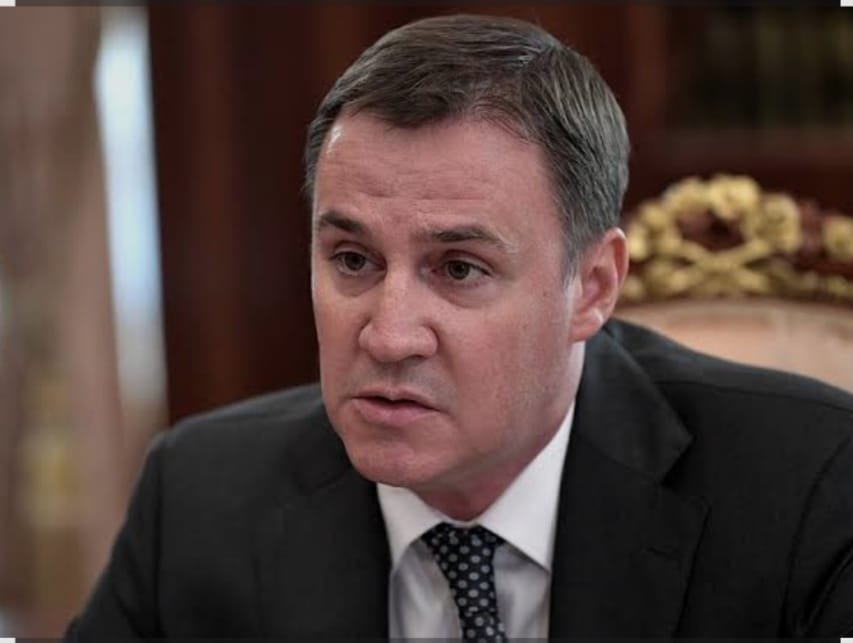
Russian Deputy Prime Minister Dmitry Patrushev called on Prime Minister Narendra Modi and exchanged views on enhancing cooperation in agriculture, fertilisers, food processing and other areas of mutual interest. Patrushev is currently on a visit to India as part of preparations for the visit of Russian President Vladimir Putin to India in December.” They exchanged views on enhancing cooperation in agriculture, fertilizers, food processing and other areas of mutual interest,” the Ministry of External Affairs (MEA) said on Patrushev’s meeting with Modi on Thursday.
PM Modi Unveils ‘GST Bachat Utsav,’ Calls It Next-Gen Reform to Boost Savings and Growth
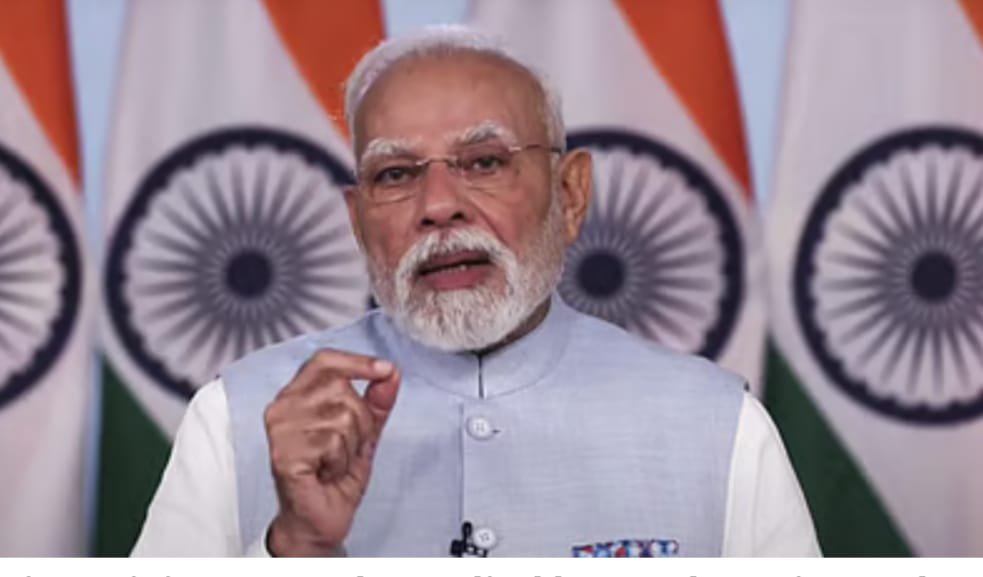
Prime Minister Narendra Modi on Sunday announced sweeping cuts in Goods and Services Tax (GST) rates, calling the move a “next-generation reform” aimed at easing the financial burden on India’s middle class, boosting youth opportunities and accelerating economic growth. In a nationally televised address at 5 p.m., Modi described the reform as a “GST Bachat Utsav,” or “GST Saving Festival,” that will take effect Monday, Sept. 22. The revised rates apply to a wide range of goods, from automobiles to daily consumer products, in what the government says is the most significant indirect tax change since GST was launched in 2017. “This reform is not only about reducing prices but about creating new opportunities,” Modi said. “The savings of our middle class will increase, our youth will benefit, and the entire economy will gain momentum.” He emphasized that cheaper essentials and consumer goods would encourage higher household spending, giving a boost to industries from agriculture to services. “When the purchasing power of people rises, it benefits every sector,” he said, linking the reform to his broader goal of a self-reliant India. Finance Minister Nirmala Sitharaman had unveiled the rate cuts earlier this month, saying they were designed to spur consumption-driven growth amid global economic uncertainty. Analysts view the tax relief as a timely measure to stimulate demand before the festive season. The announcement also came a day after U.S. President Donald Trump revealed a sharp increase in H-1B visa fees to $100,000, a move expected to hit Indian IT professionals hard. Opposition parties had pressed Modi to respond to Trump’s comments on India-Pakistan and the concerns of visa holders, but the prime minister kept his focus on domestic economic policy. The Congress party accused Modi of sidestepping pressing diplomatic issues. “The government is silent on matters affecting millions of Indians abroad,” a party spokesperson said. Still, Modi underscored that the GST reform was meant to benefit “every household” and provide lasting economic relief. “This is more than a tax cut,” he said. “It is a celebration of savings and growth for every Indian.”
Selfie frenzy with PM Modi cutout marks Passenger Service Day at Kolkata airport
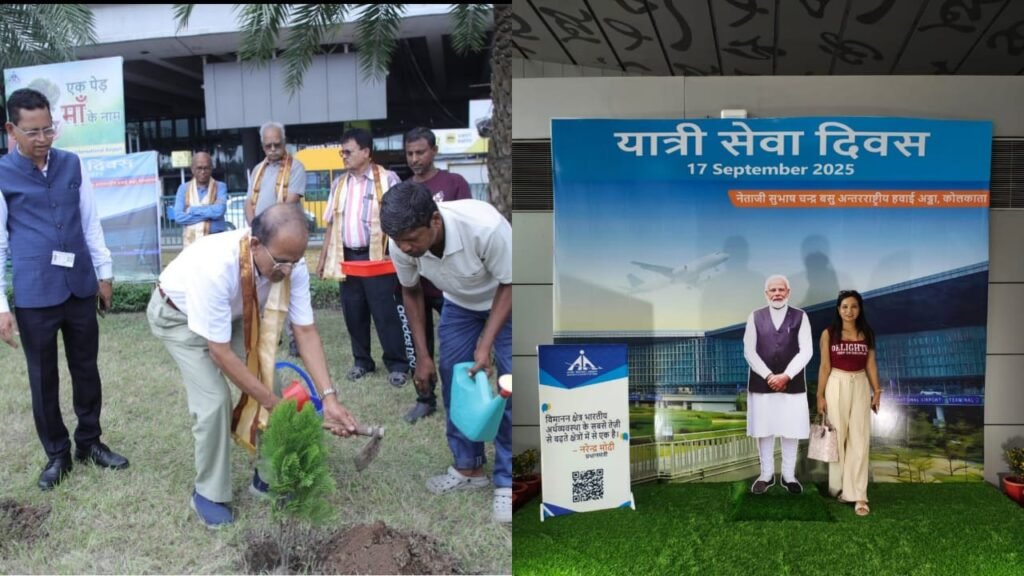
Hundreds of passengers at Netaji Subhas Chandra Bose International (NSCBI) Airport jostled for space Wednesday to snap selfies with a life-size cutout of Prime Minister Narendra Modi, an attraction coinciding with the prime minister’s 75th birthday. The rush was so overwhelming that airport authorities created three dedicated selfie zones across the terminal — at domestic arrivals, international arrivals and the security hold area. By noon, more than 500 passengers had posed with the cutouts, airport officials said. The celebration was part of Yatri Seva Diwas, or Passenger Service Day, observed across airports run by the Airports Authority of India (AAI). The annual event focuses on improving passenger experience with a range of complimentary services. “This year’s participation was remarkable,” said P. R. Beuria, director of NSCBI Airport. “Passengers availed themselves of free health check-ups, including blood pressure, blood sugar, ECG and eye tests. More than 200 people underwent free eye examinations alone.” Children traveling with families were not left out. Drawing contests and extempore speech competitions were held inside the terminal, with prizes distributed to all participants. “We are overwhelmed by the enthusiastic response,” Beuria said. In another initiative, elderly travelers and members of India’s Milly Tree Plantation group joined hands to plant saplings in the airport’s arrival garden, adding a green touch to the occasion. Senior AAI officials, including Chairman Capt. S. K. Mallick and the Executive Director (Security), reviewed the day’s proceedings alongside Beuria. Mallick said Yatri Seva Diwas offered an opportunity to reinforce AAI’s commitment to passenger-centric services. “It is a moment to showcase our efforts in delivering safe, secure and world-class services,” he told the gathering. For many passengers, however, the highlight remained the chance to take home a photo beside Modi’s smiling image. The selfie zones stayed crowded through the day, symbolizing both celebration and spectacle. Meanwhile, NSCBI Airport is preparing for another milestone on Thursday. Star Airlines will launch its maiden service between Kolkata and Purnia, with the inaugural flight scheduled to take off at 8:45 a.m. The aircraft will first land at Purnia before proceeding to Ahmedabad. Beuria will formally inaugurate the route, which officials expect will boost connectivity between eastern and western India.
Trump Calls Modi on 75th Birthday, Thanks Him for Support on Ukraine Peace Efforts
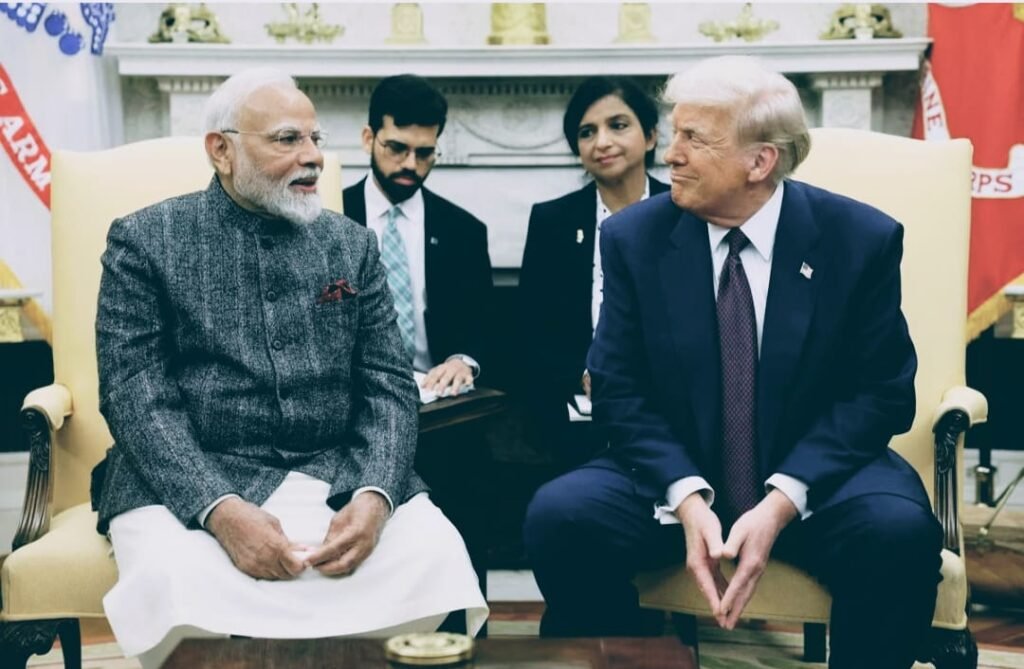
U.S. President Donald Trump on Tuesday called Indian Prime Minister Narendra Modi to extend birthday greetings on his 75th birthday, in a move viewed as part of Washington’s efforts to reset ties with New Delhi. In a post on social media, Modi expressed gratitude for Trump’s call and emphasized their shared commitment to strengthening bilateral relations. “Thank you, my friend, President Trump, for your phone call and warm greetings on my 75th birthday,” Modi wrote. “Like you, I am also fully committed to taking the India-U.S. Comprehensive and Global Partnership to new heights.” Trump, who returned to the White House earlier this year, also highlighted Modi’s role in global diplomacy. Writing on his Truth Social platform, Trump said, “Just had a wonderful phone call with my friend, Prime Minister Narendra Modi. I wished him a very Happy Birthday! He is doing a tremendous job. Narendra: Thank you for your support on ending the War between Russia and Ukraine!” The U.S. president signed off the message with “President DJT,” underscoring the personal tone of the outreach. “We support your initiatives towards a peaceful resolution of the Ukraine conflict,” he added. Trump’s phone call, which came a day before Modi officially turned 75, was widely seen as a gesture aimed at reaffirming Washington’s strategic partnership with New Delhi amid shifting global alignments. India has maintained relations with both Moscow and Washington during the Russia-Ukraine war, often positioning itself as a potential mediator. The conversation between the two leaders is expected to reinforce cooperation in areas ranging from defense and trade to regional security in the Indo-Pacific. While officials did not disclose details of the discussion, Trump’s direct acknowledgment of India’s diplomatic efforts on Ukraine signaled Washington’s interest in engaging New Delhi on broader global issues.
CP Radhakrishnan Elected as India’s 15th Vice President With 452 Votes
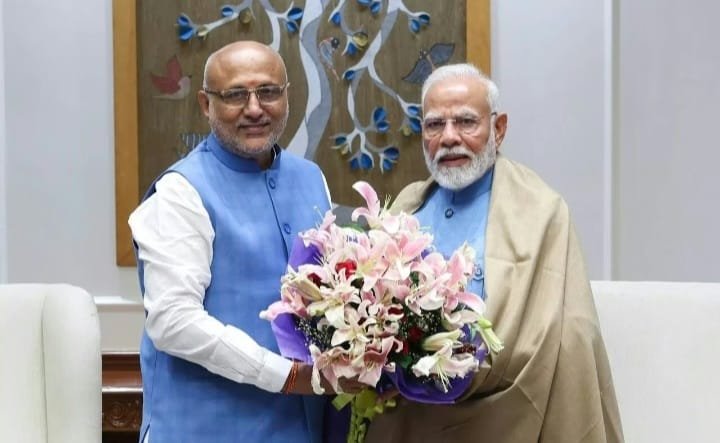
National Democratic Alliance (NDA) nominee and Maharashtra Governor C.P. Radhakrishnan was elected Tuesday as the 15th Vice President of India, defeating opposition candidate Justice B. Sudershan Reddy, a former Supreme Court judge. Radhakrishnan secured 452 votes in the contest, which was conducted in Parliament earlier in the day. Members of both the Lok Sabha and Rajya Sabha voted between 10 a.m. and 5 p.m., with over 98 percent of MPs casting their ballots. Counting began at 6 p.m. under the supervision of Returning Officer P.C. Mody, Secretary General of the Rajya Sabha. The election was necessitated after Vice President Jagdeep Dhankhar resigned from office on July 21 citing health reasons. Dhankhar, who had been in office since 2022, stepped down abruptly, creating a rare mid-term vacancy in the post. Radhakrishnan, a veteran BJP leader and two-time Lok Sabha MP from Tamil Nadu, enjoyed the ruling coalition’s numerical advantage in both Houses of Parliament. The NDA’s strength gave him a clear edge over Reddy, the INDIA bloc’s nominee. Still, the ballot was conducted through a secret vote, with MPs free from party whip, leaving room for speculation over possible cross-voting. Officials reported a smooth polling process inside the new Parliament building. After the counting concluded, results were announced in the evening, confirming Radhakrishnan’s comfortable margin of victory. With his election, Radhakrishnan will now assume office as the Deputy Chairperson of the Rajya Sabha, succeeding Dhankhar. The Vice President of India is constitutionally the second-highest office in the country, following the President, and serves as the presiding officer of the Upper House. Prime Minister Narendra Modi congratulated Radhakrishnan on his victory, calling him “a seasoned leader with years of legislative experience and dedication to public service.” Leaders from the ruling alliance described the result as a reaffirmation of the NDA’s majority in Parliament. The Opposition bloc, meanwhile, said its decision to field Reddy, a retired Supreme Court judge, was aimed at presenting “an alternative vision for parliamentary democracy.” Radhakrishnan is expected to be sworn in later this week, ahead of the Rajya Sabha’s next session.
Calcutta High Court urges stakeholders to resolve Metro viaduct clearance issue

The Calcutta High Court on Wednesday suggested that all stakeholders meet to resolve the impasse over police clearance for construction of a viaduct on the Kavi Subhash–Airport Metro line at Chingrighata, across the Eastern Metropolitan Bypass. Completion of the viaduct will allow commercial services to begin between Kavi Subhash and Sector V Metro stations, easing travel for thousands of commuters. A division bench presided over by Justice Sujoy Paul, with Justice Smita Das De, said the issue should be addressed in “larger public interest.” The court directed counsels representing the Metro Railway, Rail Vikas Nigam Ltd. (RVNL), the West Bengal government and Kolkata Police to inform it on Thursday of the date of a proposed meeting and the names of officers authorized to take decisions. “During the course of hearing, the court suggested that in order to solve the problem which is in larger public interest, why not competent officers of all stakeholders sit together to find out a solution,” the bench noted in its order. The counsels welcomed the proposal and agreed to update the court on scheduling. The bench said it will fix a date and time limit for the joint meeting after receiving inputs on Thursday. Prime Minister Narendra Modi inaugurated three new Metro sections in Kolkata on Aug. 22, including part of the Kavi Subhash–Airport line. Services on the line currently operate up to Beleghata from Hemanta Mukhopadhyay (Ruby Hospital) station. Metro Railway authorities said they are awaiting police permission to launch girders at the Chingrighata crossing, which will link already completed stretches on both sides.
Modi Borrows Ritwik Ghatak’s Iconic Cry “Dada Ami Bachte Chai” to Frame Bengal Political Battle
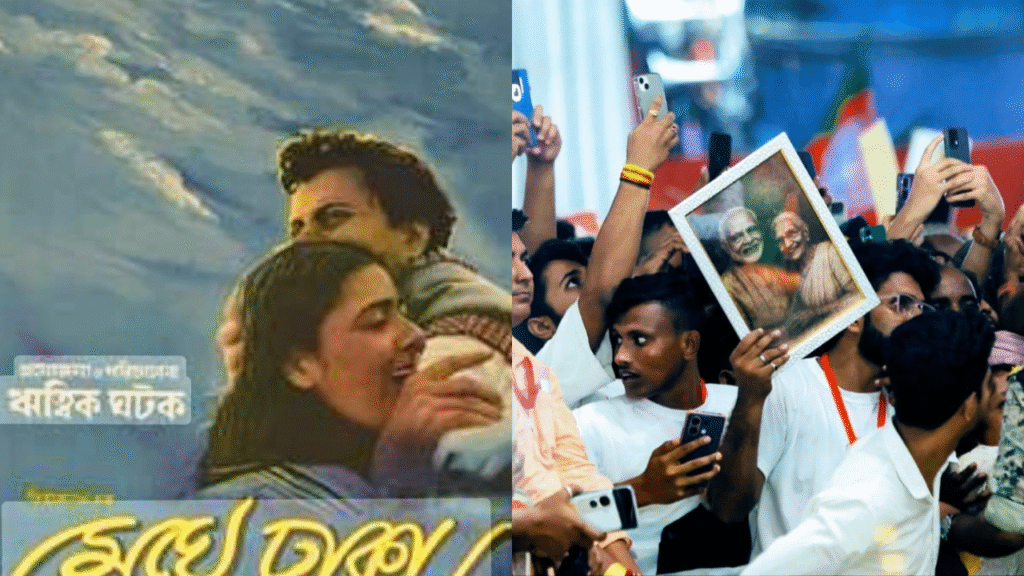
Prime Minister Narendra Modi on Friday invoked one of the most iconic lines in Indian cinema – Ritwik Ghatak’s ‘dada ami bachte chai” (Dada, I want to live) from Meghe Dhaka Tara – to frame his political narrative in West Bengal. The line, delivered by the tragic character Neeta in the 1960 classic, has long symbolized the pain and survival struggles of Partition refugees. Modi used the phrase in his speech to suggest that the Bharatiya Janata Party (BJP) represents the survival instinct of Bengal itself. “ami bachte chai BJP tai” (I want to live so I want BJP) he declared, echoing Neeta’s desperate cry, and linked it to the plight of those who fled East Pakistan, now Bangladesh, during Partition. Political commentators immediately noted the weight of the choice. Ghatak’s Meghe Dhaka Tara is not just a film but a social document of uprooted lives, particularly refugees who lost everything in the division of Bengal. Neeta, played by Supriya Devi, sacrifices herself for her family only to collapse under the unbearable weight of exploitation and despair. Her final cry, “Dada, I want to live!” spoken to her brother Shankar, continues to resonate across generations as a universal expression of human suffering and resistance. By placing himself in that emotional lineage, Modi signaled two things: his party’s identification with displaced Hindus who crossed into Bengal for survival, and his resolve to prevent a repeat of that displacement. In the same breath, however, he reaffirmed his hard line against what he termed “illegal infiltrators,” vowing to “drive them out of Bengal.” The BJP’s opponents accused Modi of emotional manipulation. West Bengal Pradesh Congress spokesperson Soumya Aich Roy said the prime minister was “stealing the emotional history of Bengalis to capture power in the state.” He argued that while BJP tries to appropriate Ghatak’s imagery for political gain, the party simultaneously fuels hostility against Bengalis in other parts of India. “Partition was not just a Hindu-Muslim divide; it was the trauma of millions,” Roy said. “To use Ghatak’s words in a campaign against so-called infiltrators is not only cynical, it is an insult to Bengal’s history.” For the BJP, however, cultural symbols are proving to be powerful tools in the run-up to the 2026 state elections. Party sources suggest that Modi’s reference is part of a wider attempt to anchor its campaign in Bengal’s collective memory of displacement, survival, and identity. The symbolism also arrives in a heated cultural moment. Filmmaker Vivek Agnihotri, known for The Kashmir Files, has announced his new film The Bengal Files, which he says will document Bengal’s political violence. Chief Minister Mamata Banerjee has signaled she may block its release in the state. Against that backdrop, Modi’s borrowing of Ghatak – one of Bengal’s most revered filmmakers, born in Rajshahi in undivided East Bengal – is being seen as a deliberate attempt to outmaneuver the Trinamool Congress by seizing the cultural high ground. “Ghatak’s cinema is the greatest testament to the wounds of Partition,” said one political analyst in Kolkata. “By invoking him, Modi is telling Bengal: we, the BJP, are the true inheritors of your pain, and the guardians of your survival.” For Bengal, however, the question remains: can a line that once captured the existential cry of refugees now be transformed into a political slogan? And will voters see it as empathy, or exploitation?
Modi Defends Controversial Constitutional Amendment Bill, Trinamool Hits Back
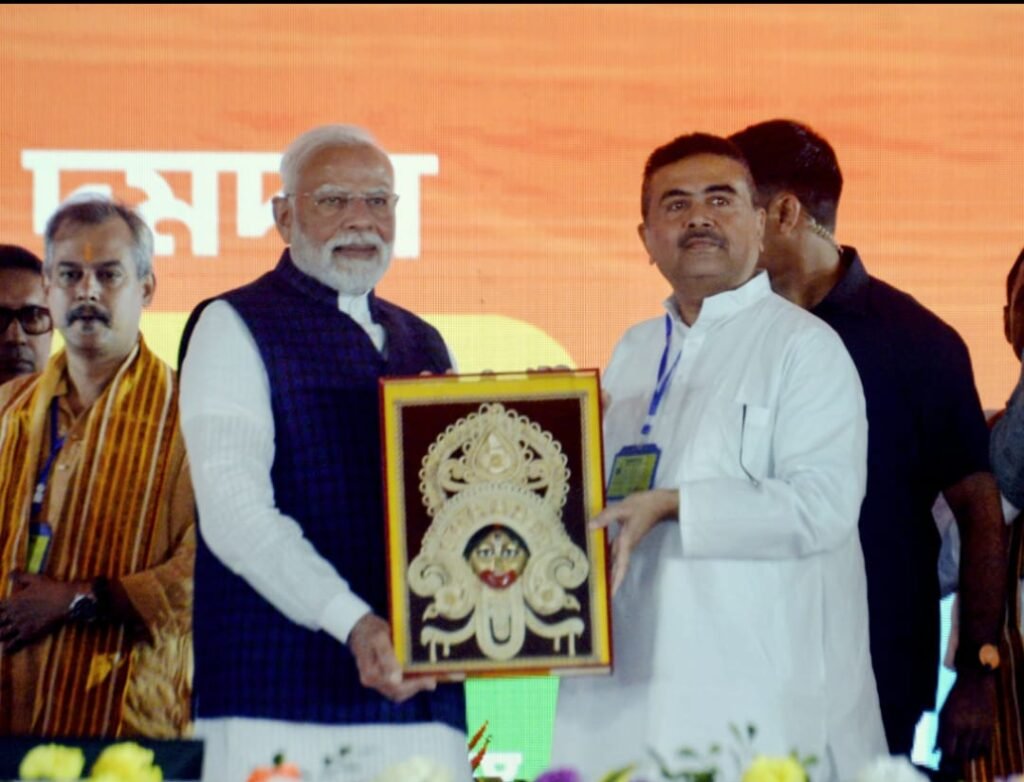
Kolkata, India – The political storm over the 130th Constitutional Amendment Bill intensified on Friday as Prime Minister Narendra Modi defended the legislation during a Bharatiya Janata Party (BJP) rally in West Bengal, drawing sharp rebuttals from the state’s ruling Trinamool Congress (TMC). Introduced in the Lok Sabha earlier this week despite fierce opposition, the bill has been branded by critics as a tool for the federal government to sideline elected state administrations. The TMC has led protests, warning that the amendment would allow New Delhi to bypass courts and dissolve opposition-ruled governments at will. Addressing BJP supporters at Dum Dum Central Jail grounds near Kolkata, Modi sought to justify the bill by invoking recent corruption scandals involving TMC ministers. Without naming them, he referred to the arrests of former state education minister Partha Chatterjee and food minister Jyotipriya Mallick, both jailed on graft charges. “Government employees lose their jobs if they spend more than 50 hours in jail. Why then should a chief minister, a minister, or even a prime minister continue to run a government from prison?” Modi asked, echoing remarks he made earlier in Bihar. “One minister was caught in the teachers’ recruitment scam, with piles of cash found in his house. Another looted rations meant for the poor. Yet both refused to resign, showing contempt for the people and the Constitution,” he said. The TMC fired back, accusing Modi of hypocrisy. “The prime minister is throwing stones from a glass house,” senior minister Shashi Panja said. “He points fingers at others while ignoring serious charges against his own party leaders.” Panja alleged that 94 of the BJP’s 240 MPs face criminal cases, including 63 involving serious charges. The TMC also accused the BJP of political opportunism, noting that corruption allegations against several leaders disappeared once they switched sides and joined the saffron camp. “The same leaders Modi once denounced are now his own,” Panja added. For the TMC, the amendment bill represents not reform but an assault on India’s federal structure. And as both parties exchange accusations of graft, the looming battle over corruption and power has become a key flashpoint ahead of the 2026 West Bengal elections.
Kolkata metro expansion to transform city travel ahead of Durga Puja
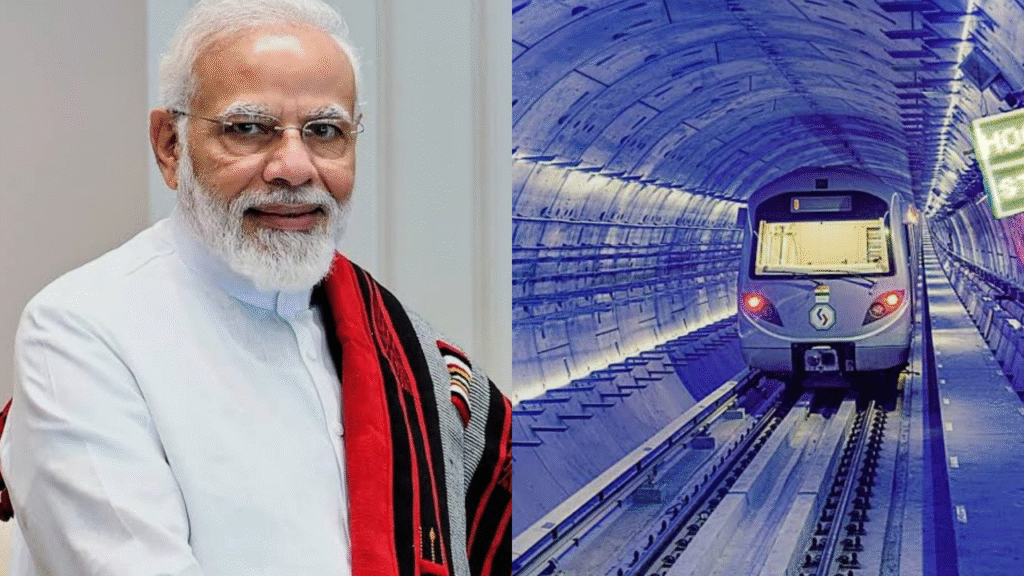
Kolkata is set for a major boost in urban mobility this week, with Prime Minister Narendra Modi scheduled to inaugurate three metro line extensions on Friday, including the long-delayed Sealdah–Esplanade stretch under the East-West Metro corridor, officials said. The 14 km expansion will link key terminals, including Howrah and Sealdah railway stations, the city airport, and Salt Lake Sector V, its information technology hub. Once fully operational, the daily ridership of the East-West Metro could rise from the current 100,000 to more than 700,000, Kolkata Metro General Manager P. Uday Kumar Reddy said. The Sealdah–Esplanade segment, just 2.6 km long, is expected to be the most crucial, cutting travel time between Howrah and Sealdah stations to only 12 minutes via an underwater tunnel under the Hooghly River. The line will ease congestion in the city’s central business district and provide direct access to Salt Lake’s offices from both major railway hubs. For the first time, passengers will also be able to travel between Howrah Maidan and Netaji Subhas Chandra Bose International Airport with a single smart card, though they will need to change trains twice. The Noapara–airport extension, covering 7 km, is also part of the new services. Another 4.4 km stretch connecting Ruby (Hemanta Mukhopadhyay station) and Beleghata (Metropolis) will be launched, offering commuters in eastern Kolkata new links to Sealdah, Howrah and the airport. Services are currently available every 12 to 15 minutes, but the frequency is expected to increase to every eight minutes during peak hours once the expanded network becomes fully operational. Kolkata’s metro, India’s oldest, began operations in 1984. In recent years, several expansions have faced repeated delays, including the East-West project, which was stalled by land subsidence in the Bowbazar area. Last year, Modi inaugurated the country’s first under-river metro service, which opened to the public nine days later. Metro officials said services on the Sealdah–Esplanade stretch may open to passengers immediately after Friday’s inauguration, while the other two extensions are expected to start from Monday.
Modi inaugurates Delhi expressways worth $1.3bn to cut traffic congestion

New Delhi, India – Prime Minister Narendra Modi on Sunday inaugurated two major road projects in the national capital region, the Delhi section of the Dwarka Expressway and the Urban Extension Road-II (UER-II), together worth nearly 11,000 crore rupees ($1.3bn). The projects, built under the government’s broader plan to ease traffic congestion in Delhi and its surrounding areas, are expected to significantly reduce travel time to the Indira Gandhi International (IGI) Airport from Sonipat, Rohtak, Bahadurgarh and Gurugram. “Dwarka Expressway and UER-II will benefit people of Delhi-NCR. Our government is making consistent efforts to remove all difficulties of citizens,” Modi said at the inauguration ceremony. He added that Delhi is being developed as a “model of growth” to represent India’s aspirations as a rising economy. The prime minister underlined the innovative use of technology in the new infrastructure, noting that millions of tonnes of municipal waste were recycled to construct sections of UER-II. “This scientific and sustainable approach has reduced the mountains of garbage in Delhi while turning waste into a valuable resource,” Modi said. Union Road Transport and Highways Minister Nitin Gadkari, who joined Modi at the event, claimed the two projects would reduce traffic jams in the capital by “at least 50 percent”. The Delhi section of the Dwarka Expressway, stretching 10.1km, has been built at a cost of 5,360 crore rupees. It is designed to integrate multiple modes of transport, linking Yashobhoomi Convention Centre, Delhi Metro’s Blue and Orange lines, the upcoming Bijwasan railway station and the Dwarka bus depot. The project is split into two packages, connecting Shiv Murti intersection to the Delhi-Haryana border. The prime minister also inaugurated a 19km segment of UER-II between Alipur and Dichaon Kalan, including new spurs to Bahadurgarh and Sonipat. Developed at a cost of 5,580 crore rupees, the road is expected to ease congestion on Delhi’s Inner and Outer Ring Roads and busy intersections like Dhaula Kuan, Mukarba Chowk and NH-09. Officials say it will also improve freight movement by connecting industrial hubs directly with the national highways. During the visit, Modi interacted with labourers who worked on the expressway and later held a roadshow at the Mundka-Bakkarwala Village Toll Plaza. The Haryana section of the Dwarka Expressway was inaugurated earlier in March 2024. Supporters of the government hailed the projects as symbols of India’s fast-paced infrastructure expansion, while critics argue that congestion in Delhi cannot be solved without deeper reforms in urban planning, public transport and pollution control.


