
India-China ties show signs of thaw as Beijing’s foreign minister to visit New Delhi ahead of Modi trip
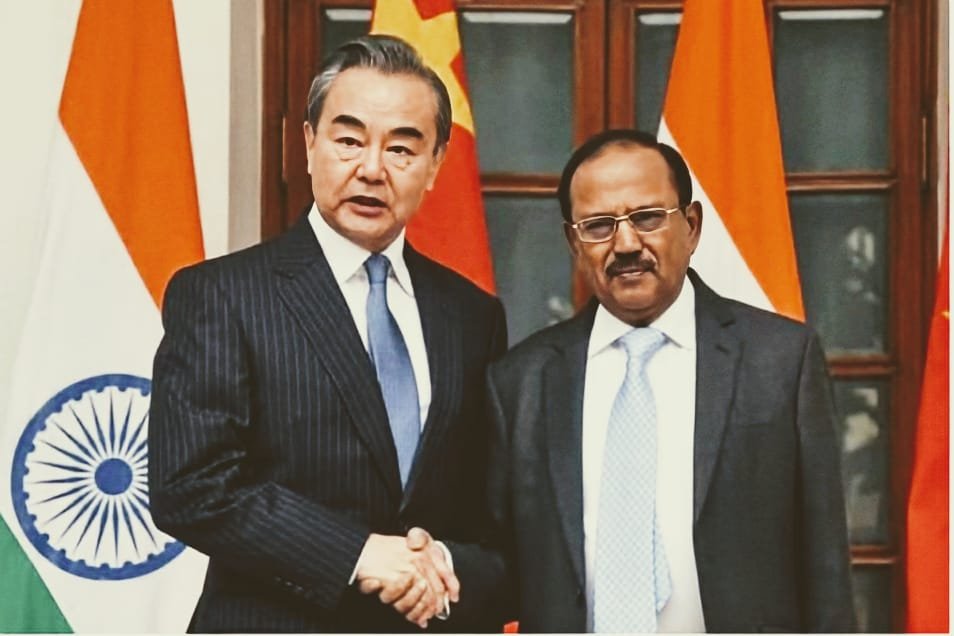
India and China appear to be moving towards a cautious rapprochement, with Chinese Foreign Minister Wang Yi expected to arrive in New Delhi next week for talks with India’s National Security Adviser Ajit Doval, diplomatic sources told Press . The visit comes ahead of Indian Prime Minister Narendra Modi’s planned trip to Beijing later this month – his first since the deadly Galwan Valley clashes in 2020 plunged bilateral relations into their lowest point in decades. According to officials, Wang’s visit will focus on building on recent high-level engagements between the two Asian giants. In July, Indian External Affairs Minister S Jaishankar travelled to China to attend the Shanghai Cooperation Organisation (SCO) meeting, where he met Chinese President Xi Jinping and Vice President Han Zheng. Indian Defence Minister Rajnath Singh also held talks in Beijing with his counterpart, Admiral Dong Jun. During his meetings, Jaishankar stressed the need for “mutual cooperation and open dialogue” between the two neighbours in an “increasingly turbulent world” – a reference to conflicts such as the Russia-Ukraine war and the Iran-Israel confrontation, both of which have heightened global instability. Relations between India and China were further strained by the COVID-19 pandemic in 2020, which halted direct flights, Kailash Mansarovar pilgrimages, and visa issuance. The Galwan clashes later that year left 20 Indian soldiers and at least four Chinese troops dead, prompting a series of tense military-level negotiations. Signs of improvement have emerged in recent months. China has given the green light for the resumption of the Kailash Mansarovar Yatra, while India announced last month that Chinese citizens will once again be eligible for tourist visas. Direct flights between the two countries are also set to resume next month for the first time in over four years. Analysts say Beijing’s outreach reflects a strategic recalibration. “China is looking to stabilise relations with India amid a complex geopolitical environment and economic headwinds,” said one foreign policy expert in New Delhi. The move also comes as Beijing publicly backed New Delhi in opposing recent US tariff hikes imposed by President Donald Trump. Prime Minister Modi is scheduled to attend the SCO summit in Tianjin from August 31 to September 1. Observers say the visit could be pivotal in resetting ties, but both sides remain wary, given the unresolved border disputes. For now, Wang Yi’s trip to New Delhi will serve as a litmus test for whether the world’s two most populous countries can move from a tentative thaw towards genuine reconciliation.
TMC MP Kalyan Banerjee Seen Beside Modi on Day of Opposition’s EC Protest
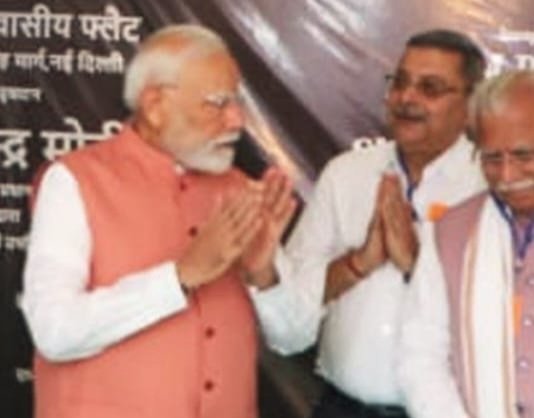
On the day opposition parties marched to the Election Commission over alleged “vote theft” linked to the Statewide Integrated Register (SIR), senior Trinamool Congress (TMC) lawmaker Kalyan Banerjee was seen alongside Prime Minister Narendra Modi at a government function in New Delhi. Banerjee, a six-term MP from Serampore, attended Monday’s inauguration of a newly built parliamentarians’ housing complex on Baba Kharak Singh Marg, where Modi formally opened 184 flats. Eyewitnesses said Modi greeted Banerjee with a smile, asking, “Kya Kalyanji, Kalyan hai to?” (“Mr. Kalyan, are you well?”), to which the MP replied affirmatively. Modi repeated the question, and Banerjee again responded positively. During a group photograph, Modi asked for chairs on the stage to be removed so everyone could stand together, personally moving one of them. Banerjee joined him in shifting the chairs, and in the final photograph the TMC MP stood next to the Prime Minister. The event was also attended by Lok Sabha Speaker Om Birla, Union ministers Manohar Lal Khattar and Kiren Rijiju, among others. Banerjee said he missed the opposition’s Election Commission protest because he was occupied with a Supreme Court case the TMC has filed over the SIR issue, and had informed party leader Mamata Banerjee in advance. As a member of the House Standing Committee, Banerjee had overseen interior furnishing for the new housing project’s final phase. The appearance comes eight days after Banerjee resigned as TMC’s chief whip in the Lok Sabha, a move accepted by Mamata Banerjee last week. His presence next to Modi has triggered speculation within TMC circles, with some questioning whether it was intended to exert pressure on the party. Banerjee’s associates deny this, noting he has publicly expressed regret over earlier critical remarks about the TMC chief and spoke to her several times in recent days. The optics of a senior TMC MP with Modi on a day the opposition staged a high-profile protest has added fresh fuel to political chatter in West Bengal.
Modi Vows Not to Compromise on Farmers’ Interests Amid Strained India-U.S. Trade Talks
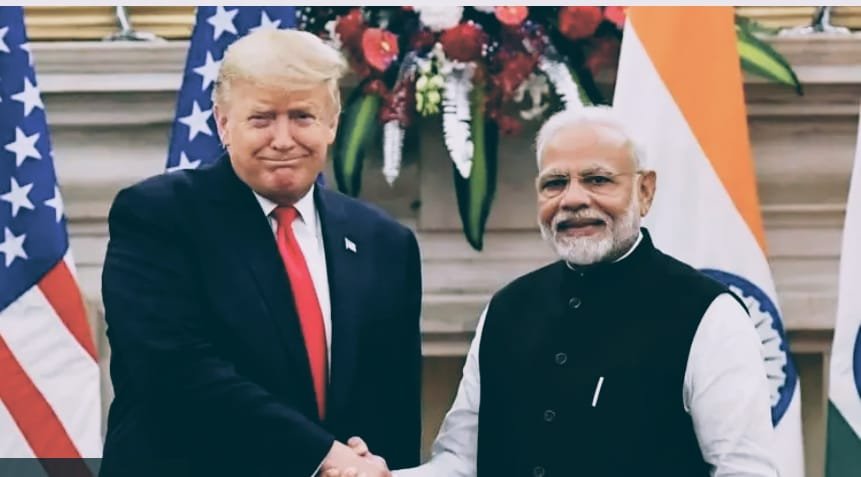
Indian Prime Minister Narendra Modi on Thursday issued a firm message that his government will not compromise on the interests of farmers, even as tensions rise between New Delhi and Washington over an unresolved trade deal. Speaking at an international conference in New Delhi commemorating the centenary of agricultural scientist M.S. Swaminathan—widely credited with spearheading India’s Green Revolution—Modi said, “The interests of our farmers, livestock rearers, and fishermen are of the highest priority. India will never compromise on them.” In a pointed remark widely interpreted as a message to the United States, Modi added, “I know I will have to pay a heavy price personally for this stand. But I am prepared for it. India is ready to protect the interests of its farmers.” His comments come amid mounting friction with the U.S. over trade, particularly involving agriculture and dairy. American officials have reportedly pushed India to open its markets fully to U.S. agricultural products and dairy exports as part of a broader trade agreement. However, Indian negotiators have so far resisted, citing the potential impact on domestic farmers and producers. Tariff Tensions The backdrop to Modi’s speech is an increasingly fraught trade relationship. U.S. President Donald Trump recently announced a second round of tariff hikes, bringing total duties on Indian goods to 50%. The move comes after India continued oil imports from Russia, defying Western pressure to scale back economic ties with Moscow amid the ongoing war in Ukraine. Trump has hinted that further restrictions may be imposed on countries that maintain trade relations with Russia, warning that “many more” punitive measures could be on the way. Although trade negotiations between India and the U.S. are ongoing—with five rounds already completed—officials on both sides acknowledge that a final agreement remains elusive. Talks are expected to resume later this month when a U.S. trade delegation visits New Delhi. India Resists “One-Sided” Deal Sources within India’s commerce ministry say Washington wants unfettered access to Indian markets for U.S. agricultural products, milk, and dairy goods. But New Delhi remains firm that it will not enter into any “one-sided” deal that prioritizes American interests while endangering domestic livelihoods. “There’s no question of rushing into an agreement that only benefits the U.S.,” one government official said, speaking on condition of anonymity. Green Revolution Legacy and Domestic Messaging Analysts see Modi’s remarks as aimed not just at the U.S. but also at a domestic audience increasingly anxious over global pressures on Indian agriculture. The choice to deliver this message at an event honoring M.S. Swaminathan—whose work transformed India from a food-deficient country to a grain-exporting nation—was symbolic. Swaminathan’s legacy is closely tied to Indian self-reliance in agriculture, particularly wheat, which once reduced dependence on U.S. grain imports. Modi’s speech was seen as reinforcing that spirit of independence, even as India navigates the complex landscape of global trade diplomacy. The Prime Minister’s firm stance is likely to resonate with India’s vast rural population and farming community, as his government prepares for general elections in the coming year. For now, the path to a comprehensive India-U.S. trade agreement appears uncertain. And with tariffs mounting and political stakes rising, the gap between economic pragmatism and political priorities may continue to widen.
Modi to visit China amid U.S. tariff threats and post-Ladakh tensions – first visit since 2020 clash

Prime Minister Narendra Modi is set to visit China later this month to attend the Shanghai Cooperation Organization (SCO) summit, his first trip to the country since the deadly border clash in Ladakh in 2020. The high-stakes diplomatic visit comes at a time when U.S. President Donald Trump has issued fresh tariff threats against India, warning of a potential increase beyond the existing 25% imposed on New Delhi. Washington has linked the punitive trade measures to India’s continued energy and trade ties with Russia. China, also a major buyer of Russian energy, has stepped up efforts to deepen its strategic partnership with India amid the shifting global geopolitical landscape. Modi is expected to travel to the Chinese city of Tianjin for the SCO leaders’ summit, scheduled for August 31 and September 1. The multilateral bloc includes India, China, Russia, and Pakistan, among others. While it remains uncertain whether Pakistan’s Prime Minister Shehbaz Sharif will attend, Modi’s message on counter-terrorism is likely to draw attention in light of recent cross-border incidents, including the Pahalgam killings and “Operation Sindoor” in Jammu and Kashmir. Ahead of the summit, India’s Defence Minister Rajnath Singh and External Affairs Minister S. Jaishankar had visited China for respective SCO ministerial meetings. In both forums, Indian officials strongly reiterated New Delhi’s zero-tolerance stance on terrorism, with Singh notably criticizing Pakistan without naming it, in the presence of Pakistani Defence Minister Khawaja Asif. Should Sharif attend the summit, observers will closely watch whether Modi delivers a pointed message in the leaders’ session, reinforcing India’s regional security concerns.
India’s PM Modi Meets President Murmu Amid Parliament Logjam and US Trade Tensions
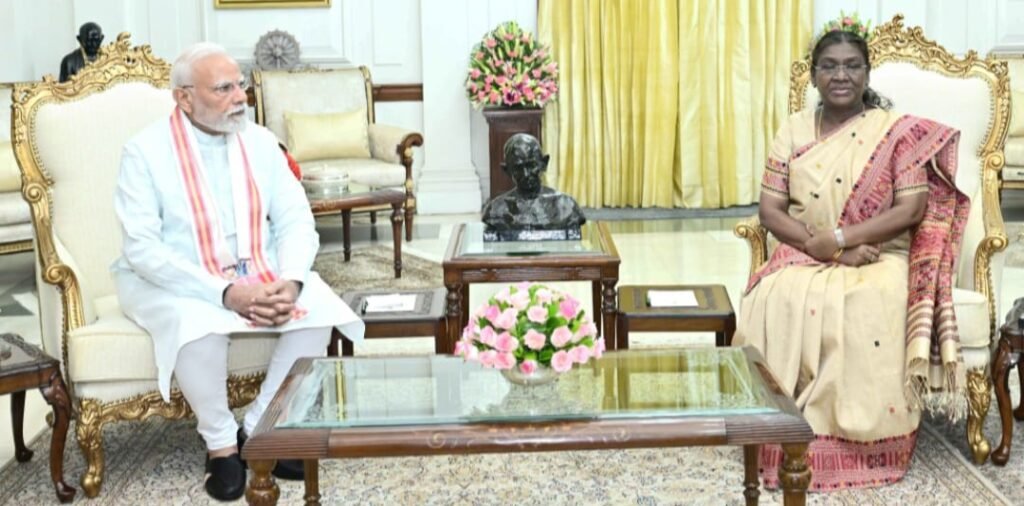
Prime Minister Narendra Modi met President Droupadi Murmu at the Rashtrapati Bhavan on Sunday amid an ongoing deadlock in Parliament and rising diplomatic friction with the United States over trade and defence ties with Russia. The Rashtrapati Bhavan confirmed the meeting in a brief statement posted on social media platform X (formerly Twitter), saying: “Prime Minister Shri @narendramodi called on President Droupadi Murmu at Rashtrapati Bhavan.” However, no further details of the meeting were made public. The meeting came as Parliament remained largely stalled since the start of the Monsoon session on July 21, with opposition parties demanding an in-depth discussion on the Special Intensive Revision (SIR) of electoral rolls in Bihar. The opposition has alleged irregularities in the SIR process, calling it a politically motivated move ahead of the state assembly elections due next year. Except for brief discussions in both Houses on “Operation Sindoor,” a military-led rescue and repatriation mission, legislative business has been minimal as both Houses witnessed frequent disruptions and adjournments. Modi’s visit to the President also follows growing diplomatic tensions between New Delhi and Washington. Just days earlier, former U.S. President Donald Trump announced a 25% tariff on Indian exports and signaled possible further penalties in response to India’s continued purchases of Russian oil and military hardware—moves that have drawn criticism from the U.S. and other Western nations amid the ongoing Ukraine conflict. While the Indian government has not officially responded to Trump’s announcement, New Delhi has consistently defended its strategic autonomy and maintained that its energy and defence imports serve its national interests. Analysts view the Prime Minister’s meeting with the President as a customary but significant consultation during a politically sensitive period marked by legislative paralysis and foreign policy headwinds. With key bills pending and crucial state elections approaching, pressure is mounting on the ruling Bharatiya Janata Party (BJP) to restore order in Parliament and address both domestic and international concerns.


