
Calcutta High Court Flags Traffic Disruption Ahead of Trinamool’s 21 July Rally
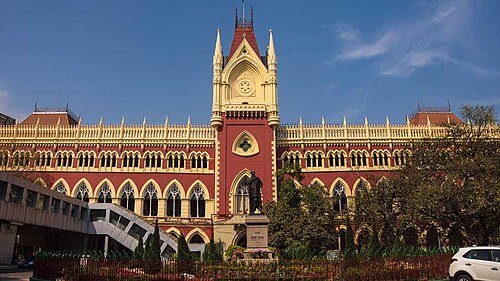
The Calcutta High Court on Thursday issued strong observations over possible disruption to public life due to the Trinamool Congress’s annual 21st July rally, prompting concerns over traffic management in the city. The remarks came during a hearing on a petition filed by a Left-affiliated lawyers’ body, which expressed apprehension that the large-scale political event could paralyse central Kolkata for hours. While Justice Tirthankar Ghosh clarified that the court would not interfere with the rally this year, he questioned the burden such events place on ordinary citizens. “How long can the public tolerate this?” he asked, signalling displeasure at the scale of inconvenience anticipated. The state’s Advocate General defended the rally, saying permissions were obtained through due process. “Even during visits by the President or Prime Minister, similar traffic restrictions are imposed. This rally has been held for over three decades,” he said. The court, however, was not convinced. “Will the Kolkata Police Commissioner give an undertaking that there will be no traffic jams?” Justice Ghosh retorted, adding that authorities must be mindful of public tolerance limits. Issuing specific instructions, the court directed that: No rally-bound participants may enter the city after 11 a.m. on Sunday; Only those already present in Kolkata by then may attend the rally; At least one-third of the road space must be kept clear for vehicular movement. The petitioner, lawyer Shamim Ahmed, argued that while he was not opposing any political event, there must be parity in how permissions are granted. “Why is one party allowed such access while others face restrictions?” he asked, citing a July 16 notification that warned of 20-hour traffic closures in parts of central Kolkata. In response, the state’s counsel said traffic regulations apply uniformly to all major events, including religious festivals and rallies by other parties. The court further suggested that future political gatherings of such magnitude be held in large venues like stadiums to reduce strain on public infrastructure. “Why not use a stadium with a capacity of one lakh? The roads belong to everyone,” Justice Ghosh said. The court also instructed the West Bengal government to develop a comprehensive policy for large-scale public events to prevent future hardship to residents. Observers note that the 21st July rally, commemorating the 1993 police firing on Youth Congress workers, has over the years become a show of strength for the ruling Trinamool Congress. But with growing urban congestion, questions over the location and scale of such events are gaining prominence. The state government is yet to respond to the High Court’s suggestions.
BJP alleges political motive behind move by TMC to hold protest over harassment of Bengalis
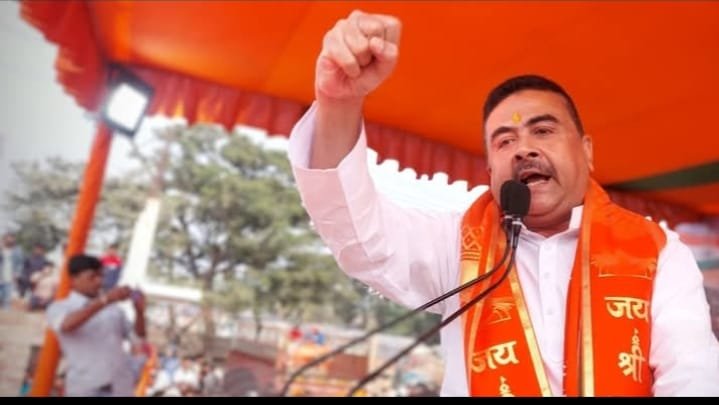
KOLKATA, 16 JULY: Leader of Opposition in Bengal assembly Suvendu Adhikari today said that in the name of Bengali sentiment, the ruling Trunmul Congress is trying to gain electoral profit. He accused Chief Minister Mamata Banerjee is taking the help from other than Bengali IAS and IPS officers to run the state administration and constantly depriving the Bengal officials to get their proper administrative positions. West Bengal’s ruling Trinamul Congress (TMC) will hold a protest rally in Kolkata on Wednesday over alleged harassment of Bengali-speaking people in several Indian states, a move the party claims is aimed at protecting Bengali identity. Chief Minister Mamata Banerjee will lead the rally, with her nephew and party’s national general secretary Abhishek Banerjee also expected to participate after a long public absence. The TMC alleges that Bengali-speaking individuals have repeatedly faced discrimination in other Indian states, where they were labelled as “Bangladeshi” and subjected to humiliation. The party said it had raised the issue with the Central government and respective state authorities but received no response, prompting the decision to launch a street protest. However, Leader of the Opposition Suvendu Adhikari of the Bharatiya Janata Party (BJP) accused the TMC of using the “Bengali identity” issue as a political ploy ahead of upcoming elections. “TMC has suddenly rediscovered Bengali pride only because elections are nearing,” Adhikari wrote in a detailed post on X, formerly Twitter. “This is nothing but a veiled attempt to shield illegal immigrants — including Rohingyas and Bangladeshis — under the guise of protecting Bengalis.” Adhikari further alleged that the state government itself has sidelined senior Bengali officials from top administrative positions. “Why were senior Bengali bureaucrats like Atri Bhattacharya and Subrata Gupta ignored for the Chief Secretary post, and Manoj Panth, a junior, appointed instead? Why was IPS officer Sanjay Mukherjee replaced by Rajeev Kumar, an outsider, as DGP?” he asked. He also questioned the government’s silence on the plight of thousands of qualified Bengali youths who lost teaching jobs due to corruption scandals, saying Mamata Banerjee’s concern for Bengali identity seems selective. “When thousands of genuine Bengali candidates are protesting on the streets after being denied teaching jobs due to scams, the Chief Minister turns a blind eye. But she rushes to defend the rights of people who may be illegal immigrants,” Adhikari wrote. The protest comes amid growing political tension in West Bengal, with the TMC and BJP engaged in a fierce battle over issues of identity, governance, and corruption. The BJP has launched a nationwide drive to identify and deport undocumented immigrants, which TMC leaders claim is targeting Bengali-speaking populations in several states. No immediate response was available from the Union Home Ministry on TMC’s allegations or Adhikari’s claims.
India Urges Bangladesh to Halt Demolition of Satyajit Ray’s Ancestral Home
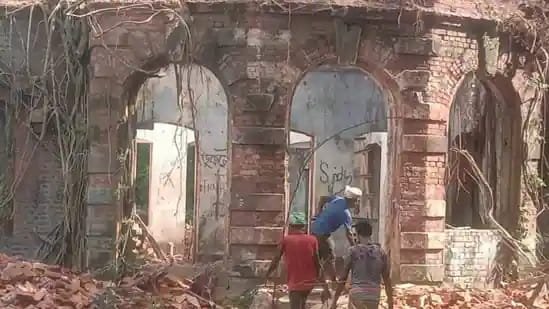
DHAKA/KOLKATA, July 16: India has urged Bangladesh’s interim government to reconsider the demolition of the ancestral home of legendary filmmaker Satyajit Ray, after reports emerged that the property in Mymensingh district is being razed by local authorities. The residence, located on Harikishore Ray Chowdhury Road, once belonged to Ray’s grandfather, renowned writer and publisher Upendrakishore Ray Chowdhury. The site had been used by the Bangladesh Shishu Academy but has reportedly been lying in disrepair for over a decade. Bangladesh’s interim government, led by Nobel laureate Muhammad Yunus following the recent ouster of Prime Minister Sheikh Hasina’s administration, has initiated demolition of the house citing safety concerns. Local child affairs officer Mohammad Mehedi Zaman told The Daily Star that the structure is at risk of collapse and will be replaced by a semi-concrete building. The development has sparked a political and cultural backlash across the border in India. West Bengal Chief Minister Mamata Banerjee raised strong objections on Tuesday, urging the Bangladesh authorities to preserve the historic site and calling on New Delhi to intervene. Following her appeal, India’s Ministry of External Affairs issued a statement highlighting the property’s historical and cultural significance. “The ancestral home of Satyajit Ray is not just an architectural structure but a symbol of shared heritage and literary excellence. We urge the Bangladesh government to preserve and restore the site instead of demolishing it,” the statement said. India has offered technical and financial assistance for the restoration and proposed converting the property into a literary museum, which officials say could further deepen the cultural ties between the two nations. The incident follows recent attacks on homes of other prominent Bengali cultural icons in Bangladesh. Just weeks ago, unidentified vandals damaged the ancestral estate of Rabindranath Tagore in Kushtia, raising concerns over the protection of heritage sites amid political instability. According to the Bangladesh Department of Archaeology, Ray’s ancestral home is over 100 years old and was taken over by the government following the 1947 Partition. Ray, who passed away in 1992, remains one of the most influential figures in global cinema. His works, including the iconic Apu Trilogy, have earned him international acclaim and India’s highest civilian honours. Cultural commentators in both countries are urging Dhaka to preserve the home as a tribute to Ray’s legacy and a testament to the shared cultural fabric of Bengal that transcends borders.
Bengal Opposition Leader Calls Parallel Rally on 21 July TMC Martyrs’ Day, Mamata Dismisses It as “Unimportant”
KOLKATA, India, July 15: Political tensions are escalating in West Bengal as opposition leader Suvendu Adhikari of the Bharatiya Janata Party (BJP) announced a counter-rally on July 21, the day the ruling Trinamool Congress (TMC) holds its annual Martyrs’ Day gathering in central Kolkata. Adhikari has also launched a state-wide campaign titled Kanya Suraksha (Girl Child Protection) in response to a recent gang rape allegation involving a law college student in Kolkata’s Kasba area, intensifying political debate over women’s safety in the state. The BJP has announced marches across various districts and a protest march to Uttarkanya, the state government’s administrative outpost in North Bengal, on the same day as the TMC rally. However, Chief Minister Mamata Banerjee has dismissed the BJP’s counter-programme, calling it insignificant. “It’s not an important issue. There’s no need to pay attention to them,” she told reporters after a cabinet meeting on Monday. Martyrs’ Day, observed annually on July 21, commemorates the killing of 13 TMC supporters during a protest in 1993. The event remains one of the party’s most significant political shows of strength. Banerjee, addressing preparations for the event, instructed ministers and officials to ensure the safe and smooth transport of party workers from across the state to Kolkata. “Our only focus is to honour the martyrs and ensure a peaceful and successful event,” Banerjee said. She directed police and administrative officials to ensure security, accommodation, and transportation logistics are carefully managed for party workers traveling to the capital. During the cabinet meeting, Banerjee also expressed concern over reports of Bengalis facing harassment in other Indian states for speaking their mother tongue. “It’s unacceptable that someone is attacked just for speaking Bengali,” she said. The Chief Minister asked her ministers to organise protests at the local level and raise awareness on linguistic and cultural respect. “Nearly 15 million people from other states live peacefully in West Bengal, and we have always welcomed them with dignity,” Banerjee said. “But over 2.2 million Bengalis working in other parts of India are facing discrimination. This cannot continue.” Officials believe the government may be preparing a larger campaign to protest these incidents, not just through administrative channels but also via cultural and social platforms aimed at protecting Bengali language and identity.
TMC Leader Shot Dead in West Bengal’s Birbhum, Police Suspect Political Motive

BIRBHUM: A local leader of the ruling Trinamool Congress (TMC) was shot dead in Birbhum district of West Bengal early Saturday, triggering political tension ahead of next year’s state assembly elections, police and party officials said. Piyush Ghosh, 42, the TMC’s zone president in the Labhpur area and an office-bearer in the local panchayat samiti, was found dead with a gunshot wound to the head around 500 metres from his home in Komarpur village. Police said he had received a call from an unknown number around 2 a.m. and left home on his motorcycle shortly before he was attacked at point-blank range. Three suspects, including a woman with known political links to the TMC, have been detained for questioning. A murder investigation has been launched, with police examining possible motives including political rivalry, personal enmity, and disputes over the local sand trade, in which Ghosh was reportedly involved. “This is a premeditated murder,” a senior TMC functionary said. “He was an influential figure in the area, both politically and economically. He had received threats during election season. We believe he was targeted to be removed from his organisational role.” Ghosh’s wife said she had repeatedly urged him to step away from politics, fearing for their safety. “Now I just want my children to be secure and get proper employment,” she said. The killing comes just days after two other TMC leaders were shot dead in separate incidents — Rajjak Khan in South 24 Parganas and another party worker in Malda. The spate of violence has raised alarm within the ruling party, with some leaders pointing to rising intra-party tensions and deteriorating law and order. Local MLA Abhijit Sinha called the murder “deeply unfortunate” and said the party would fully cooperate with the police investigation. “We have full faith in the administration. The culprits and the source of the weapon used will be uncovered,” he said. Police have sent the body for postmortem and deployed additional forces in the region to prevent unrest. Birbhum Superintendent of Police Amandeep confirmed that three people were in custody and being interrogated. The TMC, which has ruled West Bengal since 2011, faces state elections in less than a year. Political analysts say the recent killings underscore growing tension at the grassroots level within the party and the volatile political atmosphere in rural Bengal.


