
US Tech Giants Urge H-1B Workers to Stay Amid Trump Visa Fee Hike
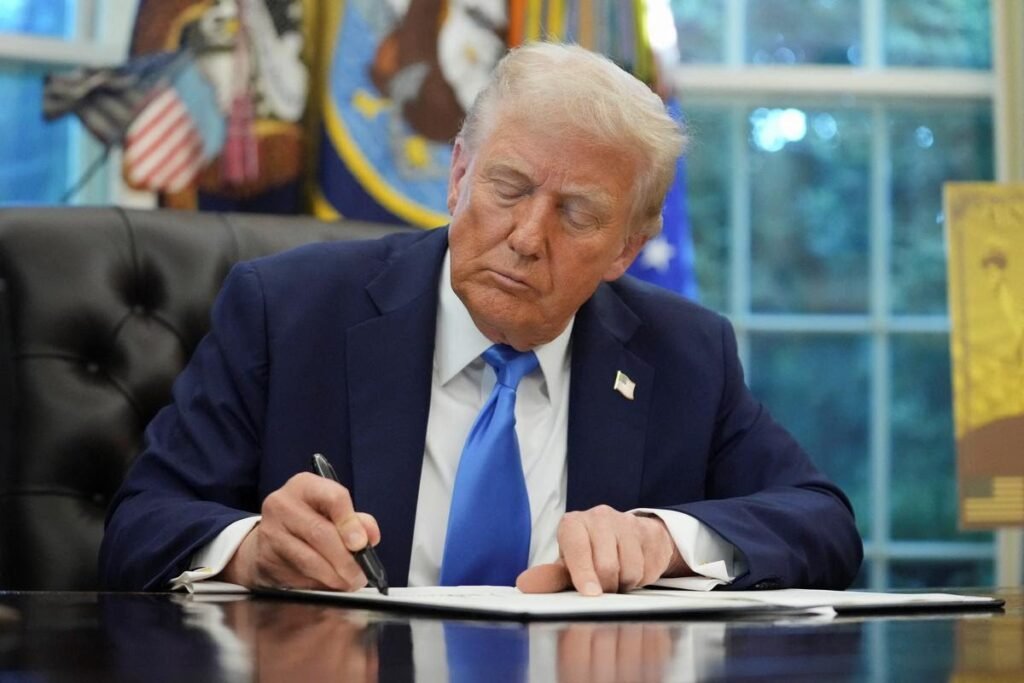
U.S. multinational companies including Meta, Amazon, Microsoft and JPMorgan Chase have urged their employees holding H-1B visas to remain in the United States, as uncertainty grows following President Donald Trump’s new directive raising the cost of such visas. Emails sent to employees this week, reviewed by Reuters, instructed H-1B and H-4 visa holders to return to the U.S. by Sunday or avoid international travel until further notice. Microsoft, in a message to its staff, said, “We are asking those on H-1B and H-4 visas to return to the United States within the specified time frame.” JPMorgan has gone further, advising workers not to leave the country at all until the company receives additional guidance. The companies have not explained the move, but industry observers believe it is tied to Trump’s latest executive order. Signed Friday, the directive imposes a $100,000 annual fee — roughly 8.8 million rupees — for companies employing workers on H-1B visas. The H-1B program, a nonimmigrant visa system, allows U.S. firms to hire skilled foreign workers, many of them from India and China. While the new policy does not ban the visa outright, labor experts say the steep fee is intended to discourage companies from sponsoring foreign talent. The technology sector, heavily reliant on international hires, could face a major disruption. According to government data, Amazon employs more H-1B workers than any other U.S. company, with more than 10,000 staff on the visa. Tata Consultancy Services follows with 5,505, while Microsoft employs 5,189, Meta 5,123, Apple 4,202 and Google 4,181. Industry leaders have yet to comment publicly on the White House’s announcement, but labor analysts warn that higher costs could slow recruitment of overseas professionals and intensify an already competitive U.S. job market for tech skills. Commerce Secretary Howard Lutnick defended the measure, saying the administration consulted “all major U.S. multinationals” before finalizing the decision. “This is about ensuring American workers are prioritized while companies contribute fairly to the system,” Lutnick said. The H-1B visa has long been a political flashpoint in Washington. Supporters argue the program supplies essential talent to keep U.S. companies globally competitive, while critics contend it undercuts American workers by lowering wages. For now, thousands of foreign professionals and their families are scrambling to comply with employers’ instructions, hoping to secure their legal status before the new rules take effect.
Bangladeshi migrant says U.S. deportation flight left him shackled, hungry
A Bangladeshi man deported from the United States said he was shackled in chains and given little food or water during a 60-hour military flight that carried him and other migrants back home. Rubel, 29, who asked not to use his real name, told Press he travelled to the U.S. on a tourist visa last October in search of a better life but was detained within days. He spent nearly 10 months in a detention centre before being expelled for illegal immigration. “They tied a chain around my waist, handcuffed me and put leg irons on both my feet,” Rubel said, describing the deportation flight that carried him and several other South Asian and African nationals. Rubel alleged the migrants were provided only four slices of bread with cheese and less than half a litre of water over the two-and-a-half-day journey. “We kept asking for water, but they didn’t give us. The officers were drinking bottled water and eating, but we were ignored,” he said. He added that shackles made it difficult to drink or use the toilet. “Even inside the restroom they stood at the door, and if we tried to move from our seats, they forced us back,” Rubel said. U.S. immigration authorities have long faced criticism from rights groups over conditions in detention centres and on deportation flights. Reuters could not independently verify Rubel’s account, and U.S. officials did not immediately respond to a request for comment.
Hindus Outraged by Trump Adviser Navarro’s ‘Anti-Brahmin’ Remark
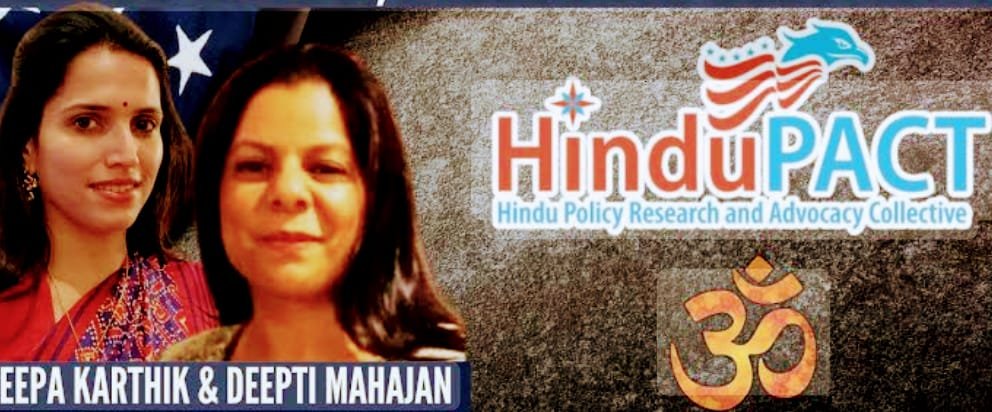
Hindu groups in the United States are demanding the removal of Donald Trump’s trade adviser Peter Navarro after he made remarks accusing India’s Brahmin community of profiteering from discounted Russian oil, sparking a storm of criticism both in the US and India. Speaking at a recent policy discussion, Navarro claimed that India was acting as a “laundry for the Kremlin,” purchasing crude oil from Russia at discounted prices, refining it, and then selling it to Europe at a profit. In his comments, he singled out “Brahmins,” suggesting they were reaping the benefits of the trade “at the expense of the Indian people.” “India is nothing more than a laundromat for the Kremlin… you’ve helped the Brahmins profit at the expense of ordinary Indians. This has to stop,” Navarro said, without clarifying why he referred specifically to the Brahmin community. The remark has been met with strong backlash from Hindu advocacy groups in the United States, who accuse Navarro of fueling caste-based divisions and displaying what they describe as “colonial arrogance.” Ajay Shah, executive director of the Washington-based advocacy group HinduPACT, called the comment “pure Hinduphobia.” “This has nothing to do with foreign policy,” Shah said. “It is a divisive remark targeting Hindus with a colonial mindset.” Deepthi Mahajan, president of the same organization, added: “If Navarro was addressing Hindus as a community, this is religious bigotry. If he was addressing India’s leadership, it is a diplomatic misstep. Either way, the statement is reckless.” The controversy has spilled over into Indian political circles as well. On X, Indian parliamentarian Sagarika Ghosh sought to contextualize the comment, noting that the phrase “Boston Brahmins” was historically used in the United States to describe wealthy elites. “Even today, some English speakers use ‘Brahmin’ as a shorthand for the rich,” Ghosh explained, suggesting Navarro’s usage may have drawn from that lineage. Still, Hindu groups argue the impact of his words is deeply damaging. “This is an attempt to sow divisions among Hindus,” Shah said. “We reject this rhetoric and call for his immediate dismissal from the Trump campaign.” Navarro, who has been a close adviser to Trump since his first administration, also criticized Indian Prime Minister Narendra Modi’s ties with Russian President Vladimir Putin and Chinese President Xi Jinping. “I don’t understand why the world’s largest democracy would choose to stand with Putin and Xi,” he said. With Trump campaigning for a return to the White House in 2025, Navarro’s remarks threaten to strain relations with Indian-American voters, many of whom see his words as inflammatory and divisive.


